Learning OpenAI Codex through Projects - From Basics to Advanced Vibe Coding Using AI
AISchool
Non-Majors Welcome: Real-World Vibe Coding Projects Created Through Conversations with AI

Beginner
Business Productivity, openai, codex
Let's create a service that improves itself even while you sleep! Learn step-by-step how to build a 24-hour vibe coding system using loop engineering with Codex.
19 learners
Level Basic
Course period Unlimited
By utilizing Codex, you can build a 24-hour automated system that repeatedly performs designated tasks without direct human instruction and self-verifies and improves the results.
You can directly design a Loop Engineering structure where multiple agents divide and process complex tasks by combining Automation, Sub Agents, Memory, and Verification.
Complete deployable automated web services, such as a public disclosure calendar, a web service revenue dashboard, a featured stock analyzer, and a lowest price tracker.
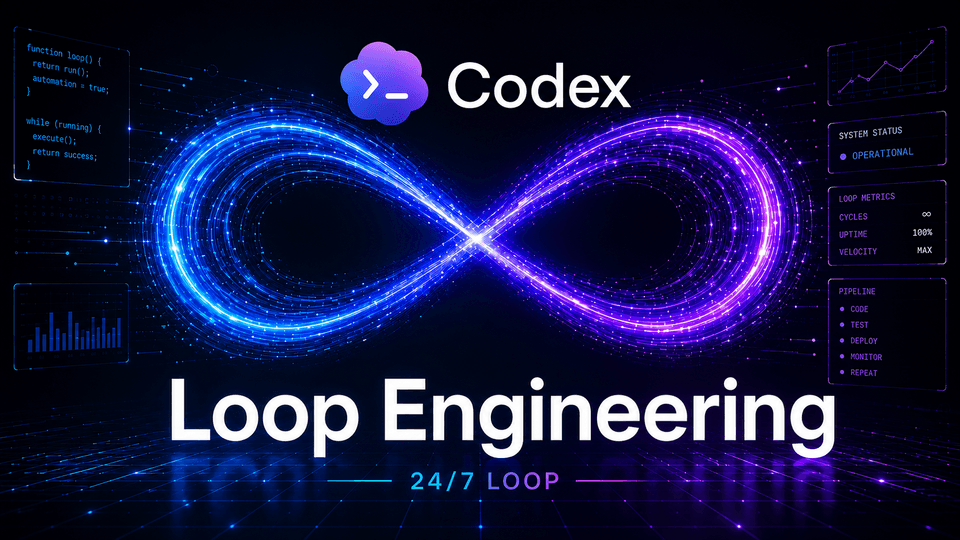
But what about after you've built the service?
Checking the data every day,
investigate new information,
inspecting for any issues,
update data,
If errors occur, they must be corrected again.
Ultimately, in order to operate the service,
humans must continuously give tasks to the AI.
What if, instead of the AI finishing after a single request,
Is there a way to make it work repeatedly on its own?
In this lecture, by utilizing Codex,
You will learn how to create a Vibe Coding system that operates 24 hours a day, repeatedly.
Automation systems are not created perfectly all at once.
When you actually run it
Data collection may fail,
Agents may make judgments that differ from expectations,
Sometimes commands fail to execute due to permission issues,
Situations also arise where you need to modify the policy you first created.
In this course, we do not hide these problems.
Executing the Loop
→ checking the actual results
→ fixing problems as they arise
→ The process of improving the loop again
will be explored together.
What is important in Loop Engineering is
it is not about creating a perfect first prompt, but
improving the system to be more stable through repetition.
Build a system that automatically collects corporate disclosure schedules and adds them to a calendar using loop engineering with the Codex Scheduled feature. Learn the process of recording changes with GitHub and automatically deploying the web service via GitHub Pages.
We will create an automated web service revenue dashboard by utilizing multiple sub-agents to handle everything from researching promising web services to collecting and verifying revenue data. You will learn the process of updating data daily through loops and deploying the web service for free using Cloudflare Pages.
We will build a featured stock analyzer that automatically selects stocks with significant daily gains, analyzes related news, and generates a report summarizing the day's major themes. Through this process, you will learn how to update data daily using loops and how to refine those loops to function exactly as desired.
Create a search tool that periodically updates and compares product price data from various retailers to notify you of the lowest price. Implement a lowest-price comparison service by designing data collection sub-agents for each retailer and a data collection loop.
Design a loop of Task → Verification → Recording → Repetition to expand Codex into a continuously working automation agent.
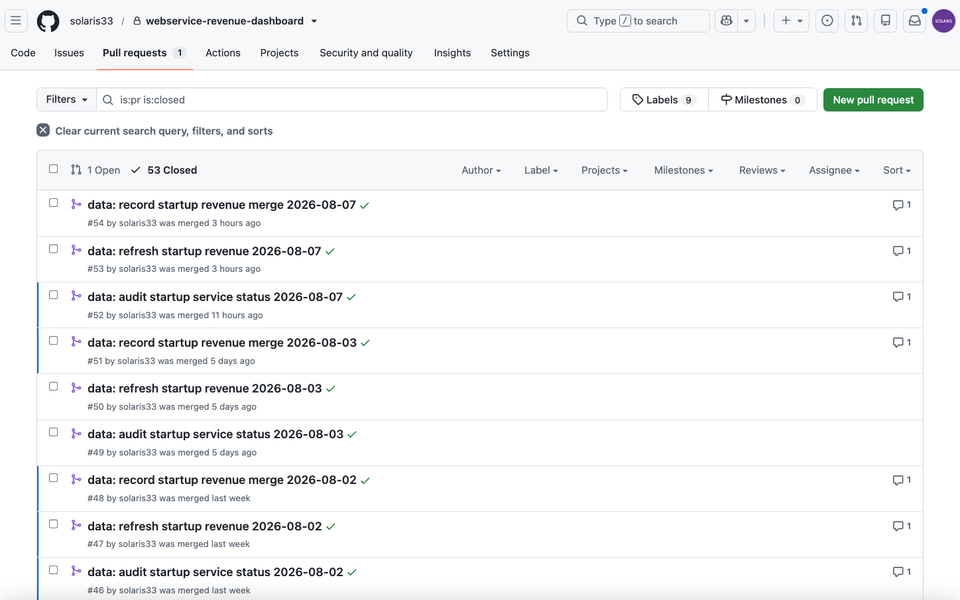
Point 1. Building a 24-hour self-improving loop
Do you want to create a service that improves itself even while you sleep? Through Loop Engineering using Codex, you will learn how to build an automation system that runs 24/7 without human intervention. Beyond simple repetitive tasks, you can directly design a system where AI performs work, verifies results, and improves on its own.
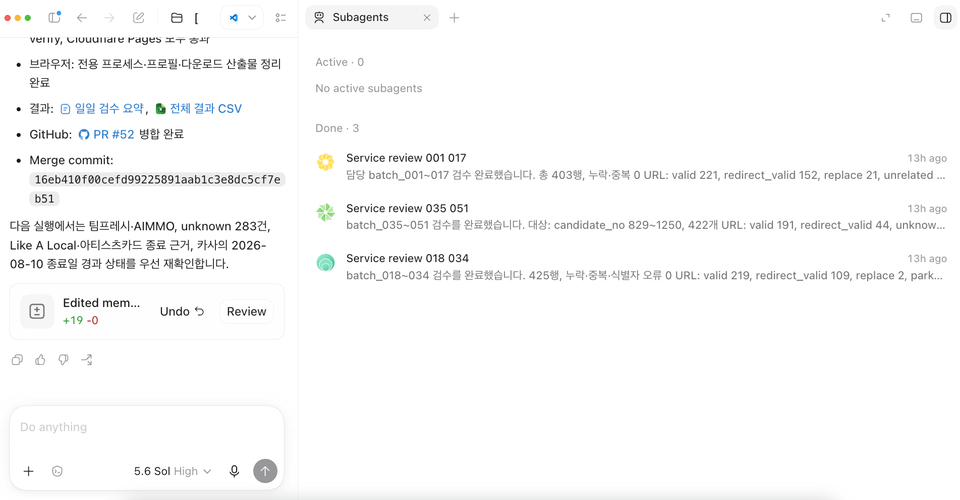
Point 2. Multi-AI Agent Collaboration Design
Design a loop engineering structure where multiple AI agents divide and process complex tasks. You can gain experience in implementing multi-agent systems as actual projects, where various AI agents share roles to conduct research, development, and inspection.
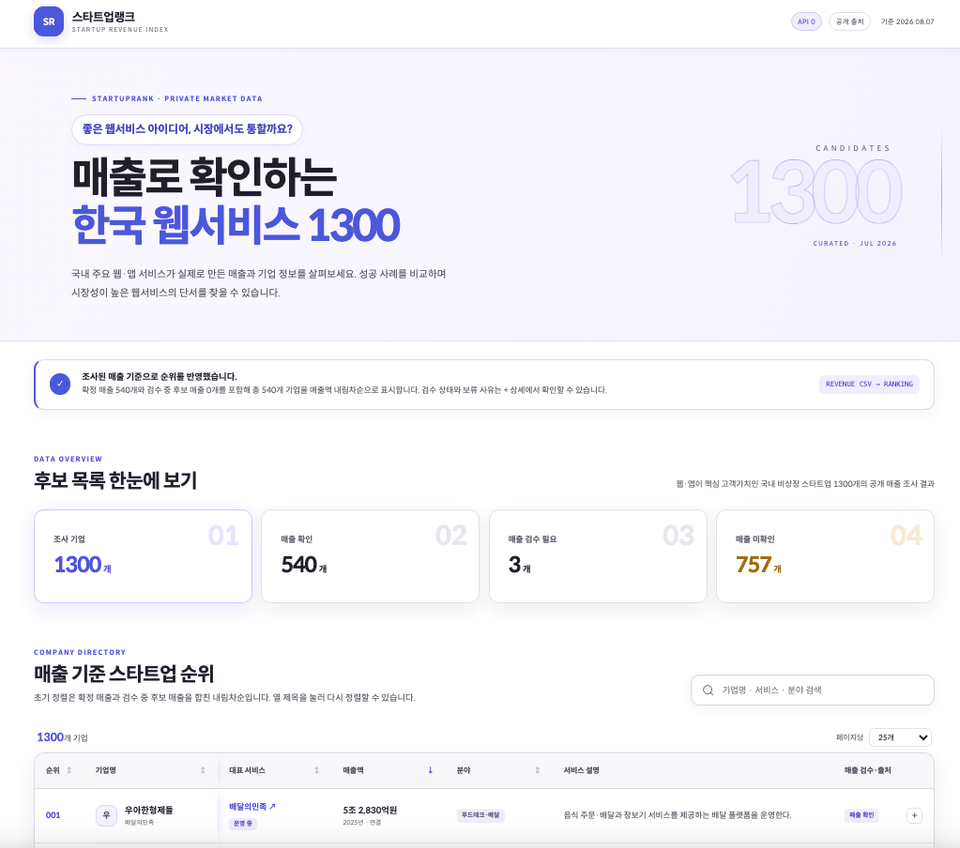
Point 3. Complete 4 Real-World Projects
You will complete actual deployable automated web services, such as a public disclosure calendar, a web service revenue dashboard, a featured stock analyzer, and a lowest-price search engine. Each project utilizes tech stacks used in practice, including GitHub, Python, NodeJS, and Cloudflare, and you will personally practice everything from step-by-step implementation to setting up automation loops and project deployment.
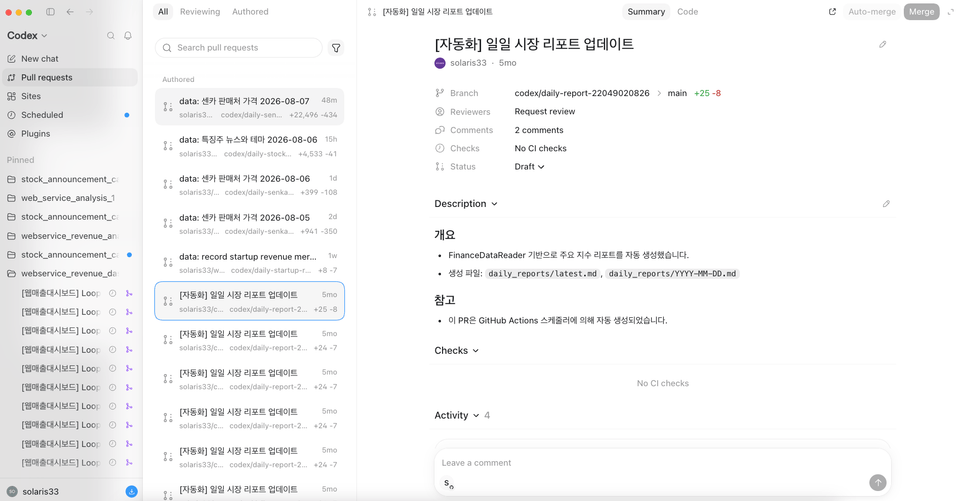
Point 4. Leveling up your Codex usage skills
Even with the same Codex, productivity varies depending on how you use it. Maximize your productivity by learning how to utilize Codex not just as a simple coding assistant, but as a 24-hour automation agent that performs tasks and verifies results on its own.
✔️ Office workers dreaming of automating repetitive tasks
Those who are tired of repetitive daily tasks such as data collection and inspection
Those who want to create an AI agent that operates 24/7 using Codex
Those who want to learn how to build automation systems that can maximize work productivity
✔️ Developers who want to enhance their AI agent development capabilities
Those who want to experience developing AI agents that go beyond simple coding tools to work and improve on their own
Those who want to develop the ability to design and implement multi-agent systems where multiple AI agents collaborate.
Those who want to personally design Loop Engineering structures and apply them to actual services
✔️ Those who want to create their own automated web services
Those who want to personally build deployable automated web services such as disclosure calendars, sales dashboards, featured stock analyzers, and lowest price trackers.
Those who want to gain experience in efficient project management using GitHub
Those who want to experience the entire automation system development process, from planning to implementation and deployment.
Q1. Can I follow along even if I don't know how to code at all?
Yes, it is possible.
In this course, we will follow the Vibe Coding method, where you create projects by conversing with Codex through Korean natural language prompts rather than writing code yourself.
Even when errors occur or modifications are needed during the project, instead of manually editing the code, we will explain how to have Codex analyze and resolve the issues.
Therefore, you can follow the course even if you do not have knowledge of programming syntax or the ability to write code yourself.
Q2. Are there any prerequisites or required knowledge?
This course covers how to build a Vibe Coding system where Codex works automatically 24 hours a day using Loop Engineering techniques.
Therefore, you will be able to learn more easily if you are familiar with the basic usage of Codex and the vibe coding method.
If you are new to Codex or not yet familiar with Vibe Coding, we recommend taking the prerequisite course,
[Learning OpenAI Codex through Projects - From Basics to Advanced Vibe Coding with AI]
it is recommended to take that course first.
Who is this course right for?
Those who want to automate repetitive data collection, research, and inspection tasks.
Those who want to utilize Codex not just as a simple coding tool, but as a 24-hour automated agent that performs tasks and verifies results on its own.
Those who want to implement a multi-agent system, where multiple AI agents divide roles to research, develop, and inspect, into a real project.
Need to know before starting?
Willingness to acquire the latest AI technologies
Experience taking the prerequisite course [Learning OpenAI Codex through Projects - From Basics to Advanced Vibe Coding using AI]

10,463
Learners
908
Reviews
366
Answers
4.6
Rating
33
Courses
All
48 lectures ∙ (10hr 44min)
All
3 reviews
4.0
3 reviews

Reviews 39
∙
Average Rating 4.6
5
At first, the theory behind Loop Engineering was explained concisely while highlighting the key points, which made me look forward to the hands-on section that followed. However, once I entered the practical section, it was conducted in a live-coding format, making it difficult to fully concentrate on the lecture content. So I let go of trying to follow along with every step as I had during the theory section and listened more casually. In doing so, I came to feel that this lecture was less about teaching a technology step by step and more about showcasing practical use cases. If you are interested in topics such as disclosure calendars, web service revenue dashboards, or notable-stock analysis, or if you work in a related field, this lecture would be a good opportunity to learn how to use the Codex tool to handle actual work more efficiently. On the other hand, if you are studying AI concepts one by one from a technical perspective, it may be best to approach this lecture as a chance to glimpse how the concepts you have learned can be applied in practice.

Reviews 1
∙
Average Rating 4.0
4
Overall, I am satisfied with the content. The course provides detailed instruction on how to carry out projects using Codex and how to collect repetitive data using loops. However, I wish the lectures had been better prepared. The instructor’s way of speaking, using expressions like “~~gu” and “~~de,” does not inspire confidence in the lectures. In addition, there are many parts during the course where the screen is scrolled up and down without any explanation. The instructor also checks the values output by Codex during the lecture. It would be easier to follow the course if the content were reviewed in advance and then explained. Although I have listed some complaints, the course was still very helpful to me.

Reviews 4
∙
Average Rating 4.0
Check out other courses by the instructor!
Explore other courses in the same field!
Limited time deal ends in 4 days
$1,296,675.00
29%
$68.20






![[Chuseok Special] An LLM Evaluation Harness Engineering Guide from a Silicon Valley DeveloperCourse Thumbnail](https://cdn.inflearn.com/public/files/courses/343194/cover/01m34cgavc7y9g7nwxe347vnqt?w=420)
![[Vibe Coding] Google AntiGravity Master Class - BasicCourse Thumbnail](https://cdn.inflearn.com/public/files/courses/339694/cover/01keh7jfnxbx3jeazjsxe75xdj?w=420)
![[Integrated] Vibe Coding for Beginners + Complete Practical App DevelopmentCourse Thumbnail](https://cdn.inflearn.com/public/files/courses/342986/cover/01kwkcfpxw9bwfvp6018ap5w1n?w=420)
![Creating a Second Salary with AI Design in 20 Minutes a Day [Image Edition]Course Thumbnail](https://cdn.inflearn.com/public/files/courses/337366/cover/01jzq6s1wdsd0c35ksbam6rbna?w=420)