Learning Vue.js by Selecting the Essentials
sucoding
Vue.JS, a must-learn for front-end beginners!! Let's delve into Vue.JS from the basics to advanced levels!
Basic
Vue.js, Vue 3, pinia
This is an introductory course designed by SuCoding, an IT author and coding creator, using a stable learning method that ensures even non-majors can complete it without frustration. We have boldly removed complex theories and selected only the essential syntax to deliver a practice-oriented experience. Even if you are starting to code for the first time, by following the lecture to the end, you will be able to create your own programs using Python.
18 learners are taking this course
Level Beginner
Course period Unlimited
You can directly install and configure a Python development environment (such as VS Code).
I can read and write core Python syntax, such as variables, conditional statements, and loops, on my own.
You can structure your code for reuse by creating your own functions.
Data can be handled using data structures such as lists and dictionaries.
You can develop the ability to debug directly by reading error messages.
I can complete a simple program from scratch by myself using Python.
Afterward, students will build the fundamental strength to continue advanced learning in areas such as data analysis, automation, and AI.
Python that is easy to understand even for non-majors
🛩 Step 1 of Sukoding's AI Roadmap Series! 🛩
Bestseller in the field of introductory front-end development
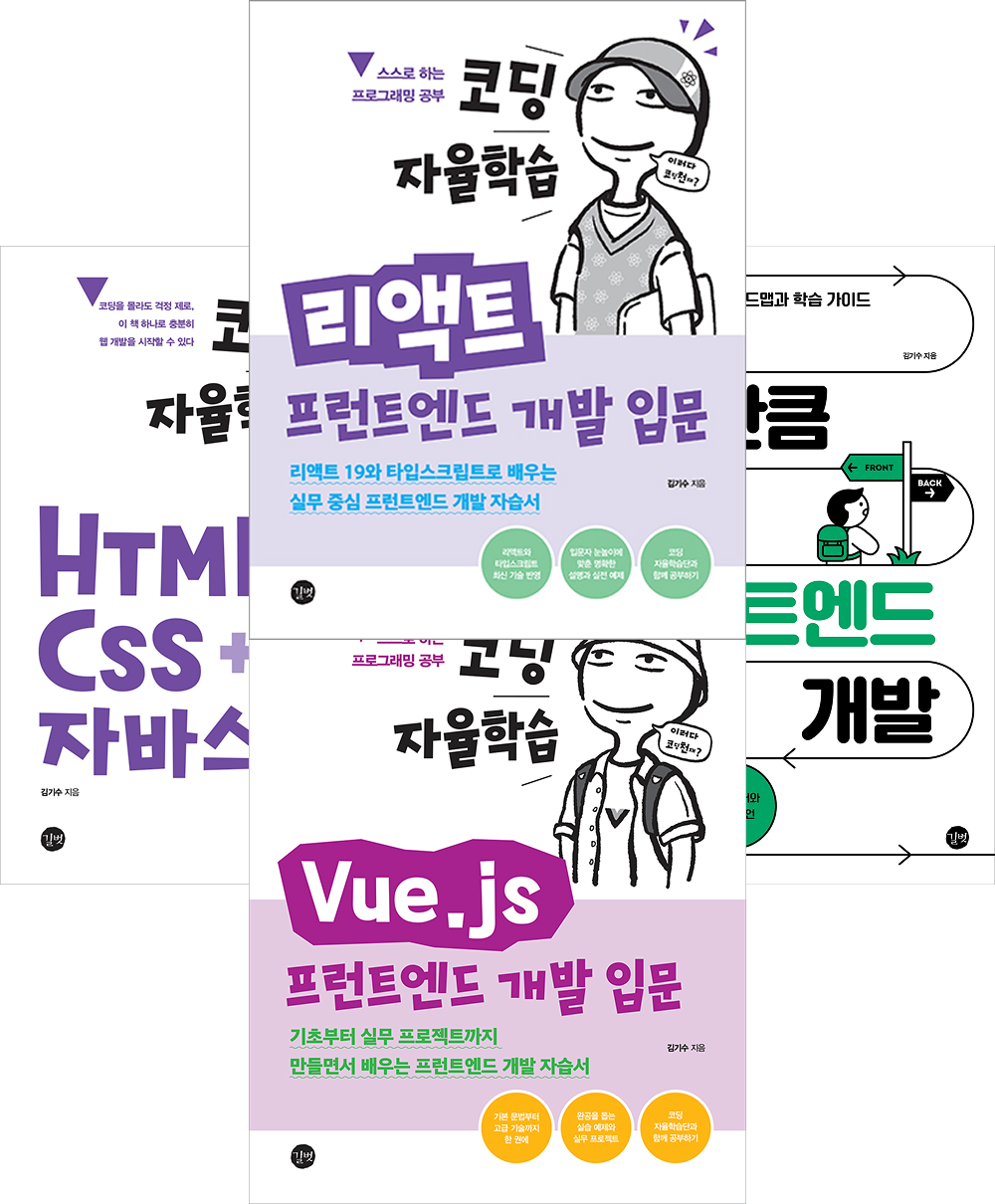
2022 "Coding Self-Study: HTML+CSS+JavaScript" published! 🎉
2023 "Front-end Development: You See as Much as You Know" published! 🎉
2024 "Coding Self-Study: Vue.JS" published! 🎉
2025 "Coding Self-Study: React" published! 🎉
Sucoding is an active author who has written on various fields of front-end development.
All published books are bestsellers. 😎
This is a special course created by Sucoding, a leader in front-end lectures!
Python is known for its concise syntax and ease of learning, but when you actually start studying on your own, you often find yourself unsure of things like "why this works," "where to use variables," or "how to create and when to use functions."
In this course, we will learn by carefully selecting only the 👉 core concepts that those learning Python for the first time must know. Rather than just listing theories, we focus on understanding "why it works this way" while actually writing code.
We don't just skip over confusing concepts; we go through them starting from the core principles.
Understanding the basic structure of Python, including variables, data types, and outputting values
Characteristics and usage of string, numeric, and boolean data types
Controlling flow with conditional statements (if/elif/else, match) and loops (while, for)
Collection data types such as lists, tuples, and dictionaries, and practical patterns
Accurate understanding of function definitions, parameters, return values, and scope
Mastering advanced patterns with closures and decorators
Introduction to Object-Oriented Programming through classes, objects, and inheritance
How to structure code with modules and packages
Writing safe and robust code with exception handling
It is structured around core topics that bridge the gap from Python basics to practical application.
Through this, even complete beginners can clearly understand Python's data flow and execution structure, growing into developers who can explain for themselves "why this code works this way."
This is a course that builds a foundation for you to truly understand and utilize Python,
rather than just saying you've "used" it. 🚀
Python is said to be an easy language to learn, but when you first encounter it, it can feel difficult due to unfamiliar concepts such as variables, data types, functions, and classes.
"Why does this code work like this?" "When should I create a function, and why do we use classes?" If it's your first time, it's natural to be confused. Don't worry!
In this course, we explain everything step-by-step from the very basics, following a natural flow so that even those new to Python can easily understand.
How data is stored and processed
how to control the flow of a program using conditions and loops
what roles functions and classes play and when to use them
I will explain it in a way that allows you to visualize it in your head, just like a picture.
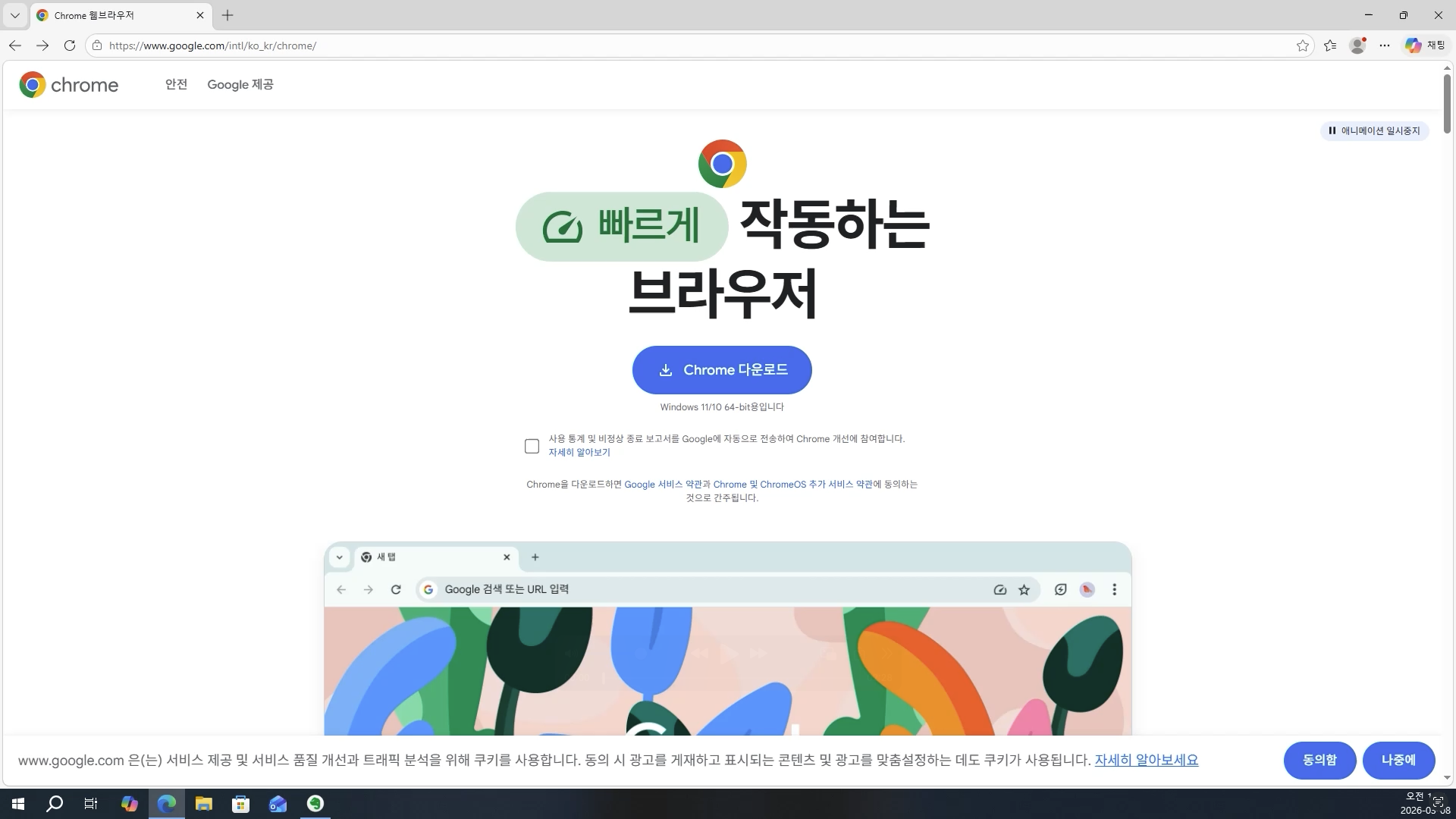
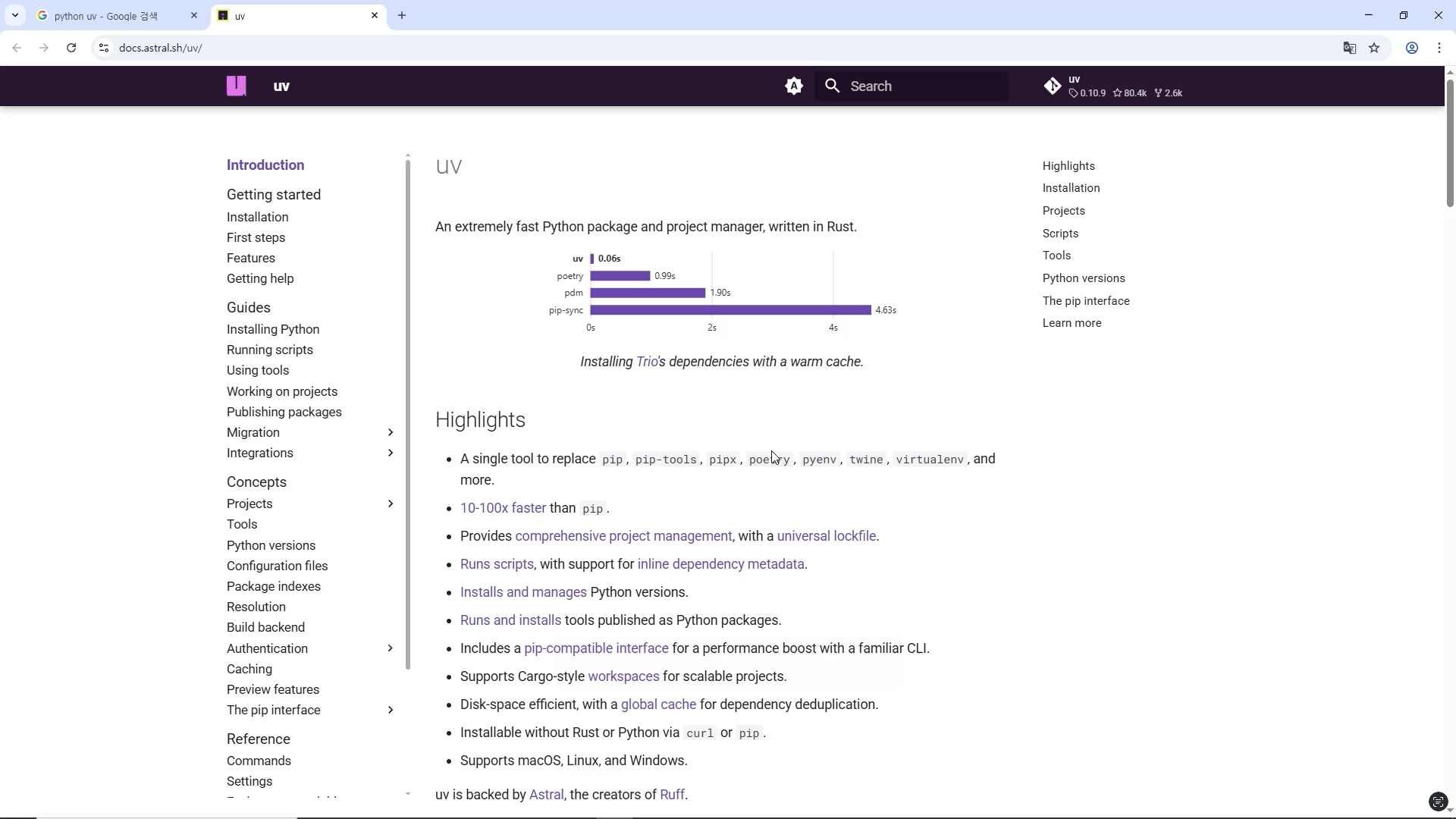
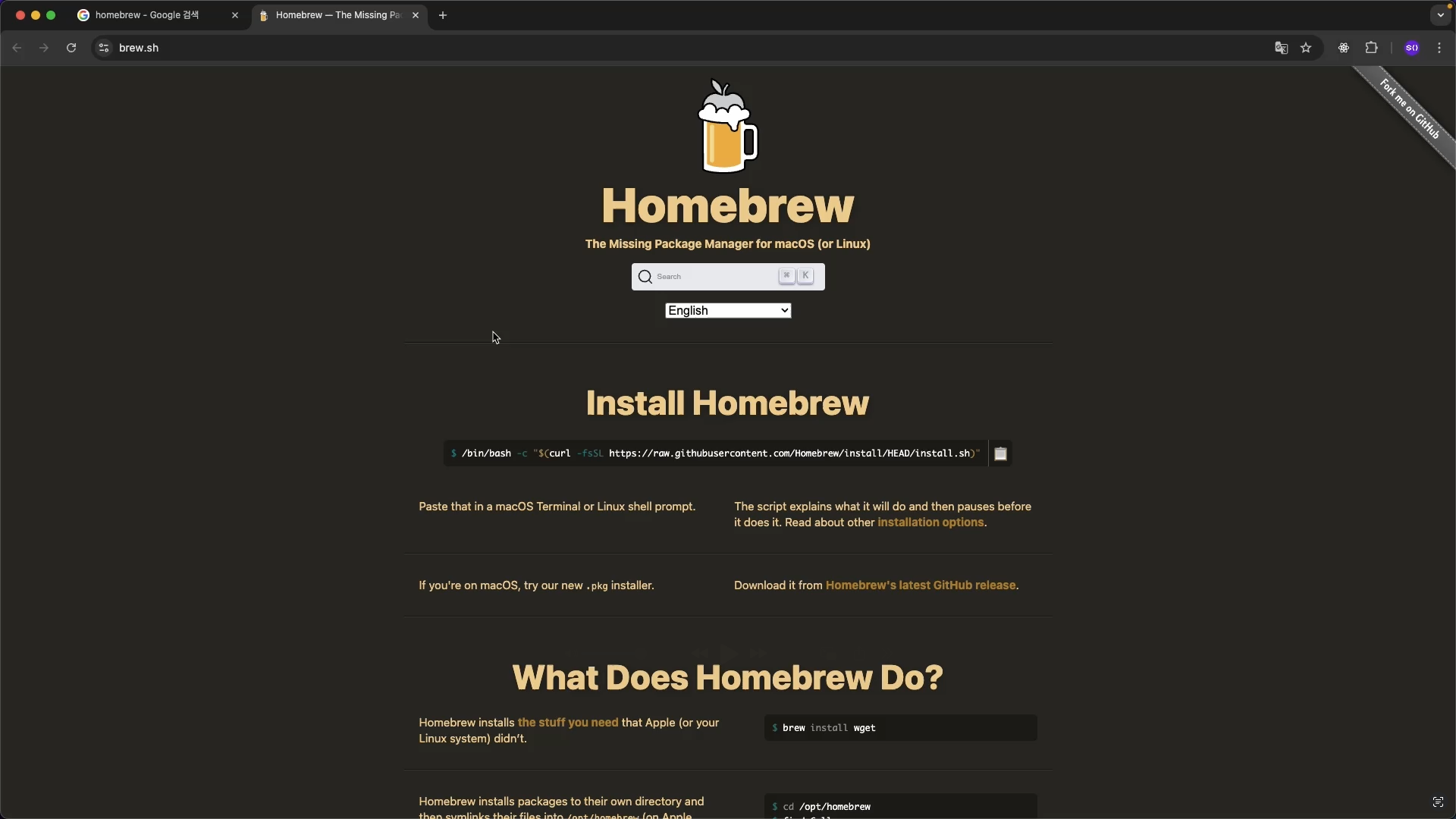
In this section, before diving into the actual practice, we will go through the basic preparations for taking the course. We will cover everything from installing the Chrome browser, Node.js, and VSCode to configuring extensions optimized for Python development, and the installation method for UV, a modern Python version management tool, all based on the Mac environment.
In this section, we will proceed with the basic development environment setup for taking the course in a Windows environment. We will provide step-by-step guidance for Windows, including the installation of the Chrome browser, Node.js, and VSCode, as well as the extension configuration required for Python development and the UV installation method.
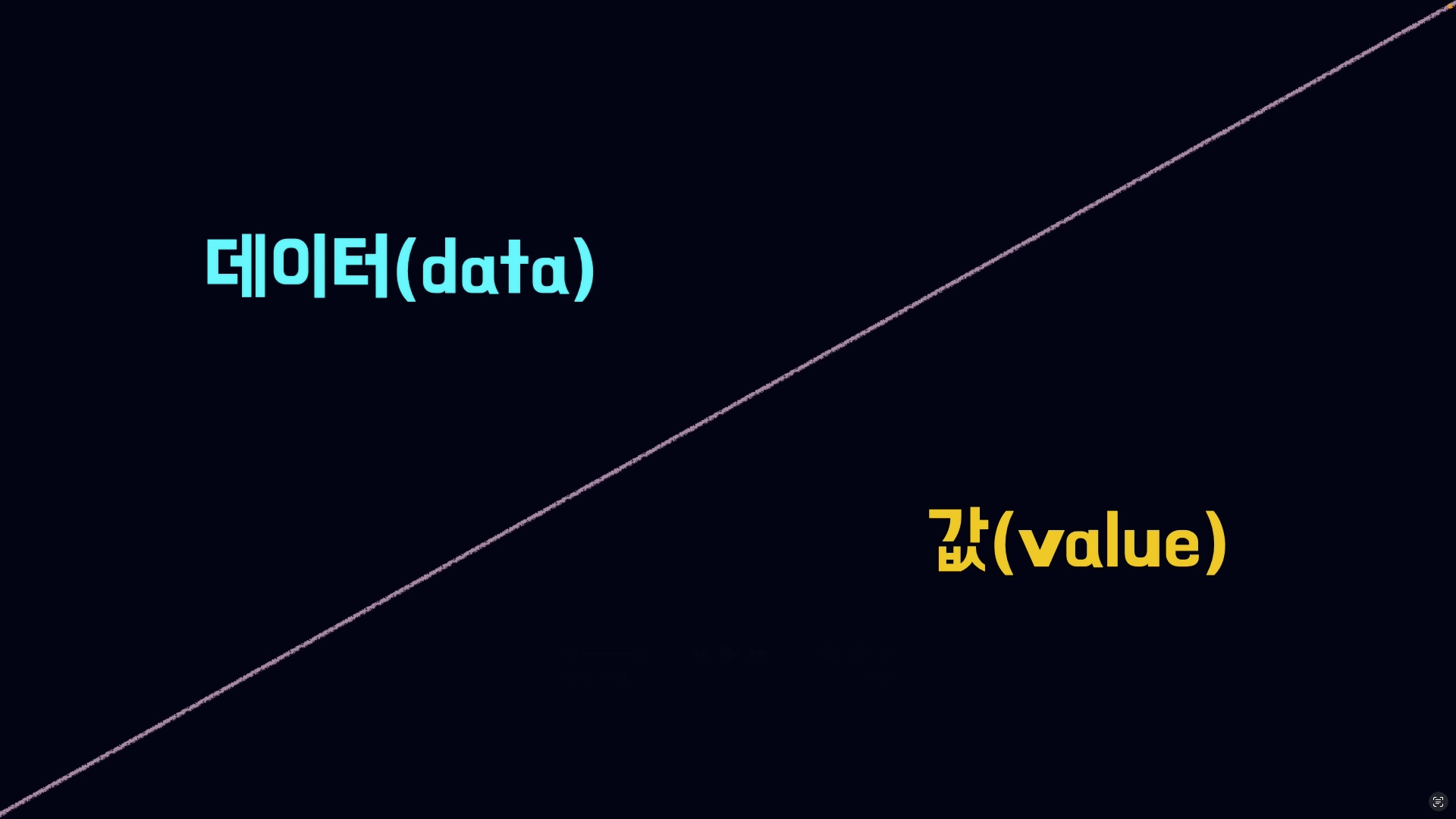
In this section, we will explore the concepts of Python step-by-step from the beginning and cover the process of actually running code. After learning how to create and run a Python project, we will organize the essential core terms for understanding Python, such as data, values, variables, and comments, along with hands-on practice.
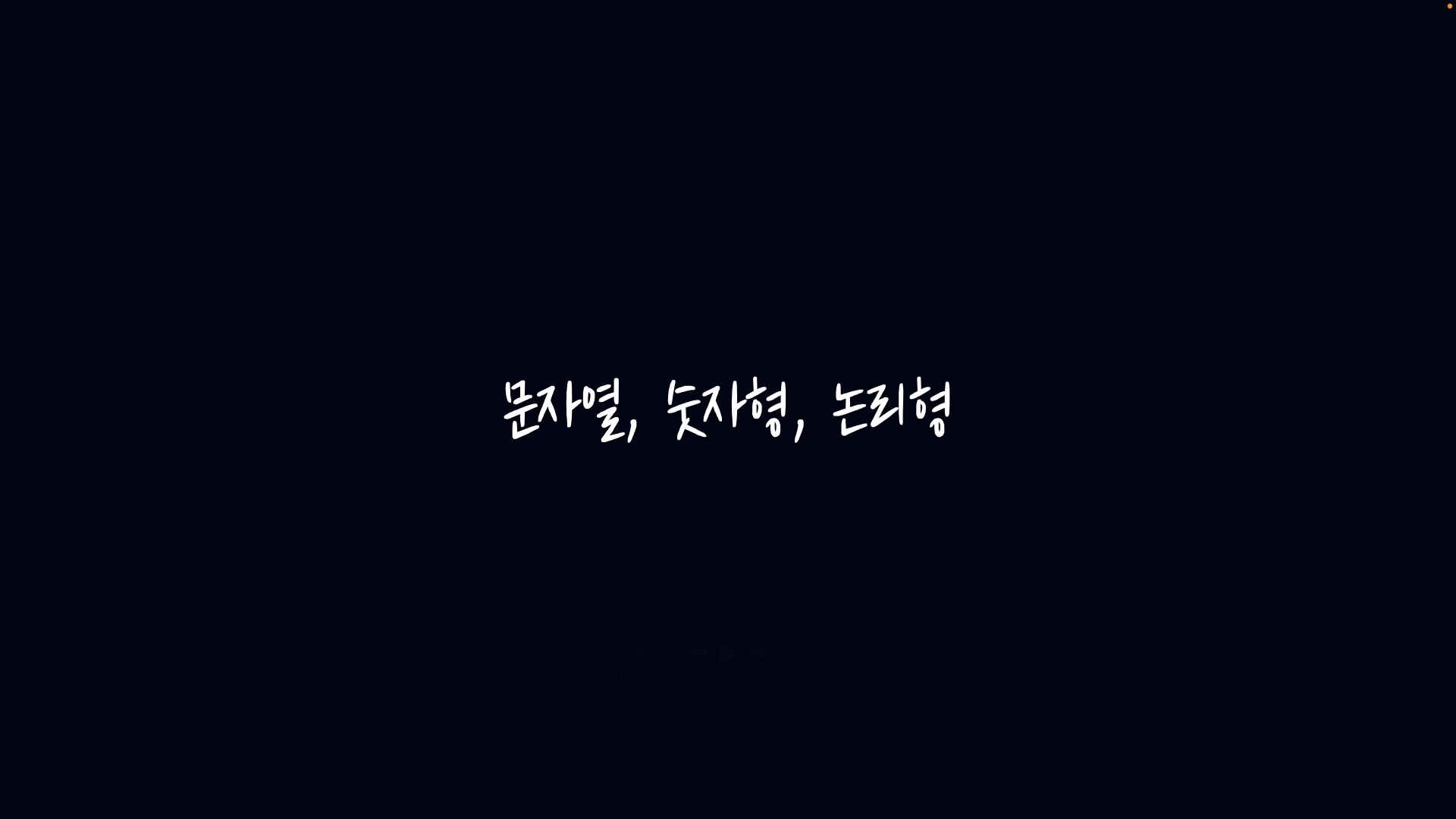
In this section, you will learn about data types, which are the foundation of how Python handles data. We will examine the concepts and characteristics of string, numeric, boolean (bool), and None data types, and summarize how to actually use each one. At the end of the section, you can check what you have learned through missions and solutions.
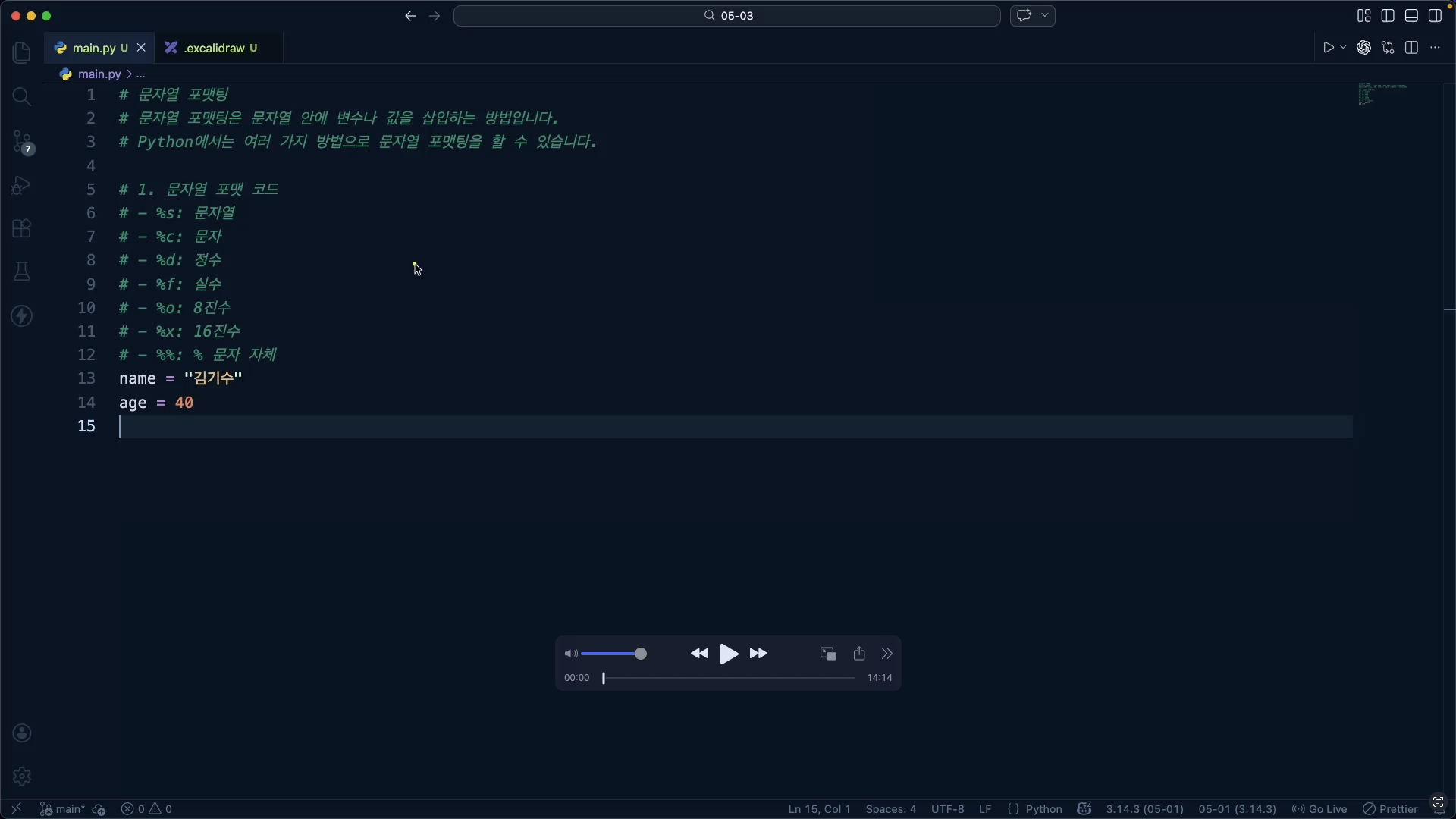
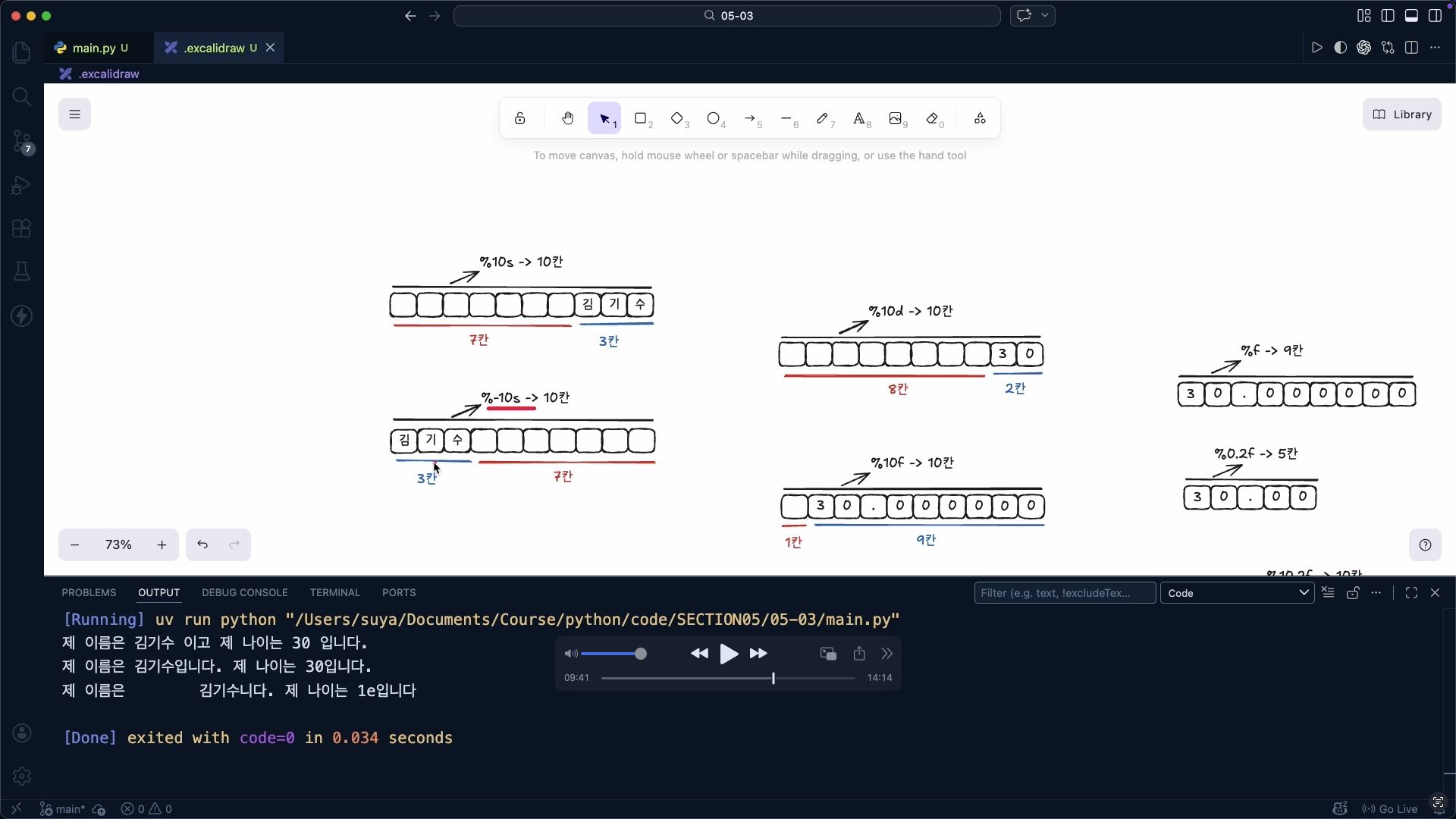
In this section, we cover how to receive input from users and output it in the desired format. We will summarize the characteristics of each method by comparing input processing using input(), the concept of type conversion, and various string formatting methods such as format codes, format(), and f-string.
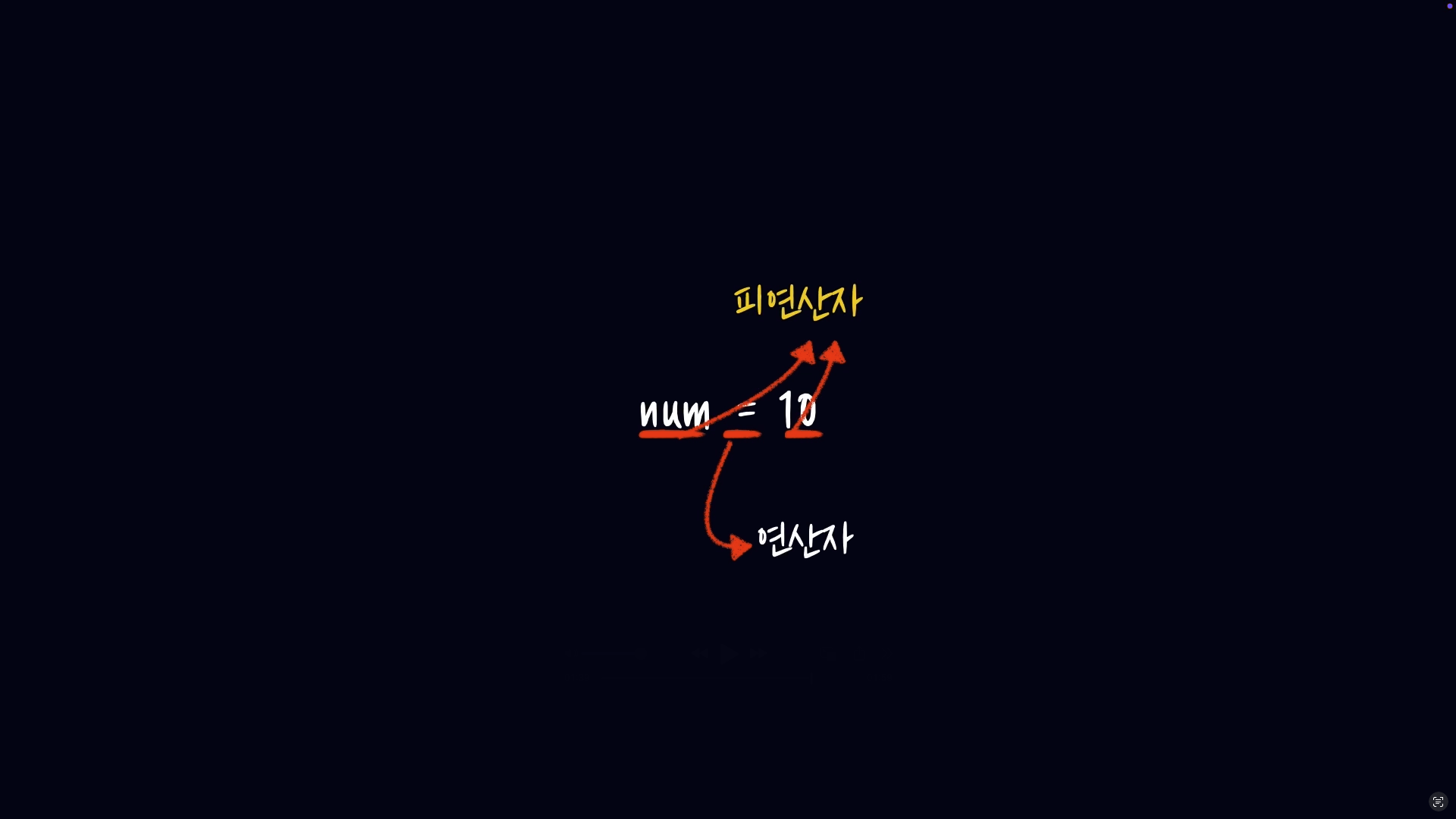
In this section, you will learn about the various types of operators and how they work in Python. We will examine arithmetic, string, comparison, logical, assignment, and compound assignment operators, as well as unary operators, in order. We will also clearly outline operator precedence to understand the order in which calculations are performed when multiple operators are used together.
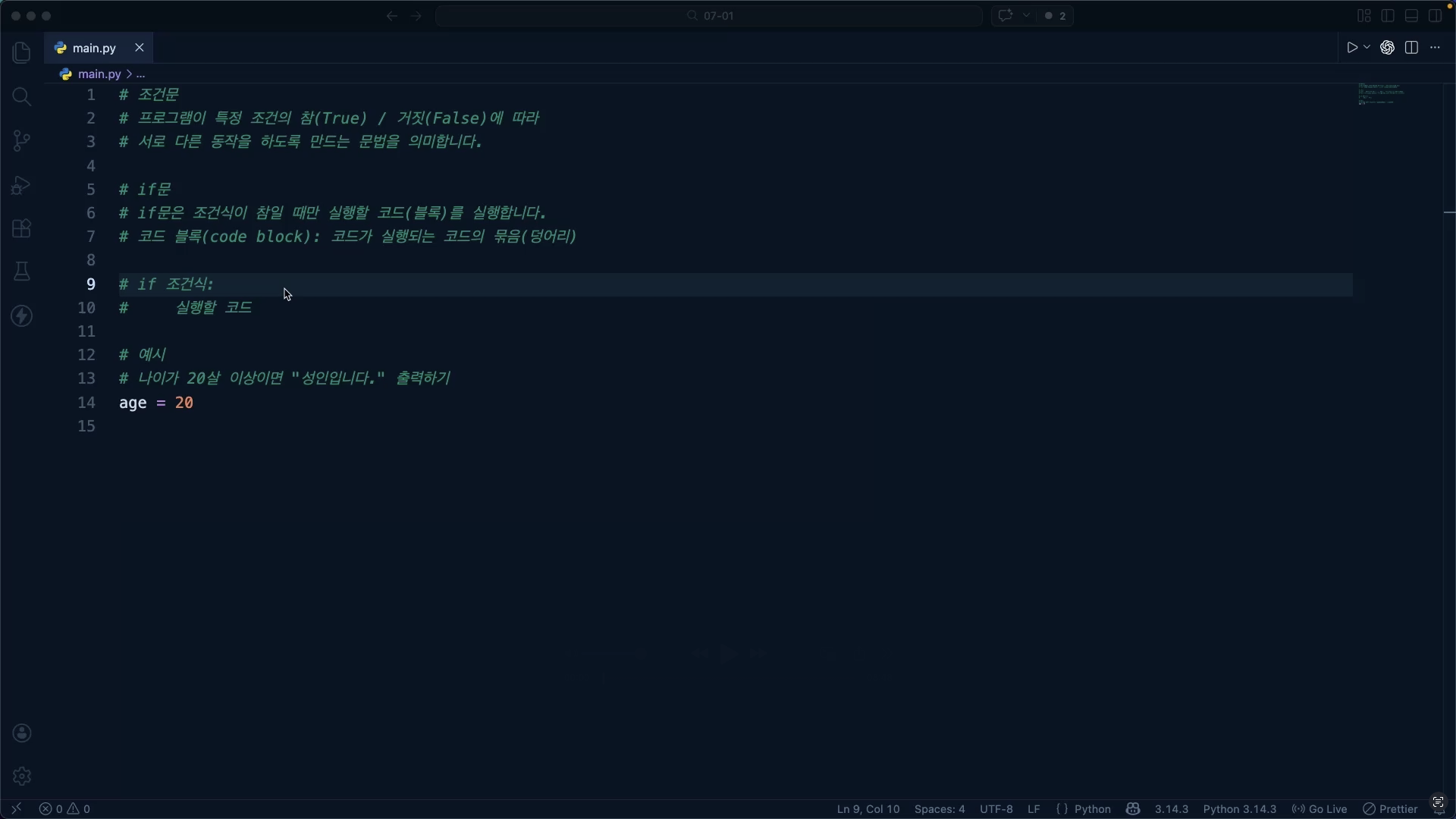
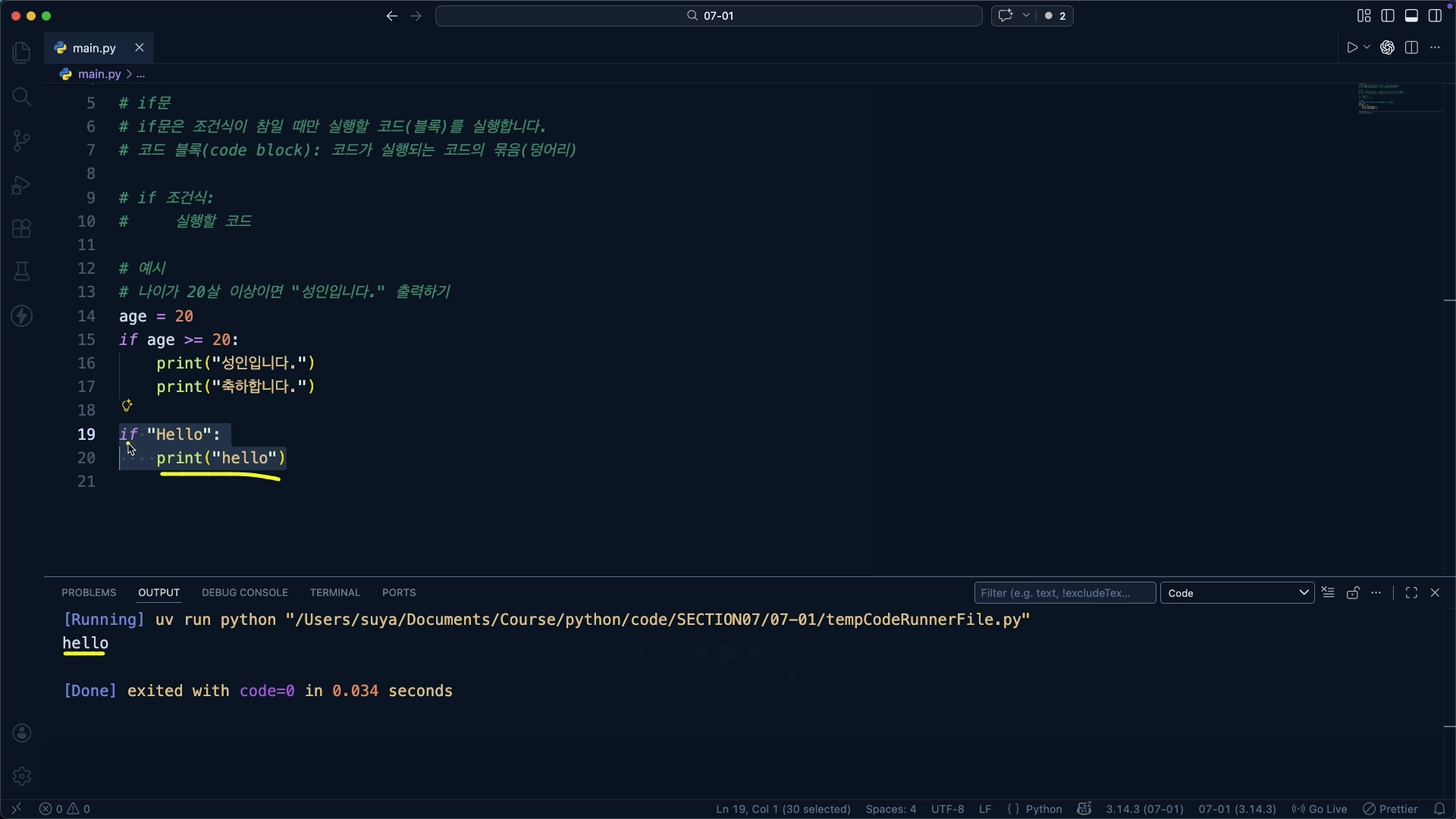
In this section, you will learn about conditional statements and loops that control the flow of a program. We will cover how to handle conditions using if / elif / else, conditional expressions, and match, as well as how to repeatedly execute code as many times as desired using while / for and nested loops.
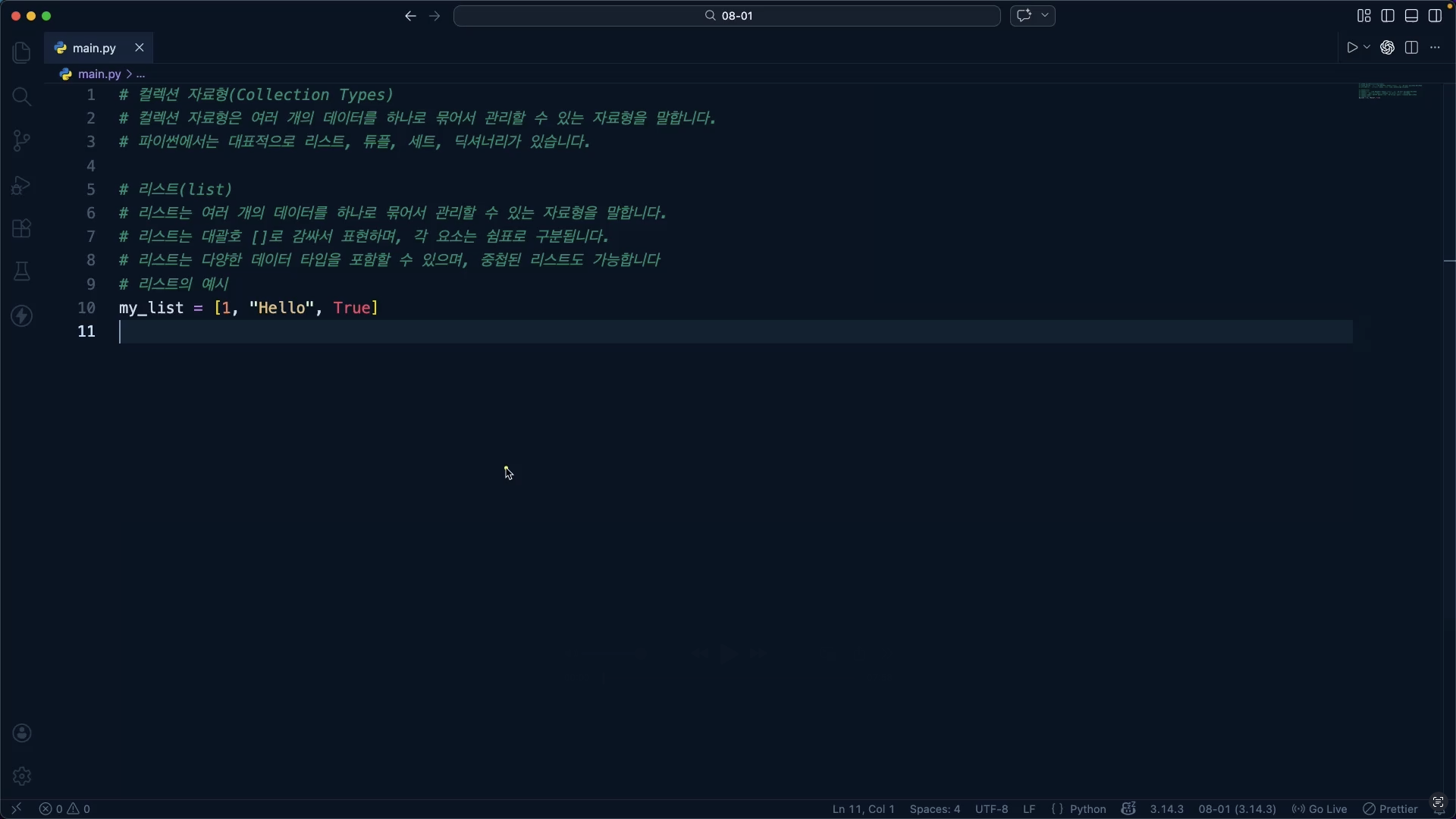
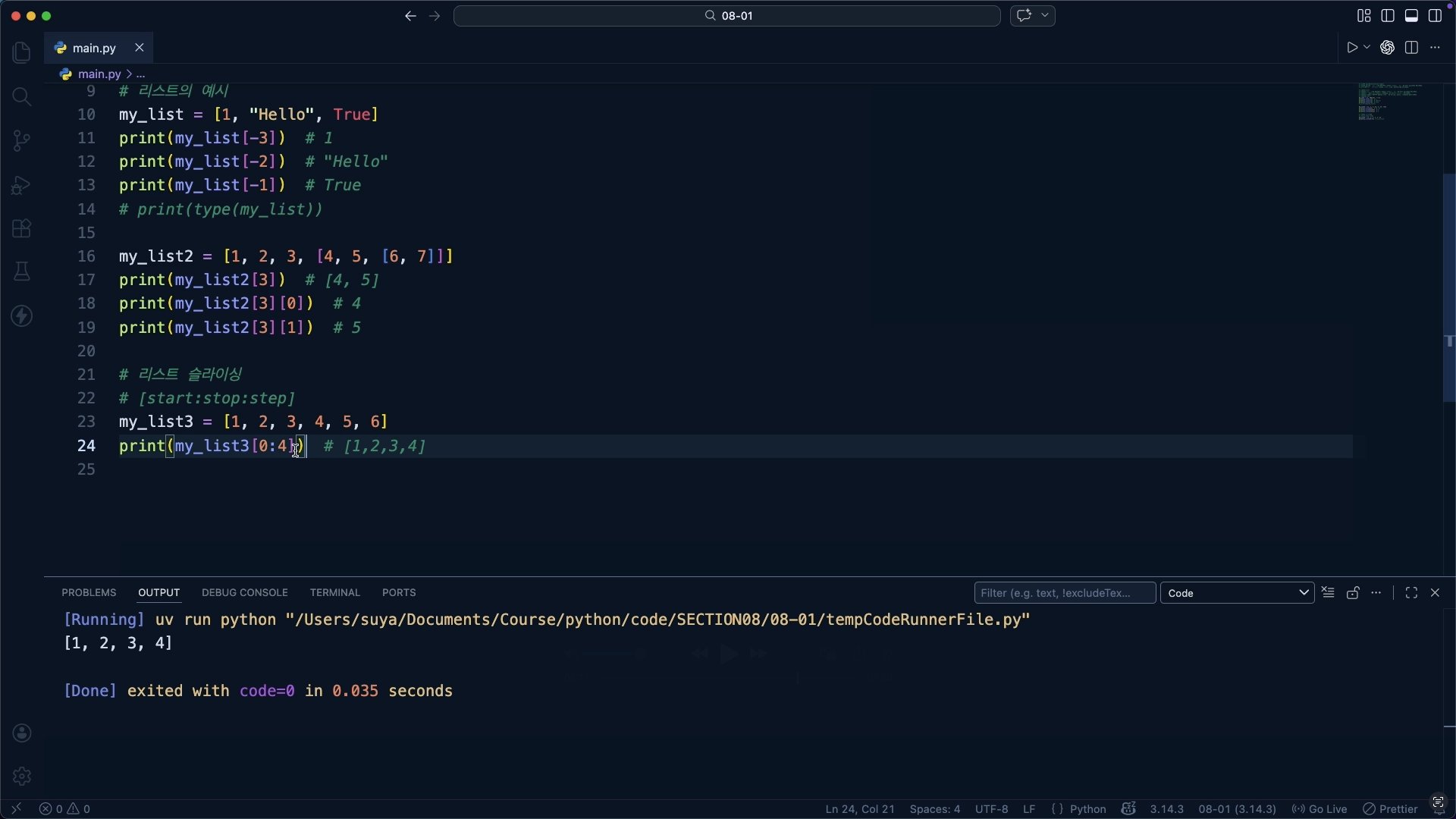
In this section, you will learn about collection data types that allow you to group and manage multiple pieces of data. We will explore the concepts and methods of lists, tuples, and dictionaries, and provide a step-by-step guide on how to handle collection data in practice by using them alongside conditional and loop statements.
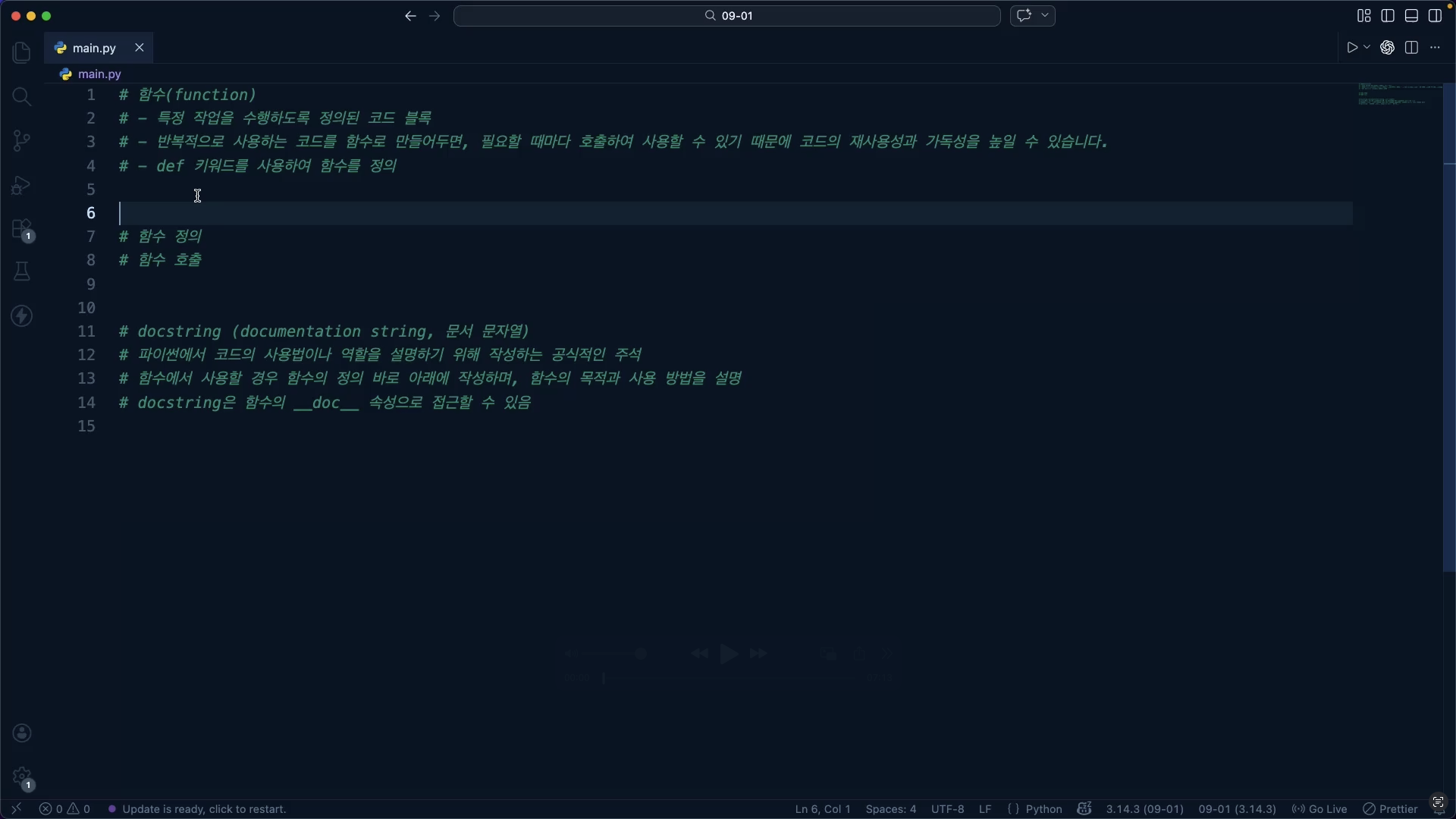
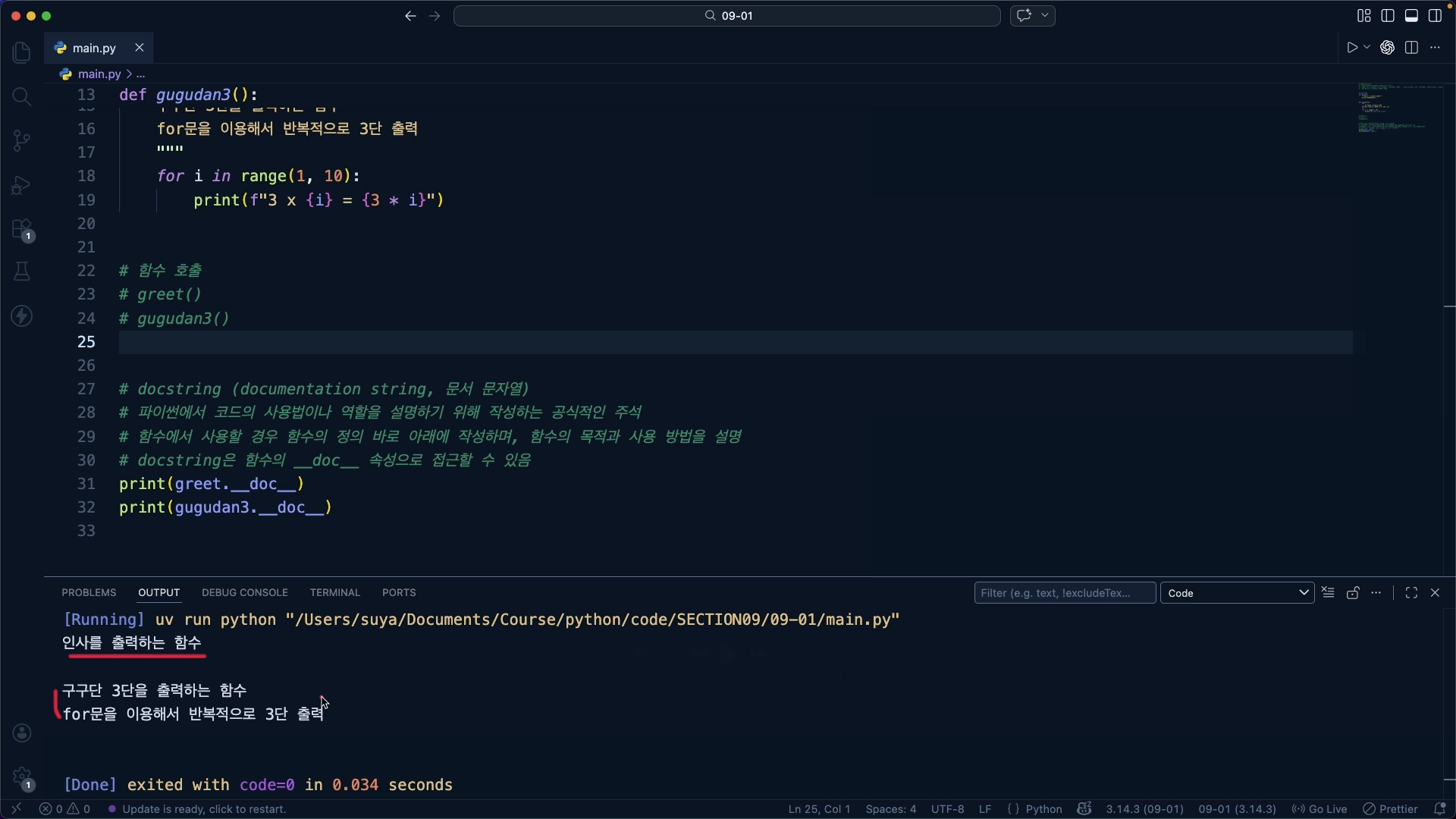
In this section, we cover everything from the basic structure of functions that make code reusable to advanced usage. After understanding parameters, return values, scope, and the operating principles of global / nonlocal, we explain the flow that naturally connects to closures and decorators.
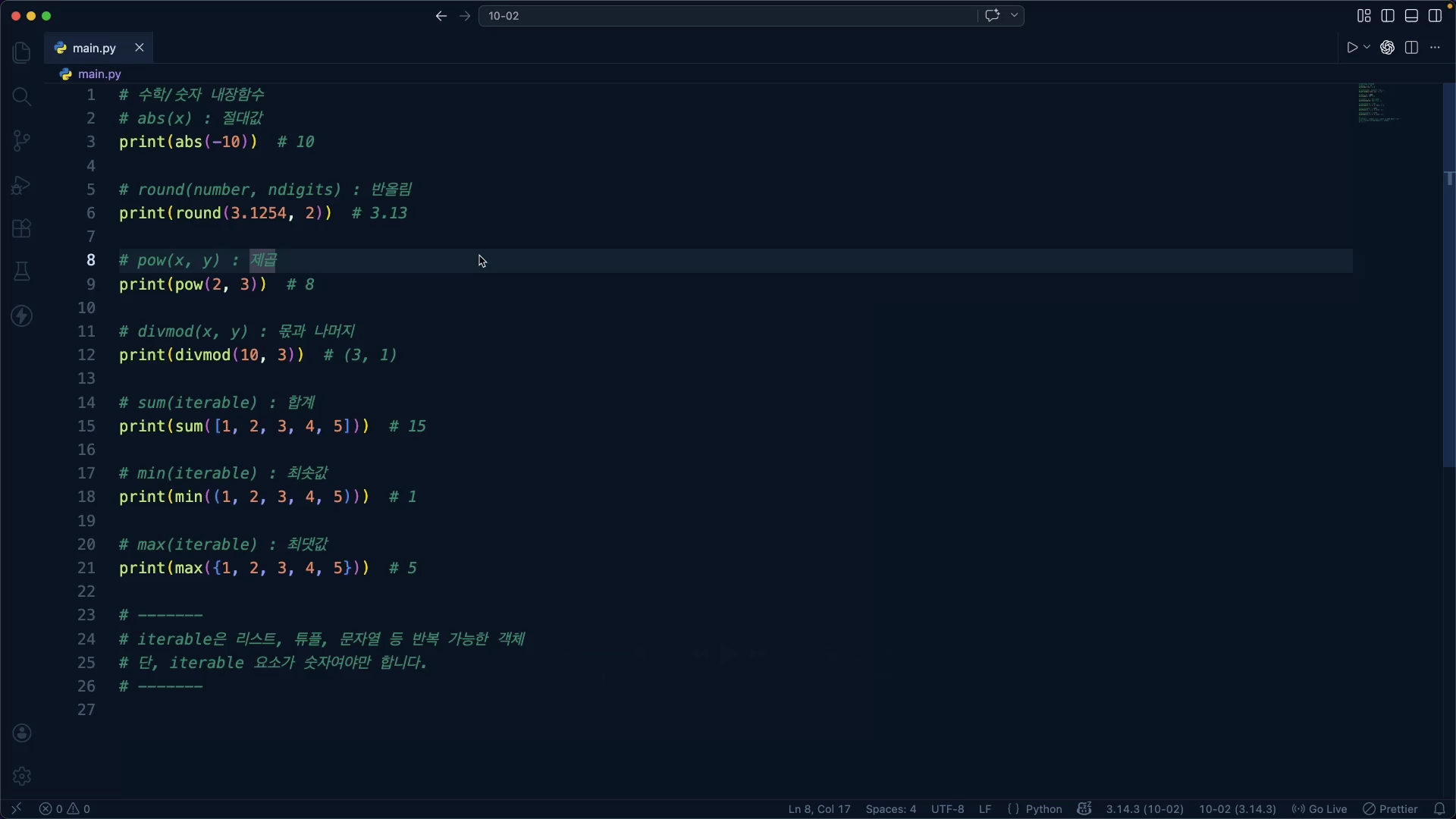
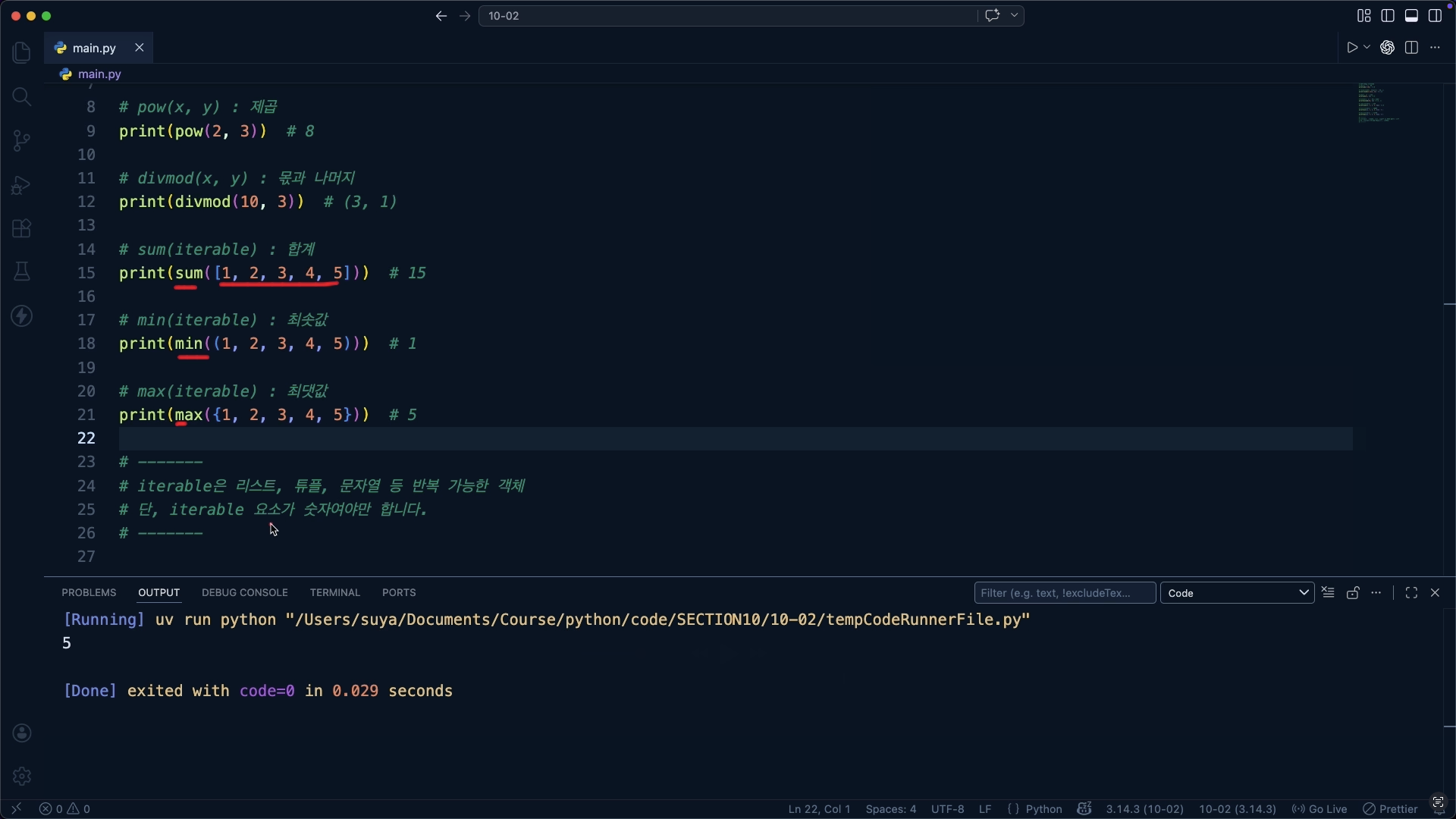
In this section, you will learn about the built-in functions provided by default in Python. We will cover functions frequently used in practice, ranging from the concept of lambda functions to math and number-related functions, type conversion functions, and functions for handling sequences and iterables.
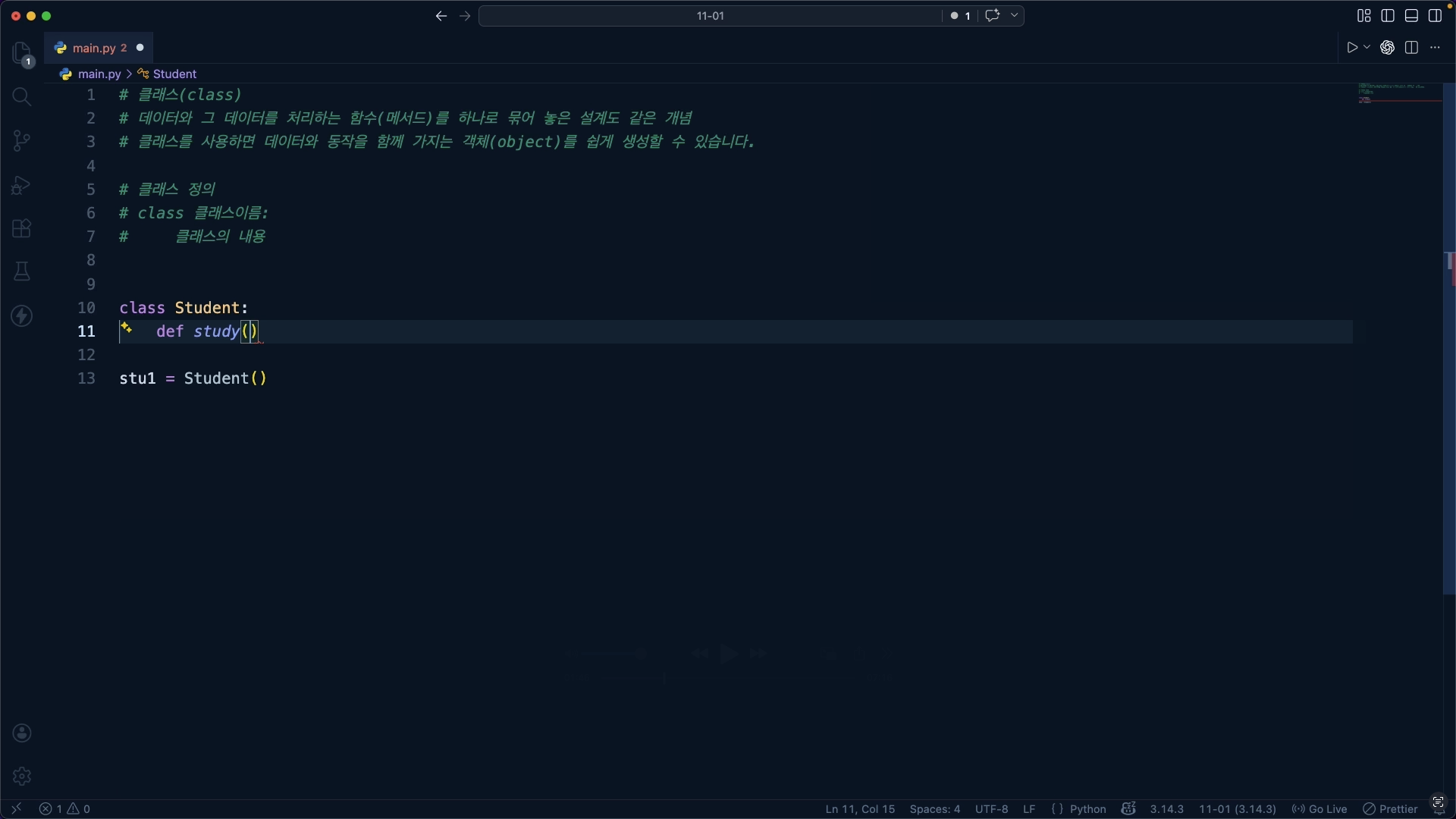
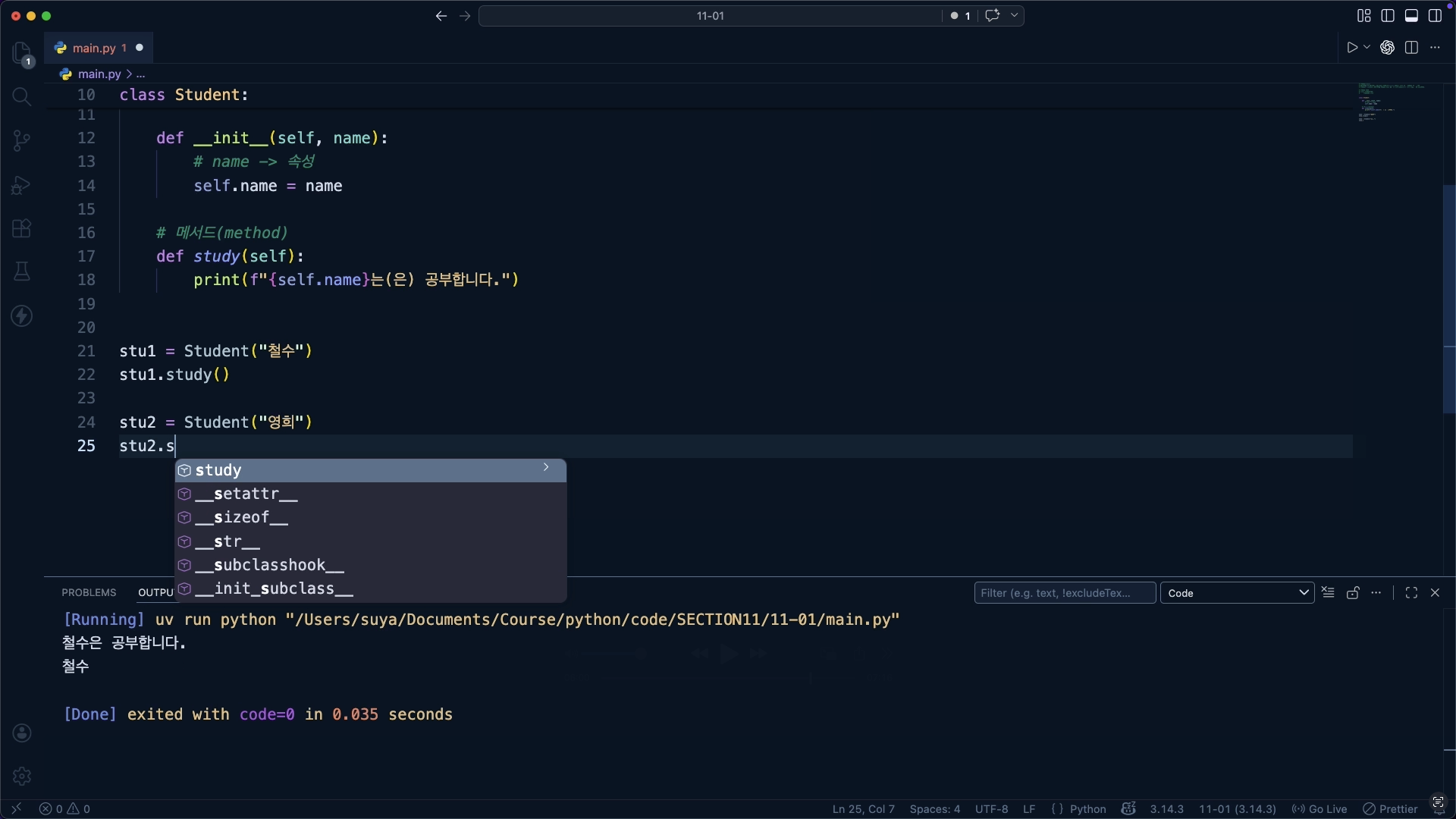
In this section, you will learn about Object-Oriented Programming, one of the core concepts of Python. We will cover everything from defining classes and clearly understanding the differences between instance variables, class variables, and methods, to how to structurally extend code through inheritance. We will also explore the key concept that "everything in Python is an object" in this section.
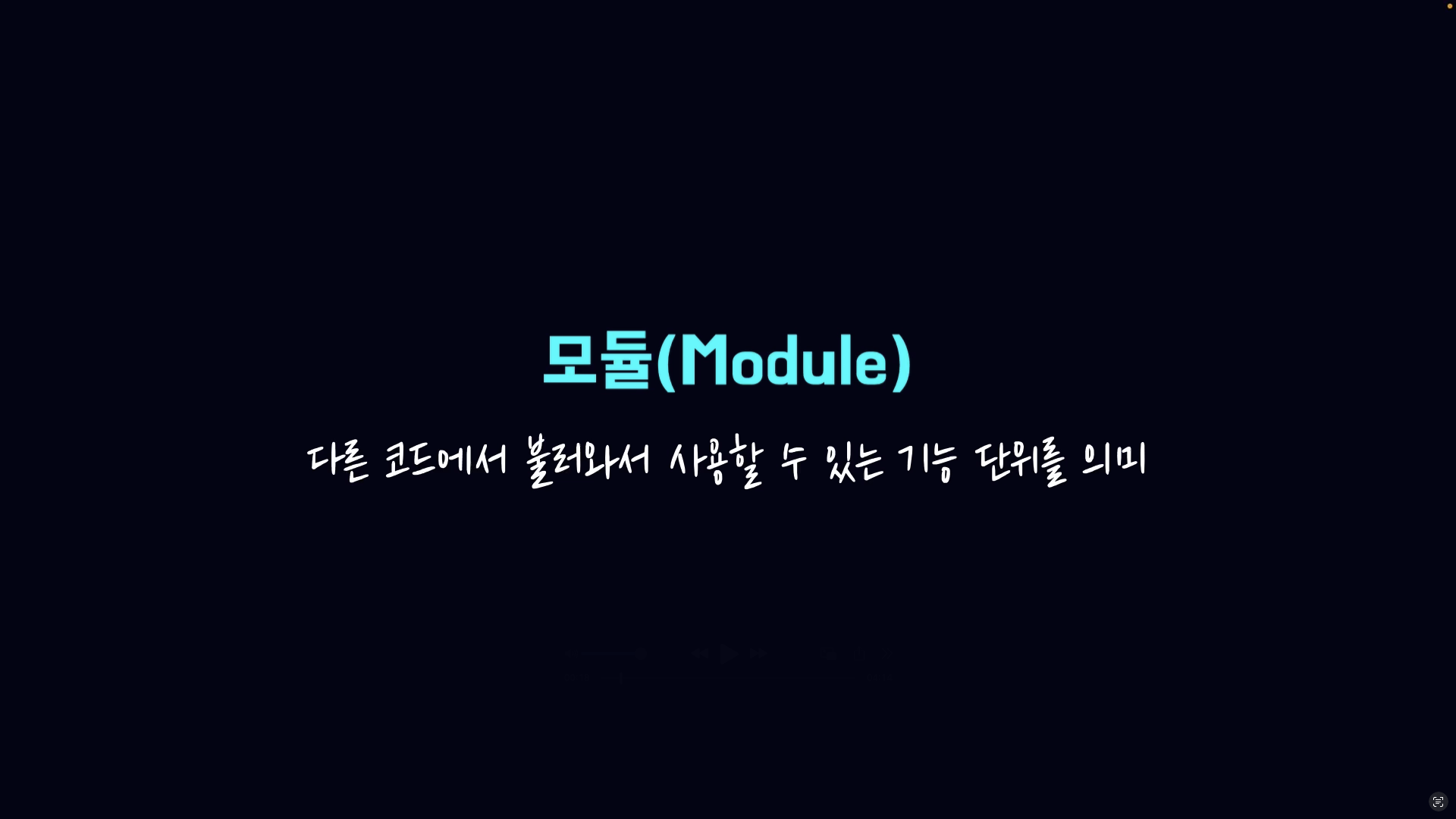
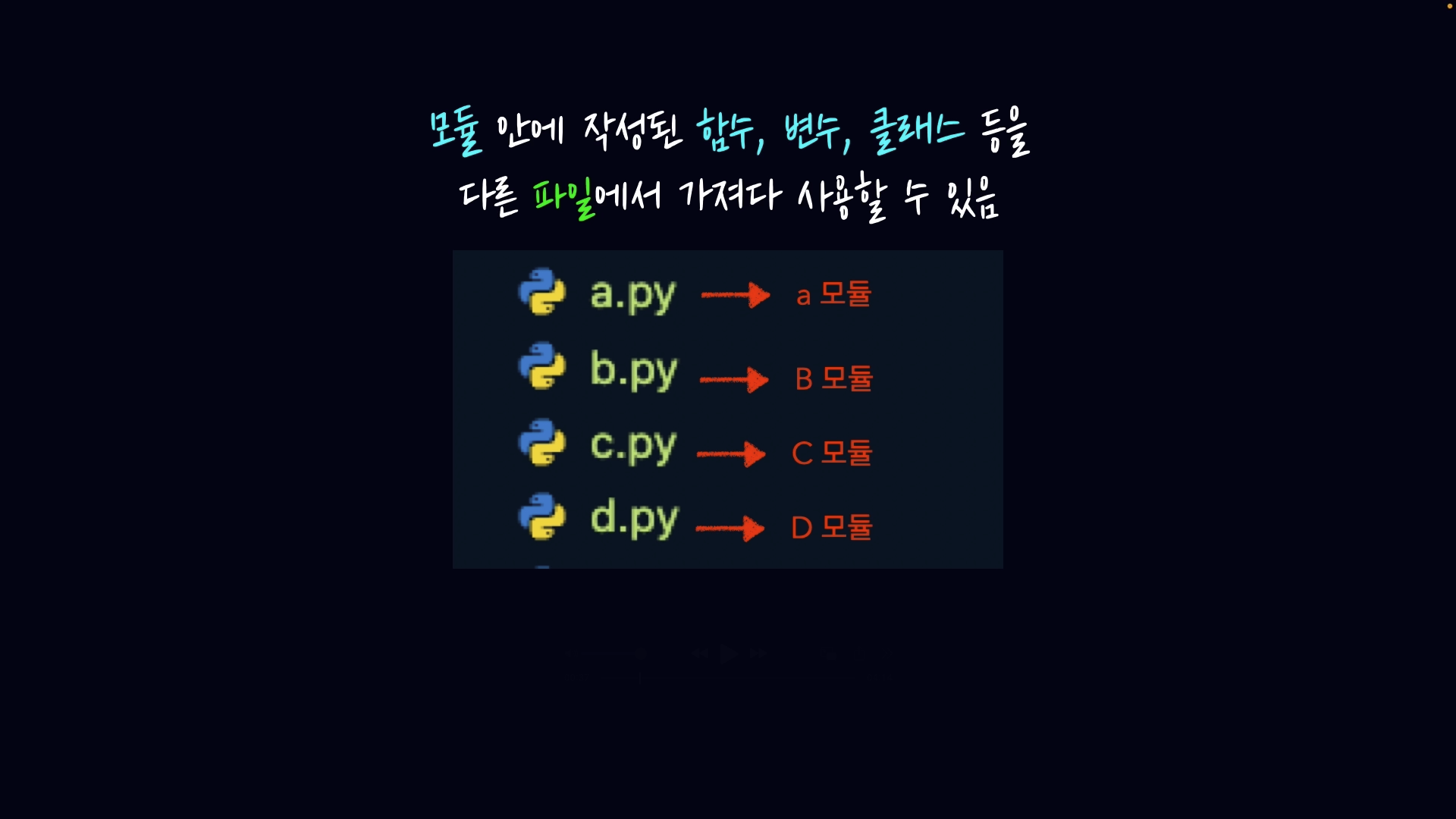
In this section, you will learn the concepts of modules and packages for separating and reusing code in file units. We will cover various import methods, the operating principles of __name__ and __pycache__, and even how to configure packages yourself using __init__.py.
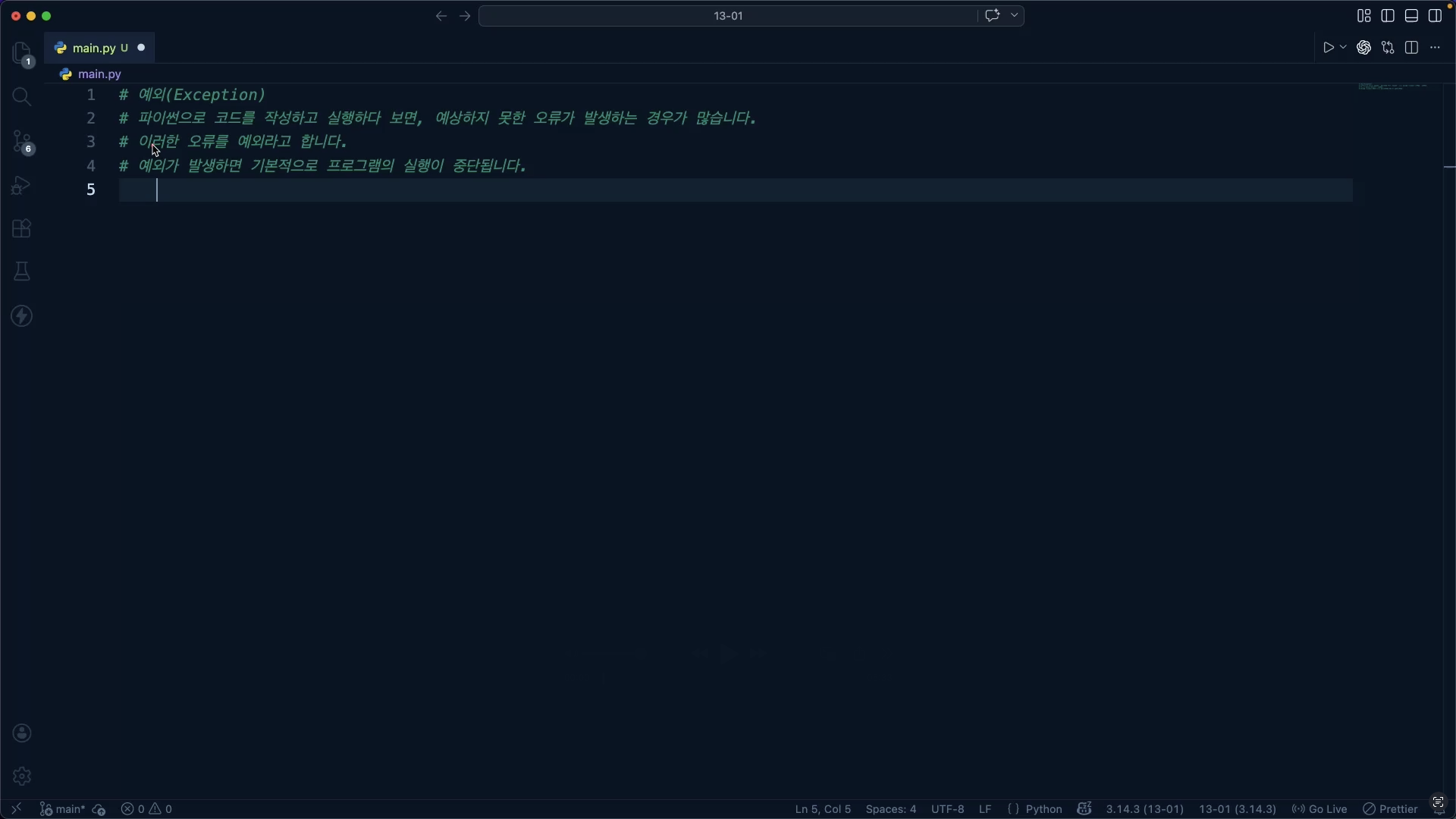
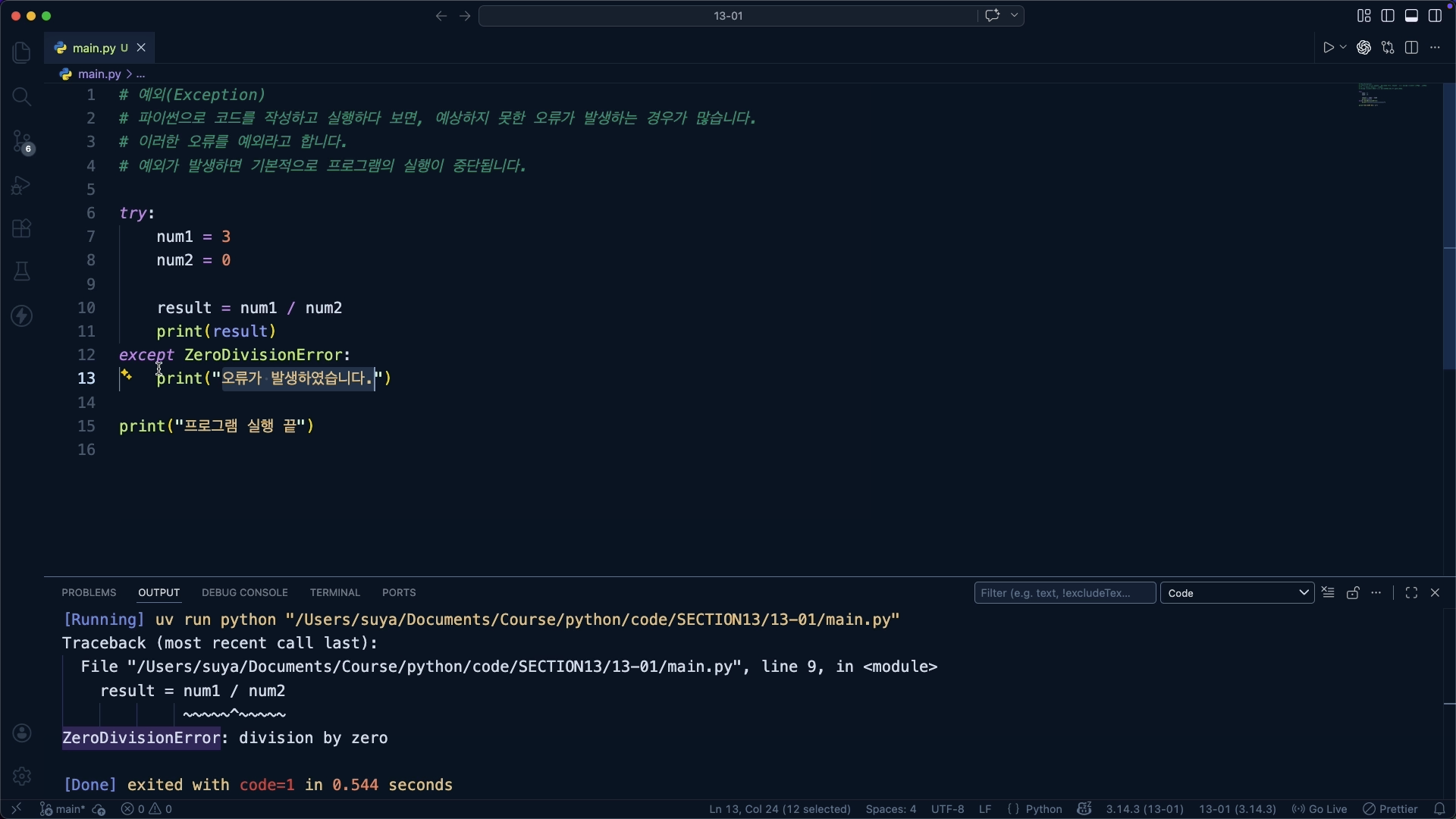
In this section, you will learn about exception handling to safely manage errors that may occur during program execution. We will cover everything step-by-step, from the basic try / except structure to various ways of extending exception handling, how to manually raise exceptions using raise, and how to create custom exception classes.
This course comes with a dedicated online practice site where you can immediately verify what you've learned. You can access it directly from your browser without any separate environment setup, allowing you to review anytime, anywhere.
Concept Review Passage Before solving the problems, quickly review what you have learned with a passage that summarizes the core concepts of the section.
4 types of practice problems
Code Completion Type — Learn the structure of code by filling in the blanks
Output Prediction — Understand the flow by predicting the results without running the code
Error Correction Type — Find and fix incorrect code yourself to identify and correct common mistake patterns
Free-writing type — Write code from scratch according to the given conditions
Progress Tracking + Instant Answer Verification You can check the completion status for each problem and verify the correct answer immediately after solving it.
Beyond simply listening to lectures, we provide a learning experience where you solve problems yourself and verify them to truly make the knowledge your own.
We learn by selecting only the core concepts that are actually frequently used among the vast syntax of Python.
We focus on structures and standards that can be immediately applied to actual coding, such as variables, data types, conditional statements, loops, functions, and classes.
Step-by-step explanations are provided in the order of concept → flow → code so that even those new to Python can understand.
It is composed of practice-oriented lectures where you write and modify code yourself, rather than just typing along with examples, to help you apply it directly to real-world situations.
"Why does this code produce this result?" and "When should I use functions and classes?" are clearly explained based on the execution flow.
Instead of simply memorizing syntax, you can naturally understand how Python works.
The course is structured with the most modern development methods, reflecting the structure and recommended patterns of the latest Python versions.
Setting up development environments actually used in the industry, such as UV and VSCode, is covered from the start to help you build the right habits from the beginning.
I will point out common points of confusion and real-world mistake cases that are often not well-explained in official documentation.
Beyond simple grammar explanations, we provide the mindset and standards for growing into a Python developer.
We provide fast and friendly feedback to students' questions.
Common mistakes and confusing parts are pointed out to maximize individual learning effectiveness.
Just as a masterpiece game recognized by everyone might not be fun for me,
a lecture is not equally suitable for everyone.
No matter how highly praised a lecture is, it might not be the right fit for you,
and conversely, a lecture that seems ordinary to someone else could be the best lecture for you.
That is why all of my lectures have at least 10% of their content available for free.
Try listening to them yourself and see if my teaching style resonates with you!
If we are a good match,
I will guide you through the fastest shortcut to becoming an AI developer.
Trust me and follow along! 🚀
Q. I am a complete beginner who knows absolutely nothing. Will I be okay?
A. Yes. It is perfectly fine. This is a customized course designed specifically for those who are starting from scratch.
Q. Is prior knowledge required?
A. It is not required.
Operating System and Version (OS): Windows, macOS
Tools used: Visual Studio Code, Chrome
PC Specifications: Even the minimum specifications capable of web surfing are sufficient.
Learning materials for each lecture are provided for hands-on practice.
Available for complete non-majors and beginners
Who is this course right for?
Those who believe they should learn Python but have given up several times while trying to teach themselves.
Those who want to study AI and data analysis but cannot even get started because they lack the basics
A non-major who is considering a career change to a developer but feels overwhelmed about where to start
A complete beginner who has watched YouTube lectures but has never actually written code themselves.
Those who know Python syntax but are always confused by the underlying principles of why it works this way
Need to know before starting?
You can take this course even without any prior knowledge.
5,122
Learners
306
Reviews
158
Answers
4.9
Rating
9
Courses
Sucoding is active in teaching coding by combining
online and offline methods.
Based on years of offline teaching experience,
we contemplate every day and strive constantly so that more people can learn coding easily and enjoyably.
To date, I have published the following four books and am leading the field of front-end instruction:
Additionally, we provide various free lectures through our YouTube channel.
👇 Visit now
[YouTube Channel Link]
You can also quickly check various discount news on the official website.
👇 Visit now
[Official Website Link]
All
146 lectures ∙ (12hr 12min)
Course Materials:
Check out other courses by the instructor!
Explore other courses in the same field!
Limited time deal
$5,055.00
28%
$42.90