Python Data Analysis Thinking for Practical Use (EDA Practice)

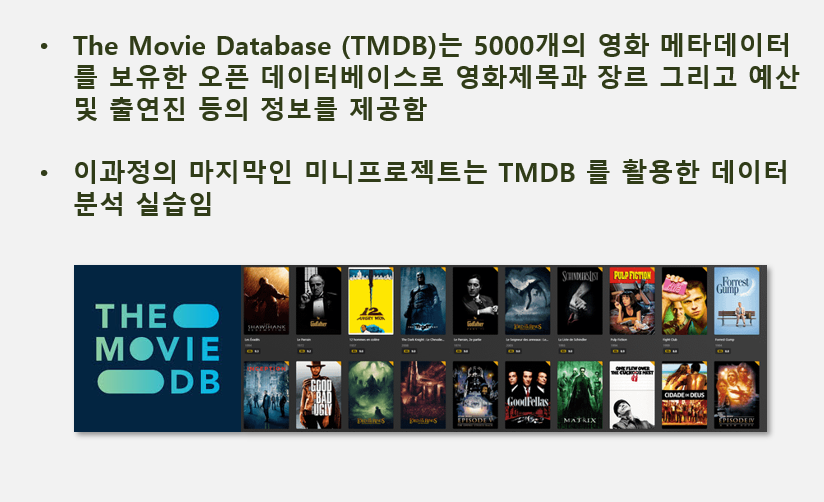
If you could draw graphs but couldn't explain the data, this course is a process for building the "ability to read and explain" data. In PART 3, we perform Exploratory Data Analysis (EDA) focusing on real-world cases. ✔ Checking data distribution ✔ Analyzing relationships between variables ✔ Outlier detection and visualization interpretation You will learn the analysis structure using the Titanic and Iris datasets, and through a project utilizing TMDB 5000 movie data, you will directly experience the entire analysis process: Data cleaning → Setting analysis topics → Visualization interpretation. By the end of this course, you will possess the analytical capability to read and explain data.

6 learners are taking this course

Level Basic

Course period Unlimited

Python
Python
Pandas
Pandas
Numpy
Numpy
Seaborn
Seaborn
Matplotlib
Matplotlib
Python
Python
Pandas
Pandas
Numpy
Numpy
Seaborn
Seaborn
Matplotlib
Matplotlib

What you will gain after the course

  • When looking at new data, I can determine for myself where to start the analysis.

  • You will be able to explain what the data means, going beyond simply drawing graphs.

  • You will understand the entire flow of data analysis as a single structure, from checking distributions to comparing groups, analyzing relationships between variables, identifying correlation structures, and finally, conditional interpretation.

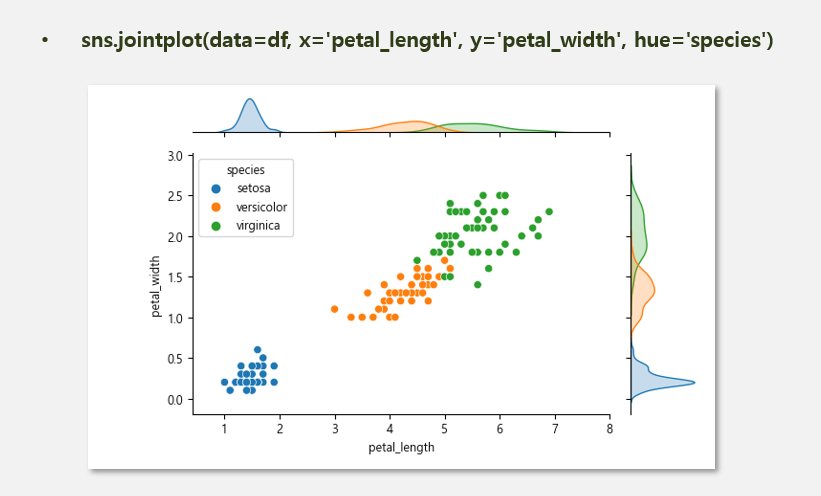
  • Through hands-on practice with the Titanic and Iris datasets, you will systematically learn the basic structure of EDA analysis.

  • Through the TMDB 5000 Movie Data project, you can directly perform the actual analysis process, from data cleaning to setting analysis topics and interpreting visualizations.

  • You will naturally acquire an analytical mindset for creating and validating questions based on data.

  • Beyond simple practice, you will gain the confidence to read and interpret data on your own.

  • The code and datasets used in the lecture are provided as course materials, allowing you to follow the analysis process exactly for review and practical application.

  • We provide EDA analysis code templates and practice data that can be copied and used immediately in practical work.

Data Analysis,
What comes after the graph?


🤷‍♂️ "I can draw the graphs, but...

I honestly don't know how to interpret it.."


This course (PART 3) goes beyond the stage of drawing graphs

This course was created for those who want to learn the analytical thinking process of reading and interpreting data.


In PART 3 of the total 50-lecture data analysis curriculum,

1) You will systematically understand the Exploratory Data Analysis (EDA) process through real-world data cases, and
2) experience the process of interpreting data distributions, relationships between variables, and patterns to explain analysis results.

3) Additionally, you will complete the actual data analysis process step-by-step through various datasets and mini-projects.

👥 Who should take this course?

🙋‍♂️ I find it difficult to interpret graphs

For those who know how to create graphs but
feel lost about what meaning to extract from the data, this course explains the thought process of Exploratory Data Analysis (EDA).

🙋‍♀️ I want to know what EDA is

EDA is not just about drawing graphs, but the process of understanding data structures and patterns and finding the direction for analysis. You will learn the analysis flow step-by-step through real-world data cases.

🙋 I want to try data analysis

Through the analysis of Titanic, Iris, and TMDB 5000 data, you will experience the process of reading data, formulating questions, and explaining analysis results in the form of an actual project.

💡 What will you be like after finishing this course?

You will grow into an analyst capable of formulating questions for data analysis.

  • Instead of simply analyzing given data, you will learn the analytical thinking process of exploring data, creating your own questions for analysis, and verifying them.

You will be able to design the Exploratory Data Analysis (EDA) process on your own.

  • Through the process of checking data distribution, analyzing relationships between variables, and exploring patterns, you will develop a standard for judging where to start your analysis when encountering new data.

You will gain the ability to interpret and explain data beyond just looking at graphs.

  • Through the Titanic, Iris, and TMDB 5000 data analysis projects, you will develop the data interpretation skills to discover data patterns and logically explain analysis results.

🙋‍♂️ What makes this lecture special?

🎓 Data Interpretation-Focused Analysis Beyond Graphs

This course does not simply create visualization results, but focuses on the analytical process of reading the structure and meaning of the data contained within the graphs.

You will develop the ability to formulate your own questions about the data by exploring data distributions, relationships between variables, and data patterns.

⚙️ Experience EDA analysis based on real-world data

Through the data analysis of Titanic, Iris, and TMDB 5000, you will experience the flow of Exploratory Data Analysis (EDA) through real-world cases.

From data exploration → pattern discovery → setting analysis direction → to result interpretation, you will perform the entire actual data analysis process step-by-step.

📚 What will you learn?


Section 1. Basic Structure of EDA

Understand the purpose and role of Exploratory Data Analysis (EDA) and learn why the exploration process is important in data analysis through real-world cases.

Section 2. Exploring Data Distribution and Patterns

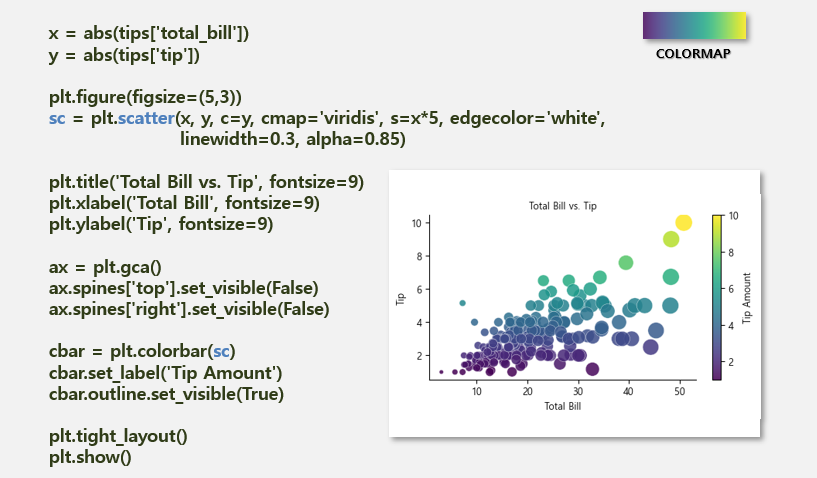
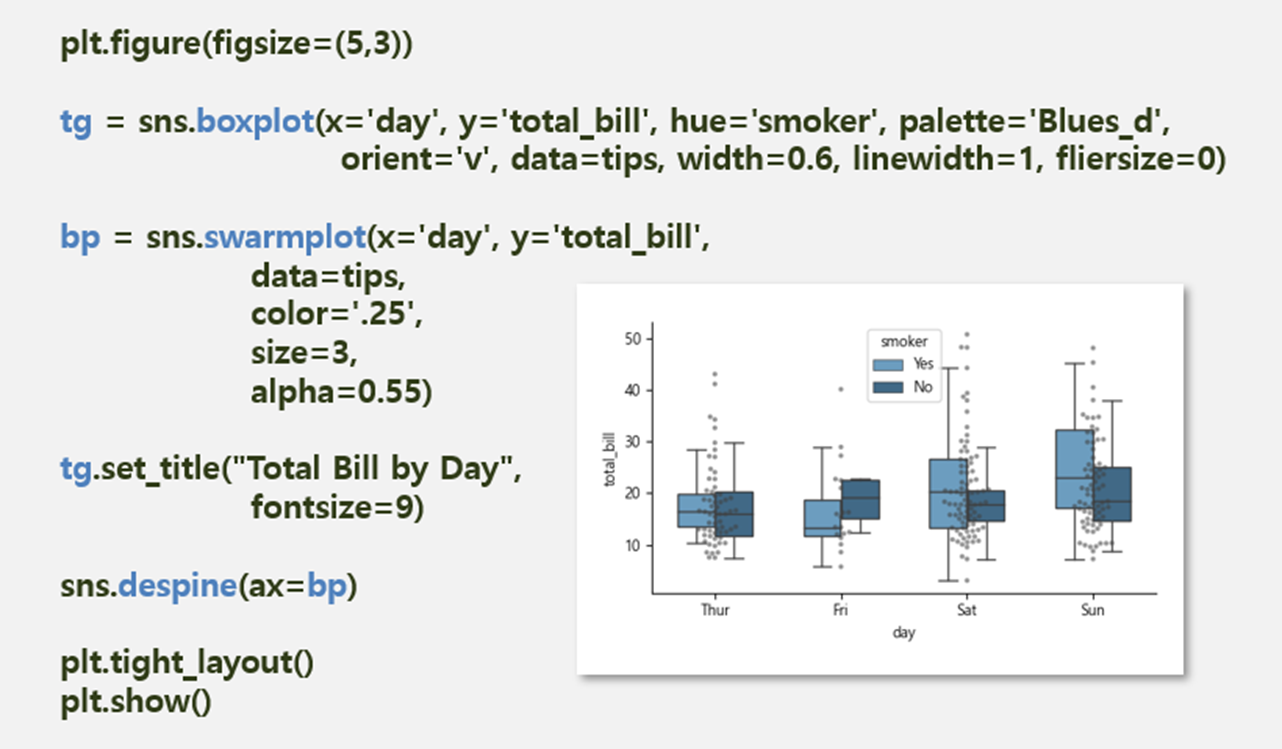
You will learn how to explore data distributions and patterns using histograms, box plots, and scatter plots, and establish criteria for interpreting data.


Section 3. Analyzing Relationships Between Variables

Through the process of exploring relationships between two or more variables and discovering hidden patterns and meanings within the data, you will understand what questions to ask and what analyses to conduct during the EDA process.

Section 4. Comprehensive Data Analysis Project

Through various data analysis cases, you will experience the EDA process step-by-step and directly perform the actual data analysis process through a mini-project using TMDB 5000 movie data. thông qua dự án nhỏ sử dụng dữ liệu phim TMDB 5000.

This course is not just about drawing many graphs,

it is a process of learning analytical thinking to discover and interpret meaningful questions from data

Recommended for
these people

Who is this course right for?

  • Those who want to possess the "ability to read and interpret" data, rather than simply "viewing" it

  • Those who could draw graphs but found it difficult to explain what the data means

  • Those who felt overwhelmed and didn't know where to start the analysis when faced with new data

  • Those who want to systematically understand the EDA (Exploratory Data Analysis) process

  • Those who want to experience the process of analysis—creating questions from data and finding answers—rather than just simple practice.

  • Those who want to experience the entire analysis process from start to finish using real-world data.

  • Those who want to complete a data analysis project that can be used as a portfolio.

  • Those who want to build a solid foundation in data interpretation skills before learning machine learning.

Need to know before starting?

  • This lecture does not necessarily require prior knowledge.

  • However, if you have experience loading and organizing data using Pandas or drawing simple graphs with Matplotlib or Seaborn, you will be able to understand the lecture much more easily.

  • Even if you have no prior experience in data analysis, this section is structured so that you can easily follow along as long as you have thoroughly studied PART 2.

  • If you are still unfamiliar with the processes of data selection, cleaning, and visualization, we recommend taking PART 2 before starting this course.

  • Once you become familiar with using the basic tools, the "analytical thinking process" covered in this lecture will be understood much more clearly.

Hello
This is daniel7

Visiting Professor, Department of Software, Yonsei University


Developer · Business Strategist · AI Service Planning Author


I have accumulated 30 years of practical experience in the fields of development and business.

In 1999, I developed the first standalone webmail in Korea, and I have experience generating 64 billion KRW in net profit by designing Samsung Electronics' mobile content platform.

Afterwards, I oversaw business strategies for 13 countries in Southeast Asia and Oceania, serving as the Head of B2B Business and the Leader of the New Business Development Team.

Currently, I run an AI-based solution company and apply AI and data analysis to real-world projects.


I teach "structure," not "grammar."


Many people who say they have learned Python find it difficult to know where to even begin when they are actually faced with code.

It is not because they don't know the detailed syntax, but because they haven't had the opportunity to learn the structure of why it works that way.

My lecture is not about memorizing code.

It is a process of developing a mindset for reading data.


I have poured these experiences into this lecture.


  • 30 years of experience in development and IT practice

  • Established business strategies for Samsung Electronics across 13 countries in Southeast Asia and Oceania

  • Achieved 64 billion won in net profit for the mobile content business

  • Educated over 2,000 people and designed practical curricula

  • Author of the AI Service Planning Guidebook


I do not separate theory from practice.

I deliver standards that have been proven in the field.


What you will gain from this course


  • You will be able to explain why the code works the way it does.

  • You will be able to see what to do first when you look at data.

  • You will be able to design the analysis process on your own.

My lecture is not a one-off course.

This course is a series designed to cultivate data thinking.

More

Curriculum

All

14 lectures ∙ (13hr 50min)

Course Materials:

Lecture resources
Published: 
Last updated: 

Reviews

Not enough reviews.
Please write a valuable review that helps everyone!

Similar courses

Explore other courses in the same field!

Limited time deal ends in 3 days

$13.20

68%

$41.80