inflearn logo

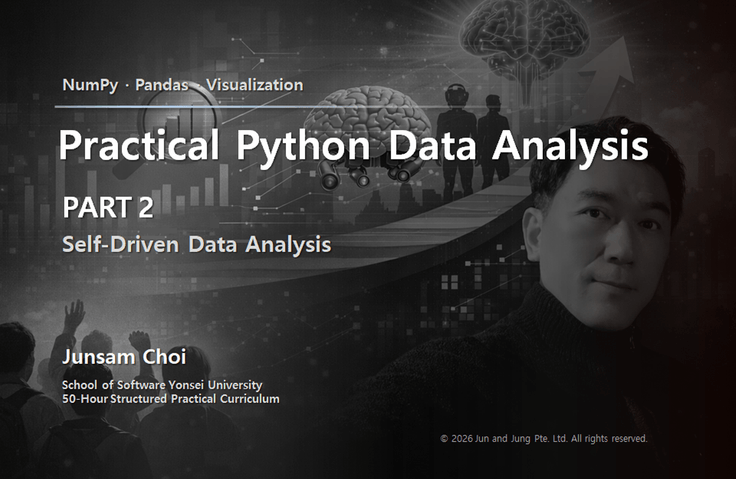
Python Data Analysis in Practice

Have you studied Python syntax but felt lost when it came to actually handling data? You know you need to learn NumPy and Pandas, but if you've been wondering where to start and how to connect them, this PART 2 is the answer. In PART 2 of our 50-lecture data analysis curriculum, you will experience the step-by-step process of loading, cleaning, processing, and statistically interpreting real data. You won't just learn libraries and syntax; you will establish criteria for which tools to choose in specific situations. PART 2 is the turning point where you move from simply knowing Python code to actually being able to handle data.

6 learners are taking this course

Level Basic

Course period Unlimited

Python
Python
Pandas
Pandas
Numpy
Numpy
Seaborn
Seaborn
Matplotlib
Matplotlib
Python
Python
Pandas
Pandas
Numpy
Numpy
Seaborn
Seaborn
Matplotlib
Matplotlib

What you will gain after the course

  • You can efficiently perform array-based operations and process data calculations structurally using NumPy.

  • Using Pandas DataFrames, you can perform the fundamental steps of analysis, from loading real-world data to selection, cleaning, processing, and statistical treatment.

  • You can self-check the status of your data through missing value handling and data statistical calculations.

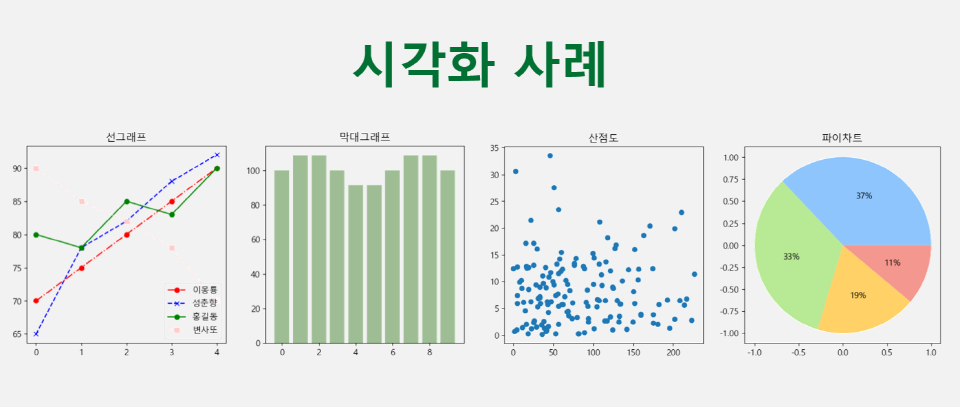
  • You can visually represent data using Matplotlib and Seaborn and interpret its meaning through graphs.

  • You will gain the criteria to judge "which tool to choose in this situation," rather than simply executing code.

  • Afterward, you will have a data processing foundation that can be expanded into machine learning or artificial intelligence training stages.

Data Analysis,
What's after Python?


🤷‍♂️ "I've studied Python syntax, but...

"I feel lost now that I actually have to handle the data.."


This course (PART 2) was created for those who know they need to learn NumPy and Pandas but are
struggling with where and how to connect them.


Through a data analysis curriculum consisting of a total of 50 lectures,
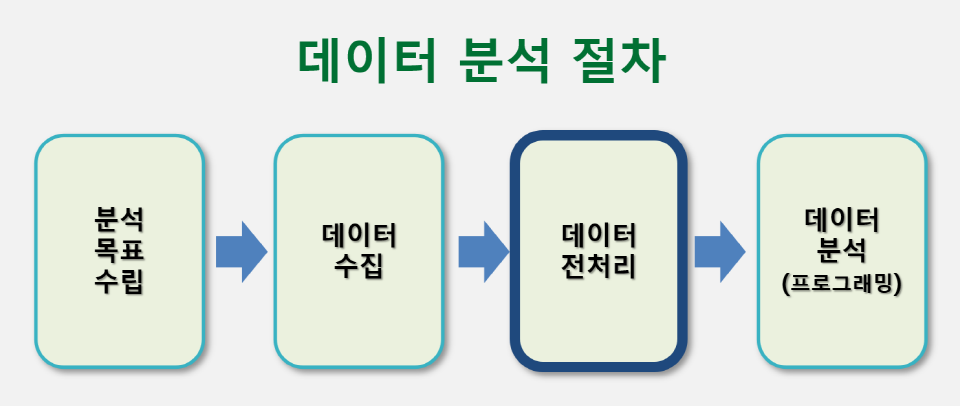
it is designed to help you 1) experience the entire process of loading, cleaning, processing, and analyzing data
2) step-by-step using real-world data.

👥 Who is this course for?

🙋‍♂️ I'm stuck at the Python basics

For those who have learned Python syntax but are unsure of what to do next,
this course explains the actual process of how data analysis is conducted.

🙋‍♀️ I'm new to NumPy/Pandas

This is a process of learning by directly performing the core workflow of data analysis, rather than simply memorizing library syntax.

🙋 I want to learn about data visualization

You will learn to represent data visually using Matplotlib and Seaborn, and establish criteria for selecting the appropriate graph for any given situation.

💡 What will you be like after finishing this course?

You will grow into a practical analyst who handles real-world data.

  • Beyond simple code execution, you will directly clean and process data using NumPy and Pandas , establishing clear criteria for selecting the appropriate analysis tools for any given situation.

You will develop the ability to read changes in data and analyze and make judgments on your own.

  • Through missing value handling and statistical analysis, you will be able to diagnose the state of data yourself and build a foundation that can be expanded into future machine learning and AI training.

You will gain the ability to interpret data beyond just looking at graphs.

  • Using Matplotlib and Seaborn, you will develop visual analysis skills to read and interpret the meaning within data, rather than simply drawing graphs.

🙋‍♂️ What makes this course special?

🎓 Proven Practical Curriculum

This course was developed based on a data analysis practice workflow that has been repeatedly proven through lectures at Yonsei University and K-Digital Training.

It is designed so that even non-majors can naturally acquire the sense of handling real-world data without difficulty.

⚙️ Mastering the 'Workflow' rather than memorization

Don't waste your time memorizing countless library syntaxes.

This course allows you to learn the core workflows repeatedly used in the field by "experiencing them firsthand."

📚 What will you learn?

Section 1. Orientation

Before starting the data analysis practice, you will understand the analysis environment and the overall structure of the course, and perfectly prepare the Python environment required for the practice.

Section 2. NumPy

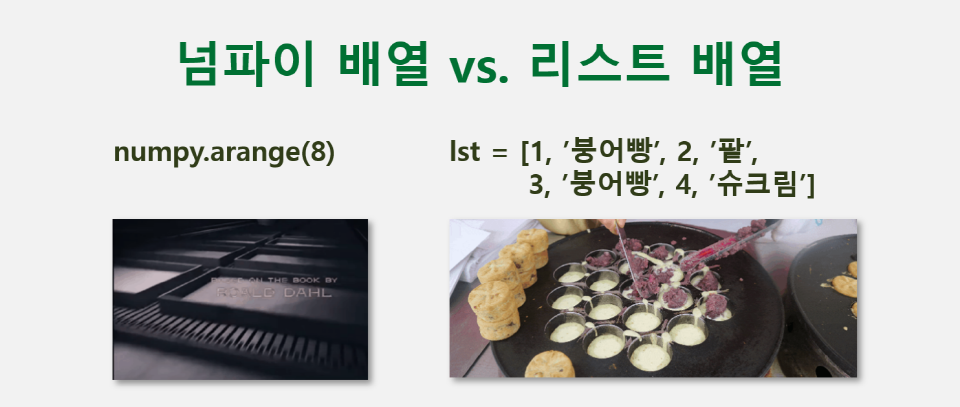
From the basic structure of arrays to creation, indexing, and vector operations using universal functions, you will build the foundation for efficient data computation.


Section 3. Pandas

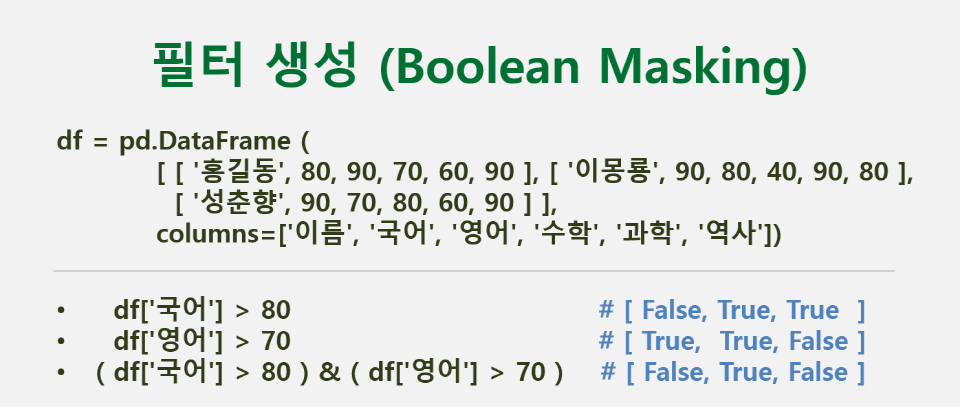
Understand the structure of DataFrames and learn data cleaning and processing skills directly applicable to practical work, such as data selection, handling missing values, and descriptive statistical analysis.

Section 4. Data Visualization

You will learn how to design basic charts using Matplotlib and Seaborn, select the optimal graph for any given situation, and interpret data with a sharp analytical perspective.

This course is not about simply learning the techniques of drawing graphs, but rather

is a process of learning the structural thinking required to interpret data.

Recommended for
these people

Who is this course right for?

  • Those who understand the basics of Python but have no experience handling real-world data.

  • Those who know they need to learn NumPy and Pandas but feel overwhelmed and don't know where to start

  • Those who felt that handling dataframes was difficult

  • Those who want to go beyond Excel and try data analysis with Python

  • Those who want to systematically learn missing value handling, data cleaning, and statistical calculations.

  • Those who have tried drawing graphs but find it difficult to decide which type of graph to use and when.

  • Those who want to build a solid foundation in data processing before learning machine learning.

  • Those who want to grow from knowing Python code to being able to handle data.

Need to know before starting?

  • You can take this course if you have a basic understanding of Python syntax (variables, functions, loops, etc.). If concepts like variables, functions, and scope are not yet clear to you, we recommend taking PART 1 first. Once your foundation is solid, your understanding and learning speed for this part will be much higher.

  • It is okay if you are new to NumPy and Pandas. The lecture explains everything step-by-step from the basics.

  • It is structured so that even those without data analysis experience can learn naturally through hands-on practice. However, having experience reading and making simple modifications to code will be helpful for your learning.

Hello
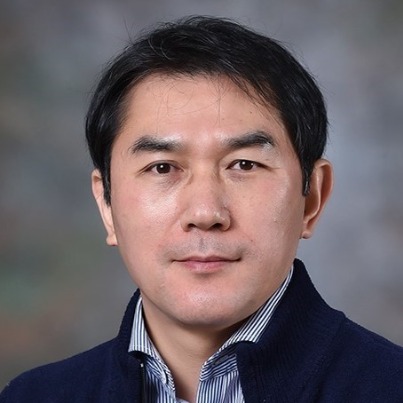
This is daniel7

Visiting Professor, Department of Software, Yonsei University


Developer · Business Strategist · Author of AI Service Planning


I have accumulated 30 years of practical experience in the fields of development and business.

In 1999, I developed the first standalone webmail service in Korea, and I have experience designing Samsung Electronics' mobile content platform, which generated a net profit of 64 billion KRW.

Afterward, I oversaw business strategies for 13 countries across Southeast Asia and Oceania, serving as the Head of B2B Business and the Leader of the New Business Development Team.

Currently, I run an AI-based solution company, applying AI and data analysis to real-world projects.


I teach "structure," not "grammar."


Many people who say they have learned Python find it difficult to know where to start when they actually face code.

It is not because you don't know the detailed grammar, but because you haven't had the opportunity to learn the structure of why it works that way.

My course is not about memorizing code.

This is a process for developing a mindset for reading data.


I have poured these experiences into this course.


  • 30 years of experience in development and IT practice

  • Established business strategies for Samsung Electronics across 13 countries in Southeast Asia and Oceania

  • Achieved 64 billion KRW in net profit for the mobile content business

  • Educated over 2,000 people and designed practical curricula

  • Author of the AI Service Planning Guidebook


I do not separate theory from practice.

I deliver standards that have been proven in the field.


What you will gain from this course


  • You will be able to explain why the code operates the way it does.

  • You will be able to see exactly what to do first when you look at data.

  • You will be able to design the analysis process on your own.

My course is not a one-off lecture.

This course is PART 2 of a series designed to cultivate data thinking.
More

Curriculum

All

12 lectures ∙ (9hr 50min)

Course Materials:

Lecture resources
Published: 
Last updated: 

Reviews

Not enough reviews.
Please write a valuable review that helps everyone!

Similar courses

Explore other courses in the same field!

Limited time deal

$16,170.00

70%

$41.80