



inflearn logo

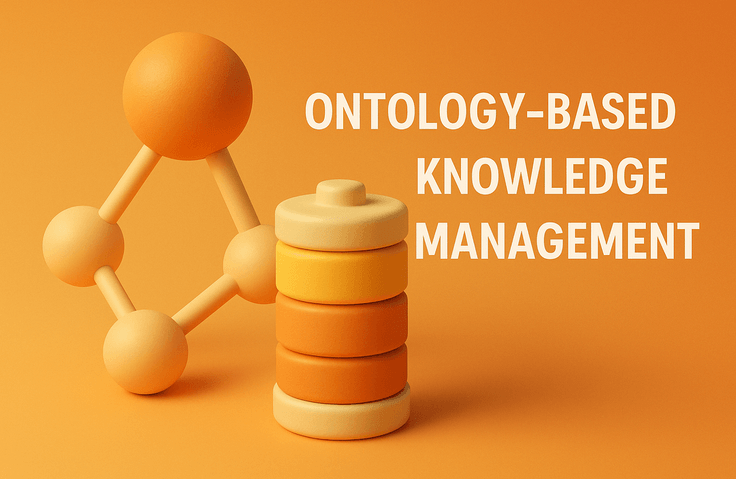
Construction of an Ontology-Based Knowledge Management System for Secondary Battery Manufacturing Processes

You will learn the concepts of ontology and their practical application methods, focusing on the secondary battery cathode material manufacturing process. You will learn how to transform fragmented process data into meaningful knowledge assets and build AI-based quality prediction and defect root-cause reasoning systems. You will acquire practical ontology engineering capabilities to lead the digital transformation (DX) and artificial intelligence transformation (AX) of manufacturing sites.

2 learners are taking this course

Level Intermediate

Course period Unlimited

Set theory
Set theory
crash
crash
dax
dax
modeling
modeling
LangGraph
LangGraph
Set theory
Set theory
crash
crash
dax
dax
modeling
modeling
LangGraph
LangGraph

What you will gain after the course

  • Modeling secondary battery manufacturing process data into an ontology and constructing a knowledge graph

  • Design of an Ontology-Based Quality Defect Root Cause Reasoning and Prediction System

  • Establishing an Intelligent Knowledge Management Architecture for DX/AX in Manufacturing Sites

Building an Ontology-Based Knowledge Management System for Secondary Battery Manufacturing Processes

This course delves deeply into the concepts and application methods of 'Ontology,' a core technology for successfully leading the Digital Transformation (DX) and AI Transformation (AX) of manufacturing processes within the rapidly changing secondary battery industry. Focusing specifically on the cathode material manufacturing process, learners will explore how ontology assigns meaning to data and contributes to building intelligent process control and quality prediction systems through concrete scenarios. Through this course, participants will acquire the capabilities to transform fragmented data into knowledge assets, infer the root causes of quality defects, and build ontology-based knowledge management systems for implementing future-oriented autonomous manufacturing plants.


Part 1. Overview of the Secondary Battery Industry and Ontology-based DX/AX

In this module, we explore the latest trends in the secondary battery industry and the necessity of Digital Transformation (DX) and AI Transformation (AX). Participants will understand the basic concepts of ontology and its importance in the semantic connection of manufacturing process data, while identifying the strategic value of ontology-based DX/AX through real-world industrial cases.

Secondary Battery Industry Trends and the Necessity of Digital Transformation

Understand the changes in the global electric vehicle market and the importance of secondary battery material technology, and learn about the necessity of Digital Transformation (DX) and AI Transformation (AX) for manufacturing process data management and identifying causal relationships.

Ontology Concepts and the Importance of Semantic Connectivity

Learn the basic concepts of ontology and the principles of knowledge structuring, and understand the role of ontology in enabling semantic connections between physical process assets and chemical material properties.

Analysis of Ontology-based DX/AX Success Cases

By analyzing the technology portfolios and R&D trends of EcoPro and POSCO Future M, we will learn through real-world cases how ontology-based DX/AX can be applied in the secondary battery manufacturing industry.


Part 2. Core Ontology Standards and Battery Domain Ontology

In this module, you will learn the concepts of ISA-95 and B2MML, which are core standards in the manufacturing industry, and explore methods to ensure interoperability across the entire process by converting them into ontologies. Furthermore, we will cover in-depth strategies for integrating materials science knowledge through BattINFO and EMMO, which are ontologies specialized for the battery domain.

Understanding the ISA-95 Standard and Manufacturing Process Integration

Learn the hierarchical structure and roles of the ISA-95 standard, which defines interfaces between Enterprise Resource Planning (ERP), Manufacturing Execution Systems (MES), and control systems, and understand how to ensure interoperability across the entire process by converting this into an ontology.

Data Standardization Practice Using B2MML

Learn the concept of B2MML (Business to Manufacturing Markup Language), which implements ISA-95 in XML format, and practice how to standardize data by utilizing key B2MML elements such as MaterialInformation, EquipmentInformation, and ProcessSegment as ontology schemas.

BattINFO and EMMO: Battery Domain-Specific Ontologies

By studying Europe's EMMO (Elementary Multiperspective Materials Ontology) and its sub-domain BattINFO, you will understand how to define battery chemical structures, electrochemical performance indicators, and characterization methods using standardized terminology. You will also analyze the properties of the ActiveMaterial and CharacterizationMethod classes.


Part 3. In-depth Analysis of Secondary Battery Cathode Material Manufacturing Processes

In this module, we will analyze in detail the core processes of secondary battery cathode material manufacturing: precursor production, mixing, calcination, and post-treatment. We will understand the key variables of each process and their impact on quality, and explore the mechanisms and solutions for major quality defects such as cation mixing, particle cracking, and impurity contamination.

Precursor Manufacturing Process and Key Variable Analysis

We will study the precursor manufacturing process (Precursor Synthesis), which serves as the 'skeleton' of cathode materials, in detail. We will analyze the mechanism of the co-precipitation reaction and the effects of key process variables—such as pH, temperature, and stirring speed—on particle size, tap density, and morphology.

Understanding the Mixing and Calcination Processes and Their Impact on Quality

Learn the mixing process, which uniformly blends the precursor and lithium source, and the calcination/sintering process, which forms the crystal structure through high-temperature heating. Analyze the impact of each process variable—such as the choice of lithium source, Li/Me ratio, calcination temperature, calcination time, and atmosphere control—on the final quality of the cathode material.

Cathode Material Post-treatment Process and Major Quality Defect Type Analysis Practice

We will conduct a practical session to understand the post-treatment process, which involves processing the calcined cathode material to meet final product specifications. We will also analyze the occurrence mechanisms and diagnostic methods of major quality defects in cathode material manufacturing, such as cation mixing defects, particle cracking, gas generation, and impurity contamination.


Part 4. Building an Ontology-Based Process DX/AX Framework

In this module, we design a framework to semantically integrate secondary battery process data and transform it into knowledge assets using ISA-95 and battery domain ontologies. We will implement semantic control scenarios for the precursor process, explore energy and quality optimization methods for the calcination process, and carry out a project to build an ontology-based process framework.

ISA-95 Based Ontology Framework Design

Learn how to design an ontology structure that integrates physical assets of the manufacturing site with chemical knowledge of materials based on the ISA-95 standard. Understand the concept of building a framework that semantically integrates process data and transforms it into knowledge assets.

Implementation of Semantic Control Scenarios for Precursor Processes

Learn the scenario of semantically controlling the chemical reaction continuity of the precursor process through ontology. Practice how to infer the chemical state inside the reactor by defining classes such as PrecursorBatch, ReactionParameter, and ChemicalInput and establishing relationships, and use inference rules to predict the final particle quality.

Energy and Quality Optimization Methods for the Calcination Process

We will learn how to optimize energy and quality by building a Digital Twin using ontology in the calcination process, which takes the longest time and has high quality variability. We will analyze scenarios for back-tracing the causes of quality defects, such as Cation Mixing, through data mapping and quality linkage.

Ontology-Based Process Framework Design Project

We will carry out a project to design a data integration and knowledge capitalization framework using ISA-95 and BattINFO ontologies by selecting a specific stage (e.g., precursor or calcination) of the secondary battery cathode material manufacturing process. Using ontology modeling tools, we will materialize the conceptual framework and define key classes, properties, and relationships.


Part 5. Intelligent Quality Anomaly Detection and AI Integration Strategies

In this module, you will learn contextual anomaly detection techniques that go beyond simple numerical comparisons by utilizing ontologies. We will explore ontology integration strategies with AI models to present ways to accelerate AX (AI Transformation) in the secondary battery manufacturing process, and strengthen practical application capabilities through hands-on ontology-based AI system design.

Intelligent Quality Anomaly Detection Using Ontology

Learn the principles of how ontologies detect 'contextual anomalies' beyond simple numerical comparisons. By analyzing situational awareness and complex anomaly detection scenarios, understand how to build an ontology-based intelligent quality anomaly detection system.

Ontology Integration Strategy with AI Models

Learn how to accelerate AX (AI Transformation) in the secondary battery manufacturing process by linking ontologies with AI models. Understand the principles of how semantic annotation through BattINFO enhances an AI model's understanding of material data, and explore AI integration strategies using ontology-based graph databases.

Ontology-Based AI System Design Practice

We will conduct a hands-on session to design an intelligent quality anomaly detection or process control AI system using ontologies. Participants will build an ontology-based knowledge graph and specify scenarios for utilizing it as training data for AI models or integrating it with reasoning engines.


Part 6. Ontology-Based Knowledge Management and Future Strategies

In this module, we analyze strategic values such as accelerating research and development through the adoption of ontologies, responding to battery passports and global regulations, and improving process efficiency and cost reduction. We will carry out a project to build an ontology-based knowledge management system and examine the core role of ontologies in the transition to future autonomous manufacturing factories.

Accelerating Research and Development through Ontology Adoption

Learn how ontology-based knowledge structuring can accelerate the research and development (R&D) process, such as the development of cathode materials with new compositions. Analyze cases where the semantic structuring of past experimental data reduces the time required to find optimal processing conditions.

Battery Passport and Global Regulatory Compliance Strategies

Understand global regulatory trends, such as the US IRA and European battery regulations, and learn strategies to respond to 'Battery Passport' requirements, including material origin information and carbon footprint tracking, using ontologies. Analyze methods for securing complete traceability through Digital Threads.

Ontology-Based Knowledge Management System Construction Project

This project involves the conceptual design of an ontology-based knowledge management system for specific domains within the secondary battery manufacturing process. It envisions an automated pipeline to convert fragmented legacy data into an ontology-based graph database and proposes methods for implementing a semantic query system that allows field engineers to easily utilize the ontology.

Future Autonomous Manufacturing Factories and the Role of Ontology

We understand that the application of ontology will be a key driver in securing knowledge competitiveness beyond secondary battery manufacturing competitiveness, and we examine the critical foundational role that ontology plays in the transition to future autonomous manufacturing factories. We comprehensively evaluate the strategic value of ontology, including process efficiency, cost reduction, and predictive maintenance.

Recommended for
these people

Who is this course right for?

  • Engineers and data scientists in charge of the digital transformation of the secondary battery manufacturing process

  • Manufacturing IT managers and PMs performing smart factory construction projects

  • Manufacturing decision-makers considering the implementation of AI-based quality control systems

Need to know before starting?

  • Basic domain knowledge of manufacturing processes or quality control

  • Basic understanding of databases and data modeling

  • Experience in data processing using programming languages such as Python

Hello
This is mj

64

Learners

4

Reviews

4.5

Rating

7

Courses

스크린샷 2026-04-09 오후 6.42.23.pngimage.png

More

Curriculum

All

20 lectures ∙ (2hr 16min)

Course Materials:

Lecture resources
Published: 
Last updated: 

Reviews

Not enough reviews.
Please write a valuable review that helps everyone!

mj's other courses

Check out other courses by the instructor!

Similar courses

Explore other courses in the same field!

Limited time deal

$115,500.00

30%

$127.60