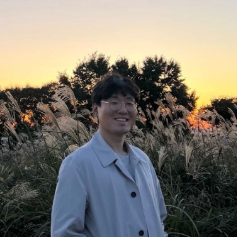
Hello. I’m Jonghyun Lee.
While working as a software developer at Coupang, I gained hands-on experience developing and operating real-world services. I am currently balancing work and studies while researching machine learning and deep learning in the Master’s program in Artificial Intelligence at Yonsei University.
With over 10 years of software development experience, I conduct AI research firsthand and implement it through various projects and services. I am particularly interested in machine learning and deep learning, LLMs and generative AI, RAG, AI agents, and AutoML. Rather than merely studying these technologies, I value the process of implementing and experimenting with them directly to solve problems.
Based on hands-on experience developing AI models, I have participated in various AI competitions and achieved strong results. In the 2026 K-League–University of Seoul Open AI Competition, I placed third out of 947 teams, and in the 5th ETRI Artificial Intelligence Paper Competition on Human Understanding, I ranked second on the Private Leaderboard out of 409 teams.
I have also continued to achieve results in research. My work on FS-DCM, which addresses the nonstationarity and volatility of time-series data, was accepted as a first-author oral presentation paper at the International Conference on Automated Machine Learning (AutoML 2026), while my first-author paper, MathQueue, was also accepted at the EMNLP 2026 MathNLP Workshop. In addition, I continue to pursue research on interpretable AutoML using LLMs and the practical application of AI technologies.
I currently operate the AI learning service Commuting AI (https://mdooai.com). I also work as a Upstage Certified Trainer (Upstage-certified AI trainer), providing generative AI education and mentoring.
Based on my practical experience in development, AI research, and education, I work with everyone from those just starting out in AI to those looking to expand their development experience into the AI field, helping them consider realistic learning paths and project experiences suited to their individual circumstances.
Going forward, I aim to contribute to helping more people understand AI, implement it themselves, and apply it effectively to their work and projects, based on AI technologies and research that I have directly experienced and validated.
Thank you.



![[2026 AI Trends] A Completely Different Generative AI: How Individuals and Corporations Will Coexist with AICourse Thumbnail](https://cdn.inflearn.com/public/files/courses/341884/cover/ai/2/9c616b32-aa40-411a-8805-b95cb53ba57a.png?w=420)
![[Basics] Understanding Google Workspace Gemini Through IllustrationsCourse Thumbnail](https://cdn.inflearn.com/public/files/courses/344659/cover/ai/3/eb2892c4-0d1f-45bf-94c5-c2a3cb4b8073.png?w=420)



![AI Reading Comprehension for Engineers [Beginner Edition] — 48 Lessons on Understanding Model Cards, API Documentation, and Research PapersCourse Thumbnail](https://cdn.inflearn.com/public/files/courses/343794/cover/01m01gk3f7dhe2fwesbwf63tz0?w=420)


![[Electron #2] React + Electron Offline Face Recognition Access and Attendance Management System (With DeepFace)Course Thumbnail](https://cdn.inflearn.com/public/files/courses/339677/cover/ai/0/3f0aeb99-6e04-4d30-ba5b-841a2c0fea14.png?w=420)
![Using ChatGPT (챗GPT) Properly: From Practical Applications to APIs and RAG [Includes Prompt Cheat Sheet]Course Thumbnail](https://cdn.inflearn.com/public/files/courses/344366/cover/01m3hzv46rpm3xgx1rczq4z1ae?w=420)
![[Meetup VOD] The Future of Work Seen Through the Working Style of an AI Native CompanyCourse Thumbnail](https://cdn.inflearn.com/public/files/courses/340242/cover/01kfdb25rybs92qftj95q38p2d?w=420)