inflearn logo

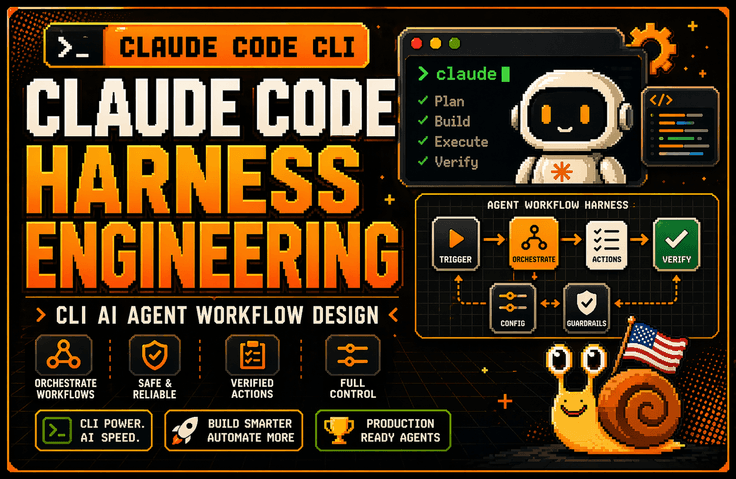
Claude Code Harness Engineering: Advanced CLI Harness Engineering Practice

The lecture explains why the harness is more important than the model through the Claude Code architecture. It covers how to design the Claude Code task system using six structures: Context Harness, Permission Harness, Verification Harness, Tool Harness, Subagent & Worktree Harness, and Debugging Harness. Afterward, it connects these concepts to CLAUDE.md, session management, large codebase control, worktree parallel operations, error log analysis, and tracking environment variables and configuration scope issues, establishing the standards for continuously using Claude Code in practical backend and DevOps workflows.

88 learners are taking this course

Level Basic

Course period Unlimited

AI
AI
claude
claude
Vibe Coding
Vibe Coding
harness
harness
AI
AI
claude
claude
Vibe Coding
Vibe Coding
harness
harness

What you will gain after the course

  • Harness design criteria for integrating Claude Code CLI into real-world projects

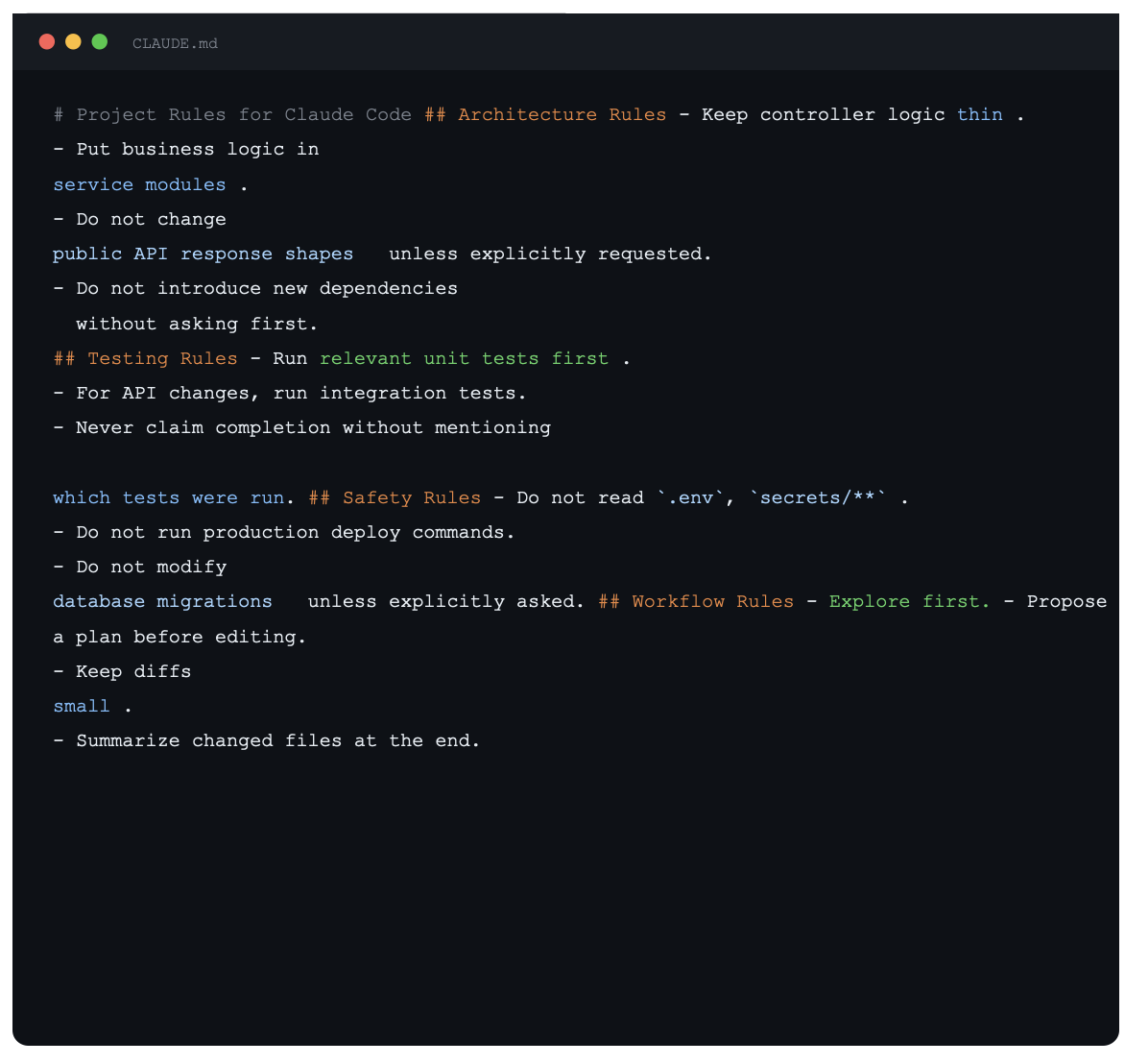
  • Ability to design workflows for large codebases through CLAUDE.md, session management, and context control

  • Ability to design permissions and authorization policies that define the scope of actions Claude can perform.

  • Practical sense of using a Verification Harness to verify Claude's outputs through tests, diffs, and counterexamples rather than trusting them blindly.

  • Subagent & Worktree operational capabilities to safely isolate multi-tasks using worktrees and parallel sessions

  • Practical skills in creating a Debugging Harness to organize error logs, environment variables, configuration scopes, and hard-to-reproduce bugs so that Claude can solve them.

Claude Code in the GUI can be fun.

However, in the harness design of the CLI, Claude Code becomes profitable.

This course does not introduce Claude Code CLI as a simple AI coding tool. Instead, it covers how to establish Claude Code within actual backend and DevOps workflows from the perspectives of Context, Permission, Verification, Tool, Subagent, and Debugging Harness. You will learn how to design a working system where Claude can operate safely in real projects by connecting log analysis, bug fixing, test recovery, CLAUDE.md design, session management, and parallel worktree operations.

Recommended for these people

Developers who have installed Claude Code but find themselves unable to use it consistently in real-world projects

If you found yourself comfortably asking and receiving answers in the GUI, only to return to the terminal in practice to read logs, run tests, review diffs, and organize Git branches, then you need this course. This course provides the standards to transform Claude Code from a "tool you try out briefly" into a "tool you use continuously in real-world projects."


A non-major developer who spent 5 hours on a task that Claude could have completed in 30 minutes within a large codebase

The problem is likely not just model performance, but a lack of design regarding what information Claude should see and within what scope it should operate. In this course, we cover practical patterns to prevent Claude from getting lost in large codebases through Context Harness, CLAUDE.md, session management, and context redesign.

Developers and non-majors who want to elevate their use of AI coding tools from "using them well" to "operating them as a professional system"

I recommend this to those who need practical standards rather than simple feature introductions—such as deciding which tasks to delegate to Claude versus which to judge yourself, which results to verify through tests and diffs, and which automations to extend using Hooks, MCP, or Skills. It is particularly suitable for backend developers, DevOps engineers, and tech leads.

After taking this course,

After taking this course, you will no longer see Claude Code as just a "tool for writing good prompts." Instead, you will be able to determine what Claude needs to look at, the extent of its permitted actions, how to verify results, when to clear/compact/restart if a session becomes contaminated, and how to manage worktrees and parallel sessions.

Specifically, you will be able to structurally fix project rules and prohibitions in CLAUDE.md, organize issues regarding logs, environment variables, and configuration scopes into a format that Claude can solve, and review Claude's proposed fixes through a test-diff-counterexample verification loop. In other words, you will elevate Claude Code from a GUI-based auxiliary tool to a level where it can be integrated into actual backend and DevOps workflows.

Features of this course

1. Instead of just explaining features, it teaches from a "Harness Engineering" perspective based on research papers.

This course does not simply list Claude Code's features like official documentation. Instead, it explains how to design Context, Permission, Verification, Tools, Subagents, and Debugging Harnesses so that Claude Code can work safely within real-world projects. As a result, you will be less affected by rapidly changing version updates and will be left with standards that are applicable to actual projects.

2. Focuses on large codebases and real-world practical issues

Instead of just building simple demo apps, this course covers how to prevent Claude from getting lost in large codebases, how to reduce session pollution, how to safely manage worktrees and parallel sessions, and how to connect the GitHub Issue-to-PR workflow with Claude. We start from the actual bottlenecks encountered in real-world practice.


What you will learn

Getting Started with Claude Code CLI in Practice /

Architecture / Memory / CLAUDE.md / Plan Mode / Skills

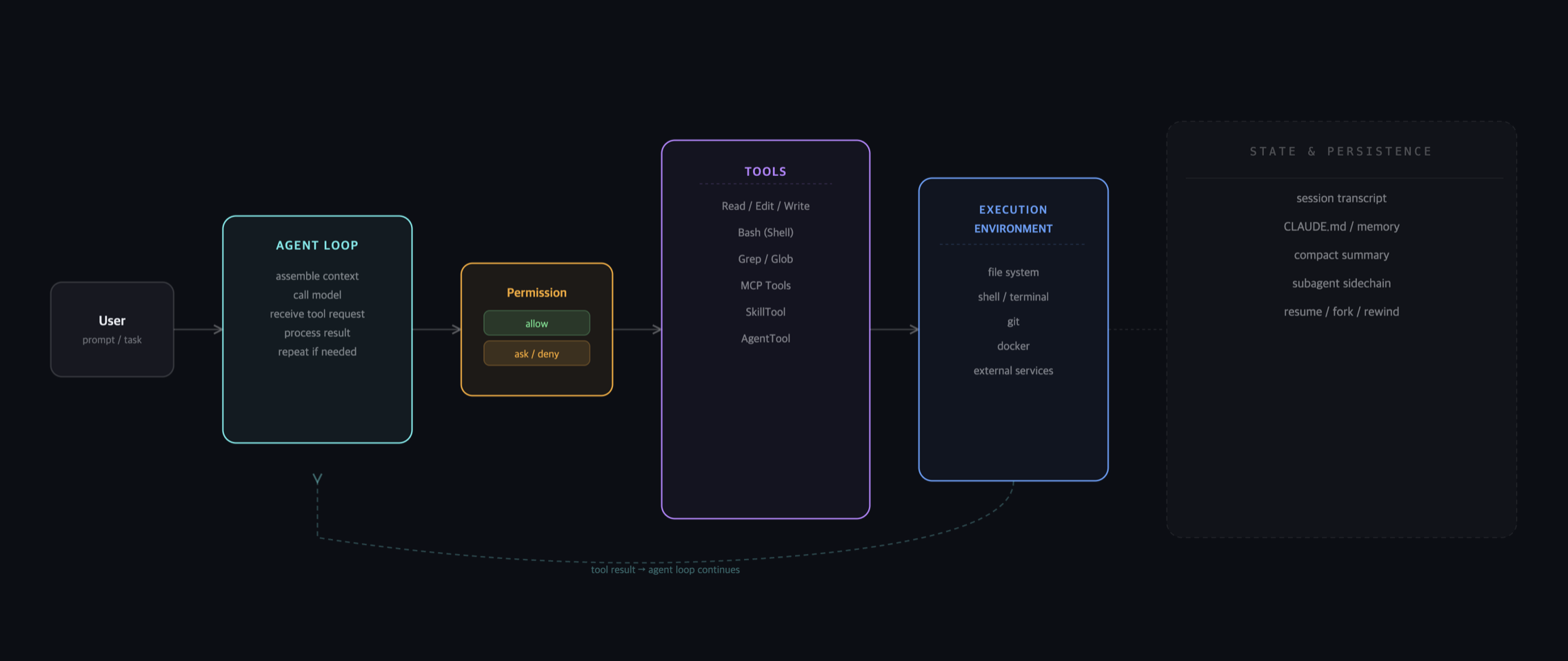
In the first section, we clearly define the differences between the GUI-based Claude and the CLI. Rather than simply comparing interface differences, we explain why the GUI often limits you to "asking and receiving answers," whereas the CLI allows you to connect directly to actual logs, testing, Git, and deployment preparation. Afterward, we explore the Claude Code architecture to understand why the harness is more important than the model itself, and examine the roles of session memory and CLAUDE.md, Plan/Thinking Mode and Subagents, and the differences between Skills and Tool use.

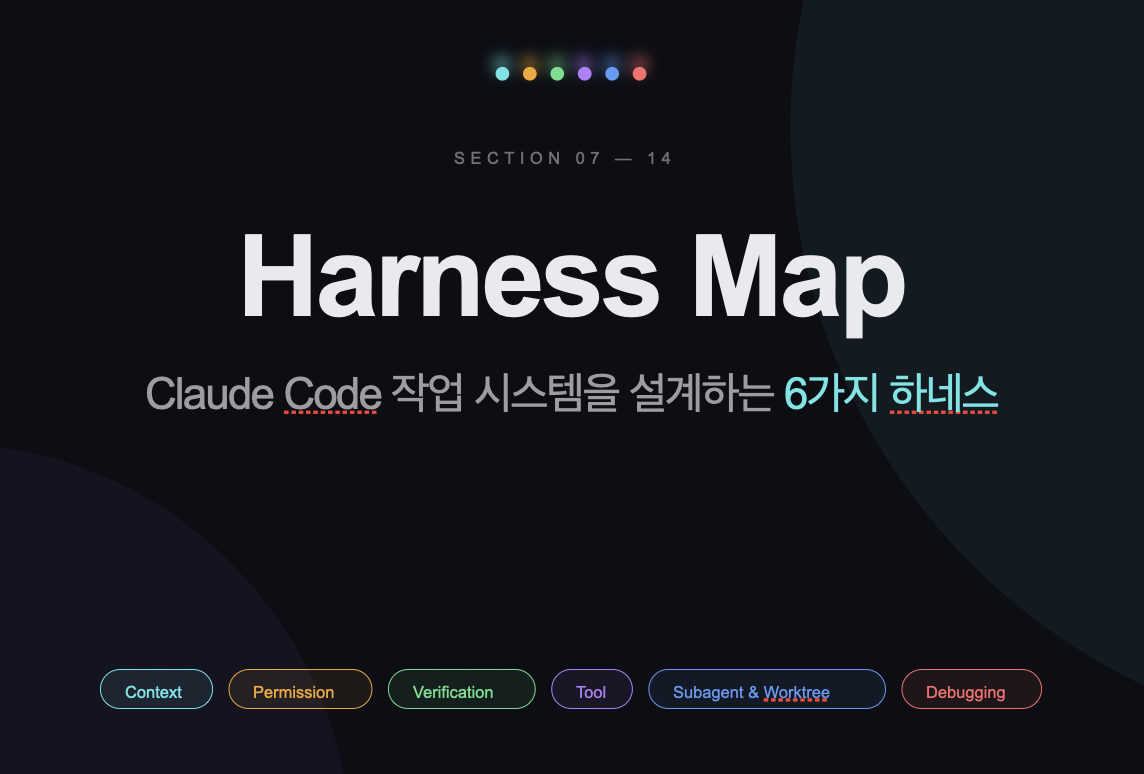
Harness Map / Context Harness / Permission Harness / Verification Harness / Tool Harness / Subagent & Worktree / Debugging Harness

The second section is the core of this lecture.

This section explains the six harnesses required to integrate Claude Code into an actual project as a single unified operating system. It provides a big-picture overview of what information Claude needs to see, the extent of its permitted actions, how to verify results, the structure for attaching tools, how to isolate parallel tasks, and how to transform logs and environment variables into a format suitable for troubleshooting. You will then proceed to actually implement this map in the subsequent hands-on sections.

The person who created this course

  • Silicon Valley Survivor | US Snail 

    Based on experience and know-how accumulated at the forefront of the global tech scene, I present a path for non-majors to overcome technical barriers and become masters of their business.

    • Current) Founder of a Silicon Valley AI Coding Agent Startup

      • Operating the self-developed AI tool 'Snailer CLI' (11K+ downloads)

      • Selected for the Google for Startups Program

    • Former) Engineer Career at US Big Tech and Promising Startups

      • Reached the final stage at Amazon, but gave it up to start a business

      • Silicon Valley AI Fintech Startup Engineer

      • OpenAI / Meta / Apple / Adobe / Amazon Full-stack Fellowship

      • Domestic search engine portal, fintech development

      • AI Startup AR/B2B/SDK Development

    • Proven Educational Capabilities

Do you have any questions?

Q. I've used Claude Code a little bit before; will this lecture still be helpful?

Yes. In fact, those who have already used Claude Code, even briefly, are likely to find this course even more impactful. If you’ve experienced the frustration of it seeming convenient at first, only to have Claude lose its way when applied to a real project—or if you felt let down because the final steps like testing, Git, and deployment still had to be done manually—this course addresses exactly those issues. Rather than just introducing features, this course focuses on the "structure that makes you keep using it."

Q. Can't I just look at the official documentation?

Official documentation is the baseline for the most up-to-date and accurate information. However, simply reading the documentation makes it difficult to gain practical judgment criteria, such as "when to use which feature," "why it fails in large codebases," "which rules should go into CLAUDE.md versus permissions," and "how to recover when a session becomes polluted." While this course references official documentation, it is based on research papers. It provides structures and standards that can be applied immediately to real-world tasks.

Q. What level does this course cover?

This course is not an introductory "build an app quickly" type of lecture.

This is an intermediate-level practical course designed to integrate Claude Code CLI into actual projects and workflows such as mobile app development, backend, frontend, and DevOps. Therefore, it will cover topics including log analysis, session management, CLAUDE.md, context redesign, worktree parallel operations, and bonus lectures on model routing and context budget management.

Notes before taking the course

Hands-on Environment

  • macOS is the most recommended operating system, and Windows users are encouraged to use a WSL environment. You can follow along similarly in a Linux environment as well. The practice sessions will center around the Claude Code CLI, so prior experience with using a terminal will make things much easier. Since we will be handling project structures and using Git/worktree to some extent, it is best to have a basic development environment already set up.

Learning Materials

  • PPT, Notion

  • The course provides materials centered around templates and reference tables that can be applied directly to real-world tasks, rather than just a collection of simple links. For example, it is structured so that you don't have to rewatch the videos from the beginning when reviewing, by providing resources such as CLAUDE.md templates, context pack examples, session summary prompts, worktree operation playbooks, and model routing reference tables.

Prerequisites and Notices

  • It is best if you have basic development experience, experience using CLI, and an understanding of Git concepts.

  • Rather than a course for just "dipping your toes" into Claude Code for fun, this course focuses on creating a structure that can be used continuously in real-world projects. Therefore, we provide harness engineering techniques suitable for all students, regardless of whether they are non-majors or majors.

Recommended for
these people

Who is this course right for?

  • Developers who have installed Claude Code but haven't been able to make it a consistent part of their actual projects.

  • Developers who feel limited by the GUI version of Claude and need practical CLI-based usage methods.

  • Those who want to learn about CLAUDE.md, permissions, hooks, MCP, and subagents based on practical application rather than just feature introductions.

  • Developers who want to elevate their use of AI coding tools from "just trying them out" to "operating them as a core workflow system."

Need to know before starting?

  • Experience using LLMs such as ChatGPT and Claude is preferred.

Hello
This is americasnail

744

Learners

28

Reviews

35

Answers

4.5

Rating

5

Courses

  • Silicon Valley Survivor | US Snail

    Based on experience and know-how gained at the forefront of the global tech scene, I present a path for non-majors to overcome technical barriers and become masters of their own business.

    • Current) Founder of a Silicon Valley AI Coding Agent Startup

      • Operating the self-developed AI tool 'Snailer CLI' (11K+ downloads)

      • Selected for the Google for Startups Program

    • Former) Engineer Career at US Big Tech and Promising Startups

      • Reached the final stage at Amazon but gave it up to start a business

      • Silicon Valley AI Fintech Startup Engineer

      • OpenAI / Meta / Apple / Adobe / Amazon Full-stack Fellowship

      • Domestic search engine portal and fintech development

      • AI Startup AR/B2B/SDK Development

    • Proven Educational Expertise

      • Double major in Computer Science and Business Administration at a 4-year university in Seoul, with extensive entrepreneurial experience

      • Produced 700+ cumulative students, 3.9K+ social media followers, and 450+ Substack educational content subscribers.

More

Curriculum

All

22 lectures ∙ (2hr 19min)

Course Materials:

Lecture resources
Published: 
Last updated: 

Reviews

Not enough reviews.
Please write a valuable review that helps everyone!

americasnail's other courses

Check out other courses by the instructor!

Similar courses

Explore other courses in the same field!

Limited time deal

$48.40

29%

$68.20