PHP 8, New Features
pronist
Free
Basic / PHP
4.7
(23)
900+
We'll briefly look at the new features of PHP 8, which has appeared after 5 years. If you're curious about the new features of PHP 8, give it a listen!

Basic
PHP

AI literacy refers to the "ability for general users, not just technicians, to effectively utilize AI in their practical work and daily lives," as well as the "competency to critically evaluate AI." This is a practice-oriented literacy course designed for non-experts to understand the core knowledge for "utilizing" AI well—covering everything from prompt engineering to security understanding, expansion, automation, and the structure of language models.
131 learners
Level Beginner
Course period Unlimited
You can configure your own AI agent and welcome AI as a colleague rather than just a tool.
You can understand the technology that makes AI 'obedient.'
You can understand why AI tells lies and how to prevent it.
You can configure workflows and delegate tasks through AI.
You can understand the flow from when a prompt is entered until it is output to us.
This course is an "AI Literacy" lecture that provides essential knowledge and a foundation for advanced learning in the era of generative AI. Rather than a technology-centered lecture for developers, it can be seen as a basic liberal arts lecture on generative AI for non-majors, targeting students and office workers. As it is a foundational course, taking it before other AI application courses will greatly help improve your understanding.
AI Literacy
AI literacy refers to the 'ability for general users, not just technicians, to effectively utilize AI in their work and daily lives,' as well as the 'competency to critically evaluate AI.' It includes critical thinking to judge the reliability of information generated by generative AI and to consider ethical issues regarding AI usage.
The AI services currently on the market are like a battlefield. Various AI services are striving to achieve a dominant position in the market. However, we do not have the time to understand and grasp all of these services. Even while studying the concepts and usage of a specific AI service, yet another new service is often released.
It is also not easy to patiently use and compare AI services within the same field. Furthermore, with so many services available, the subscription costs incurred are not something to be taken lightly. The term "digital rent" is even being used now. We need selection and focus, and it is necessary to concentrate on the representative AI services in each field.
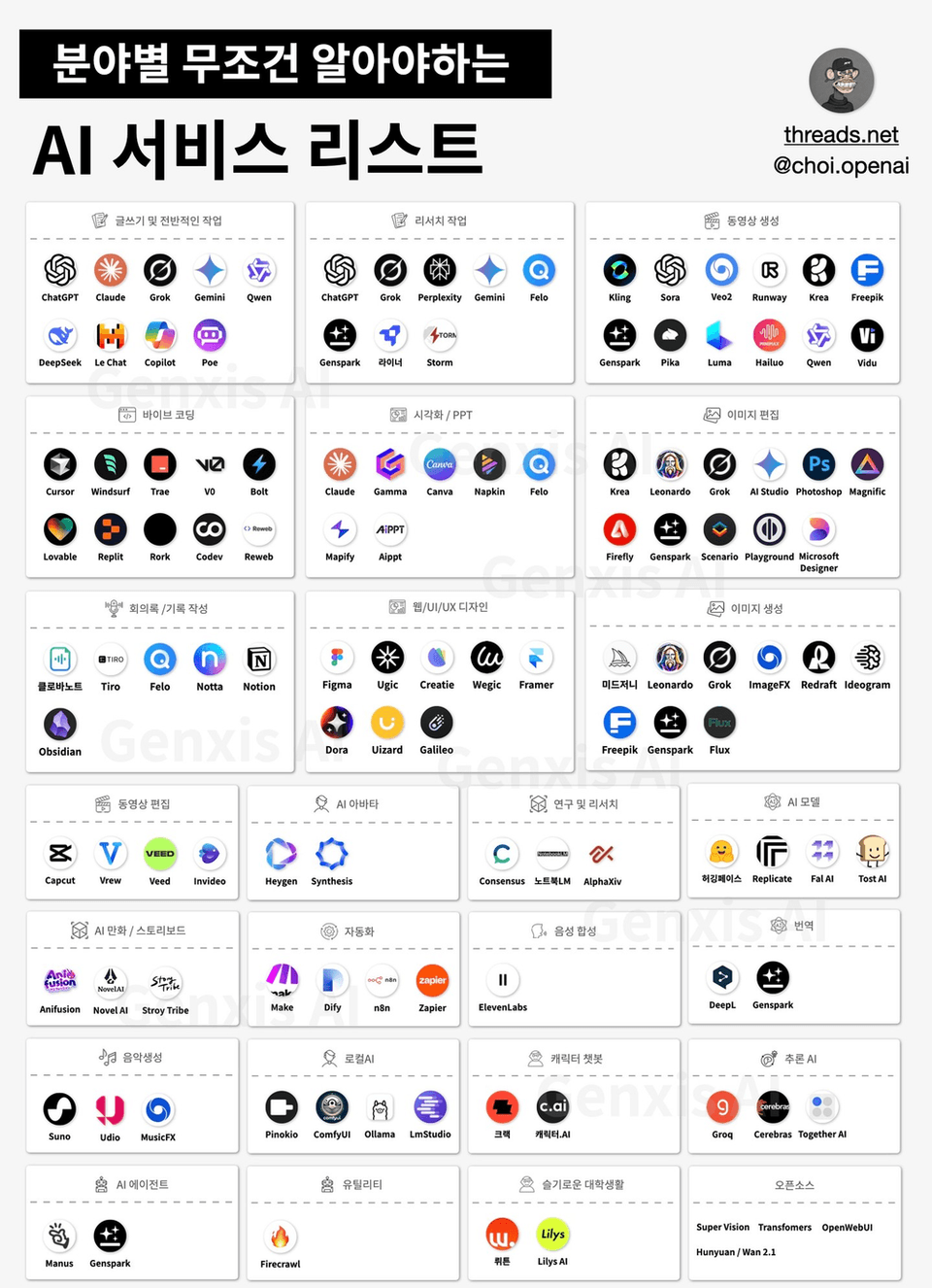
First, we will focus on ChatGPT, the most representative generative AI service.
As ChatGPT is the most widely used generative AI service, it is the absolute basic of basics. Furthermore, in most cases, what can be done in ChatGPT can also be done in services like Gemini, Claude, and Grok, and vice versa.
Widely known general-purpose generative AI companies like OpenAI and Google are competitively launching services. This includes not only general chatbots but also specialized coding agents for vibe coding and multimodal capabilities that can process various types of data. Therefore, if you focus on and learn about the representative services, you will also be able to identify similar services offered by competitors.
Except for specialized fields that require domain knowledge, such as design, video, music, and comics, I have included relevant concepts in the curriculum so that you can learn and use them naturally. The AI services used in this lecture consist of tools with low entry barriers and difficulty levels, making them fully accessible even to non-experts.
Generative AI ― ChatGPT, Claude Desktop
Vibe Coding ― Cursor
Automation ― ChatGPT Custom GPTs, ChatGPT Task, Make
AI Agent ― AutoGen Studio
Local AI ― LM Studio
Browser Utility ― Sider
When we make a request through a prompt, the AI agent within the service handles various tasks such as writing text, generating code, designing, and drawing pictures. Rather than focusing on flashy mastery of various tools, this course aims to help you master the "fundamentals," which are the common concepts used across various services, so that you can use agents more easily without being dependent on any specific service.
"AI Literacy: Generative AI Introduction for Non-Majors" is an AI course where a developer provides easy explanations for office workers and students. While there are quite a few courses that cover individual topics like automation or vibe coding in depth, it was not easy to find a course that covers a broad and shallow range for an introduction to generative AI, so I decided to create one myself.
This is a literacy education program designed for non-experts to understand the core knowledge for effectively 'utilizing' generative AI, covering Prompt Engineering → Security → Automation → Language Model Architecture. In particular, the language model architecture section is an advanced course suitable for those who wish to go beyond simply using generative AI and gain a comprehensive look at how language models are structured.
It focuses on AI "technical" literacy, which involves understanding, utilizing, and collaborating with generative AI like ChatGPT. However, rather than a narrow and deep expert-level technical understanding of a specific topic, the goal is to build a solid foundation by understanding the generative AI ecosystem and tools at a broad but slightly shallower level to utilize various AI services in practice.
It covers most of the generative AI learning roadmaps, including the AI Agents Roadmap and the Prompt Engineering Roadmap. However, while this course is sufficient as a start and foundation for learning generative AI, it is not the end. You will need to continue studying.
AI courses centered around specific services generally have a short shelf life. In particular, they often become obsolete when new models emerge, trends pass, new competing services are released, or versions are updated. Rather than obsessing over a specific service, this course focuses on mastering the fundamentals of generative AI to prevent the knowledge you've worked hard to acquire from easily evaporating.
Prompt Engineering ― How to design questions so that AI can easily understand
Security ― How to use AI safely
Prompt Expansion ― Utilizing personalized memory, RAG, code-based prompts, and multimodal models
Automation ― Connecting AI with external services to configure automation workflows
Language Models ― Understanding the core elements that make up language models, such as training, transformers, and attention
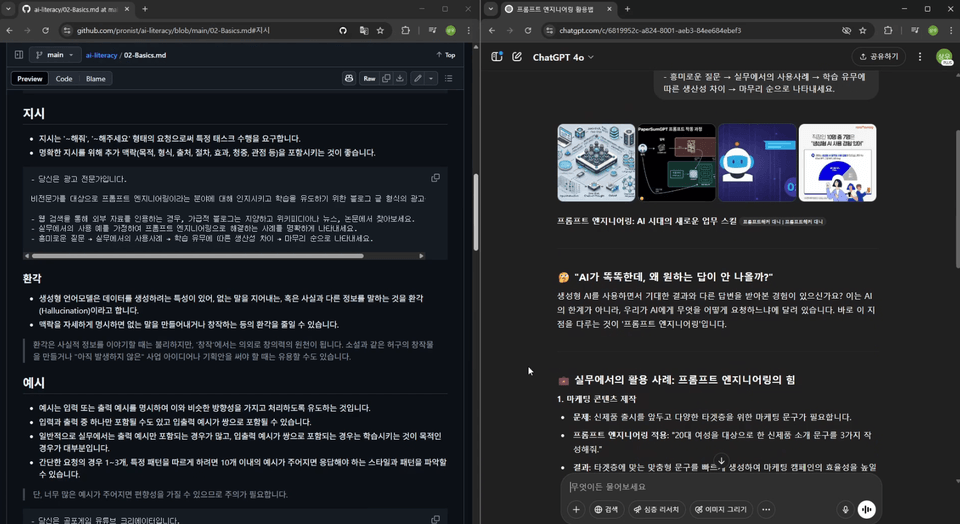
Practical-focused curriculum for non-experts
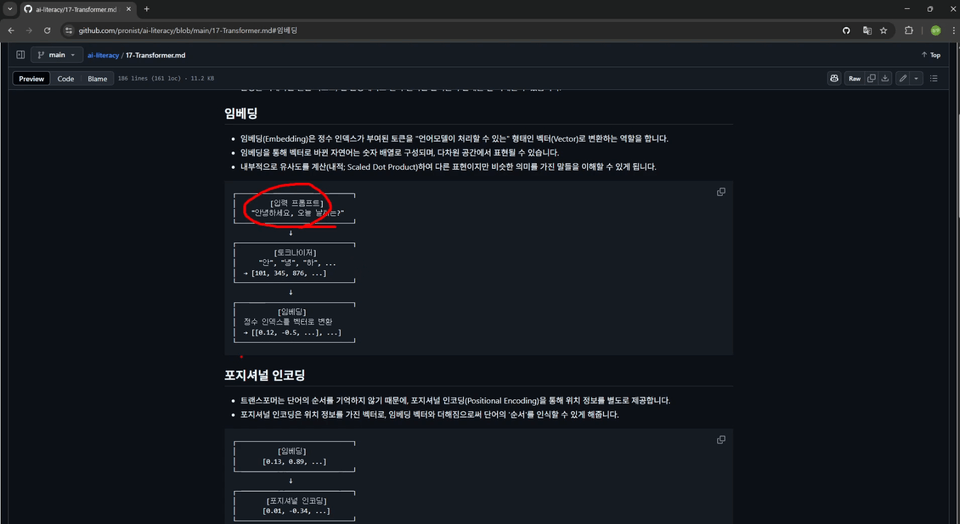
Literacy education that even explains the structure of language models
This course is designed for non-developers, including students, office workers, and general users, and features a harmonious blend of theory and practice to help you master various use cases and technical concepts in generative AI. The process involves reviewing the course materials together and engaging in direct hands-on practice.
We have chosen a structure that explains the principles of language models easily, covering topics such as GPT, BERT, Transformer, and Attention. Although diagrams are used for this purpose, complex code, mathematical concepts, or formulas are not included in the explanation.
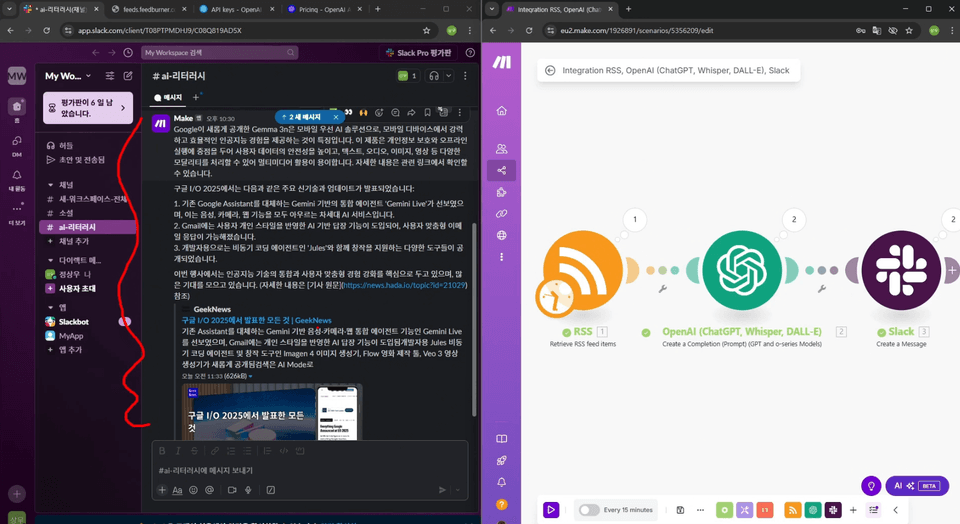
To automation and orchestration
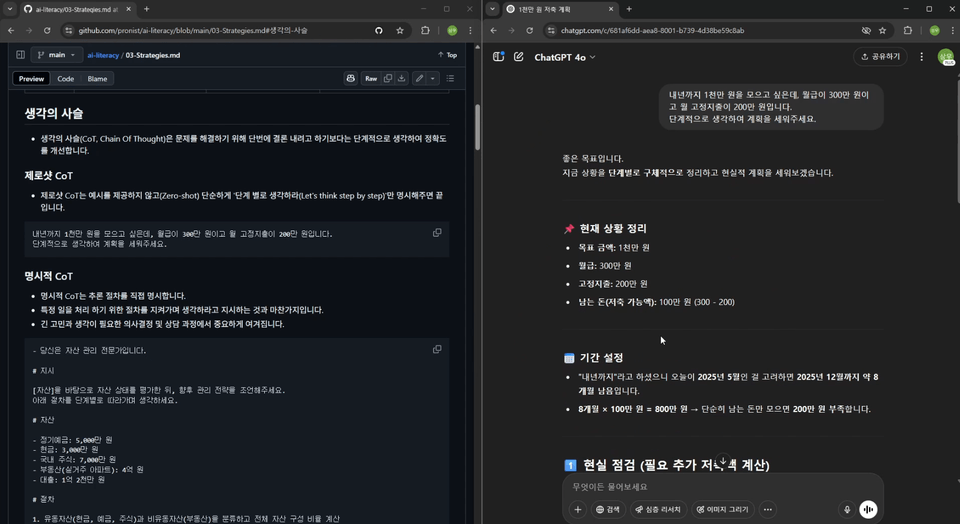
Compatible with various models such as ChatGPT and Claude
We will go beyond simple prompt engineering and expand into automation and orchestration to create AI Agents. By using tools such as GPTs, MCP, Make, and AutoGen Studio, you will get a sense of what can be achieved with generative AI within and beyond ChatGPT.
Content such as prompt engineering, automation and orchestration, and language models is not limited to specific services or models. Because it can be applied to future models and services, this knowledge does not easily become obsolete.
Basic: ChatGPT (>= Plus)
Automation and Orchestration: Claude Desktop, NodeJs, Python, Cursor
Lecture Notes: You can download them from the "What is Prompt Engineering? — Overview" lecture.
After taking this course, it is recommended to expand your studies by gaining deep knowledge in specific topics such as LangChain, AI Orchestration, and PromptOps.
If you have an understanding of coding and development, it is also good to move on to LangChain for LLM application development and fine-tuning to turn language models into domain experts. However, as these are specialized fields, there is a significant amount of technical content you need to know.
For non-majors, try building multi-agent systems and workflows using various AI orchestration and automation services such as Make, Zapier, N8N, and Flowise.
It is also a good idea to perform prompt testing using tools such as OpenAI Platform, PromptLayer, and Promptfoo.
Who is this course right for?
Those who have used ChatGPT but found the results to be inconsistent every time
Those who want to try using AI but feel overwhelmed about where to start.
Those who want to reduce repetitive tasks by utilizing AI in practice.
Students and professionals who are not technicians but want to understand the flow of AI automation
Those who have ever worried about security and accuracy issues when using AI
Need to know before starting?
Experience using generative AI services such as ChatGPT, Gemini, and Claude

1,920
Learners
107
Reviews
188
Answers
4.4
Rating
4
Courses
I am a freelance software developer and generative AI instructor. I am interested in utilizing AI, including ChatGPT and prompt engineering. I teach practitioners such as aspiring entrepreneurs and planners. I help even those who are not AI experts achieve great results by leveraging AI in their startups and practical work.
Contributing Writer and Journalist for Brand News, National Brand Promotion Agency
Partner Instructor at Crowd Academy
Email: pronist@naver.com
Brunch Story: https://brunch.co.kr/@pronist
GitHub: https://github.com/pronist
Tech Blog: https://pronist.tistory.com
Inflearn: https://inf.run/iD5QJ
(Multicampus) Samsung SDS 『FabriX』 Introduction and Utilization Lecture
(Oz Coding School) "Solo Entrepreneur Development Bootcamp" 1st, 2nd, 3rd, and 4th Class Generative AI Special Lecture
(Inflearn) 『AI Literacy: Introduction to Generative AI for Non-Majors』 Lecture
(Oz Coding School) 『Lean Startup-Customized Serverless MVP Development Expert Training Course』 3rd Class PHP Lecture
(Inflearn) 『PHP 7+ Programming』 『PHP 7+ Programming: Object-Oriented』 『PHP 8, Exploring New Features』 Lectures
(BJ Public) 『Awesome Laravel』
(Brunch Story) 『ChatGPT 101 for Non-Majors』
All
26 lectures ∙ (8hr 15min)
Course Materials:
All
32 reviews
4.8
32 reviews

Reviews 6
∙
Average Rating 5.0
Reviews 6
∙
Average Rating 4.8
Reviews 1
∙
Average Rating 5.0
Reviews 2
∙
Average Rating 5.0
Reviews 2
∙
Average Rating 5.0
Check out other courses by the instructor!
Explore other courses in the same field!
25% off for new members
$57.00
25%
$77.00




![[Marketing Archive] New Media Marketing Utilizing Generative AICourse Thumbnail](https://cdn.inflearn.com/public/files/courses/337637/cover/01jwfsks5w5v7z6x2z2c0jb2bw?w=420)
![AI Reading Comprehension for Engineers [Beginner Edition] — 48 Lessons on Understanding Model Cards, API Documentation, and Research PapersCourse Thumbnail](https://cdn.inflearn.com/public/files/courses/343794/cover/01m01gk3f7dhe2fwesbwf63tz0?w=420)