While preparing for a backend job, I was planning to challenge myself by developing a backend server without using a framework, and that's when I discovered this course on Inflearn. So, instead of just developing without a framework, I started this course with the mindset of learning how to actually develop a framework.
I'll make sure to leave a review after completing the course!
5.0
jetlifan
91% enrolled
This is a lecture that will give you an overall understanding of important points in development.
It shows you the process of creating a framework yourself and explains why and how implementation should be done, so you can learn the points that you need to consider as a developer.
5.0
강태일
100% enrolled
I am getting useful information!
What you will gain after the course
Knowledge and experience to understand all the frameworks in the world
Ability to explain backend technology roadmap
Ability to view backend frameworks from a creator's perspective
backend framework, Let's make it with our own hands! 🧰
What about this lecture?
Create your own backend framework, This course will help you easily understand and use the world's many frameworks from a creator's perspective.
Why should you build your own framework?
All the frameworks in the world They are all made through the same process .
There are many delicious foods in the world Thanks to that food, we can live happily in the world. There are ways to make that delicious food even more delicious. I cook the food myself .
Of course, you can't make it well from the beginning. You may fail to adjust the ingredients or burn the pot. The food you worked so hard to make may get the worst reviews.
But if you don't get discouraged and keep trying, My own recipe is complete, You can make food that everyone can enjoy.
But the experience and knowledge gained from cooking doesn't stop there. The way you look at food changes. It gives you the ability to read the ingredients, tools, and thoughts of the person who made the food. And it broadens my horizons with wisdom to refine my recipes to perfection.
Creating a framework is the same. My experience and knowledge in creating frameworks The skills and knowledge contained in other frameworks, And it helps us to understand the thoughts of the person who created it correctly. It will be wisdom that will deepen my capabilities.
That's why you shouldn't just use the framework well. You have to create your own framework for other people to use.
It's okay if the code is messy. Of course, errors may occur. There may be complaints from users.
But the world's great frameworks were created through the same process. Repeat the process of bumping into problems, identifying them, and solving them. Such a process allows you to gain knowledge and experience and becomes wisdom within your body. Enriching the lives of developers.
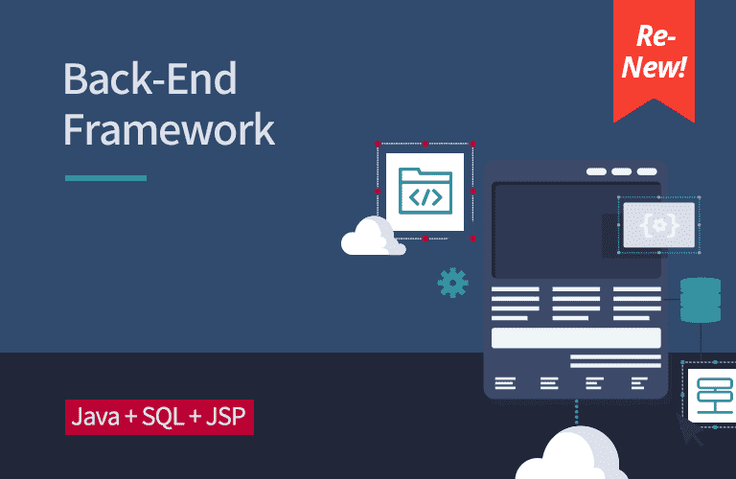
"Creating a backend framework" From nothing to a level that can be used for actual work It contains the process of completing the backend framework.
Abstraction for SW reusability, which is the basic goal of SW engineering. At runtime, create a module with the desired functions and data. object-oriented paradigms available, Transactions to secure both parallelism and serializability Non-functional quality attributes that must be provided to developers There is a process, experience, and wisdom that goes into putting it into a framework.
Through this lecture It makes it easy for me and others to create working software. I hope you have the courage and effort to create a framework. And I hope that through such experiences, developers' lives will become richer and more enjoyable.
Additional information in the revised edition
Bulletin Board Project
Explains the process of completing the bulletin board and backend framework, which are the basic topics of the toy project.
Describes a complete framework that goes beyond direction
The advanced course explains the principles and functions of the framework required for additional practical work.
Understand that the direction of the framework is similar by comparing it with other frameworks.
Lectures designed with students in mind
Embedded Tomcat, automatic configuration of the execution environment
Project/Module Configuration for Eclipse and IntelliJ Users
Learning Content
It consists of a total of 8 sections (excluding orientation).
Each section contains a question to think about. There are no right or wrong answers, but please think about it and express it in writing.
Because the framework's features are built sequentially, we recommend learning them in the order of the curriculum .
(Advanced) courses provide detailed explanations of specific functions. They are easier to understand if you take them after completing the basic course.
The source code used in the lecture is uploaded to GitHub by section. (Link)
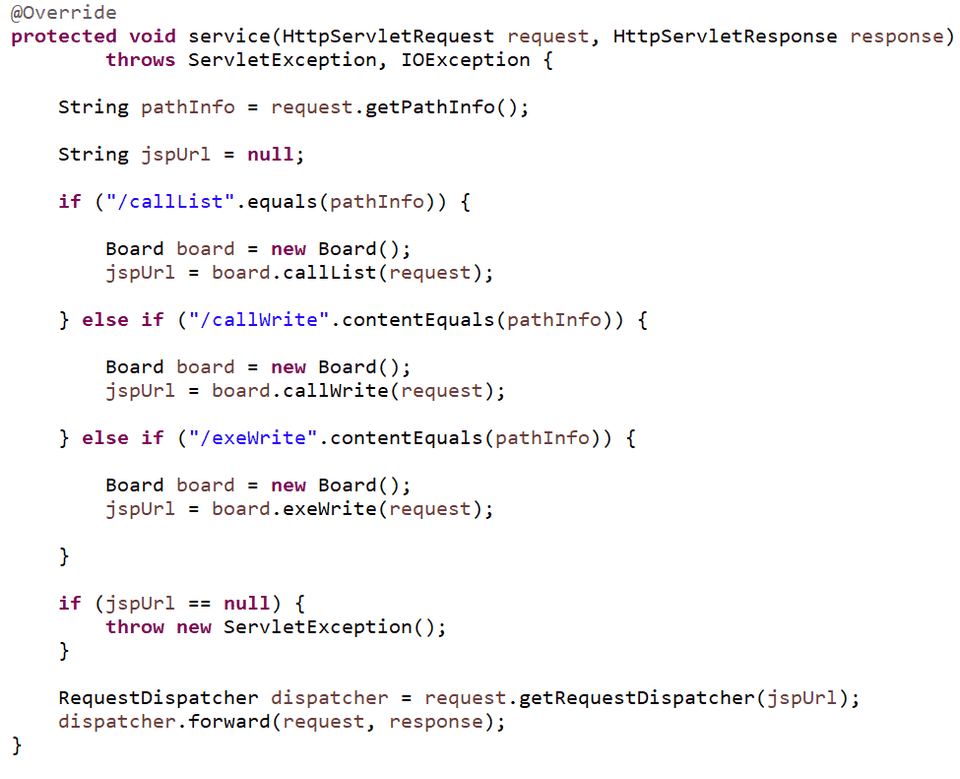
Section 1. Prepare to easily create working software. • Understand Servlet and MVC architectural styles and implement them from a framework perspective.
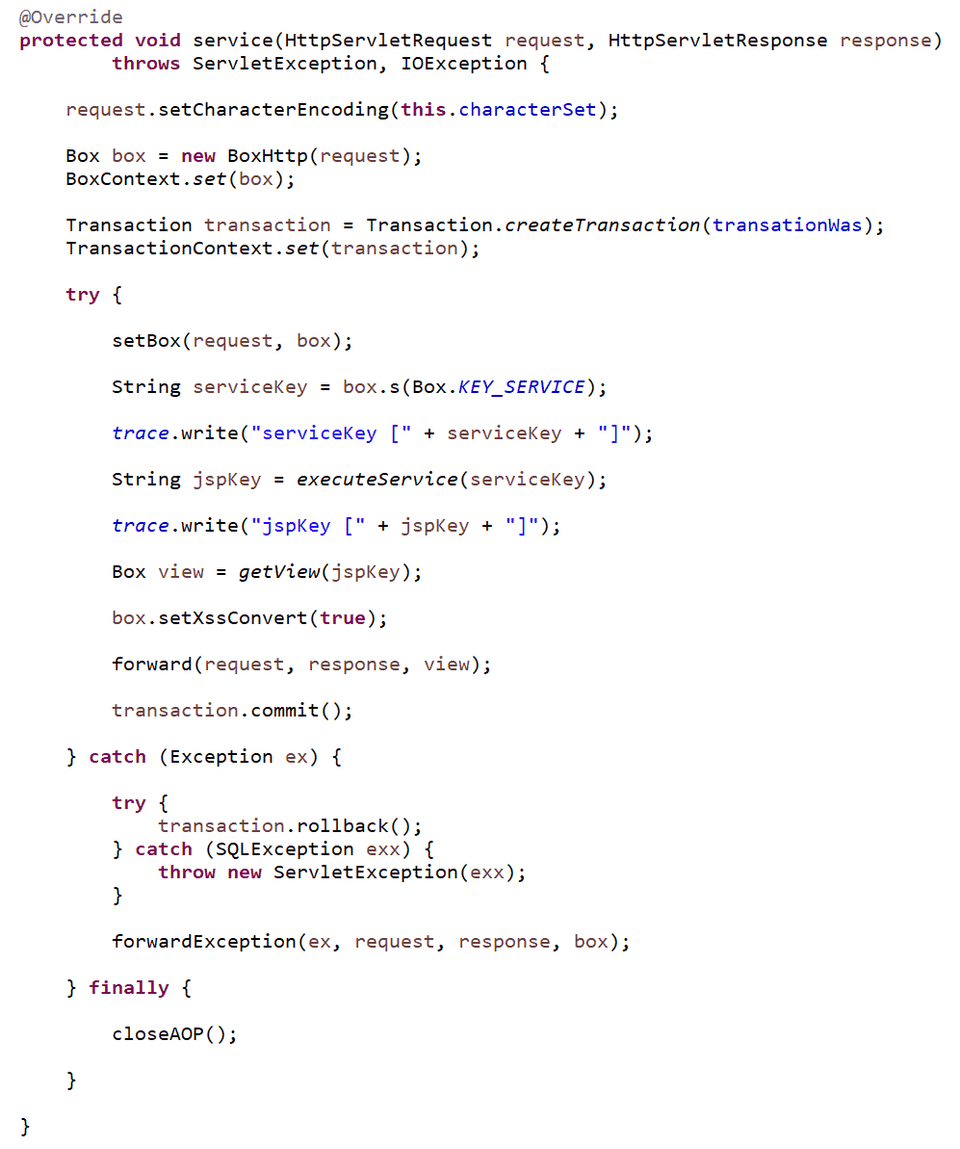
Section 2. Abstracts common functions and organizes them for easy use. • The first common function, the HttpServletRequest object, is abstracted and refactored from an AOP perspective to make it easier for developers to use.
Section 3. Eliminate SQL-dependent development. • Understand SQL-dependent development and develop framework features to eliminate it.
Section 4. Implement DI and IoC to reuse service logic. • Think about and implement DI and IoC, which are essential features of a framework, from a business perspective.
Section 5. Implementing authentication and access control. • Implement authentication and access control features that prove who I am and what I can do.
Section 6. Cryptography: What Developers Should Know • Learn the knowledge to effectively use block secret key encryption technology and implement it into functions.
Section 7. Implement a logging function to understand SW characteristics. • Implement logging functions to understand SW characteristics in systems operating in a parallel/parallel environment.
Section 8. We distribute one piece of software we create. • Run half the backend framework and deploy and verify the bulletin board functionality for the other half.
Section 9. Appendix:Enabling Thymeleaf in our framework. • Take well-built front-end technologies and configure them to run.
Take on the challenge now!
The beginning is simple, but Finally, it can be used in practice You can complete a great backend framework .
Recommended for these people
Who is this course right for?
For those who want to know the principles of backend frameworks
Anyone who wants to understand the theories required for developers
Anyone who wants to create SW for developers to use
While preparing for a backend job, I was planning to challenge myself by developing a backend server without using a framework, and that's when I discovered this course on Inflearn. So, instead of just developing without a framework, I started this course with the mindset of learning how to actually develop a framework.
I'll make sure to leave a review after completing the course!
This is a lecture that will give you an overall understanding of important points in development.
It shows you the process of creating a framework yourself and explains why and how implementation should be done, so you can learn the points that you need to consider as a developer.
Hello. This is Zero. It's been a while since I posted a course review. ^^
As I mentioned before,
I hope you don't just keep the knowledge and experience I've conveyed through videos in your head,
but express them in code and writing.
Knowledge is completed when you express it,
and experience is completed when you convey the expressed knowledge to others.
Thank you again for the course review.
I look forward to your course review after the course is over. ^^
One thing I want to say is
Since there is a lot of lecture content, many people stop listening in the middle.
It's really unfortunate for the lecture writer.
If you post a post or question that organizes your knowledge for each sector,
you will be able to listen with interest until the end without getting tired.
Why is it done like this?
If I were you, I would do it like this...
Isn't this knowledge wrong?
What would happen if I applied that knowledge like this?
I think it would be good to use the lecture by posting questions like this and getting answers,
and asking again if you don't like it.
The lecture fee also includes lecture feedback.
Please make good use of it. :)
Thank you.










![[Spring AI in Practice] Creating Your Own 24-Hour Code Reviewer & Automatic Grading AgentCourse Thumbnail](https://cdn.inflearn.com/public/files/courses/340163/cover/01kd87fc1wdcg20nnkcngd9wap?w=420)






![[Season 1] Spring AI in Practice: Developing a Premium Reservation AI AgentCourse Thumbnail](https://cdn.inflearn.com/public/files/courses/339732/cover/01kb2qr7zw5gf0724jvv4rndns?w=420)