Building the Basics of R Programming
coco
This course covers the basics of R programming for those who have no knowledge of R programming.
입문
R
Theory and practice are different. We will understand the basic concepts of machine learning and introduce the core concepts and theories of various models that you must know. And we will share various techniques and know-how that are helpful in practice while handling various data.
234 learners
Level Basic
Course period Unlimited

Reviews from Early Learners
5.0
eastone0508
The training was enjoyable.
5.0
김동현
I think it will be of great help in my work.
5.0
blueday
Thank you for the lecture.
Basic concepts of machine learning and artificial intelligence
Linear Regression Analysis
Key concepts of machine learning models you need to know
Techniques for solving class imbalance problems
Concepts and Theories of Cluster Analysis
How to properly analyze data
The first step for beginner data scientists!
Want to learn the fundamental core concepts of machine learning and artificial intelligence? This course introduces the core concepts and theories essential to becoming a data scientist, as well as various practical techniques .
Therefore, this course focuses on core concepts rather than mathematical explanations, making it easy for beginners to understand. Furthermore, we share practical data handling challenges, along with various methods and know-how for resolving them.
Machine learning models
Core concepts and theories
Anyone who wants to know
As a data scientist
Growing fast
Anyone who wants to
What is needed in practice
Machine learning techniques and know-how
Those who want to learn
The course is structured so that, upon completing the course , you'll be able to properly analyze data as a data scientist . Furthermore, you'll be able to design appropriate experiments tailored to your data domain, select variables, and model to enhance model performance.
Q. Do I need a lot of mathematical knowledge to take the course?
Undergraduate level statistics is required, but prior knowledge is not required.
Q. Do I need to know how to handle R?
Yes, the course is conducted on the assumption that you have some knowledge of R or Python. Below
Building the Basics of R Programming
New to data analysis and R programming? Free course
From experience
Core know-how
transmission
vividly
Learning
Live Coding
various
With data
Real-life sense Up
Our training goes beyond simply teaching machine learning theories and applying them to data. Drawing on our experience in seven big data competitions (7 finalists, 5 winners) and various projects, we strive to provide you with the best know-how for effective data analysis.
To demonstrate my data analysis process, most of the exercises are conducted through live coding. I demonstrate in detail how to search and apply concepts when faced with a problem during the coding process. I also share problems encountered while handling data and the methods I use to resolve them.
We'll cover a variety of data. This includes the Boston House housing price prediction data, a widely used example, simulation data with strong multicollinearity, positive/negative movie review predictions (in Korean), villa rental price prediction data in Seoul, and the Kaggle Otto data, allowing you to gain practical experience.
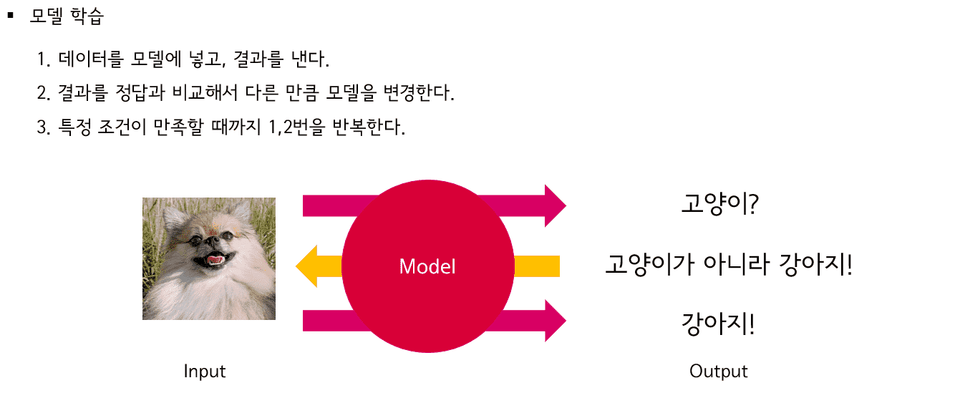
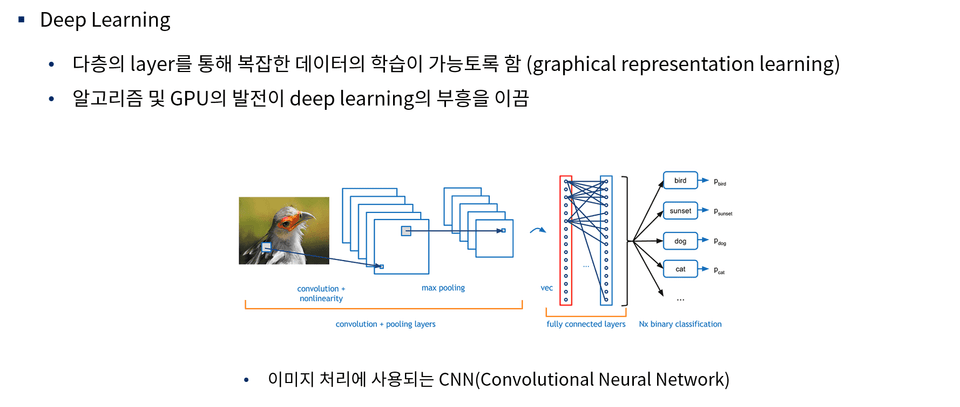
We'll cover what machine learning is and what it can do. We'll also explain the differences between machine learning and deep learning, and briefly introduce various machine learning and deep learning models. We'll also discuss the overfitting phenomenon, a common problem in both machine learning and deep learning.
When learning machine learning, the first model you learn is always the linear regression model. While it's a simple and easy model, it tends to be underused due to its poor performance. However, linear regression models are widely used in industry and are a powerful tool for linear regression problems. We'll focus on the most fundamental theories and concepts.
This course covers essential machine learning models. Rather than focusing on mathematical details, the lecture focuses on concepts for easy understanding. Less commonly used models like decision trees and kNN, while not commonly used as standalone models, are widely utilized in other fields and models. Therefore, they should never be neglected. You'll learn the concepts and applications of various models, and we'll also introduce ShapValue, a model gaining traction as an example of eXplainable AI.
Class imbalance issues occur more frequently in a variety of fields than you might think, causing a variety of problems. A prime example is the deterioration of prediction performance due to models learning biased toward multiple classes. This article introduces various techniques (re-sampling methods) to address this issue.
Data analysis isn't simply about reading data and fitting a model. It involves basic data preprocessing, generating key derived variables to predict Y values, and implementing appropriate experimental design. We'll teach you how to design experiments for various situations and the essential knowledge you need as a data scientist.
"There's a significant gap between the theory and practice of machine learning. The world is filled with diverse domains and data, and analyzing data requires more than simply training a model. Appropriate experimental design tailored to the domain, the creation of derivative variables to enhance model performance, and model selection based on the analysis objective are essential.
This course explains the concepts and core principles of data science and artificial intelligence in a simple, accessible manner, while also providing practical tips and know-how. I hope this course will help you improve your skills and sharpen your understanding of data analysis.
Who is this course right for?
Anyone who wants to know the core concepts and theories of machine learning models
Anyone who wants to grow quickly as a data scientist
Need to know before starting?
Statistics at undergraduate level
R Programming Basics
8,388
Learners
509
Reviews
136
Answers
4.4
Rating
20
Courses
I am an unemployed scholar who majored in statistics as an undergraduate, earned a PhD in industrial engineering (artificial intelligence), and is still studying.
Awards ㆍ 6th Big Contest: Game User Churn Algorithm Development / NCSOFT Award (2018) ㆍ 5th Big Contest: Loan Delinquency Prediction Algorithm Development / Korea Association for ICT Promotion
Awards
ㆍ 6th Big Contest Game User Churn Prediction Algorithm Development / NCSOFT Award (2018)
ㆍ 5th Big Contest Loan Defaulter Prediction Algorithm Development / Korea Association for ICT Promotion (KAIT) Award (2017)
ㆍ 2016 Weather Big Data Contest / Korea Institute of Geoscience and Mineral Resources President's Award (2016)
ㆍ 4th Big Contest: Development of Insurance Fraud Prediction Algorithm / Finalist (2016)
ㆍ 3rd Big Contest Baseball Game Prediction Algorithm Development / Minister of Science, ICT and Future Planning Award (2015)
* blog : https://bluediary8.tistory.com
My primary research areas are data science, reinforcement learning, and deep learning.
I am currently doing crawling and text mining as a hobby :)
I developed an app called Marong that uses crawling to collect and display only popular community posts,
I also created a restaurant recommendation app by collecting lists of famous restaurants and blog posts from across the country :) (it failed miserably..)
I am currently a PhD student researching artificial intelligence.
I even developed a restaurant recommendation app by collecting blog posts and lists of top-rated restaurants across the country :) (though it failed miserably...) Now, I am a PhD student researching artificial intelligence.
I even developed a restaurant recommendation app by collecting lists of famous restaurants and blogs from all over the country :) (It failed miserably...) Now, I am a PhD student researching artificial intelligence.

All
71 lectures ∙ (14hr 31min)
Course Materials:
All
29 reviews
4.8
29 reviews
Reviews 4
∙
Average Rating 4.8
Reviews 5
∙
Average Rating 5.0
Reviews 5
∙
Average Rating 5.0
Reviews 6
∙
Average Rating 4.5
Reviews 2
∙
Average Rating 5.0
$66.00
Check out other courses by the instructor!
Explore other courses in the same field!