Learn Terraform Basics with the Terraform Associate Exam
JeongSuk Lee
Learn the theory and practice of Terraform based on the HashiCorp Certified: Terraform Associate (003) exam content.

Basic
Terraform


Github Action for CI configuration!
"I'm curious about what CI is. How can I best grasp the concept from a technical perspective ?"
“My company has installed and is using a CI solution like Jenkins. What kind of content should I include in CI?”
“I received consulting on my CI/CD strategy, but I'm concerned about how to implement it .”
“We need to evaluate and manage our organization’s CI structure .”
When organizations talk about implementing CI, the actual implementation often involves only post-build package distribution. However, implementing CI involves establishing a software supply chain (SSC). It's not simply about installing a CI solution.
Learn how to configure Continuous Integration (CI) using Github Actions and how to apply the tools needed to configure the Software Supply Chain within CI.
This lecture covers the Model CI Flow , which must be implemented at a minimum when building a CI-based software supply chain. We hope this lecture will be helpful to those who have been curious about the standards and methods for building and evaluating CI systems.
Case 1 Are there any guidelines for configuring CI?
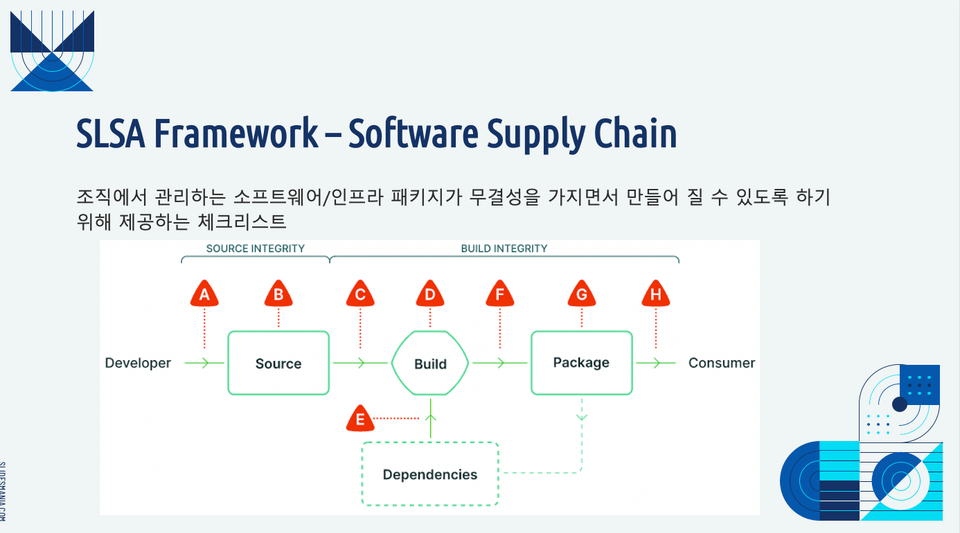
The SLSA Framework provides guidelines for the Software Supply Chain.
Case 2: In the CI system, there are concepts called Host and Agent. What are the ways to configure them?
We will explain how to configure the CI Host using Github Actions , and the Agent using either the SaaS-based Agent provided by Github or your own Agent based on the Ephemeral environment.
Case 3: I want to include our company's technical policy guidelines in CI. Is there a way to do this?
This article will explain how to apply security checks to CI using SonarQube and Aqua Trivy. It will also demonstrate Policy as Code (PoC) through ConfTest.
Case 4 Our organization uses IaC through Terraform. Can we manage the costs of this first in CI?
We'll explain how to use InfraCost to indicate cost increases or decreases for Terraform changes in GitHub Pull Requests.
CI isn't just about installing CI software and automating builds. Unlike typical CI courses that focus on builds and artifact creation, this course focuses on the core purpose of CI: Software Supply Chain Management and Gated Commit .
In addition, we will proceed by reflecting the latest trends such as Dependency management and SLSA Framework based on the Software Bill of Material, which has been highlighted due to recent security breaches caused by open source libraries (Log4j, SolarWind).
You'll understand that CI isn't just about installing CI software and automating builds. You'll also learn about the SLSA Framework and how it can be combined with other solutions to reach the highest Framework Level 4.
You'll learn how to implement Gated Commit using GitHub and explore how to build a CI chain for related services within a microservice architecture. You'll also learn how to create GitHub Custom Actions and leverage them to build a reusable software supply chain. You'll also understand the characteristics and differences between Persistent and Ephemeral agents.
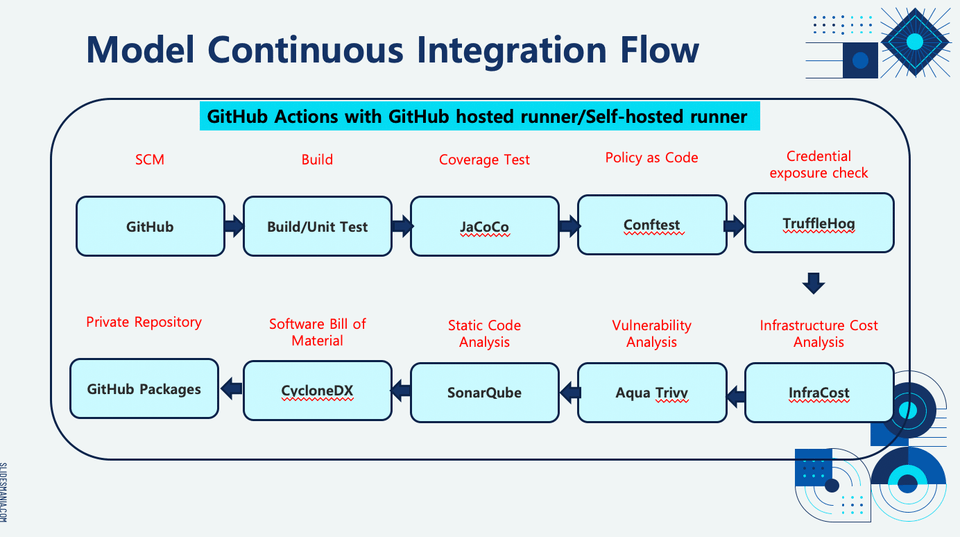
Getting Started with Github Actions
Verifying IaC Deployment Stability
Checking for security vulnerabilities in CI
Container image management using private repository
Modularizing the Build Process with GitHub Custom Actions
Implementing a GitHub Self-hosted Runner
Summary through SLSA Framework
I'm a digital nomad IT engineer with approximately 15 years of experience as a full-stack developer and DevOps engineer/consultant in Korea, Australia, and the UK. I'm constantly learning new topics to optimize IT organizational operations , and I dream of remaining an engineer until I retire. Currently, I work as a DevOps engineer on the Developer Experience team at a bank in Melbourne, Australia.
Q. When implementing CI, can't you just install Jenkins, enter the build command, and deploy it?
The goal of CI implementation isn't just to automate builds. Its purpose is to automate and review builds, tests, and organizational security/compliance requirements that may arise throughout the entire software supply chain, ensuring reliable artifacts are passed on to the CD team.
Q. I see you use a lot of software. Do I need any basic knowledge about it?
In this lecture, we will explain the purpose and method of use of the software used, and proceed with the process of integrating it with CI.
Q. How important is this part when building a career in DevOps?
In DevOps-related positions, CI/CD is a fundamental requirement, and questions about CI often ask for ideas or experience on how to structure pipelines. Pipeline flow and gated commits are crucial perspectives, and this lecture covers these aspects.
💾 Things to note before taking the class
The following PC specifications and service versions are required for this tutorial:




![[DevOps Classic 2] Integrated Logging through Building Log Analysis Technology in MSA EnvironmentCourse Thumbnail](https://cdn.inflearn.com/public/courses/330178/cover/874af780-6138-4232-a722-fce2a079b60d/330178-eng.jpg?w=420)

![[DevOps Basics 1] Monolith to Microservice Conversion with Spring/Python/Node.js and Strangler Fig PatternCourse Thumbnail](https://cdn.inflearn.com/public/courses/329980/cover/7687ff1a-6346-4e04-b2be-ceac51d6a1cc/329980-eng.jpg?w=420)