강의

멘토링

커뮤니티

AI Technology

/

Deep Learning & Machine Learning

Deep Learning for Developers

This course is ideal for those who want to focus on theory and context rather than practice, aiming to organize their knowledge of deep learning in depth and grasp the big picture. It makes the mathematical and statistical foundations of deep learning easy to understand and provides intuitive interpretations of key modern models—such as AutoEncoder, GAN, Transformer, and AlphaGo—from a developer's perspective.

(4.8) 8 reviews

108 learners

Level Intermediate

Course period Unlimited

  • kok202
Machine Learning(ML)
Deep Learning(DL)
Deep Learning(DL)
Statistics
Statistics
AI
AI
Probability and Statistics
Machine Learning(ML)
Deep Learning(DL)
Deep Learning(DL)
Statistics
Statistics
AI
AI
Probability and Statistics

What you will gain after the course

  • Probability and Statistics for Deep Learning

  • Likelihood, Probability, and Statistical Models from a Deep Learning Perspective

  • Statistical Learning Theory (SLT)

  • AutoEncoder, VAE, AlphaGo, Transformer

  • Operating principles and background of major deep learning models

Target Audience 🎯

Those who want to prepare for the AI era

Tools like Copilot and Cursor AI are clearly providing a huge boost to developers. At the same time, they can also feel like a threat. What should developers learn to prepare for the era of AI? I have poured my reflections and the answers I found into this course.

Those who want to deeply understand deep learning

Aren't you tired of every AI course being just about how to use LLMs? Simply knowing how to use an API doesn't make you an AI developer. This course is for those who want to dive deeper into the fundamentals of deep learning itself.

This is how it will change.

  • You will be able to systematically understand the mathematical and statistical background and core theories of deep learning.

    • You can focus on learning exactly what you need from the vast field of probability and statistics.


  • You will be able to interpret the principles of major deep learning models within their context and historical background, rather than as simple structures.

  • You will be able to understand the basic background and history of modern AI development.

    • You will be able to understand that probabilistic and statistical models existed before machine learning.

    • You will be able to understand that machine learning models are statistical models.

Original Curriculum 📝

Unconventional content

There are already countless resources available on topics like FCNN, CNN, and RNN, and high-quality free lectures are easy to find. Therefore, this course goes beyond simply listing concepts and focuses on the question of "Why?"—why these concepts emerged in the first place. I have put a lot of effort into ensuring that even those who have already studied deep learning can find valuable takeaways from this course.

A narrative-driven lecture

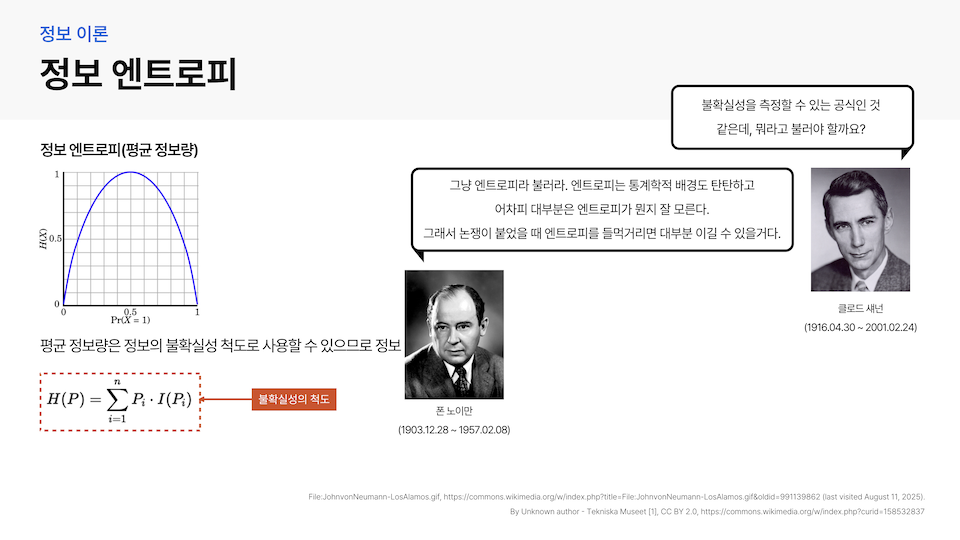
Did you know that the term 'Information Entropy' was actually named somewhat arbitrarily? Understanding the history allows you to grasp the context, which often leads to a more multi-dimensional understanding of the subject matter. By incorporating historical background and context throughout the course, I aimed to provide a learning experience that is both engaging and profound.

Deep Learning Lecture Covering Statistics

Since the roots of deep learning are often found in probability and statistics, understanding these fields is crucial. However, in reality, studying probability and statistics is challenging due to the vast amount of material and the scarcity of deep learning courses that cover statistics. This is one of the few courses that can help overcome these difficulties. It is a course specifically designed to focus on the essential background knowledge required to understand deep learning.

3000 slides

I structured all the lecture content to start with the challenges and questions researchers faced, explaining the process of how they solved those problems. To fully convey this flow to students, the lecture materials are also organized step-by-step, with approximately 3,000 slides prepared. I have done my best to ensure you truly understand the concepts, rather than just delivering information.

From the basics to probability, statistics, and the latest models 📈

Part 1. Deep Learning Overview

It explains core deep learning concepts such as perceptrons, layers, activation functions, loss functions, optimization, regularization, and initialization. Rather than just explaining the concepts, I focused on the historical background of how they emerged to add context and depth. I have prepared plenty of original content not commonly covered in existing lectures, such as the origins of the sigmoid function, cross-entropy derivation, and interpretation of the Adam formula.

Deep Learning Overview

Part 2. Probability and Statistics for Deep Learning

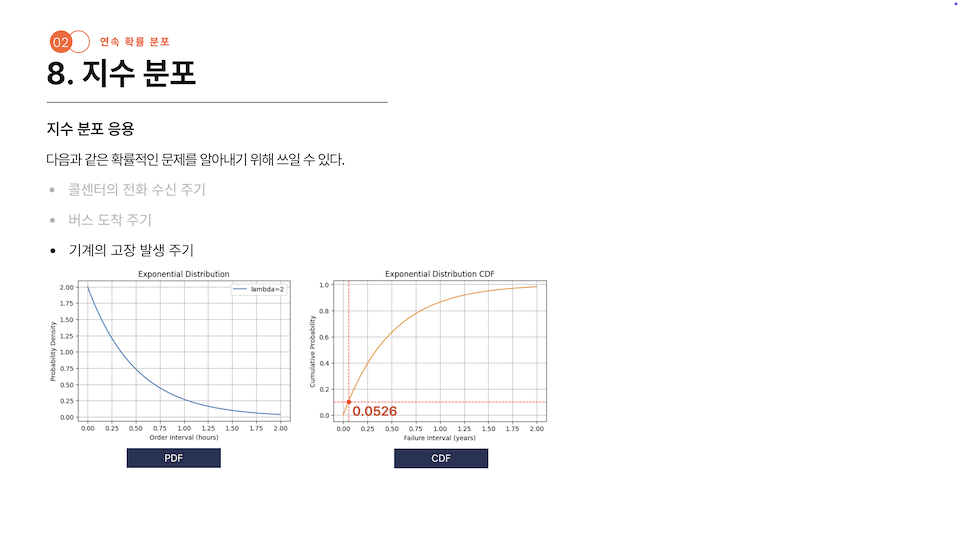
It covers the mathematical and statistical foundations of deep learning, such as regression, probability distributions, Bayes' theorem, likelihood, and Statistical Learning Theory (SLT). Rather than delving into the vast field of probability and statistics at a specialist's level of depth, we have focused on summarizing the essential background knowledge required to understand deep learning.

Probability and Statistics for Deep Learning

Part 3. Analysis of Modern Deep Learning Models

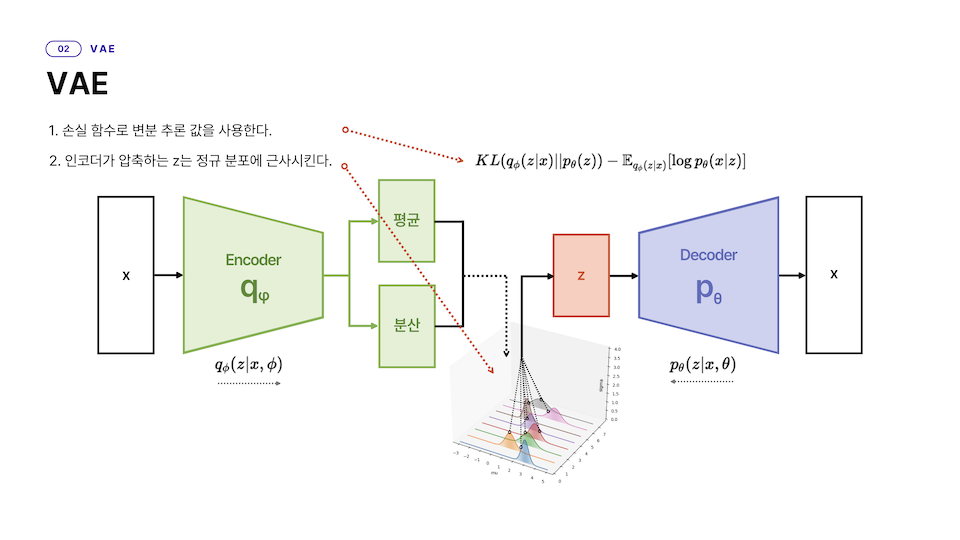
This section explains the principles and background of representative deep learning models such as AutoEncoder, VAE, GAN, Diffusion, ResNet, Transformer, and AlphaGo.
Instead of hands-on practice, it is structured to help you understand the context of how these models have evolved and their significance and limitations.

Analysis of Modern Deep Learning Models

I want to help you
grow as a developer!

I currently work at Kakao, and because I love building things, I'm always developing something even after work. There is a saying, "a dwarf standing on the shoulders of giants." I, too, am just a small dwarf, but I strive to pass on knowledge to contribute to the growth of the giant I stand upon. Having mentored many junior developers, I'll be able to help you grow.

✅ Github / Blog
✅ Current Backend Engineer at Kakao
✅ 2020 Open SW Developer Competition General Category Gold Award: National IT Industry Promotion Agency President's Award
✅ Published Book Pragmatic Programming for Java/Spring Developers
✅ Inflearn Course Incorrect Answer Notes for Java/Spring Junior Developers
✅ Inflearn Course Incorrect Answer Notes for Developers Who Want to Add Java/Spring Tests

Q&A 💬

Q. Can non-majors take this course?

This course was originally designed for those who have some experience with deep learning and want to take their skills to the next level. However, while structuring the course, I realized that significant prerequisite knowledge would be necessary to fully explain the concepts I wanted to convey. Therefore, I revised the curriculum to organize the content systematically from the basics. As a result, I believe the current course is now accessible enough for beginners or non-majors to understand if they follow along closely.

However, not all non-majors possess the same level of programming skills and mathematical background. Their understanding of AI also varies. This is true for majors as well, as some may have taken AI courses during their undergraduate years while others may not have due to a lack of interest.

Therefore, to provide a reference for those considering the course, we have gathered the following brief feedback. We conducted offline lectures for both majors and non-majors from various backgrounds and received the feedback below. If you are considering taking the course, please be sure to check the feedback, prerequisites, and precautions, and decide whether to enroll after trying the free lectures first.

  • Case 1. Computer Science major, 3 years of experience, no prior knowledge of deep learning


    It was harder than I expected. It definitely doesn't seem like a course for beginners. I was very satisfied with the content itself.


  • Case 2. Computer Science major, 5 years of experience, with deep learning background knowledge


    I realized there were many things I "mistakenly thought" I knew about deep learning. There was a lot of content I was seeing for the first time. I felt it was different.

  • Case 3. Fine Arts major (switched to developer), 3 years of experience, no prior knowledge of deep learning
    The content was difficult because I lacked a background in mathematics. I understood the message. The content itself was interesting.

  • Case 4. Electrical and Electronic Engineering major, 5 years of experience, no background knowledge in deep learning
    I felt the volume was large. Although the content was difficult, I felt it was content that was bound to be difficult.


Q. What is the proportion of hands-on practice, and what level will I reach by the end of the course?

Unfortunately, this course does not provide executable example code or follow a step-by-step approach where you type along to verify the process. I believe that simply copying someone else's code is not a very effective way to learn. Instead, I find it much more valuable to understand why a particular method emerged, what problem it aimed to solve, and how it differs from other approaches.

Furthermore, students use different devices and operating systems, and there are various deep learning frameworks, including TensorFlow and PyTorch. Additionally, framework interfaces often change significantly with each version update. For these reasons, this course focuses on the underlying concepts and principles rather than providing hands-on exercises tailored to specific code or environments.

Personally, I believe that for those whose goal is to become an AI modeler or who are curious about how to use frameworks, building models yourself and going through trial and error while referring to official documentation is a more effective learning method than taking a course.

Q. Will this course be helpful for employment, career changes, or research?

As someone who also took AI classes during my undergraduate years, I believe the content covered in this course provides deep learning knowledge that goes beyond the undergraduate level. Therefore, this course will certainly be helpful for students aspiring to become researchers.

Additionally, it can be useful for those preparing for AI interviews because it covers fundamental concepts and model principles that may come up in interviews. However, given the nature of job hunting, focusing on expected interview questions may be more helpful than studying all the vast content. Therefore, to be honest, I don't think this lecture would be very helpful for students who need to prepare for employment in a short period of time.

If you are a student preparing for an AI interview, I recommend referring to the GitHub repository below to organize the content instead.

Notes before taking the course

Learning Materials

  • Approximately 3,000 slides of PPT


Prerequisites and Important Notes

  • To take this course effectively, the following basic knowledge is required.

    • Basic programming knowledge

    • Basic college-level mathematics (must be able to differentiate quadratic functions)

    • Basic Linear Algebra (Must be able to perform matrix multiplication)

  • Although this course starts from the basics of deep learning, it is better to take it if you already have some basic knowledge.

  • As this is intended as a theoretical course, it does not include practical exercises.

  • We recommend taking the free course first before deciding whether to purchase.

Recommended for
these people

Who is this course right for?

  • For those who want to understand the working principles and origins of major deep learning models step-by-step

  • For those who want to understand the theoretical background and context of deep learning, rather than just generic conceptual explanations.

  • Those who feel the need to study statistics to understand deep learning

  • For those who want to learn only the truly essential probability and statistics required for AI from the vast amount of content available.

  • Those who want to derive cross entropy

  • Those who want to understand deep learning more deeply

Need to know before starting?

  • Basic programming knowledge

  • Basic College Mathematics

  • Linear Algebra

Hello
This is

3,755

Learners

282

Reviews

47

Answers

4.9

Rating

3

Courses

  • (Current) Kakao Backend Engineer
  • (Award) 🏆 Open Source SW Developer Competition [2020 General Category / Gold Prize_National IT Industry Promotion Agency President's Award] 

I am currently working at Kakao, and because I love creating things, I am always developing something even after work. There is a saying, "A dwarf standing on the shoulders of giants."

I currently work at Kakao, and because I love building things, I am always developing something even after work.

There is a saying, "A dwarf standing on the shoulders of giants." I, too, am merely a small dwarf, but I strive to pass down knowledge to contribute to the growth of the giant I stand upon. Having mentored many junior developers, I believe I can help you grow as well.

GitHub > https://github.com/kok202
Blog > https://kok202.tistory.com

Curriculum

All

32 lectures ∙ (9hr 2min)

Course Materials:

Lecture resources
Published: 
Last updated: 

Reviews

All

8 reviews

4.8

8 reviews

  • petergbson2님의 프로필 이미지
    petergbson2

    Reviews 1

    Average Rating 5.0

    5

    44% enrolled

    I was very impressed that the course covers not only basic deep learning concepts but also detailed yet important conceptual points that are difficult to encounter in other lectures. Additionally, considering students who might find certain terms or concepts unfamiliar, the instructor explained them in an easy-to-understand way, allowing me to follow the lectures without much difficulty! In particular, there were many parts where the instructor explained each concept together with the background or reason for its emergence. While listening to the lectures, questions like "Oh, now that I think about it, that makes sense? But why is it like this?" naturally came to mind, and thanks to that, I felt like I was developing an attitude of thinking more deeply about and trying to understand those points. Rather than simply feeling like I was receiving knowledge while taking the course, it was a lecture where I could directly feel the sense of 'understanding while grasping the context'! I got the impression that a lot of thought and preparation went into the overall composition, quality and quantity of the content covered in the lectures, as well as the students' level of understanding. If a follow-up curriculum is opened in the future, I intend to take it. Thank you so much for such a great lecture!

    • raymid님의 프로필 이미지
      raymid

      Reviews 3

      Average Rating 4.3

      4

      31% enrolled

      I really enjoyed the lecture. I was especially glad to learn that the term "Norm" is not an abbreviation for Normalization, but rather a method for measuring the length of a vector in mathematics!!!

      • noojung님의 프로필 이미지
        noojung

        Reviews 4

        Average Rating 5.0

        Edited

        5

        100% enrolled

        This was so good to hear from a backend developer's perspective. Until now, I've only been using it, and only had a superficial understanding of the principles. Since I'm not someone who creates AI models, there were many parts I couldn't understand well even when reading the official documentation, but now that I understand the internal working principles, I think I'll be able to use it more deeply in actual work. Looking forward to more great lectures in the future ^^

        • dachki님의 프로필 이미지
          dachki

          Reviews 64

          Average Rating 5.0

          5

          31% enrolled

          • segara7285님의 프로필 이미지
            segara7285

            Reviews 1

            Average Rating 4.0

            4

            9% enrolled

            This course requires a basic understanding of deep learning and machine learning concepts.

            $46.20

            kok202's other courses

            Check out other courses by the instructor!

            Similar courses

            Explore other courses in the same field!