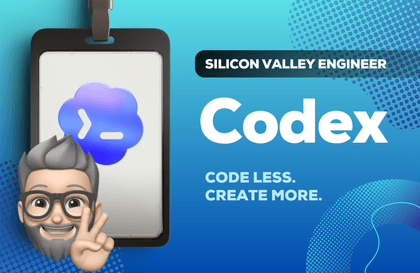

Codex with Silicon Valley Engineers
altoformula
From a developer who only used ChatGPT to a developer who handles AI agents. Learn practical ways to maximize coding productivity using Codex's Rules, Hooks, Skills, and MCP.
Beginner
AI, Python, codex
Learn how modern data teams leverage dbt. Build maintainable analytics models and validated data pipelines hands-on. Master core concepts of analytics engineering with a practical focus. This course is for those who want to take their data career to the next level 🚀
401 learners
Level Basic
Course period Unlimited
Reviews from Early Learners
5.0
홍태경
I am watching this after your Airflow lecture. I believe this is the only lecture available on information system modeling. I will certainly purchase your "Standard of Data Architecture" lecture later, as it's something you must know to get promoted. As a junior engineer who practically lives on Inflearn, I would be willing to spend hundreds of dollars on well-made, toy project-style ELT practice examples—where you take APIs and various raw data, put them into ODS, and combine them into fact and dimension tables to go from DW to DM. However, I haven't been able to find anything like that... ㅠ Do you happen to have any plans to launch something related to this in the future? ㅠ
5.0
asdf
It felt like a great opportunity to get a taste of DBT. I really liked how the hands-on practice was clean and straightforward without any hiccups. I'm not sure if I'll be able to use it at my current workplace, but I hope I'll have the chance to use it someday. Thank you for the great lecture.
5.0
이승호
I think it was an informative lecture that allowed me to get an introduction to and learn new concepts in data science in just about two hours. Until now, my knowledge of databases was limited to SQL concepts for writing queries that respond to API requests, and at most, designing table relationships. However, I found it truly beneficial to take a step further and take my first steps into the actual approach of how to process data required for practical work flexibly while maintaining its original form as much as possible. Please continue to provide great lectures in the future.
Understanding the complete workflow of how modern data teams work with dbt
Organize and extend complex SQL into structured models
Practical analytical engineering sense that can be applied immediately to real work
Improving Data Reliability through Testing and Documentation
In this course, you'll learn how to build a modern data analytics environment using dbt.
Going beyond simply writing SQL queries, we cover the process of designing maintainable analytical models and creating
reliable data pipelines through testing and documentation..
You can understand the core concepts of analytics engineering used by actual data teams in a practical way, connecting modeling, testing, and documentation in one unified flow.
#SQL, #Database, #DataModeling, #dbt, #HandsOn
The dbt and analytics engineering approaches covered in this course are widely used in the following fields.
📊 Data Analytics Team (Analytics / BI)
🧠 Analytics Engineer
🏗️ Data Engineering Organizations
🏢 Modern data stack environments from startups to large enterprises
☁️ Cloud-based data warehouses (BigQuery, Snowflake, Redshift, etc.)
In practice, many teams still struggle with
"SQL that works but nobody trusts"
"analysis queries where no one knows who created them."
I also repeatedly experienced these problems in the field,
and have been adopting dbt and analytics engineering approaches as the solution.
This course is designed to help you understand and apply dbt not through theoretical explanations, but exactly as it's used in real data teams. It's created to help those who want to turn data into 'manageable assets' beyond just SQL.
You'll learn the complete workflow of how modern data teams use dbt to build analytical data. You'll understand how to transform ad-hoc SQL into reusable and manageable analytical models. You'll clearly define dependencies between models and design a structure that refines data step by step.
You'll learn how to transform data from "plausible-looking results" into trusted analytical assets. Leverage dbt's testing features to validate data quality and build an analytical environment that the entire team can understand through automated documentation.
Modern analytics starts here.
Operating System and Version (OS): Windows, macOS, Linux, Ubuntu
Tools Used:
dbt Core (Open Source)
Python 3.9 or higher
Docker & Docker Compose (for unified practice environment)
Visual Studio Code or your preferred code editor
PC Specifications:
CPU: 2 cores or more
Memory (RAM): 8GB or more recommended (minimum 4GB)
Disk: 10GB or more of free space
Lecture slides (PDF / PPT)
Source code for hands-on practice (entire dbt project)
Basic SQL usage experience is required.
(SELECT, JOIN, GROUP BY level)
In the course, we will be using PostgreSQL in a Docker environment.
Don't worry if Docker is still unfamiliar to you! 😊
I have a free Docker course available, so if you need it, feel free to check it out and you'll be able to follow along quickly. 👉 https://inf.run/KkNw9
A practical, hands-on course that allows even SQL beginners to start easily and immediately apply what they learn. ✨
Pulling data with SELECT, connecting with JOIN, organizing with GROUP BY, and more
Let's learn only the most frequently used features in real work, easily and enjoyably! 📊
We'll minimize complex explanations,
"Ah, this is why SQL is important!" The course proceeds with realistic, immediately understandable examples. 💡
Data Analyst, Developer, Data Engineer…
No matter which path you choose, SQL is an essential skill. 🚀
With this one course, you'll build a solid foundation,
I'll help you develop the data intuition to solve problems on your own in real-world situations! 🔥
Who is this course right for?
👨💻 Those who use SQL but always feel their analysis structure is lacking
🧩 Those who want to make analysis results more reliable
🚀 Those who want to learn how modern data teams work
📈 Those who want to advance their data career to the next level
🔥 For those who want to break free from ad-hoc SQL
Need to know before starting?
✅ Basic SQL experience is sufficient.
📊 If you understand SELECT, JOIN, and GROUP BY, you'll be able to follow along without any problems.
🚀 If you have experience in data analysis or data engineering, you can understand it more quickly.
Inflearn Verified
25,577
Learners
1,447
Reviews
368
Answers
4.8
Rating
32
Courses
Are you going to finish in Korea? Penetrate the global market with English! 🌍🚀
Hello. I majored in Computer Science (EECS) at UC Berkeley 💻, have worked as a software engineer in Silicon Valley for over 15 years, and am currently a Staff Software Engineer working with Big Data and DevOps at a Big Tech headquarters in Silicon Valley.
🧭 I would now like to share the technologies and know-how I learned firsthand at the forefront of innovation in Silicon Valley with all of you through online lectures.
🚀 Join me, having learned and grown at the forefront of technological innovation, and develop the skills to compete on the global stage!
🫡 I may not be the smartest, but I want to emphasize that you can achieve anything if you stay consistent and never give up. I will always be by your side, supporting you with great resources.
All
23 lectures ∙ (2hr 41min)
Course Materials:
All
18 reviews
4.8
18 reviews
Reviews 3
∙
Average Rating 5.0
5
It's the best. I plan to take all the lectures related to data engineering.
Hello Seukseukseureuk, Thank you so much for taking the time to leave such a wonderful review!
Reviews 34
∙
Average Rating 5.0
5
I am watching this after your Airflow lecture. I believe this is the only lecture available on information system modeling. I will certainly purchase your "Standard of Data Architecture" lecture later, as it's something you must know to get promoted. As a junior engineer who practically lives on Inflearn, I would be willing to spend hundreds of dollars on well-made, toy project-style ELT practice examples—where you take APIs and various raw data, put them into ODS, and combine them into fact and dimension tables to go from DW to DM. However, I haven't been able to find anything like that... ㅠ Do you happen to have any plans to launch something related to this in the future? ㅠ
Hello Taekyung Hong, Thank you for your kind words. 😊 I also had many similar thoughts while creating the lectures. As you mentioned, the most regrettable part of learning dbt or data modeling is that there aren't many practice environments where you can go beyond simply learning syntax or features and actually design and build from ODS → DW → DM using data at a scale similar to real-world business. Especially from a data engineer's perspective, the experience of collecting data from APIs, logs, and operational databases, performing Fact/Dimension modeling using dbt, and finally creating a data mart is much closer to actual practical skills. However, it is surprisingly difficult to find educational content in this format. While I don't have a specific lecture in preparation at the moment, I agree that a practice-oriented data warehouse construction project, as you suggested, is highly valuable. If I plan a lecture in the future, I will consider a format where students can experience the flow of building an actual data platform, going beyond simple explanations of dbt features. Thank you for sharing your great opinion. This kind of feedback is a huge help in preparing for the next lecture. 🙏
Wow, thank you so much for responding to a junior's low-level question. Even if it doesn't necessarily involve dbt, a simple practice session pulling data via DB-to-DB procedures would be a huge help. Rather than just focusing on tech stacks like Spark or Airflow, I want to learn the ELT/ETL philosophy of a senior data engineer—things like the criteria for dividing Fact and Dimension tables in information system modeling, ensuring idempotence before loading data, and other critical factors to consider in various situations.
Reviews 21
∙
Average Rating 4.9
5
It felt like a great opportunity to get a taste of DBT. I really liked how the hands-on practice was clean and straightforward without any hiccups. I'm not sure if I'll be able to use it at my current workplace, but I hope I'll have the chance to use it someday. Thank you for the great lecture.
Hello asdf, Thank you for the great review! I'm so glad to hear that your experience "dipping your toes" into DBT was helpful 😊 As you mentioned, even if you don't use it right away, having experienced these tools and concepts once will allow you to utilize them much faster when you need them later. I put a lot of effort into structuring the hands-on parts so that you wouldn't get stuck, so thank you for the kind words. I will continue to create lectures that are helpful for practical work!
Reviews 19
∙
Average Rating 5.0
5
I think it was an informative lecture that allowed me to get an introduction to and learn new concepts in data science in just about two hours. Until now, my knowledge of databases was limited to SQL concepts for writing queries that respond to API requests, and at most, designing table relationships. However, I found it truly beneficial to take a step further and take my first steps into the actual approach of how to process data required for practical work flexibly while maintaining its original form as much as possible. Please continue to provide great lectures in the future.
Hello Seungho Lee, Thank you so much for the great review! As you mentioned, the goal of this course was to go a step beyond SQL or table design and provide a sense of how to "process and utilize data flexibly," and I am truly glad that you felt that part well. I will continue to create great courses centered on concepts and perspectives that can be applied directly in practice. Thank you!
Reviews 15
∙
Average Rating 5.0
5
Hello Jeju Peter, Thank you for taking the time to leave such a great review.
Check out other courses by the instructor!
Explore other courses in the same field!
Limited time deal ends in 2 days
$30,800.00
30%
$34.10