



Prompt Patterns for Developers
arigaram
We introduce basic prompt patterns for coding and advanced API prompt patterns for leveraging artificial intelligence.
Basic
prompt engineering
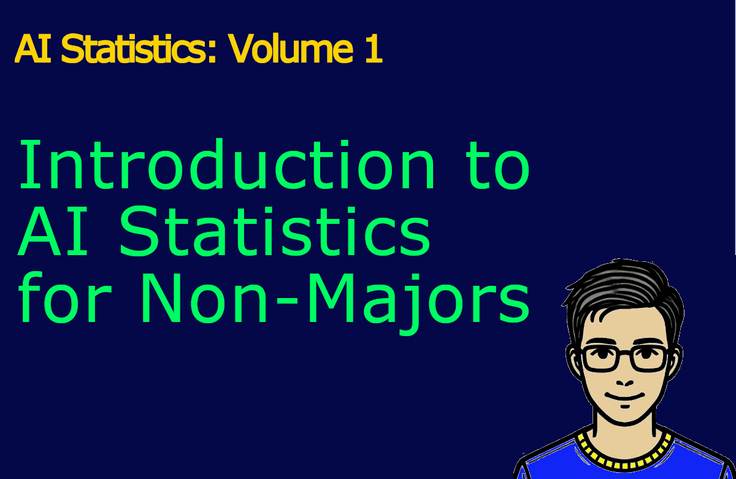
Without a single formula or line of code, this penetrates the essence of basic statistics necessary for AI development and application.
Understanding that AI is a probabilistic decision-making tool
The ability to interpret AI-generated results based on statistical thinking
An attitude of compensating for AI's limitations by considering data bias and uncertainty
The course is currently in the process of being completed. Please note that there is a disadvantage in that you may have to wait a long time until the course is fully finished (although I will be adding supplementary materials frequently). Please take this into consideration when making your purchase decision.
March 18, 2026
The entire course is being revised to the [2nd Edition]. During the revision period, the 2nd edition course materials will be posted first without videos, and the videos will be recorded and uploaded over several days. Therefore, there will be a period of a few days where no videos are available.
January 13, 2026
The lecture has been posted for the first time. For now, I have posted three lesson videos.
The lectures are currently being completed.
It is not easy to understand statistics, where all sorts of advanced mathematics run rampant. Therefore, it is better to focus on understanding the concepts at first without using formulas or code.
This course is an introductory program designed for non-majors with little to no background in mathematics or statistics.
Understand the principles of how modern Artificial Intelligence (AI) works and core statistical concepts easily and intuitively,
The goal is to develop the ability to correctly interpret and utilize AI results in practical, policy, and planning tasks.
Learning focused on concepts without formulas or proofs
Explanations focused on visual aids, examples, and analogies
Understanding AI's probabilistic judgment, data bias, and uncertainty
Including social context and ethical considerations
Through this course, students will be able to learn the following.
Understand that AI is not a thinking being, but a tool that makes probabilistic judgments based on data.
Acquire essential statistical concepts for understanding AI, such as mean, median, variance, standard deviation, probability, and conditional probability
Understanding data structures, variables, samples, and the incompleteness of real-world data
Realizing that having a lot of data is not always a good thing
Awareness of uncertainty in prediction results, overfitting, and data bias
Understanding the social and ethical issues that can arise when using AI results as they are
Acquiring foundational competencies so that even non-majors can safely utilize AI as a reference tool for judgment.
Planners, designers, policy makers, and general office workers who are new to AI
An introductory level that can be learned even if you are not familiar with mathematics or statistics.
Those who want to acquire the foundational skills to evaluate and utilize AI results.
Level: Introductory
Target: Non-majors
Time required: Approximately 10 minutes per lesson, 56 lessons in total, approximately 10 hours in total
Advantages: Intuitive understanding without formulas
We do not provide flashy diagrams like those drawn on a blackboard in the beginning. When the time comes... gradually... more and more...
Understand that AI is a tool for probabilistic judgment, and
You can interpret AI results based on statistical thinking, and
Responsible decision-making becomes possible by considering data bias and uncertainty.
Deepening Statistical Knowledge: AI Statistics courses prepared by the instructor for planners, developers, and machine learning engineers
Learning Machine Learning Basics: Supervised/Unsupervised Learning, Classification/Regression
Data Analysis Practice: Python, Excel, Visualization
Understanding AI Ethics and Social Impact: Reviewing Bias, Discrimination, and Policy Application
Starting with this course (introductory level for non-majors), which is the first lecture related to statistics required for artificial intelligence, you will be able to gradually progress from the planner level to the developer level, and from the developer level to the machine learning engineer level.
Who is this course right for?
Those who felt that existing explanations of AI were too vague and abstract
Someone who has felt limited in expanding their knowledge of artificial intelligence
Those who want to gain a deeper understanding of the fundamental principles underlying artificial intelligence.
Need to know before starting?
Artificial Intelligence
691
Learners
38
Reviews
2
Answers
4.6
Rating
18
Courses
I am someone for whom IT is both a hobby and a profession.
I have a diverse background in writing, translation, consulting, development, and lecturing.
All
56 lectures ∙ (8hr 53min)
Course Materials:
Check out other courses by the instructor!
Explore other courses in the same field!