Learn Git Internals by Building It Yourself
Jayce
Learn and create Git actions yourself, the de facto standard for version control tools!

Basic
Git, internals, Go
.png?w=736)
Distributed systems that seem complex and difficult,
Did you know that there's actually a pattern to the solution? ⭐

I have no experience with large-scale systems, but the company I want to work for requires knowledge of large-scale systems...
I want to study distributed systems, but where should I start?
I need to build a large-scale system, but I don't know what problems there might be or how to best solve them.
Distributed systems are a truly challenging area. If there are 100 services built on a distributed system, each service will utilize the distributed system with a different strategy tailored to its specific situation. However, the problems to be solved in distributed systems often follow common patterns. Consequently, the methods for solving these problems are also patterned .
In this lecture, we'll explore the challenges faced in developing planet-scale services through renowned papers. We'll explore common problems encountered in large-scale services through renowned books, papers, and articles.


When I was a junior, I once told a senior colleague at the company, "I've never developed a large-scale system before, so I'm not sure if what I'm trying to build is a good approach."
A senior colleague told me, " No one has ever experienced the exact situation you're in. Large-scale systems face different, detailed problems for each company. So we need to study in depth how similar problems were solved to find solutions that work for us. "
I began studying these issues, and through this process, I discovered how studying can help me grow as an engineer. I hope my lectures will help junior developers learn how to study deeply.
In this course, you'll learn about the fundamentals of distributed systems, including replication, sharding, and consistent hashing. You'll then explore real-world examples of how these components are applied.

Section 0 Introduction
This course provides an overview of the course. You can review the course objectives, target audience, main content, and presentation method.
Section 1: Basic Theory of Large-Scale Systems
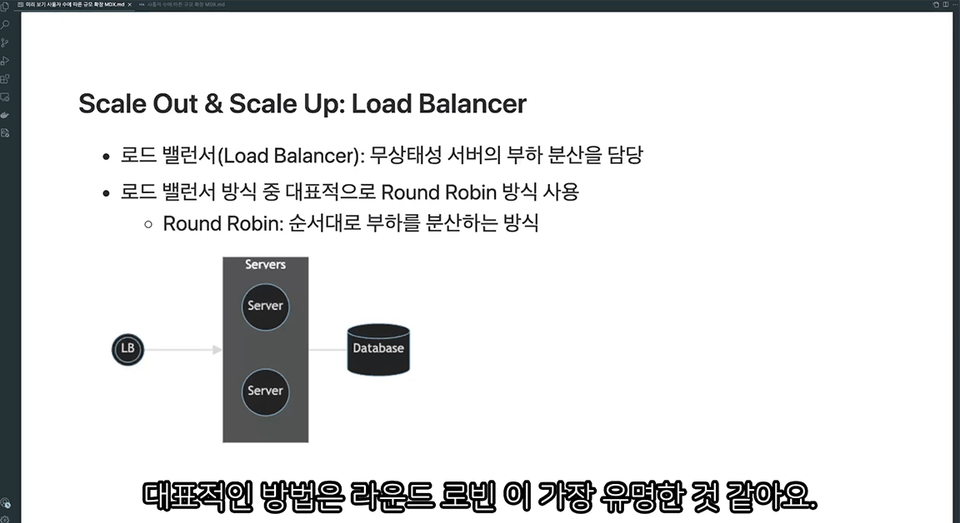
Learn about CAP theory, a fundamental principle of system design, and distributed storage techniques such as replication, partitioning, and sharding.
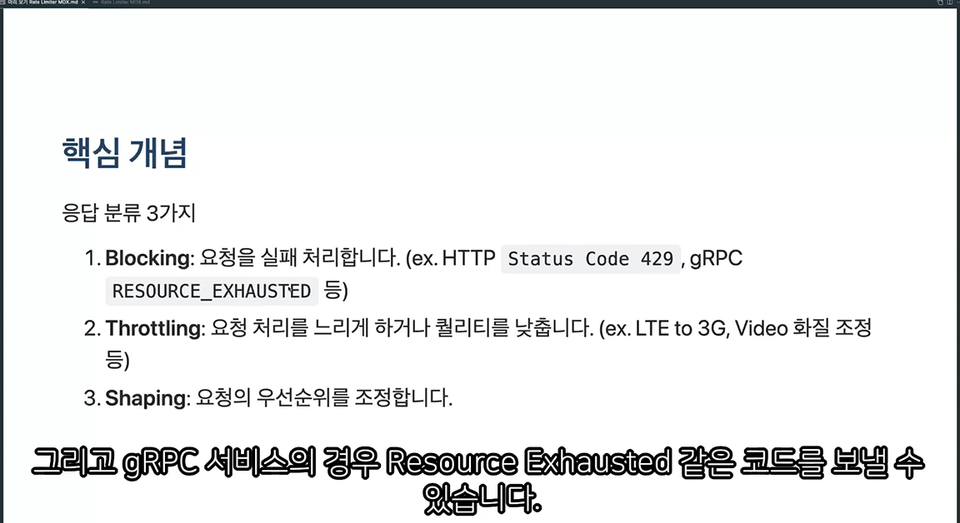
Section 2 Components of a Distributed System
Learn about Consistent Hashing, Rate Limiter (throughput control), and Unique ID Generator, which are components frequently encountered when designing distributed systems.
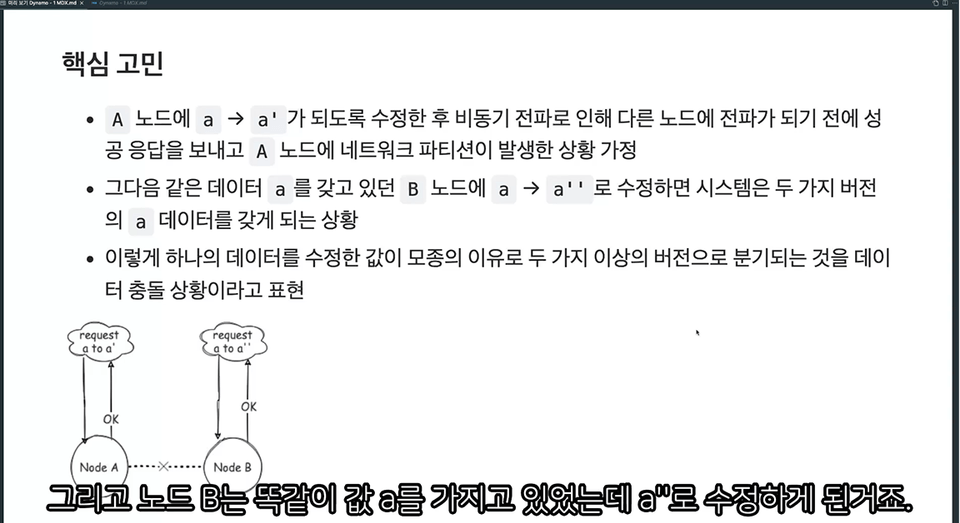
Section 3 Case Study
Based on this paper, we will examine the implementation of distributed systems by global companies such as Amazon, Facebook, and Instagram.
📢 Please check before taking the class!

Junior developers with no experience designing large-scale systems

Developers who want to study the components of distributed systems

Those who want to study complex systems from a macroscopic and theoretical perspective

Backend developer with 1-3 years of experience developing backend systems
📌 Join this lecture!
Q. Is it okay if I don't know much about computer engineering?
Basic CS knowledge is required. It's difficult to say exactly what constitutes basic knowledge, but if you have the necessary knowledge to work as a backend engineer, you should be able to address any remaining gaps through questions and research.
Q. Is there any practical training?
This course is a theoretical one. While developing even a simple distributed system is a truly valuable learning tool, I believe the difficulty of distributed systems stems from failure situations. Because it's difficult to build an environment that simulates unknown network failures, this course doesn't include implementation exercises. Instead, you'll learn how real-world cases have been used to resolve failures.
Q. What can I expect from this course?
I hope this lecture series will serve as a glossary of distributed systems knowledge for junior developers. You'll learn about common and well-known problems and solutions used in distributed systems. You'll be able to recall the lectures when you encounter or design similar problems. You'll also be able to make compelling arguments in interviews asking for system design skills.









![[Unity 6 Firebase] Real-world Serverless Game Backend: Data Save/Load, Ranking, Bulletin Board, MailboxCourse Thumbnail](https://cdn.inflearn.com/public/files/courses/342851/cover/01kw3p9kv236jv40dk7r44gfet?w=420)

![[ITⓔCoaching] Practical Data Management with OracleCourse Thumbnail](https://cdn.inflearn.com/public/courses/327587/cover/8133dede-51cb-4410-949c-cd95aa80b7d6/327587-eng-original.jpg?w=420)
![[The concept is easy~, the practice is intense] SQL data analysis, utilization!Course Thumbnail](https://cdn.inflearn.com/public/courses/328743/cover/59aa0ed0-cf2f-4cdc-b508-6cf8d652c563/328743-eng-original.png?w=420)
![[MMORPG Game Development Series with C# and Unity] Part 5: DatabaseCourse Thumbnail](https://cdn.inflearn.com/public/courses/325283/course_cover/afb413e6-681e-47cd-808a-099c79fed112/rookiss-rpg-5.jpg?w=420)