Spring Core Principles - Basic Edition
yh

Spring beginners can grasp core principles and solidify basics via examples.

Basic
Spring, oop
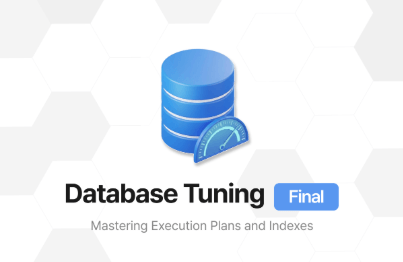
"A query that ran perfectly during development suddenly slows down as data accumulates." At such times, the mark of a truly skilled developer is identifying the root cause based on solid evidence rather than guesswork, and optimizing a 30-second query down to 0.1 seconds. Master the core principles of database performance—from execution plans, indexes, and optimizers to joins and sorting—using millions of rows of real-world data. Elevate your skills and become a top-tier developer capable of independently analyzing and resolving slow queries in production environments.
2,078 learners
Level Intermediate
Course period Unlimited
Reviews from Early Learners
5.0
박종철
Hello. I sincerely congratulate you, Kim Young-han, on completing your incredible 7-year journey! I have been taking your classes ever since my first one in January 2023, eagerly waiting for the notifications of new course releases to pop up. Looking back now at those late-night study sessions after work, rubbing my sleepy eyes to stay awake, I sometimes wonder how I managed to keep at it. It was grueling and a bit daunting, but it also filled me with immense pride and happiness. It has been a tremendous privilege and a source of great pride to have accompanied you to the very end of this monumental journey, one in which you poured your heart and soul into every meticulous detail. Once again, thank you from the bottom of my heart for tirelessly completing this remarkable roadmap over the past 7 years.
5.0
magicsof
Younghan, this lecture was truly outstanding. The 20 hours flew by in the blink of an eye. I waited until I had completed 100% of the course before leaving a review, so I’m only getting around to it now. Younghan, please don’t take too long of a break—I’m really looking forward to your next lecture as well. I know you still have many lectures in preparation!! For now, I’ll hold my breath and wait.
5.0
이수현
When I was preparing for employment, I used to be amazed by how easy it was to understand Mr. Kim Young-han’s lectures. They also helped strengthen my determination to find a job and motivated me to work hard in my preparation. Now that I’m employed, I’ve reached the stage where I think not only about basic database design but also about performance optimization. Even as I continue gaining hands-on experience, I’m very happy and grateful to still be learning alongside Mr. Kim Young-han’s lectures. Studying while envisioning an actual production database seems to make the lectures even more helpful. Thank you so much, as always, for your excellent lectures.
The ability to read an execution plan and independently diagnose the cause of a slow query.
The ability to independently design indexes tailored to specific situations.
Real-World Experience in Optimizing Queries by 10x to 100x Across Millions of Data Records
Understanding Database Internals Beyond Indexes
Who is this course right for?
Job seekers and students preparing for careers in the IT field
A backend developer who encountered a slow query in a live service but is at a complete loss as to where to begin troubleshooting.
A developer who is comfortable with feature development using SQL, but lacks confidence when faced with performance issues.
Aspiring Database Administrator (DBA)
Need to know before starting?
Kim Young-han's Practical Database Fundamentals


Inflearn Verified
616,627
Learners
43,548
Reviews
9,143
Answers
5.0
Rating
27
Courses
Educator
Before: Technical Director at Woowa Bros, Kakao, SK Planet
Author: Java ORM Standard JPA Programming
My goal is to provide education so that you can become a truly practical and competent developer.
EO Interview Video
The Life of Korea's Top Developer Instructor Young-han Kim [Part 1]
The Life of Younghan Kim, Korea's Top Developer Instructor [Part 2]
Gaebalbadak - A Country Youth Becomes the King of Development
Q&A Commemorating Inflearn Reaching 200,000 Users for the First Time
Q&A Commemorating Inflearn Reaching 300,000 Users for the First Time
All
104 lectures ∙ (21hr 10min)
Course Materials:
All
58 reviews
5.0
58 reviews

Reviews 36
∙
Average Rating 4.8
Edited
5
Hello. I sincerely congratulate you, Kim Young-han, on completing your incredible 7-year journey! I have been taking your classes ever since my first one in January 2023, eagerly waiting for the notifications of new course releases to pop up. Looking back now at those late-night study sessions after work, rubbing my sleepy eyes to stay awake, I sometimes wonder how I managed to keep at it. It was grueling and a bit daunting, but it also filled me with immense pride and happiness. It has been a tremendous privilege and a source of great pride to have accompanied you to the very end of this monumental journey, one in which you poured your heart and soul into every meticulous detail. Once again, thank you from the bottom of my heart for tirelessly completing this remarkable roadmap over the past 7 years.
Mr. Jong-cheol Park, thank you so sincerely for being with me on this long journey since 2023 and for celebrating the final period with me. Thanks to people like you, I was able to find the strength to complete the roadmap. I will be sincerely rooting for you, wishing that the path you walk ahead is always filled with great achievements and happiness!!!

Reviews 15
∙
Average Rating 4.9
5
Thank you for your hard work. I enjoyed this lecture as well. After studying tuning from books, I was finally able to understand it through your lecture, Younghan. I look forward to more great lectures in the future. Thank you.
Golden Coin, thank you for listening so attentively :) It really does become your own when you actually try it out yourself. Haha, cheering you on!
Reviews 5
∙
Average Rating 4.2
5
Younghan, this lecture was truly outstanding. The 20 hours flew by in the blink of an eye. I waited until I had completed 100% of the course before leaving a review, so I’m only getting around to it now. Younghan, please don’t take too long of a break—I’m really looking forward to your next lecture as well. I know you still have many lectures in preparation!! For now, I’ll hold my breath and wait.
magicsof, 20 hours flew by in no time, huh? Hahaha. Thank you for your support!!!
Reviews 3
∙
Average Rating 4.7
5
When I was preparing for employment, I used to be amazed by how easy it was to understand Mr. Kim Young-han’s lectures. They also helped strengthen my determination to find a job and motivated me to work hard in my preparation. Now that I’m employed, I’ve reached the stage where I think not only about basic database design but also about performance optimization. Even as I continue gaining hands-on experience, I’m very happy and grateful to still be learning alongside Mr. Kim Young-han’s lectures. Studying while envisioning an actual production database seems to make the lectures even more helpful. Thank you so much, as always, for your excellent lectures.
It makes me truly proud and happy to see that you’ve been with us since your days preparing for employment and have now grown into an amazing developer who considers performance optimization in your professional work, Suhyeon Lee :) I sincerely support your journey as a developer, as you continue to grow without pause, and I hope you’ll keep achieving great things in the future.
Check out other courses by the instructor!
Explore other courses in the same field!











![[The concept is easy~, the practice is intense] Introduction to SQL data analysis!Course Thumbnail](https://cdn.inflearn.com/public/courses/328741/cover/e1d1e473-ef71-403e-93ef-63db6a7eba72/328741-eng-original.png?w=420)

![[The concept is easy~, the practice is intense] SQL data analysis, utilization!Course Thumbnail](https://cdn.inflearn.com/public/courses/328743/cover/59aa0ed0-cf2f-4cdc-b508-6cf8d652c563/328743-eng-original.png?w=420)






![[MMORPG Game Development Series with C# and Unity] Part 5: DatabaseCourse Thumbnail](https://cdn.inflearn.com/public/courses/325283/course_cover/afb413e6-681e-47cd-808a-099c79fed112/rookiss-rpg-5.jpg?w=420)