

First steps towards Tableau
Gemma
By skimming through the content of the Tableau certification, you can understand the overall functions of Tableau in a short period of time.
입문
Tableau
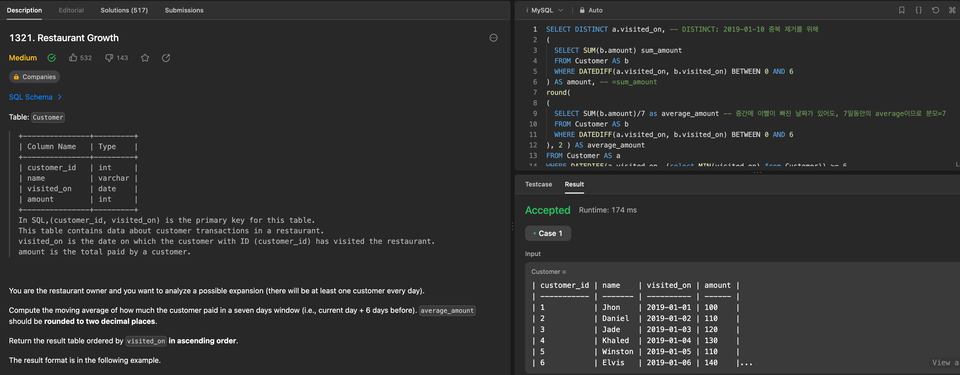
As you work through more difficult Leetcode SQL problems, you'll learn how to apply multiple grammar rules to a single problem.
95 learners
Level Intermediate
Course period Unlimited
Reviews from Early Learners
5.0
김주아
I took this course because I liked the previous one so much. The teacher was very thorough, so it was very helpful. I highly recommend taking these two courses if you are preparing for a SQL coding test 😊😊
5.0
이승렬
As an extension of the pre-lecture, I think it helped me a lot in solving more difficult problems.
5.0
미나리
I took the beginner level, but I liked the teacher's teaching style, so I completed the intermediate level! I was about to take a coding test, and this lecture was good because I was able to solve a lot of problems. It would be more useful for those who are taking it before the test or want to apply it right away in real life.
Implementing SQL logic
Using SQL functions
Use various SQL syntax at once
SQL coding test problem solving,
From various functions to logic implementation, all in one place!
SQL coding tests aren't limited to a single grammar question! This course will help you solve challenging problems that mix multiple grammar questions .
SQL is a programming language that helps you uncover insights and trends hidden in vast amounts of data. You can also extract and examine only the specific data you need. Because it uses a limited syntax, implementing clear logic and using the right functions is crucial.
Therefore, SQL is the first language you encounter before joining an IT company, especially if you're in a data-related position, even during the coding test. It remains an essential language even after joining the company.
For those who don't know where to start preparing, I recommend taking the First Steps to SQL Coding Test course first.
In this pre-course, we'll follow Leetcode 's SQL Easy difficulty problems to help you cover the general SQL problem types in a short amount of time.
This course, consisting of Leetcode 's Medium-difficulty SQL problems (with Korean translations) , presents comprehensive problems that blend all aspects of grammar and function. Rather than focusing solely on single-logic problems, you'll practice organically connecting SQL grammar to solve problems that mix multiple logics.
🙋♀️ Job seekers preparing for coding tests
🙋♀️ Those who want to refer to SQL solutions and apply them to their work
🙋♀️ For those who find learning through examples more effective than theory
Setting up the environment for SQL queries and backups
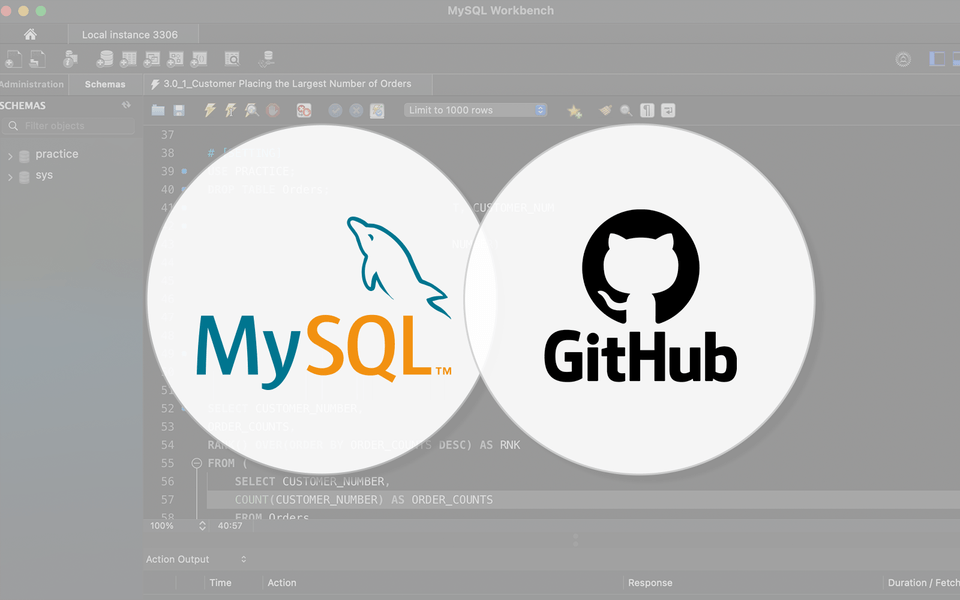
The SQL you can query in the LeetCode prompt is limited. To improve your skills, it's essential to directly verify the data your queries produce. Therefore, before solving the problems, we'll install MySQL and set up the environment to query SQL in Workbench.
We'll also set up an environment that integrates with GitHub. Uploading code to GitHub allows you to access it anytime, anywhere, from any device, making it a great backup solution. This GitHub integration is incredibly useful, as it can be used not only for SQL but also for other programming languages!
Provides detailed SQL problem types and homework
Leetcode offers two difficulty levels, Easy and Hard. We'll start with the Easy difficulty level.
In addition to difficulty, we've categorized SQL questions by type. These range from logic-related questions like CASE WHEN and GROUP BY to function-related questions like LAG, LEAD, and RANK. We've organized the questions so you can see at a glance how each type of question will be presented.
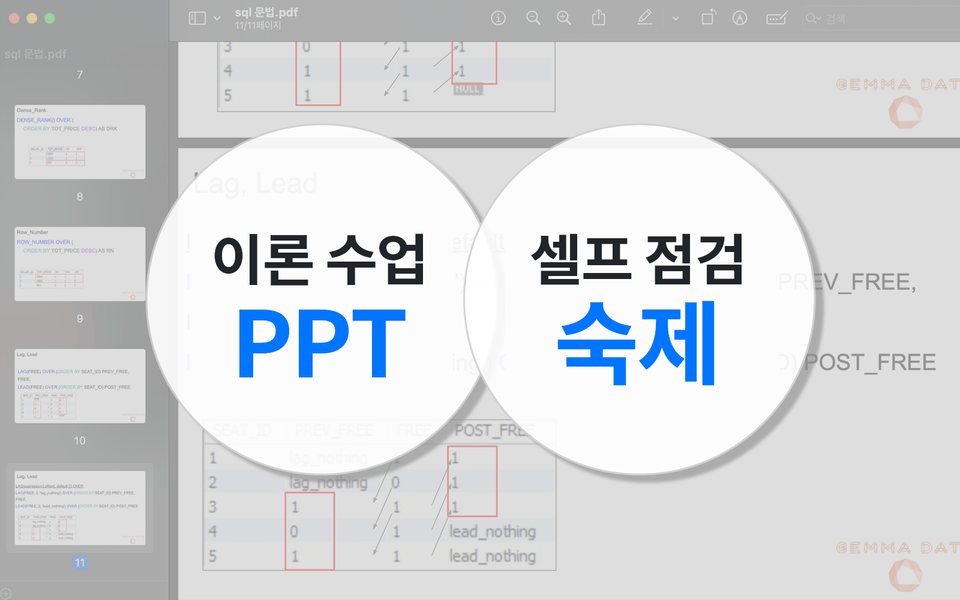
We also provide theory lecture PPTs for areas requiring additional conceptual explanation. Interval homework and solutions are also provided for independent practice. Test your SQL skills for yourself!
The lecture is largely divided into two parts.
Solve function-related problems by type (e.g. rank, dense_rank, lag, lead, etc.).
After querying the SQL step by step with MySQL Workbench, we derive the final query.
Solve logic-related problems by type (e.g., having, limit, sum, not in, case when, etc.).
After querying the SQL step by step with MySQL Workbench, we derive the final query.
Q. What makes this course different?
Q. Can I listen without prior related knowledge?
No, this course is intended for those who have already taken the prerequisite course, " First Steps to the SQL Coding Test ." It's also an effective course for those just starting out in data science.
Q. What level can I reach after completing the course?
The actual SQL coding test isn't that difficult, so just attending the preparatory lectures should be sufficient. However, if you want to apply various grammar techniques to a single problem or practice organically connecting different logics, this course will help you level up.
Who is this course right for?
Computer Engineering Major
Job seekers preparing for coding tests
Data Analyst
Need to know before starting?
SQL
943
Learners
118
Reviews
40
Answers
4.9
Rating
5
Courses
I'm Gemma, a data analyst who started in mathematics, moved into a developer career, and eventually settled into my current role after studying statistics. In data analysis, the most important thing is identifying fresh insights and trends within the overflowing sea of big data. That’s easier said than done, right? However, if you can utilize the right analysis tools and methods, anyone is capable of discovering valuable gems. I would like to share these methodologies with you.
(Current) Data Analyst at LINE Plus
(Former) NAVER Data Analyst
MS in Applied Statistics, Politecnico di Milano, Italy
Bachelor of Science in Mathematics, Ewha Womans University (Double Major in Computational Science, Minor in Computer Science)
https://blog.naver.com/italian-lesson
(Personal Blog)
MS in Applied Statistics, Politecnico di Milano BS in Mathematics, Ewha Womans University (Double Major in Computational Science, Minor in Computer Science) https://blog.naver.com/italian-lesson (Personal Blog)
All
14 lectures ∙ (1hr 50min)
Course Materials:
4. rank
07:41
5. dense_rank
09:25
6. lag, lead
14:56
7. ifnull
09:02
8. date
08:08
9. min, max
03:39
10. having
07:44
11. limit
08:17
12. not in
04:55
13. case when
07:18
14. sum
04:28
All
4 reviews
5.0
4 reviews
Reviews 2
∙
Average Rating 5.0
Reviews 3
∙
Average Rating 5.0
Reviews 2
∙
Average Rating 5.0
5
I took the beginner level, but I liked the teacher's teaching style, so I completed the intermediate level! I was about to take a coding test, and this lecture was good because I was able to solve a lot of problems. It would be more useful for those who are taking it before the test or want to apply it right away in real life.
Reviews 1
∙
Average Rating 5.0
$17.60
Check out other courses by the instructor!
Explore other courses in the same field!