inflearn logo

A Practical Review Workflow for Validating and Deploying AI-Generated Code

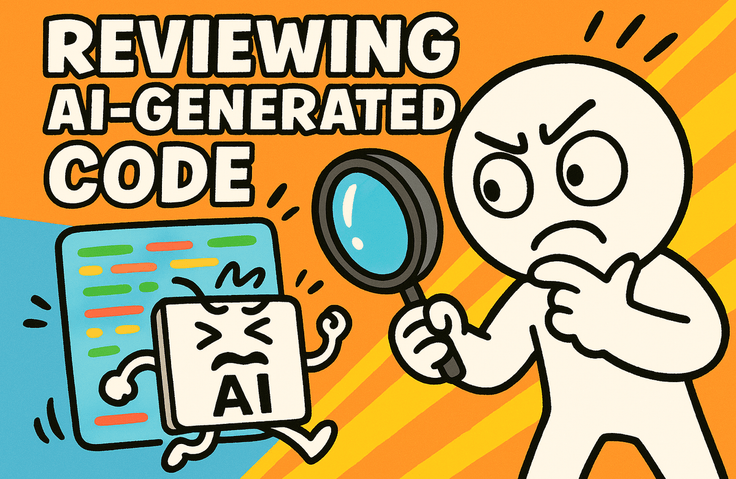
AI code rework and anxiety keep recurring. I’ll guide you through a review method you can see through to completion, based on standards validated and deployed in real-world practice.

(5.0) 2 reviews

81 learners

Level Beginner

Course period Unlimited

AI
AI
AI
AI
Thumbnail

What you will gain after the course

  • Distinguish between claims made by AI-generated code, tests, and explanations and the evidence that has actually been verified.

  • Determine whether to adopt, modify, defer, or reject the AI output based on the requirements and success criteria.

  • Apply code reviews, testing, security, performance, and operational checks to AI collaboration workflows.

  • Design the scope of additional validation and the pre-deployment checklist according to the level of risk.

  • Take an AI-generated feature from review and revision through to deployment in a real-world project.

I built it quickly with AI, but
why isn’t the work finished?

Review criteria for developers who don't blindly trust AI-generated code

Free · 7 lessons · 28 minutes 48 seconds total · Subtitles included


The code was generated quickly. The explanation sounds plausible, and the tests passed.
But when you try to apply it to the project, there is still more to verify and fix.

What results should you trust, and what should you verify yourself?
This course is an introduction for developers that explores through brief case studies the goals, evidence, remaining risks, and next actions needed when developing with AI.


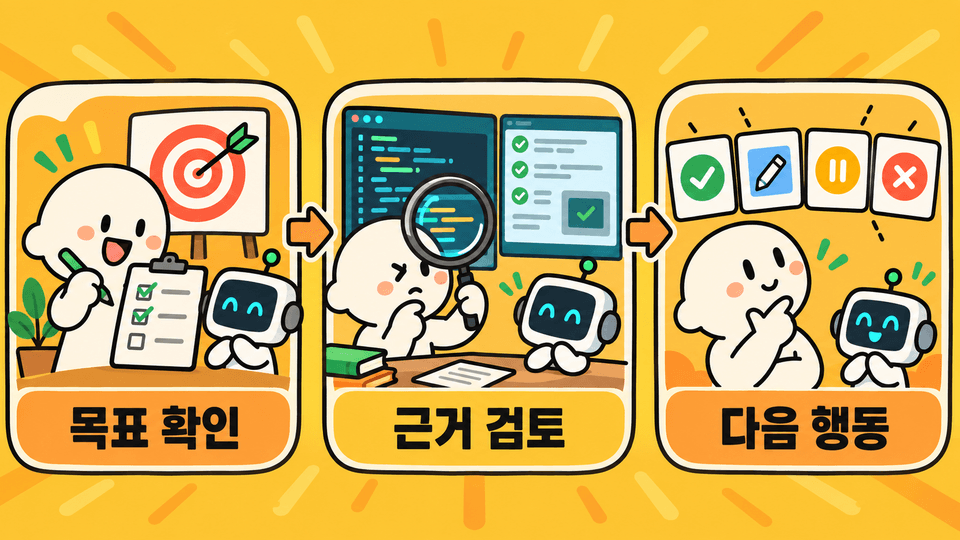
After receiving the result,
ask these three questions.

01. What are we trying to do?

First, define the task’s goal and constraints, as well as the criteria for accepting the result. Before focusing on what the AI created, confirm the problem we were trying to solve.

02. How far have we verified?

Distinguish between the AI’s explanation and the results actually observed. If the test passed, examine what conditions were verified and what has not yet been verified.

03. What will you do now?

Learn why you should decide whether to adopt, revise, put on hold, or reject the result. Connect the evidence you have verified and the remaining risks to your next action.


If you have these concerns, take a look at this together.

  • Developers who implement faster but spend more time reviewing and reworking
    Those who want to distinguish between the amount of generated output and actual project progress

  • Developers unsure how much to trust AI’s answers
    For those who want to distinguish plausible claims from evidence they have verified themselves

  • Developers who want to decide what to entrust to AI and what to judge themselves
    Those who want to explain in code reviews why they adopted or modified the results


A curriculum that follows seven questions

  1. How has AI changed developers’ work?
    How do generation speed and project productivity differ?

  2. New problems created by more output
    Why do verification and integration remain necessary even when there is more output?

  3. How not to become a messenger for AI
    When delivering results, what purpose, evidence, and risks should you explain?

  4. What developers must decide themselves
    What goals, constraints, adoption criteria, and responsibilities should be established before delegating tasks to AI?

  5. How to make evidence-based judgments
    How can we distinguish claims, observations, evidence, predictions, and things we are unsure about?

  6. What to delegate to AI and what people should review
    What criteria should we use to decide what to delegate and what to review first?

  7. How to turn good answers into good decisions
    How can you explain the reasons for accepting, modifying, deferring, or rejecting them?


Take a moment to review it, then think about your own work.

Each lesson follows a relatable situation → an explanation of examples and decision-making criteria → a summary of the direction for resolving it. Since the course covers review criteria that are not limited to any specific AI product, you can think about the tools and work you use as you take the course.

Please note before taking the course.

  • Difficulty: This is an introductory course for developers using AI. It is helpful to have experience asking AI to perform development tasks and a basic understanding of the meaning of requirements, testing, and code reviews.

  • Course structure: Seven subtitled videos, totaling 28 minutes and 48 seconds.

  • Format: The course focuses on watching videos, with no required assignments or submissions. No supplementary materials are provided.

  • Scope covered: This course explains the criteria for reviewing AI outputs and deciding what to do next. It does not cover installing specific tools, prompt syntax, or hands-on app development.


When you receive the following AI response,
so you can establish a starting point for your judgment.

What you’re trying to do, how far you’ve checked, and what you’ll do next.
We’ll explore these together in seven short lessons.

Recommended for
these people

Who is this course right for?

  • Developers who implement faster with AI coding tools but face schedule delays due to review and rework

  • A developer who finds it difficult to determine how much to trust AI-generated code and test results

  • Beginner to intermediate developers looking to learn systematic review, testing, and deployment workflows beyond simply using AI-generated code.

  • Tech leads and development teams looking to establish code review standards and guidelines for using AI within their teams

Need to know before starting?

  • It would be good to have experience requesting tasks from AI coding tools and a basic understanding of the meaning of requirements, tests, and code reviews.

Hello
This is hancof

Career Verified

203

Learners

8

Reviews

4.8

Rating

2

Courses

Hello.

I’m Hankoff (a programmer who designs code stitch by stitch).

Based on diverse backend development experience, I share ways to understand code and improve it safely.

Even when fixing existing code or using code generated by AI, I strive to be a developer who can explain “why it was written this way” and “what needs to be checked.”

In the course, we will walk through examples step by step, sharing everything from problematic code to improved code, along with the reasons for the changes and the verification process. We will also explain the situations in which to use what you have learned so that you can apply it to your own code.

Main topics covered

  • The structure of Java code and object design,

    Verifying the results of changes through testing

  • Various Development Topics

  • Pushing AI to write better code, establishing criteria for reviewing AI-generated code, and so on.

Development Experience

  • Former) Woowa Brothers — Backend Developer

  • Formerly at JobKorea — Platform Architecture

  • Formerly 11st and WeMakePrice — Backend Developer

I plan to engage in a variety of activities on YouTube as well.

If you’re curious about the teaching style before taking the course, check it out on YouTube first. (Go directly to Hankov on YouTube)

I previously operated under the name “Humbly Ripened Rice.”

More
Published: 
Last updated: 

Reviews

All

2 reviews

5.0

2 reviews

  • 9119501254님의 프로필 이미지
    9119501254

    Reviews 13

    ∙

    Average Rating 5.0

    5

    100% enrolled

    • lthcity6781님의 프로필 이미지
      lthcity6781

      Reviews 13

      ∙

      Average Rating 5.0

      5

      71% enrolled

      Similar courses

      Explore other courses in the same field!

      Free