inflearn logo

Mastering PMSM Vector Control - From Theory to Matlab and STM32 Practice!

Have you felt overwhelmed about where to start with PMSM control? You can perfectly master PMSM vector control and sensorless techniques through a three-step process, ranging from theory to Matlab-Simulink simulation and STM32 practice.

(5.0) 6 reviews

68 learners

Level Intermediate

Course period Unlimited

stm32
stm32
motordriver
motordriver
stm32
stm32
motordriver
motordriver

Reviews from Early Learners

Reviews from Early Learners

5.0

5.0

우제성

96% enrolled

Seriously, the teaching skills are better than those of my university professors..ㅋㅋ And covering hands-on practice as well is truly the best. As expected, this lecture is also top-tier~~

5.0

박유성

100% enrolled

I am a student who also took the electric scooter lecture. I think this might be the best online lecture for embedded systems and motor control in Korea. It was a huge help. Please release many more lectures. Thank you.

5.0

Pole

85% enrolled

I highly recommend this lecture to anyone who wants to properly learn PMSM vector control! Above all, it was incredibly beneficial because I could personally experience the entire process, starting from the theoretical background to precise simulations using Matlab, and finally, actual hardware practice based on STM32. Lectures that include hands-on PMSM practice are very hard to find in Korea, making this a truly valuable course. Thank you.

What you will gain after the course

  • Ability to understand the electrical characteristics of PMSM motors and estimate their parameters

  • The ability to understand the principles of sensorless control techniques and apply them in practice.

  • Ability to design and verify motor control simulations using Matlab Simulink

  • Ability to directly implement PMSM FOC vector control algorithms using STM32.

  • Ability to design current/speed control loops and tune PI control

The subtle difference that sets your skills apart,
Advanced Motor Control Technology: PMSM


Are you having these concerns? 🤔


When you want to go beyond BLDC and add more depth to your motor control skills

When you want to challenge yourself in the fields of electric vehicles or robotics, but are worried because you lack the core technology

When you have studied PMSM theory but feel lost when trying to implement it on your own

By learning PMSM, the ultimate control technology,

Grow into an engineer of a different class.


✔️

Why you should take this course


POINT 1.

Mastering PMSM in 3 Steps: Theory - Simulation - Implementation

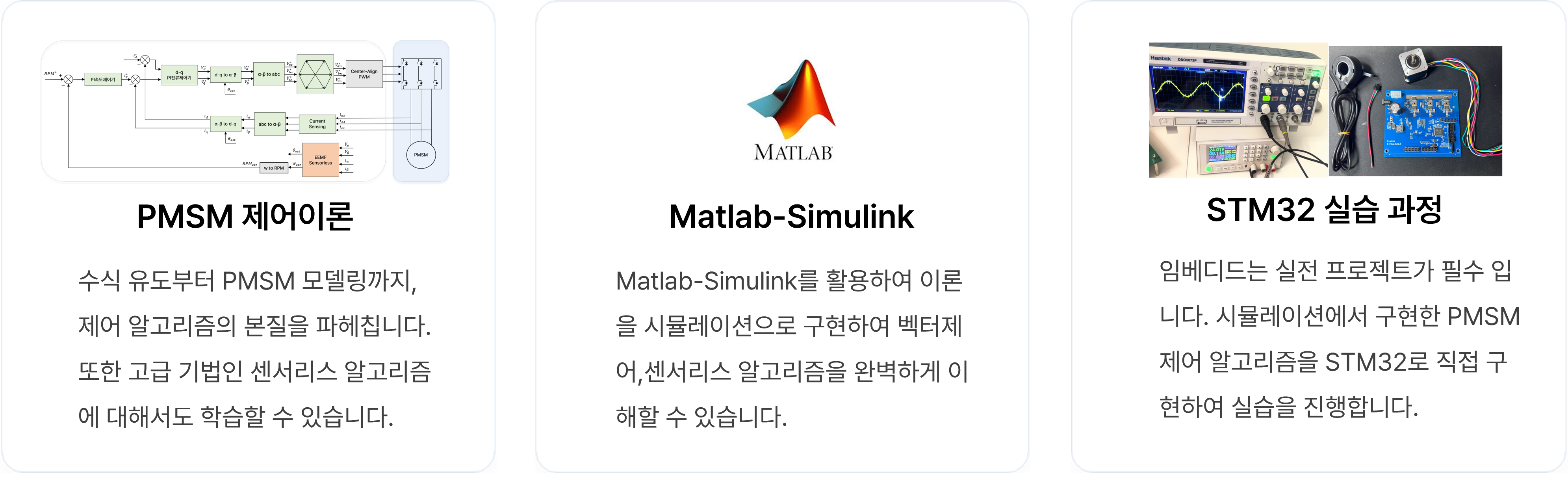
It systematically covers the control algorithms of DC motors and PMSM, from theory (modeling) to Matlab simulation and actual STM32 implementation. Through this three-step learning process, you will be able to understand how "formulas" and "code," which once felt like a black box, are transformed into "actual motor rotation."

PMSM Theory → Matlab Simulink → STM32 Practice

POINT 2.

Sensorless control technology
that completes practical competitiveness

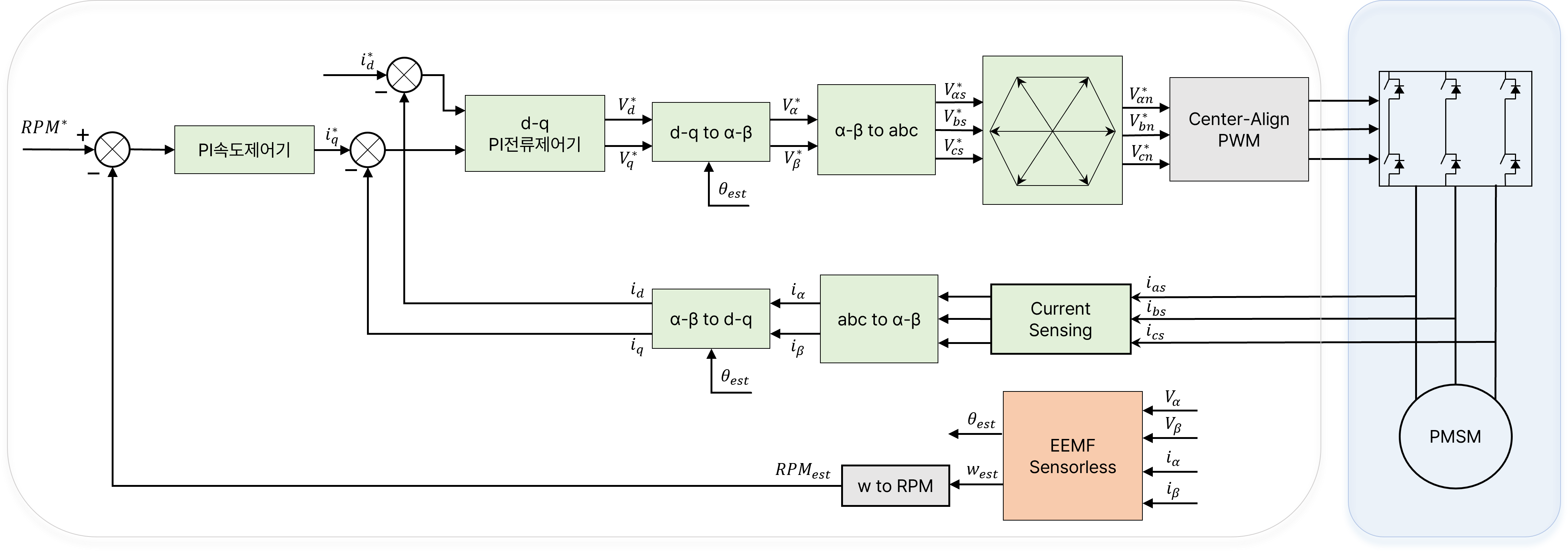
In the professional field, where cost and durability are required beyond performance, sensorless control is a core technology that realizes all these values without hardware sensors. The ability to understand and implement this technology will make you an engineer with a differentiated competitive edge in the industry.

.

POINT 3.

The final 1% detail for perfect motor control,
practical tuning

Even when built according to theory and simulation, actual motors sometimes do not move as expected.

  • "Why does it fluctuate instead of maintaining the target speed?"

  • "Why does it lose all its power and struggle as soon as a load is applied?"

  • "I only changed the Kp and Ki values slightly, so why is the motor suddenly convulsing?"

These problems are not due to a lack of knowledge. It is because they belong to the realm of 'tuning' that can only be mastered through practical experience, something that theoretical textbooks never teach you.

We will conduct hands-on PMSM drive practice, including PI controller tuning.


✔️

Why you should learn PMSM


CHECK 1.

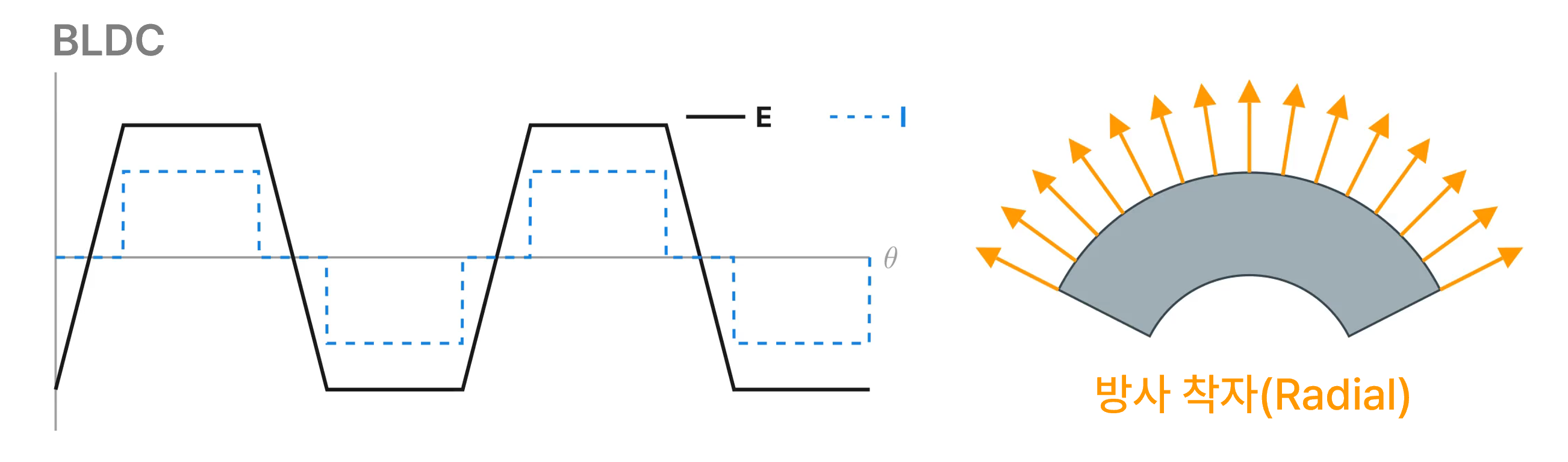
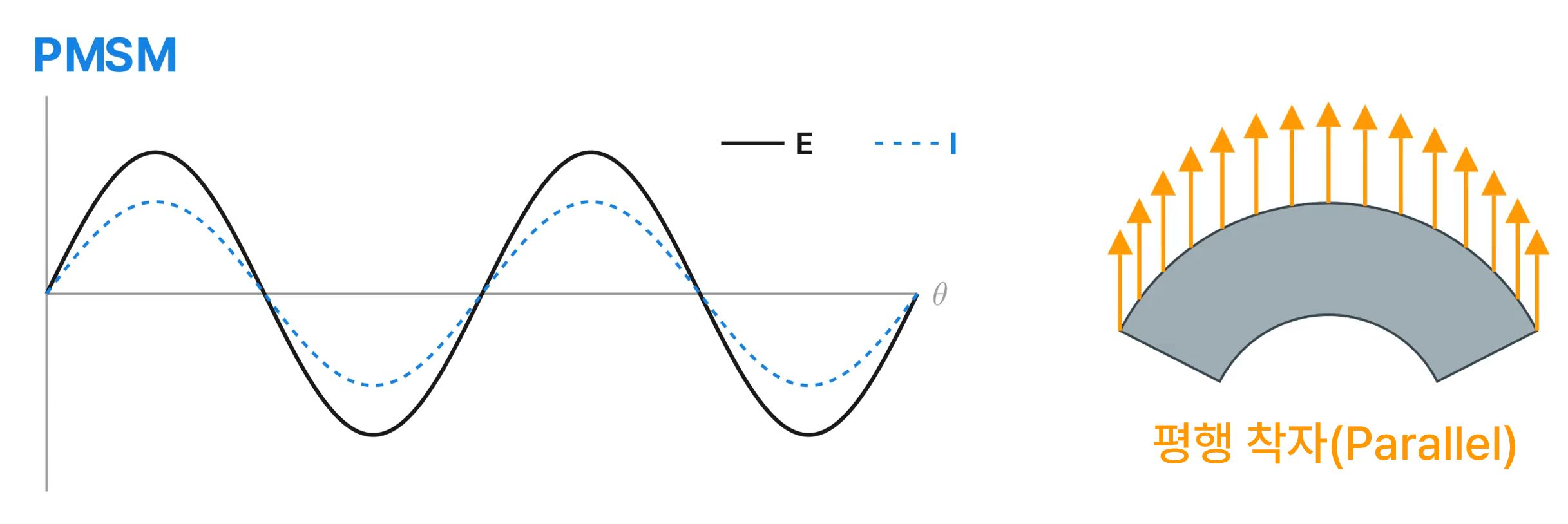
PMSM, going beyond the limits of BLDC

While BLDC is the basic technology for operating a motor, PMSM is an advanced technology that maximizes motor performance and quality. The core of PMSM is the ability to convert electrical energy into the desired force without waste, noise, or error.

BLDC

PMSM

  • Step wave (6-Step) control → Noise & vibration generation

  • Efficiency drop in specific sections → loss in battery life and power efficiency

  • Torque ripple (fluctuation in force) occurs → disadvantageous for precision work

  • Sinusoidal Control→ Low Noise & Smooth Rotation

  • High efficiency across all ranges→ Maximizing battery usage time

  • Uniform and constant torque→ Essential for precise position/speed control

CHECK 2.

PMSM, the standard technology for various industries including
electric vehicles, robots, drones, home appliances, and defense.

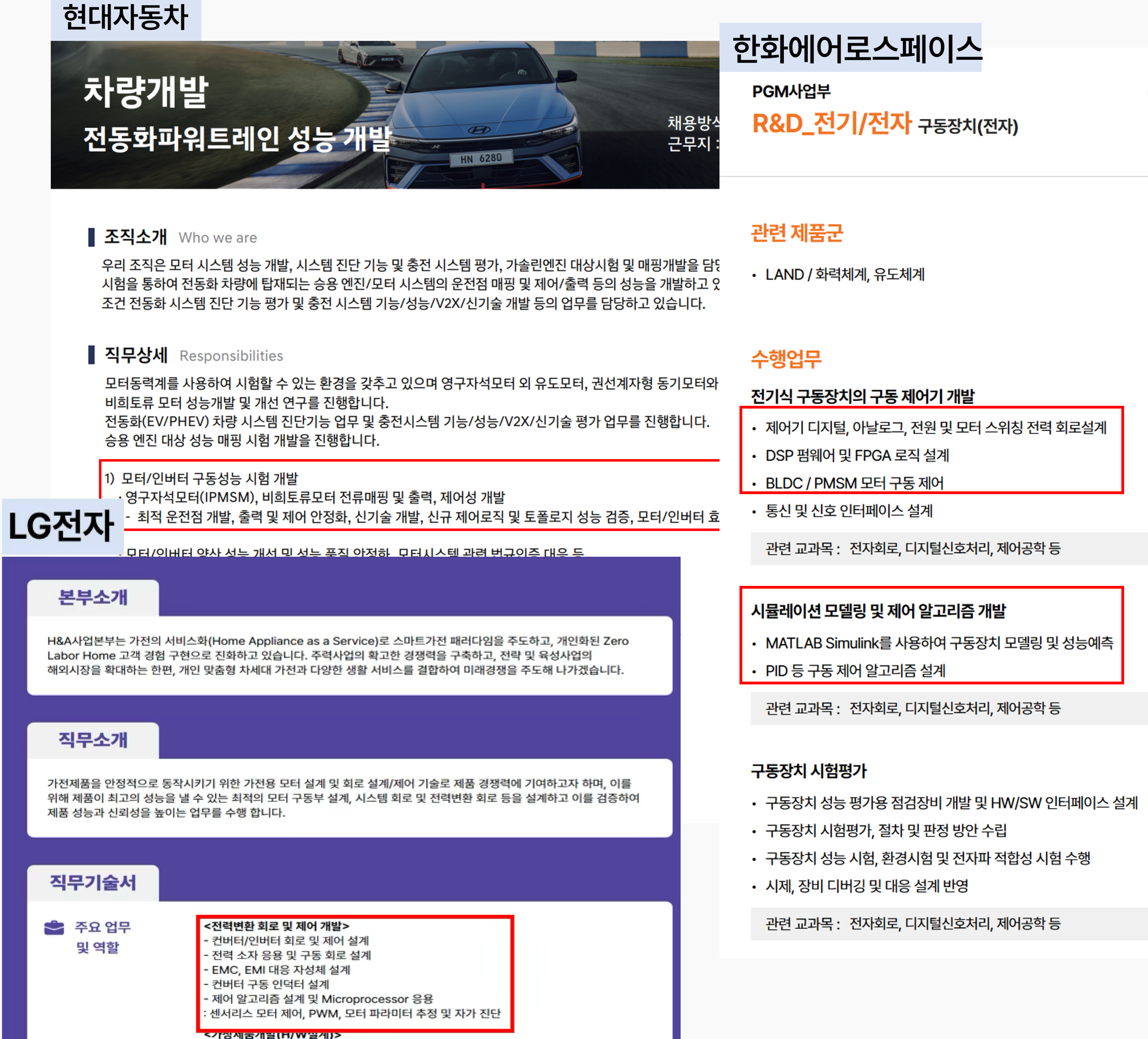
Looking at technical job postings from major companies, "PMSM" and "Vector Control" capabilities are becoming 'essential qualifications' across all fields, including electric vehicles, robotics, and defense.

Why is that? It is because, thanks to its overwhelming efficiency and precise control performance, PMSM is no longer a technology for specific fields, but has established itself as a 'standard component' that determines the performance of future industries.

Electric Vehicles

It extends the driving range with high efficiency and achieves dynamic acceleration performance and a premium ride quality through precision control.

Home Appliances

It minimizes noise and vibration through precision control and fulfills the essential requirements for achieving first-class energy efficiency through high efficiency.

Drone/Defense

Ensures mobility through high power/high density, and guarantees stable flight and target accuracy through precision control.

Robotics/Automation

Maximize task success rates through precision control, and increase robot productivity through high power and miniaturization.

📚

From theory to practice, learning content by section


Section 1

Setting up the STM32 MCU-based practice environment and building the foundations

In this section, you will understand the architecture and key peripherals (GPIO, Timer, ADC, UART, etc.) of the STM32F767 MCU and learn about the bus structure and clock settings. You will grasp the operating principles of the MCU by utilizing datasheets and reference manuals, and acquire basic knowledge for setting up the development environment.


Section 2

Basic Principles of DC Motors and Control Theory

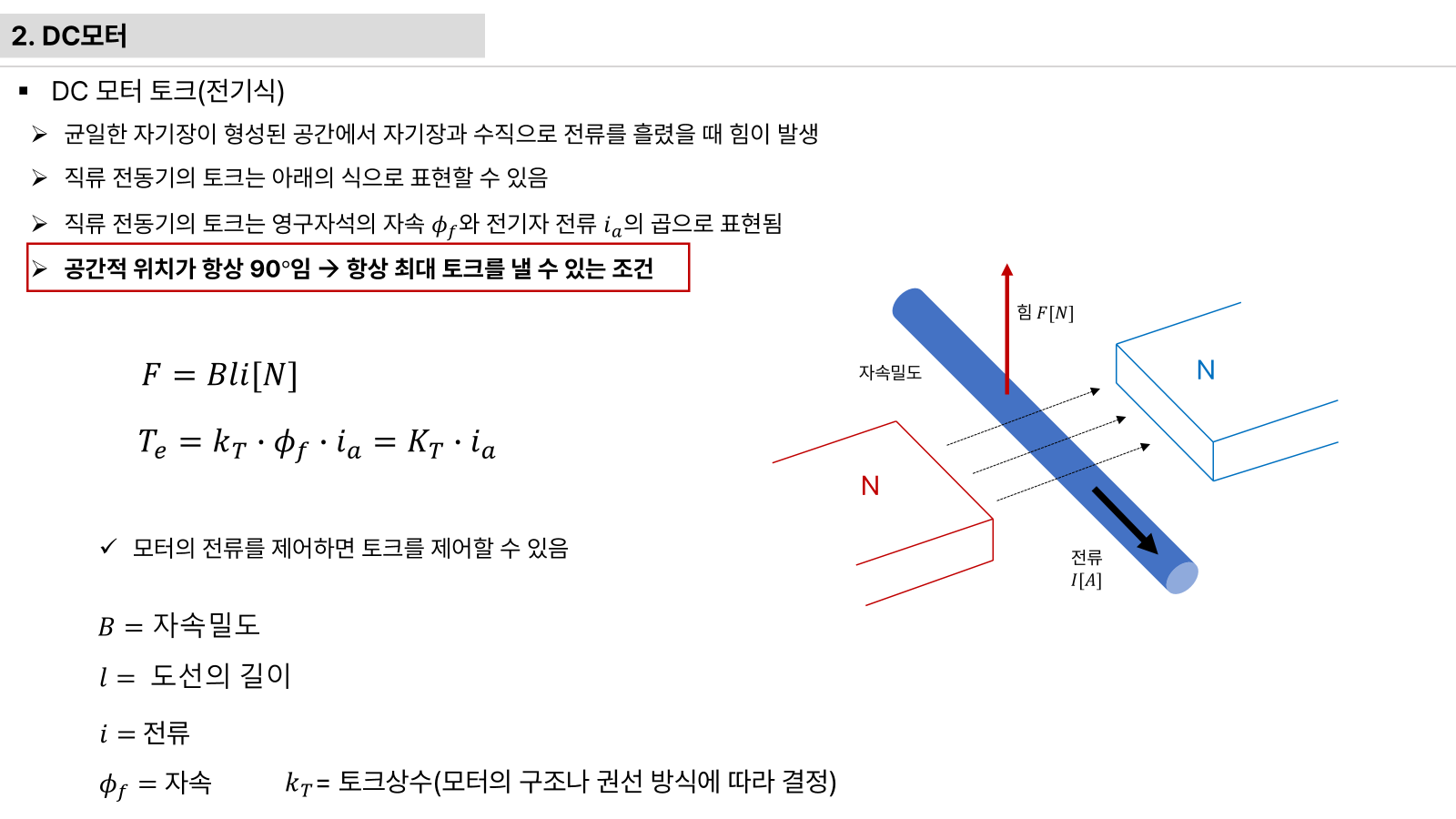
It covers the basic theories of DC motor structure, rotation principles, and modeling. It involves learning control concepts, Laplace transforms, and frequency response characteristics, as well as designing PI controllers and analyzing phase/gain margins. Additionally, it covers the roles of single-phase half-bridge and full-bridge inverters and PWM control methods.


Section 3

Establishing PMSM Vector Control Theory

Analyze the principles of Permanent Magnet Synchronous Motors (PMSM), stator/rotor magnetic fields, and magnetic circuits, and learn dq-axis transformation and modeling. Understand permanent magnet torque and reluctance torque, and cover IPMSM and SPMSM modeling and vector control techniques in depth. Gain a complete theoretical understanding of flux-weakening control and Space Vector Modulation (SVM) methods.


Section 4

PMSM Matlab-Simulink Simulation and Control Implementation

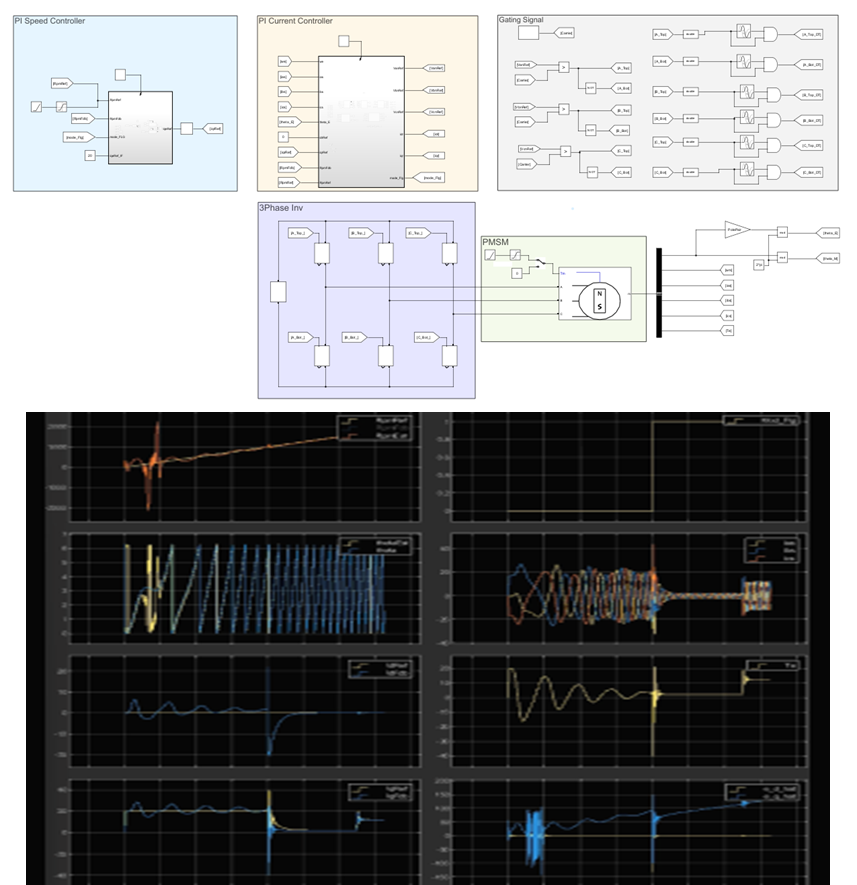
Using Matlab-Simulink, we simulate the PMSM's back-EMF, dq-axis transformation, PI current controller, and SVPWM. We conduct hands-on simulations of the speed controller, VF control, and IF control, while analyzing feed-forward compensation and dead-time effects. We also verify control algorithms by exploring the necessity of sensorless control and simulating extended back-EMF techniques.


Section 5

Practical Implementation of PMSM Control Based on STM32

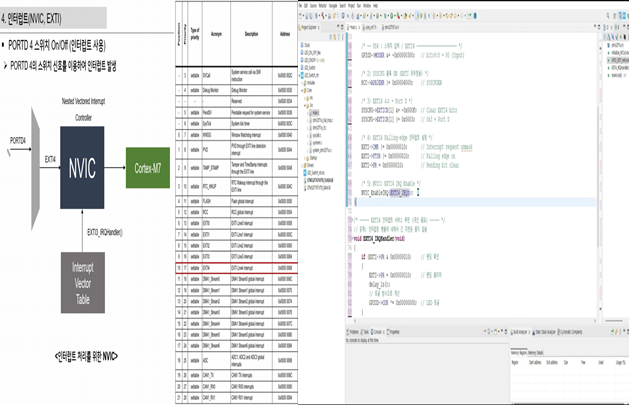
Directly implement vector control and sensorless control on an STM32 MCU by configuring clocks, timers, and ADCs. Learn code writing using register settings, interrupt-based control, and SysTick and task management techniques. Gain practical experience by implementing VF control, IF control, and extended EMF sensorless control in real-time on the STM32.


We can solve the concerns of
people like this!

📌

Electrification System Development Engineer

Engineers who want to develop a deep understanding of PMSM motor control—a core technology in future mobility fields such as electric vehicles, robots, and drones—and build the ability to implement it using actual STM32
Those who want to bridge the gap between theory and practice and confidently handle complex control algorithms, but feel overwhelmed about where to start.


📌

Embedded Firmware Developer

Developers who have existing firmware development experience but face difficulties directly implementing advanced motor control techniques, such as PMSM FOC vector control, on STM32
Those who wish to improve their problem-solving skills in the process of verifying control logic through Matlab-Simulink simulation and applying it to actual hardware


📌

Motor Control Beginners

Engineers who are hesitating to learn PMSM control due to complex formulas and theories, or those who wish to transition their career into the motor control field
Those who want to clearly and easily learn the overall aspects of PMSM control, including sensorless control techniques, through a systematic process starting from theory to Matlab simulation and STM32 practice.


Notes before taking the course


Practice Environment

  • PC Operating System: Windows

  • Practice conducted with MATLAB/Simulink 2024b version

  • C/C++ development environment (IDE, compiler)

Prerequisites and Notices

  • Basic knowledge of C programming


  • Basic knowledge of circuit theory and electronic circuits

Learning Materials

  • Lecture slide PDFs provided

  • Matlab-Simulink example models

  • STM32 Practice Code


Recommended for
these people

Who is this course right for?

  • Hardware/firmware engineers who want to expand their careers into electric vehicles, robotics, drones, home appliances, and defense industries.

  • Embedded engineers who want to master the ultimate motor control technology

  • Embedded engineers who are new to PMSM control or feel overwhelmed by difficult mathematical formulas.

  • A developer who understands motor control theory but lacks experience in actual STM32 implementation.

Need to know before starting?

  • You must have a basic understanding of C language syntax.

  • Knowledge of circuit theory and electronic circuits

Hello
This is insid2embedded

484

Learners

61

Reviews

99

Answers

4.9

Rating

3

Courses

Hello.

I run a YouTube channel and Naver blog called "Inside Embedded," and I create educational content for embedded developers based on my practical experience in the electrification (motor/inverter) field, covering everything from circuits and PCBs to firmware and control :)

Cafe : https://cafe.naver.com/insideembedded?iframe_url=/MyCafeIntro.nhn%3Fclubid=31273003

Blog : https://blog.naver.com/sw_engineer-

YouTube : https://www.youtube.com/@Inside_Embedded

Open Chat Room: https://open.kakao.com/o/gsUVs3Uh

  • 3-phase inverter hardware development

  • Collaboration with global automotive OEMs

  • Experience in electrification system development/validation

  • Experience in mass production/validation processes

  • BLDC/PMSM control algorithm development

  • WFSM (Wound Field Synchronous Motor) control algorithm development


  • Experience in vehicle/bench-based evaluation

More

Curriculum

All

112 lectures ∙ (21hr 37min)

Course Materials:

Lecture resources
Published: 
Last updated: 

Reviews

All

6 reviews

5.0

6 reviews

  • raphotame2389님의 프로필 이미지
    raphotame2389

    Reviews 4

    Average Rating 5.0

    5

    30% enrolled

    • insid2embedded
      Instructor

      Thank you so much for taking the course! 😊 If you have any questions while studying, please feel free to ask anytime. I will continue to share more great content in the future.

  • woojaesssung7181님의 프로필 이미지
    woojaesssung7181

    Reviews 1

    Average Rating 5.0

    5

    96% enrolled

    Seriously, the teaching skills are better than those of my university professors..ㅋㅋ And covering hands-on practice as well is truly the best. As expected, this lecture is also top-tier~~

    • joh60171479님의 프로필 이미지
      joh60171479

      Reviews 1

      Average Rating 5.0

      5

      31% enrolled

      • insid2embedded
        Instructor

        Thank you so much for taking the course! 😊 Please feel free to ask any questions you have while studying. I will continue to share more great content in the future.

    • yoosung12345q9830님의 프로필 이미지
      yoosung12345q9830

      Reviews 2

      Average Rating 5.0

      5

      100% enrolled

      I am a student who also took the electric scooter lecture. I think this might be the best online lecture for embedded systems and motor control in Korea. It was a huge help. Please release many more lectures. Thank you.

      • insid2embedded
        Instructor

        Thank you so much for taking the course! 😊 Thank you for your kind words. I will continue to share even better content in the future.

    • polezero09308님의 프로필 이미지
      polezero09308

      Reviews 1

      Average Rating 5.0

      5

      85% enrolled

      I highly recommend this lecture to anyone who wants to properly learn PMSM vector control! Above all, it was incredibly beneficial because I could personally experience the entire process, starting from the theoretical background to precise simulations using Matlab, and finally, actual hardware practice based on STM32. Lectures that include hands-on PMSM practice are very hard to find in Korea, making this a truly valuable course. Thank you.

      • insid2embedded
        Instructor

        Thank you so much for taking the course! 😊 I will continue to share more great content with you in the future.

    Limited time deal

    $770,000.00

    30%

    $847.00