Operating System Stories That Make Docker Easy

Many people use Docker, but few understand its underlying principles. Without understanding these principles, you can only rely on searching for answers when problems arise, rather than solving them yourself. The essence of Docker lies in the operating system. This course is not a superficial overview of memorizing a few commands; it delves deep into the inner workings of the operating system that makes up Docker. Once the internal structure becomes visible, Docker is no longer difficult.
(5.0) 8 reviews

492 learners

Level Basic

Course period Unlimited

Network
Network
Linux
Linux
Docker
Docker
Operating System
Operating System
linux-containers
linux-containers
Network
Network
Linux
Linux
Docker
Docker
Operating System
Operating System
linux-containers
linux-containers

Reviews from Early Learners

5.0

5.0

dev_PizzaHop

16% enrolled

Personally, I really like Null-Null's teaching style. I think our values are quite similar as well. Thank you for teaching so passionately and sincerely. I've even joined the YouTube membership, and there are so many lectures to listen to. I want to study hard and grow into a reputable back-end developer. I will finish all the lectures by the live broadcast next Monday. Highly recommended!

5.0

No one

98% enrolled

It is a magnificent lecture that needs no words. I can feel the decades of expertise, and I look forward to your other lectures as well. I think I'll have to watch it one more time.

5.0

Jaehyeong Park

100% enrolled

amazing

What you will gain after the course

  • You can understand the operating principles of 'virtual memory,' a core technology of operating systems.

  • By gaining a deep understanding of how file systems manage files, you can learn how file deletion and recovery are possible.

  • You can understand the principles and implementation of Linux container technology.

  • You can learn what processes and threads are and what the differences between them are.


The moment you understand the internal structure, Docker becomes truly easy.


Core operating system theories that pierce through the basic principles of Docker—now you can understand them clearly

Many developers use Docker. However, if you don't properly understand how it works, it's difficult to solve problems on your own when they arise. The core of Docker actually lies in the operating system itself. That's why this course focuses on the internal workings of the operating system that supports Docker, rather than just superficial usage.


This course follows a different order.


In this course, Docker only makes its full appearance once we reach the tenth section out of eleven. The preceding nine sections are entirely about CPU, memory, processes, file systems, and networks—in other words, the story of the operating system.

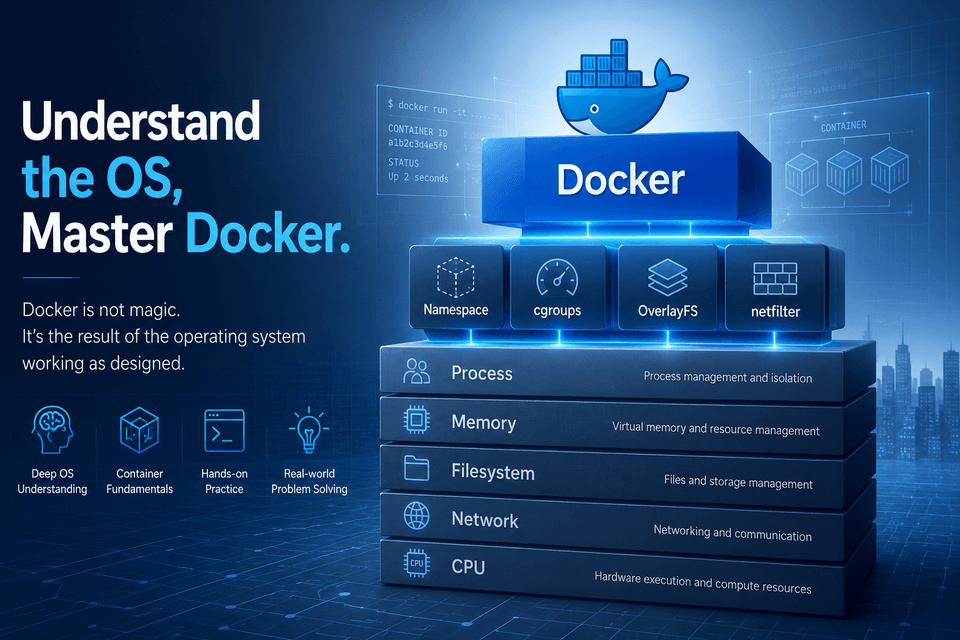
The reason is simple. It is because containers are not a new technology that appeared out of nowhere, but rather a well-packaged combination of features that Linux already had (Namespace, cgroups, Overlay file system, netfilter). By following the operating system step by step, you will see the process of assembling things you already know, rather than "newly learning" Docker.

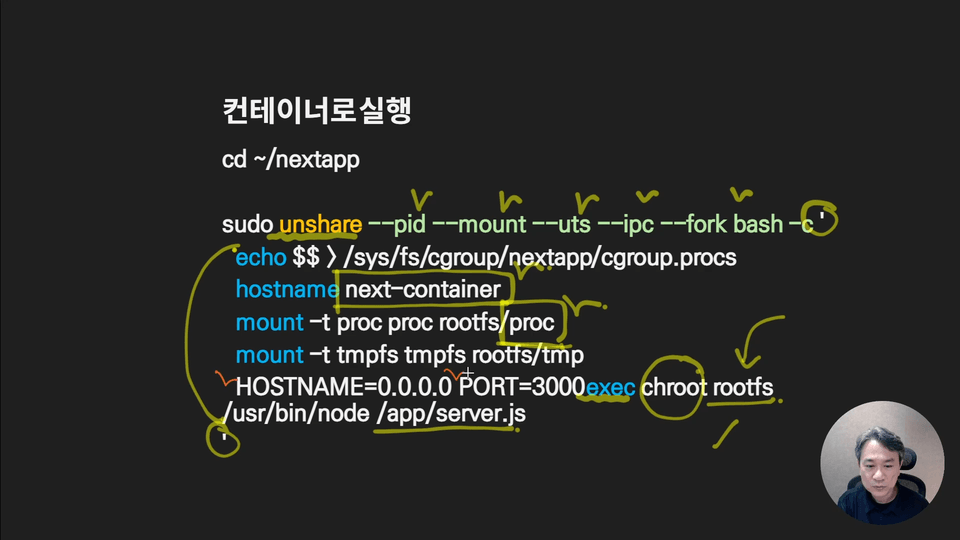
In this course, we will run a container directly without Docker even before installing it. After this experience, Docker commands will no longer be something to memorize, but a natural conclusion.

Understand the core principles of the operating system, delve into the fundamental principles of Linux container technology, and
start your journey to
becoming a Docker expert.


By the end of this course, you will...

You will gain a perfect understanding of core operating system theories and grasp the fundamental principles of Docker.

Before taking this course, Docker might have been a "tool you use by memorizing," but after the course, it will become a "system whose operations you can visualize." When a container fails to start, when volume data seems to have disappeared, or when containers cannot communicate with each other, instead of just copying and pasting search results, you will be able to deduce the cause at the operating system level and solve it yourself. And this knowledge is not limited to Docker. Whether it's Kubernetes or whatever technology comes next, they all ultimately run on the same operating system.


✔️

Why this lecture is the fastest solution

Before Docker,

Understanding from the internal structure of the operating system!

From the core of the operating system, the virtual memory system, to the principles of Linux container technology and the netfilter-based internal structure of the Linux kernel, we provide easy and clear explanations of the essential theories you must know to properly understand Docker.

※ Learn about netfilter, which is integrated into the Linux kernel's IP protocol implementation. Based on this, you will be able to properly utilize iptables commands.


Practical! Understanding Container Technology

Based on the theory studied, we will try running a container without Docker. Through this process, you can grasp the core of container technology and realize that Docker is actually nothing more than simple packaging.

Things that seem unrelated but are actually the same in essence

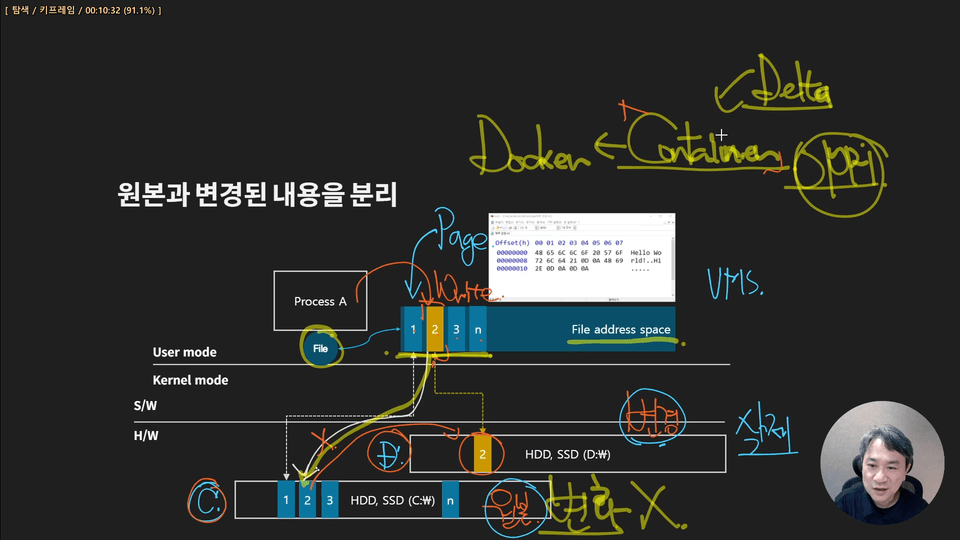
How to easily reset PCs in internet cafes or computer labs and the principles of protecting systems from malware are the same as the principles of virtualization technology. Understanding this allows you to grasp the true essence.cũng giống như nguyên lý của công nghệ ảo hóa, bạn sẽ có thể nắm bắt được bản chất của nó.


You can feel the necessity for yourself!

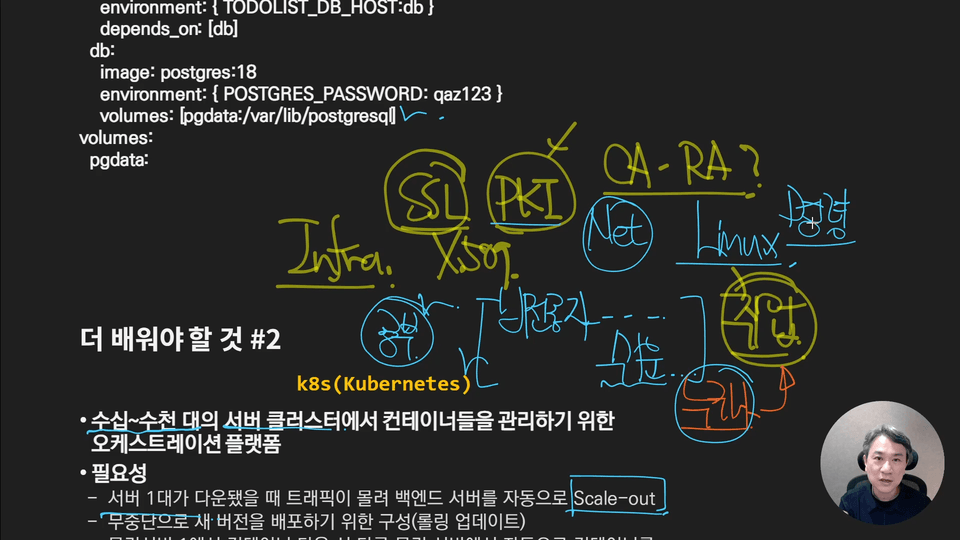
You can internalize the reasons why Docker Compose or k8s are necessary, as if understanding them through experience rather than just head knowledge. By experiencing the process of understanding the principles, mastering them as your own, and expanding your scope, you will feel the necessity for yourself. And the urgency of necessity becomes a powerful motivation for learning.


We can solve the concerns of
people like this!

📌

New developers who need to learn Docker but feel they lack an understanding of basic operating system principles


📌

Cloud beginners who want to know how core operating system concepts such as virtual memory and process scheduling are utilized in a Docker environment


📌

Junior system engineers who struggle to identify the root cause of failures because they do not accurately understand how Linux containers work


Step 1 — Aligning the Starting Point (Section 1)
Before diving into the main lessons, we will clearly distinguish between what is assumed you already know and what you should simply memorize rather than try to understand. You can check in advance how much you need to know to follow along.


Step 2 — The Essence of the Machine Called a Computer (Section 2)
Covers the CPU, which determines a computer's identity, and the memory hierarchy ranging from Registers to Cache, RAM, and SSD. This is the physical foundation of all discussions.


Step 3 — The Subject of Execution, Process (Section 3)
Establish a perspective to distinguish between the subject and object of actions in the computer world, and grasp the reality of 'execution', covering everything from the differences in how C and Java code operate (and the JVM) to scheduling, switching, inter-process relationships, and permissions.


Step 4 — File Systems (Section 4)
We cover where and how files are actually stored, what happens internally when they are deleted (including the principles of antivirus real-time monitoring engines), a comparison of Windows and Linux directory structures, the reality of program "installation," and Linux file management commands.


Step 5 — Virtual Memory, the Beginning of Isolation (Section 5)
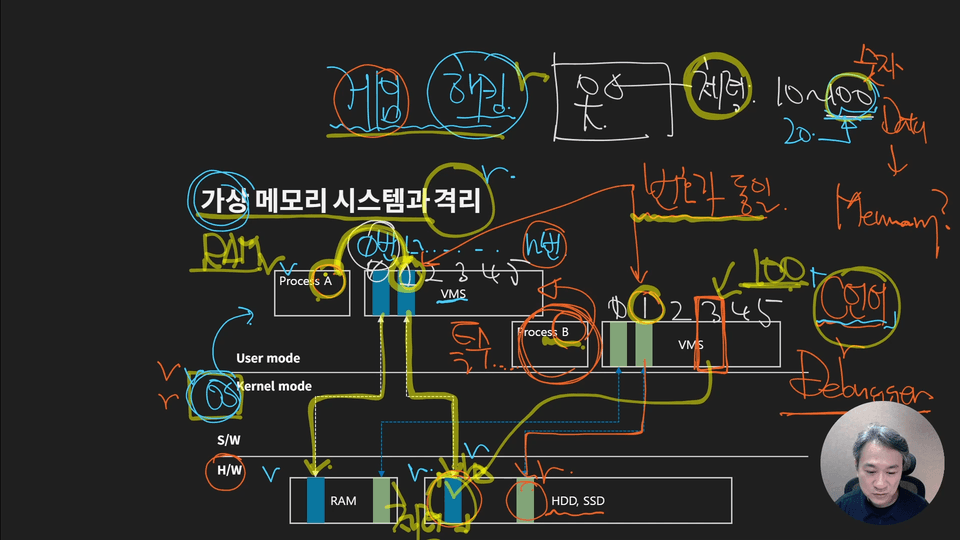
Covers process memory isolation (including why common game hacking techniques work), memory swapping, Copy on Write, Inter-Process Communication (IPC), file address spaces, and RAM drives. All the core concepts needed to understand container "isolation" are presented here.


Step 6 — The Pieces that Make Up a Container (Sections 6–7)
Starting from the recovery principles of PC cafe HDDs to understand the Overlay file system structure, you will learn about Linux Namespaces and Control groups (cgroups). In essence, these pieces are the container itself.


Step 7 — The Reality of Containers (Section 8)
After looking at the overview of container technology and container image standards (OCI, which Docker also follows), we will run a container without Docker.


Step 8 — Network, the Final Puzzle (Section 9)
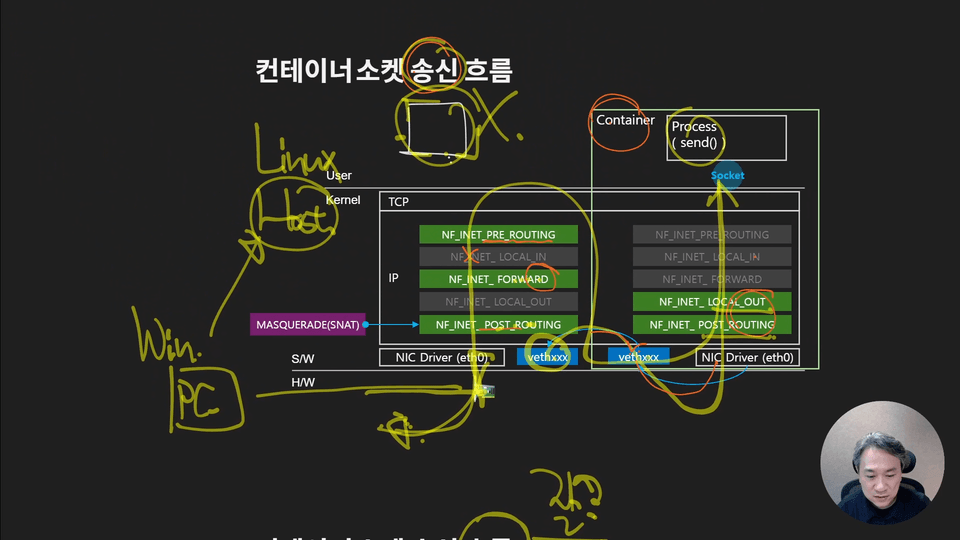
Starting from the operating principles of the routers everyone uses (NAT) to netfilter, Chain, iptables, the internal flow of the Linux network system, and management commands. You will realize that Docker networking is not "magic."


Step 9 — Now, Docker (Section 10)
Finally, Docker. We cover images and containers, Windows 11 installation, container lifecycles, and key commands. For students who have made it this far, this section will feel like a review.


Step 10 — Hands-on Project (Section 11)
You will personally containerize a 3-tier service consisting of a Next.js frontend, a Spring Boot API server, and a PostgreSQL database. You will complete the entire practical workflow, covering image creation, Docker volumes, and container network configuration.


Notes before taking the course


Practice Environment

  • Windows 11-based WSL

  • Docker Desktop

Learning Materials

  • Lecture material PDF file

  • Two Docker images to be used for the practice (Frontend, Backend)


Recommended for
these people

Who is this course right for?

  • Those who know how to use Docker commands but find themselves searching for answers as soon as a problem arises.

  • Those who have wondered what the 'entities' of images, containers, volumes, and virtual networks actually are

  • Those who have learned operating system theory but felt frustrated because it didn't connect to practical application

  • A junior developer aiming to grow in the fields of backend, infrastructure, and DevOps.

Need to know before starting?

  • Experience setting up IP addresses in an operating system (General knowledge of TCP/IP)

  • Understanding the roles of the Program Files and Windows folders in the Windows operating system

  • Experience in C programming is very useful.

Hello
This is nullnull8537

Inflearn Verified

52,714

Learners

3,172

Reviews

1,217

Answers

4.9

Rating

32

Courses

I am the owner of the "NullNull Developer TV" channel and
a developer who has been navigating the sea of IT technology for over 30 years. Nice to meet you. ^^

Curriculum

All

45 lectures ∙ (12hr 3min)

Course Materials:

Lecture resources
Published: 
Last updated: 

Reviews

All

8 reviews

5.0

8 reviews

  • bridge1309961님의 프로필 이미지
    bridge1309961

    Reviews 6

    Average Rating 5.0

    Edited

    5

    24% enrolled

    As expected of a great lecture by Teacher Choi Ho-seong, who organizes even the things I already knew so clearly and weaves them into a single coherent thread!!! If you are a software developer, I think your future studies will become much easier if you take this course along with the network course and use them as your foundation.

    • galaxyrys5853님의 프로필 이미지
      galaxyrys5853

      Reviews 8

      Average Rating 5.0

      Edited

      5

      98% enrolled

      It is a magnificent lecture that needs no words. I can feel the decades of expertise, and I look forward to your other lectures as well. I think I'll have to watch it one more time.

      • kwoghks98님의 프로필 이미지
        kwoghks98

        Reviews 2

        Average Rating 5.0

        5

        16% enrolled

        Personally, I really like Null-Null's teaching style. I think our values are quite similar as well. Thank you for teaching so passionately and sincerely. I've even joined the YouTube membership, and there are so many lectures to listen to. I want to study hard and grow into a reputable back-end developer. I will finish all the lectures by the live broadcast next Monday. Highly recommended!

        • nullnull8537
          Instructor

          Thank you for the first course review. Above all, I am sincerely grateful that you appreciated my style just as it is. I will continue to work hard and fulfill my role without losing my initial mindset. :)

      • parkbs69745109님의 프로필 이미지
        parkbs69745109

        Reviews 1

        Average Rating 5.0

        5

        100% enrolled

        amazing

        • zibril님의 프로필 이미지
          zibril

          Reviews 11

          Average Rating 5.0

          5

          32% enrolled

          nullnull8537's other courses

          Check out other courses by the instructor!

          Similar courses

          Explore other courses in the same field!

          Limited time deal

          $61,600.00

          30%

          $68.20