
inflearn logo

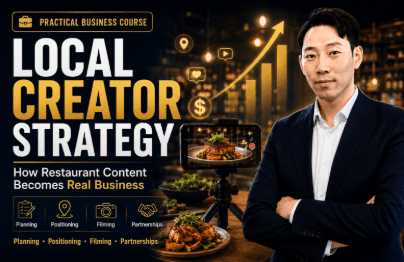
How Restaurant Content Becomes a Business: Practical Strategies for Local Creators

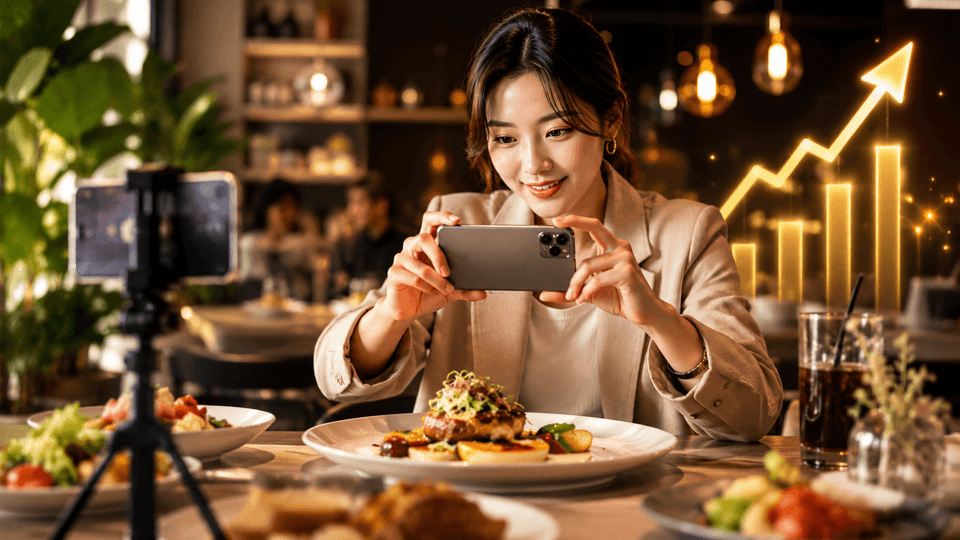
This lecture views a gourmet restaurant account not just as a simple food introduction channel, but as a starting point for a local content business that connects local shops with customers. Based on actual F&B store consulting experience, we examine the problems faced by business owners who have great food and spaces but fail to promote themselves to customers. We also explain why content with high views differs from content that drives actual visits, and what role local creators can play for local businesses. In this lecture, we cover the process of creating your first local content, including why food content is advantageous for short-form, the roles of each channel (Instagram, Naver, YouTube Shorts, TikTok), account positioning, benchmarking account analysis, writing scripts before filming, on-site restaurant filming methods, and basic editing with CapCut. The course is designed so that you can start even without professional filming equipment or editing experience, providing practical standards for those who want to turn their local area and lifestyle into content and develop it into a sustainable content channel.

1 learners are taking this course

Level Beginner

Course period 3 months

Contents Marketing
Contents Marketing
Video Production
Video Production
Photography
Photography
Content Creation
Content Creation
business
business
Contents Marketing
Contents Marketing
Video Production
Video Production
Photography
Photography
Content Creation
Content Creation
business
business

What you will gain after the course

  • You can understand why the local creator market can be an opportunity.

  • You can see why restaurant content is a great starting point for short-form and local content.

  • You can differentiate and utilize the roles of Instagram, Naver, YouTube Shorts, and TikTok.

  • You can design your account positioning based on your region and lifestyle.

  • You can learn the workflow of writing a script before filming, shooting on-site at a restaurant, and basic editing with CapCut.

  • You can understand local content operation methods that can lead to sponsorships, content production proposals, and brand collaborations.

Practical Strategies for Local Creators: How Food Content Becomes a Career

A gourmet food account is more than just a channel for introducing food

A gourmet food account is not just a channel for posting photos of food. Well-planned local content serves as a bridge between local businesses and customers, turning the strengths of restaurants and small business owners into actual reasons for visits. It can evolve into a practical content channel that expands into sponsorships, content production proposals, and brand collaborations.

This course is based on actual F&B store consulting and local creator recruitment experience. It uses realistic examples to explain the challenges faced by business owners who have great food and spaces but struggle to promote themselves, why there is a difference between high-view count content and content that drives actual visits, and what role local creators can play in between.

Key topics covered in this lecture

This course is not an advanced video production class using professional equipment. Instead, it covers how to view your local area and daily life through the lens of content, plan videos that people want to save and visit, and develop them into a sustainable local content account.

Students will come to understand the basic structure of content marketing through the process of creating food-related content. Rather than simply creating pretty photos and videos, they will learn which scenes to show to which customers, which sentences to use for hooking, and which platforms to utilize for what purposes.


Who this course is recommended for
This course is suitable for those who want to start a gourmet or local content account, those who want to start Instagram Reels, YouTube Shorts, or TikTok but feel overwhelmed about what to film, and those who want to turn their local area and daily routines into content.

It is also helpful for those who want to transition from blog or photo-centric content to short-form video, those who want to create a content channel capable of collaborating with local businesses, and those who want to learn how to convey the strengths of restaurants and small business owners through content.

You can take this course even if you don't have connections to specific restaurants or any sponsorship experience. As long as you can take photos and videos with a smartphone and have the desire to create content in your local area, you are more than ready to start.

It is also helpful for those who want to go, those who want to create a content channel capable of collaborating with local businesses, and those who want to learn how to convey the strengths of restaurants and small business owners through content.

You can take this course even if you don't have connections with specific restaurants or experience with sponsorships. As long as you can take photos and videos with a smartphone and have the desire to create content in your own local area, you are more than ready to start.


Direction of this course
This course is not one that claims "anyone can easily make money."

Creating local content requires time and consistency. To build a good account, you must understand the local area, analyze people's reactions, and responsibly deliver information that benefits both business owners and customers.

For restaurants and small business owners, business is not a hobby but a matter of livelihood. While what we create may be just a single short video, that video contains someone's shop, effort, time, and their very means of living.

I hope this lecture serves as a realistic starting point for those who wish to become local creators who consider responsibility alongside profit.

Expected changes after completing the course

After completing this entire course, you will understand why the local creator market can be a significant opportunity. You will learn why gourmet food content serves as an excellent starting point for short-form and local content, and you will be able to utilize Instagram, Naver, YouTube Shorts, and TikTok by distinguishing their respective roles.

Additionally, you will be able to design your account positioning based on your local area and lifestyle, and analyze benchmarking videos to understand the structure of hooks, filming sequences, captions, and CTAs. You will also learn the basic workflow of writing a script before filming, capturing necessary scenes at restaurant locations, and completing your first vertical short-form video using CapCut.

This lecture is not simply about how to make a single video. It is closer to a strength development process where you build content creation capabilities based on your own life and locality, and connect them to content marketing and collaboration proposals.

Local Creator Practical Course

The lecture consists of a total of 3 parts.

Part 1. The Moment a Food Account Becomes a Business: Opportunities in the Local Creator Market

In the first class, we view local creators not merely as people who introduce restaurants, but as individuals who connect local businesses and customers through content.

Through actual F&B store consulting cases, we examine the fact that even if the food and space are excellent, it is difficult to lead to visits if they are not effectively communicated to customers. Many restaurants and small business owners recognize the need for promotion, but often struggle to define what to show, to which customers, and how.

In this class, we will cover the difference between a good shop and a shop that gets discovered by customers, the difference between high-view content and content that drives actual visits, and the realistic promotional challenges faced by restaurants and small business owners. We will also explain why opportunities can arise even for new accounts and how local creators play a role in translating a shop's strengths into the language of content.

Part 2. How Gourmet Content Becomes a Career: From Channel Selection to Collaboration Proposals

In the second class, we will look at why food content serves as a great starting point for local content.

With food, the subject is immediately conveyed on the first screen, and movements essential for short-form content—such as grilling, cutting, pouring, and eating—occur naturally. Furthermore, it is easy to give viewers a reason to save the content by connecting it to their own lives, such as for lunch, dates, family outings, or company dinners.

In this class, Instagram, Naver, YouTube Shorts, and TikTok are explained by dividing them into different roles. We look at them from the perspective of Instagram for account portfolios and relationship building, Naver for search and actual visit connections, YouTube Shorts for content accumulation, and TikTok for hooking and response testing.

We also cover how restaurant content can expand beyond simple view counts into food sponsorships, content production proposals, regular channel management, and brand collaborations. This process is not just a hobby, but a business-oriented approach to content management that can be linked to local businesses.

Part 3. Creating Your First Video: Account Positioning, Filming, and CapCut Editing in Practice

In the third lesson, we will cover the actual process of creating your first piece of local content.

Many people start filming as soon as they arrive at a restaurant, but for local content, there are things you must decide before you begin shooting. You need to determine which region your account will cover, who your target audience is, and under what circumstances and criteria you will introduce locations.

In this class, I will explain how to establish a sustainable account position based on your lifestyle and local area. Afterwards, we will analyze benchmarking accounts to examine the first 3 seconds of hooking, the sequence of food scenes, cut lengths, captions, and CTAs of videos that achieved high view counts despite having a small following.

Before filming, write a simple script first. Organize who you are introducing it to, what the store's strongest advantage is, what scenes and sentences to show in the first 3 seconds, and which shots must be captured on-site.

On-site, secure footage of the exterior, signage, parking, interior space, menu, signature dishes, cooking scenes, food close-ups, and eating scenes with reactions. We will also cover the perspective of capturing not just video, but also photos that can be used for thumbnails, feeds, blogs, and proposals all in a single visit.

Finally, we will look at the basic process of using CapCut to import filmed footage, trim unnecessary parts, arrange the sequence of scenes, and add subtitles and music to complete a vertical short-form video.

Recommended for
these people

Who is this course right for?

  • Those who want to start a restaurant recommendation account or a local content account

  • Those who want to create Instagram Reels, YouTube Shorts, and TikTok content but feel stuck on what to film.

  • Those who want to create content based on the area they live in, restaurants and cafes they frequently visit, and their daily routines.

  • Those who want to move from blog or photo-centric content to short-form video

  • Those who want to create a content channel that can collaborate with local businesses

  • Those who want to learn how to convey the strengths of restaurants and small business owners through content.

Need to know before starting?

  • It is enough as long as you can take photos and videos with a smartphone.

  • It is preferred if you have experience using one or more of Instagram, YouTube, or Naver.

  • Professional filming equipment or video editing experience is not required.

  • Installing CapCut beforehand will make it easier to follow along with the editing practice.

  • You can take the course even if you don't have specific restaurant connections or sponsorship experience.

Hello
This is ppapdp

Career Verified

For over 10 years, I have been working in the fields of business development, domestic distribution and monetization structure design, and international trade.

Over the years, I have received various proposals for lectures and training programs. However, rather than high-priced side hustle courses aimed at short-term profits, I have consistently believed that it is more meaningful to honestly share, from a professional perspective, how revenue is actually generated in the real market and at which points one encounters limitations.

In particular, I have accumulated experience focusing on the following areas.

  • Realistic profit structures in the domestic distribution market

  • The difference between "areas said to be easy" and structures that are actually difficult to sustain

  • Criteria for evaluating markets from a business development perspective

  • Practical experience gained through international trade and global business

I aim to share standards and mindsets that have been repeatedly verified in the actual field, rather than exaggerated success stories or result-oriented narratives.

If I were to share my knowledge through Inflearn, I would prefer to start with low-barrier formats such as small-scale live sessions, pilot-style lectures, or mentoring—rather than a completed large-scale course—and gradually expand based on actual feedback.

Rather than simply 'selling' knowledge, I place more importance on having the experience and decision-making criteria I've built in the field serve as a reference point to help others reduce trial and error.

If it aligns with the direction Inflearn is pursuing, I would like to start small and explore the possibilities together.

More

Reviews

Not enough reviews.
Please write a valuable review that helps everyone!

ppapdp's other courses

Check out other courses by the instructor!

Similar courses

Explore other courses in the same field!

Limited time deal

$32,670.00

70%

$84.70