


inflearn logo

Avoiding Advertising Violations as a Sole Proprietor — How to Change Wording That Gets Flagged into Wording That Doesn’t

Copy that sells well is often copy that gets flagged. Here, we’ve compiled the exact phrases we actually removed from our sales pages, along with why we removed them.

1 learners are taking this course

Level Beginner

Course period Unlimited

Marketing Theory
Marketing Theory
Digital Marketing
Digital Marketing
Management
Management
Marketing Theory
Marketing Theory
Digital Marketing
Digital Marketing
Management
Management

What you will gain after the course

  • You can identify phrases that get flagged on the sales page and replace them with phrases that don’t.

  • You can include all the required information on the sales page without leaving anything out.

  • You can meet the conditions for actually asserting a restriction on the right of withdrawal for digital products.

  • You can review store descriptions, emails, and social posts using the same standards.

This course is

⚠️ This course is not legal advice. It is a summary of the wording I actually removed from my sales page and the basis for my decisions at the time. I have also noted in the main text that you should have important decisions reviewed by a lawyer.

When you sell products on your own, you write the copy yourself. But copy that seems likely to sell is often copy that gets you into trouble.

The two things I actually removed were these: including a “Tax invoice issuance: Required / Not required” field in the payment instructions even though, as a simplified taxpayer, I cannot issue tax invoices; and unverifiable claims about results. Neither was intended as a lie, but both were still problematic.

This course covers those two issues and five risky phrases commonly seen on sales pages (such as a list price that was never actually used and a “first-come, first-served” offer you won’t honor), as well as what to put in their place after removing them. It also covers the disclosures that must appear on the sales page, the conditions that make it possible to actually claim restrictions on the right of withdrawal, and the fact that the same rules apply to store descriptions and emails.

This is not about tricks for avoiding regulations. It is about how to change wording that gets you in trouble into wording that does not. Simply deleting it would hurt sales, so we have also noted what to replace it with.

It is not a video but text and a checklist. It was created on the premise that you will keep the sales page open and write while comparing each item one by one.

Recommended for:

  • People writing marketing copy on their own — Copy that sells well often crosses a line. Learn to recognize that boundary.

  • Those adding payment processing — without the required disclosures, you may be blocked during payment review.

  • For those selling digital products — refund restrictions can only be enforced if they are disclosed in advance and documented.

Contents

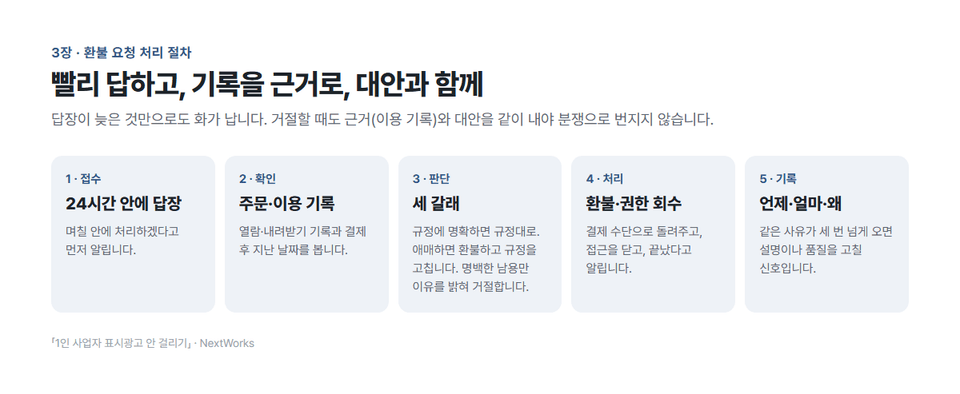
  • Section 1 · What’s at stake — five types that get flagged, common risky wording and what I removed, the inspection process, and the scope of this course

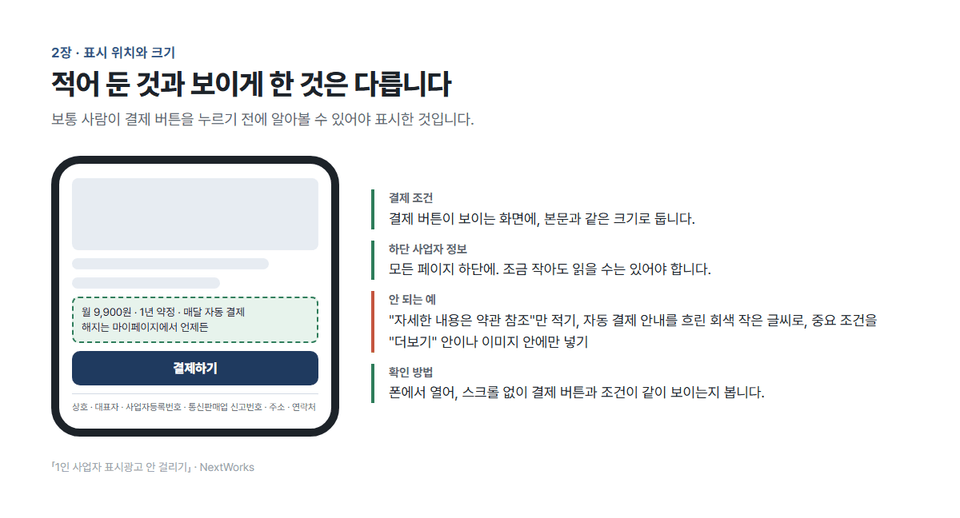
  • Section 2 · What must be on the sales page — footer notices, near the product, immediately before payment, omission checks

  • Section 3 · Making refunds and cancellation rights enforceable — the framework of the rules, if you intend to claim restrictions, preparing for disputes

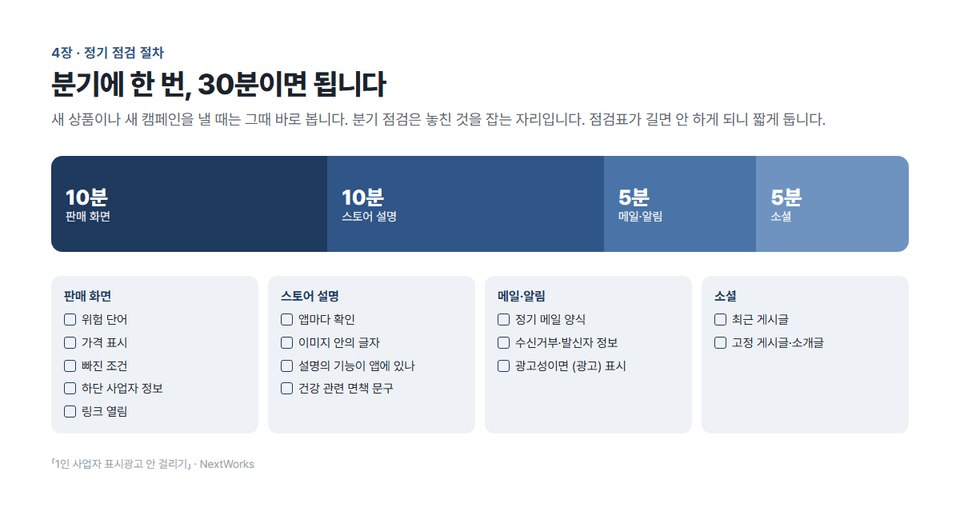
  • Section 4 · The same rules apply to stores and emails — store descriptions, emails, social media, automatically generated copy, and regular checks

Prerequisite Knowledge

  • No. If you have something to sell or are making something, that’s enough.

  • No legal knowledge is required — we start with where and how to find the relevant provisions.

This is not covered.

  • This is not legal advice. These are records of the judgments I made, and I noted that anything uncertain should be checked with a lawyer.

  • This is not about evading regulations — it’s about how to rephrase things so they don’t get flagged.

  • It does not cover detailed standards in the health and financial sectors.


    do.

Recommended for
these people

Who is this course right for?

  • For those writing marketing copy on their own—the copy that sells well is often the copy that gets flagged. We look at that boundary.

  • For those integrating payments—if there are no displayed items, you’ll be blocked during payment review.

  • Those who sell digital products — refund restrictions can only be claimed if they were disclosed in advance and documented.

Need to know before starting?

  • There isn’t one. It’s fine as long as there’s something being sold or made.

  • No legal knowledge is required — we start with where and how to find the relevant provisions.

Hello
This is nextworks2048

I’m a solo developer who builds mobile apps and web services and independently publishes and operates them on app stores.

I’ve published seven apps on Google Play and the App Store. I ran into more obstacles during the publishing process than during development. My apps were rejected over paperwork and settings rather than code—privacy policy URLs, review accounts, consent for third-party AI processing, and sales region settings. There were even times when my apps didn’t appear in store searches for several weeks despite passing review.

I organized the rejection emails I received during that process, along with what I personally confirmed in the console, into a course.

Apps developed: Google Play “몸결,” “끼니,” “하루표,” “옷결,” “말결,” and “영어서랍” (developer: NextWorks)

More

Curriculum

All

53 lectures

Published: 
Last updated: 

Reviews

Not enough reviews.
Please write a valuable review that helps everyone!

Similar courses

Explore other courses in the same field!

Limited time deal

$557,431.00

69%

$68.20