Pass the Kakao Cote 6-week course! Real Python Coding Test
excusemee04122221
Kakao Cote 6-week pass study method nerd scientifically selected algorithm/data structure extract
Basic
Algorithm, data-structure, Coding Test
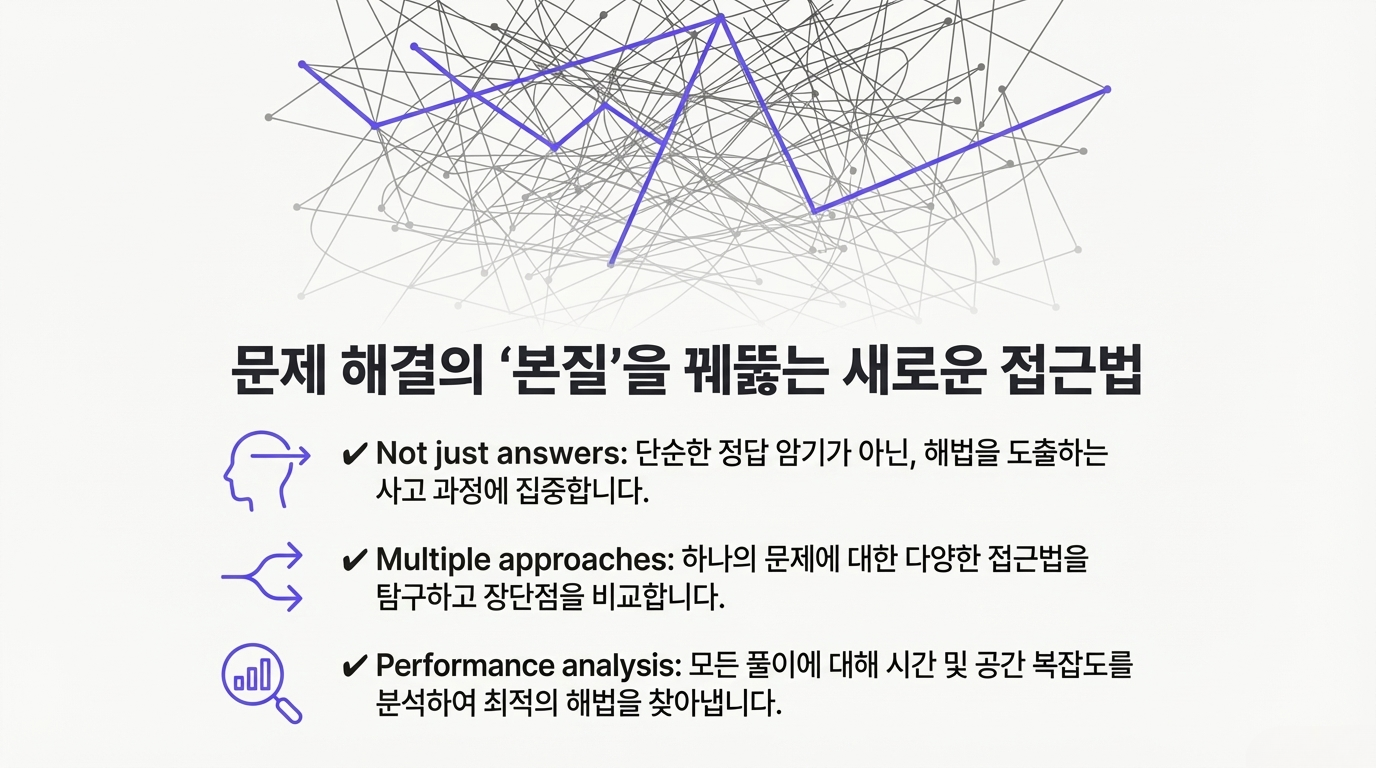
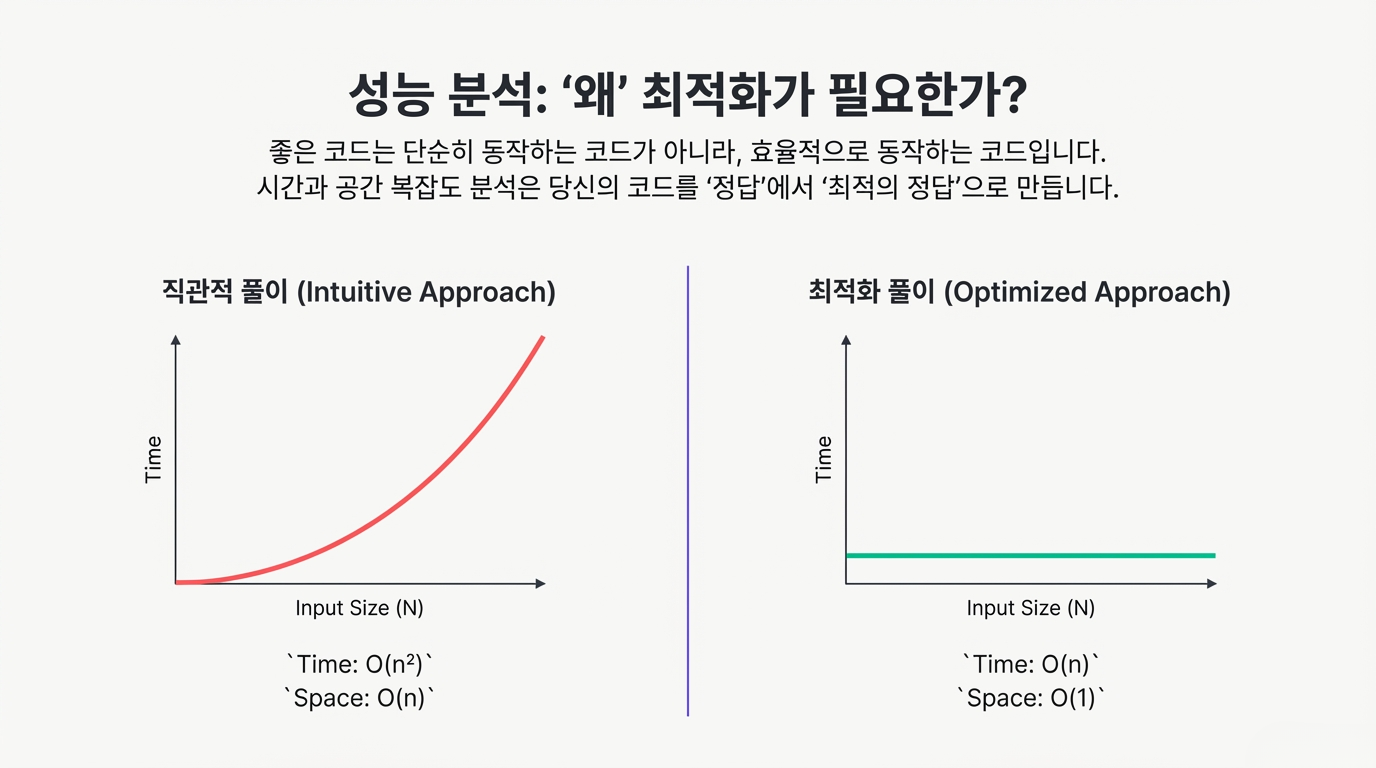
LeetCode explained by Dalle, a Korean developer working at a Silicon Valley startup! This is a practical LeetCode problem-solving course that doesn't just provide answer codes, but compares multiple approaches for each problem, analyzes time and space complexity together, and explains why certain solutions are more efficient. First, we write the most intuitive approach and analyze its time/space complexity to identify bottlenecks and improvement points. Then, we explore alternative approaches applying various data structures and algorithmic techniques, comparing the performance differences and pros and cons of each method. Through this, it helps you develop problem-solving skills to design efficient solution strategies on your own when facing new problems.
76 learners
Level Basic
Course period Unlimited
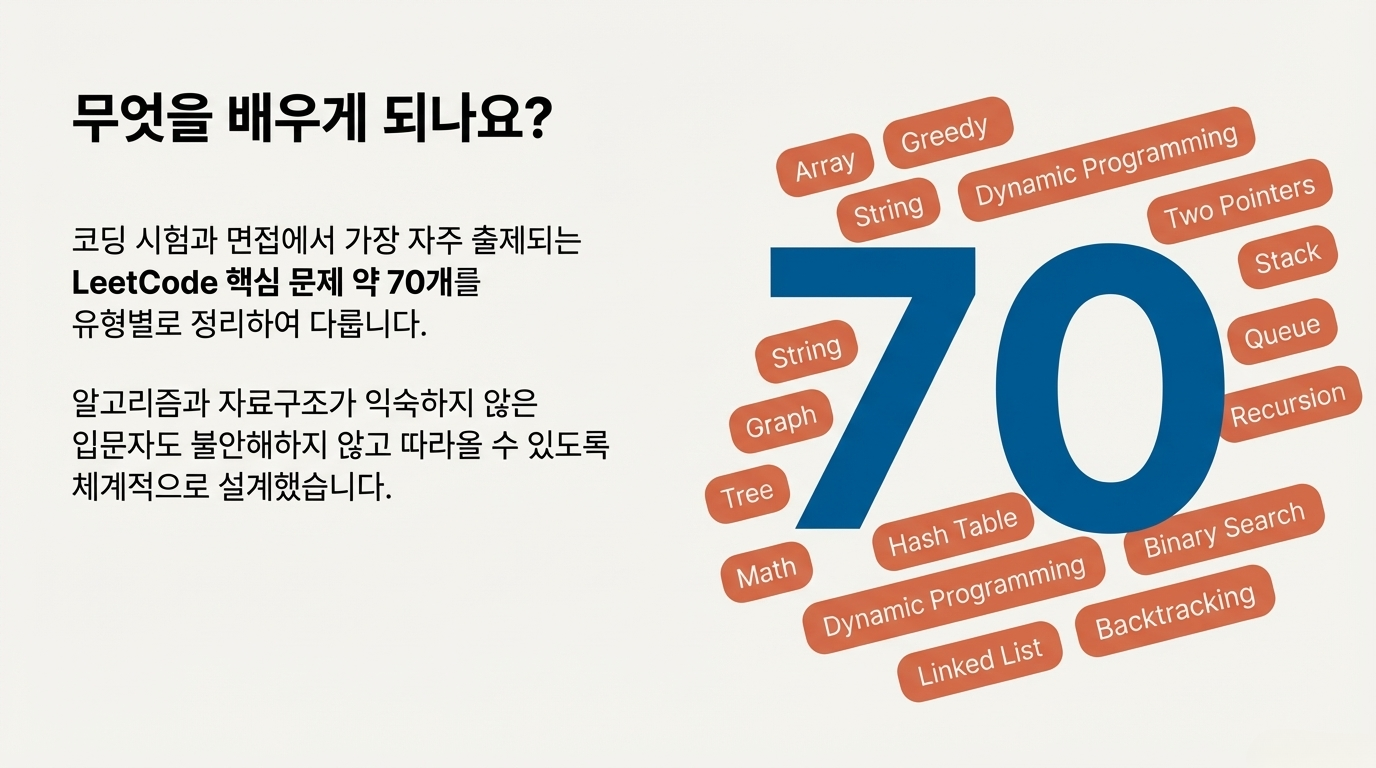
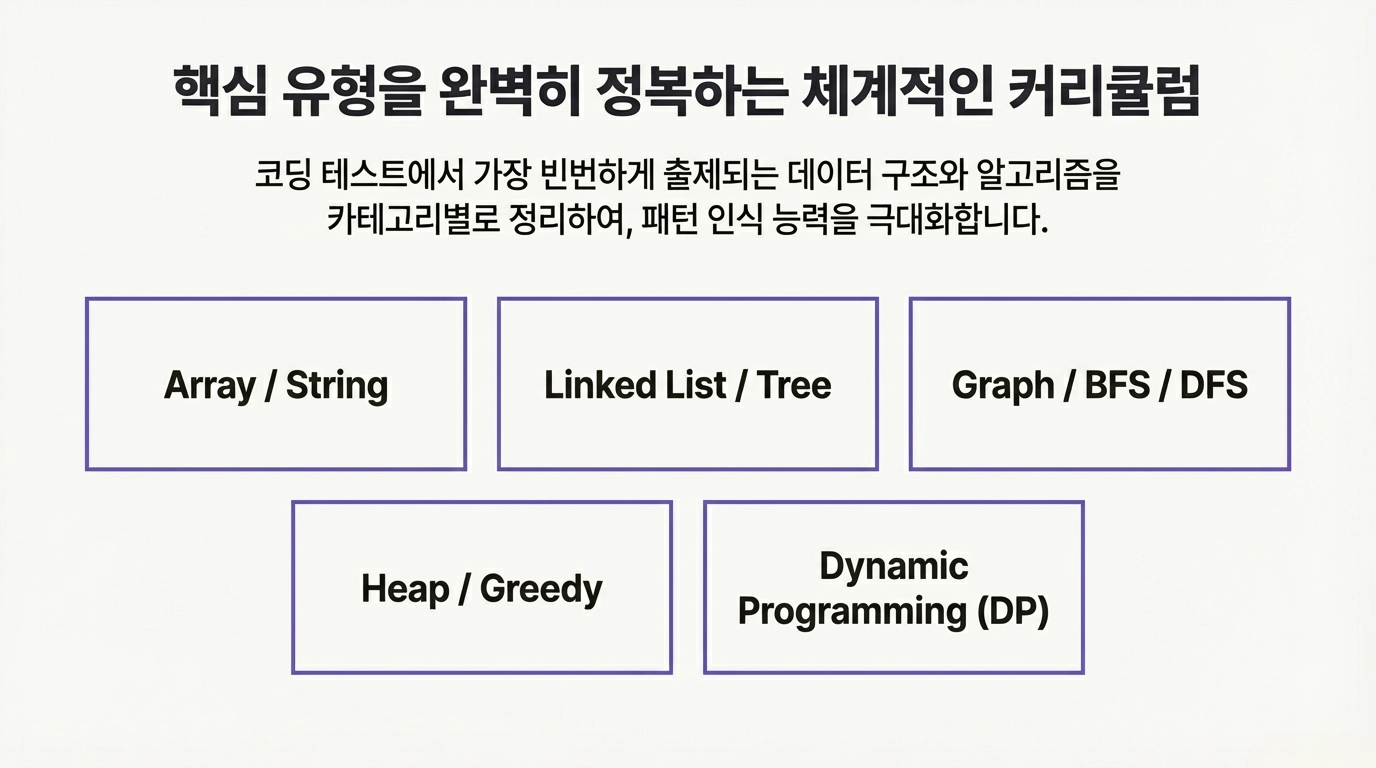
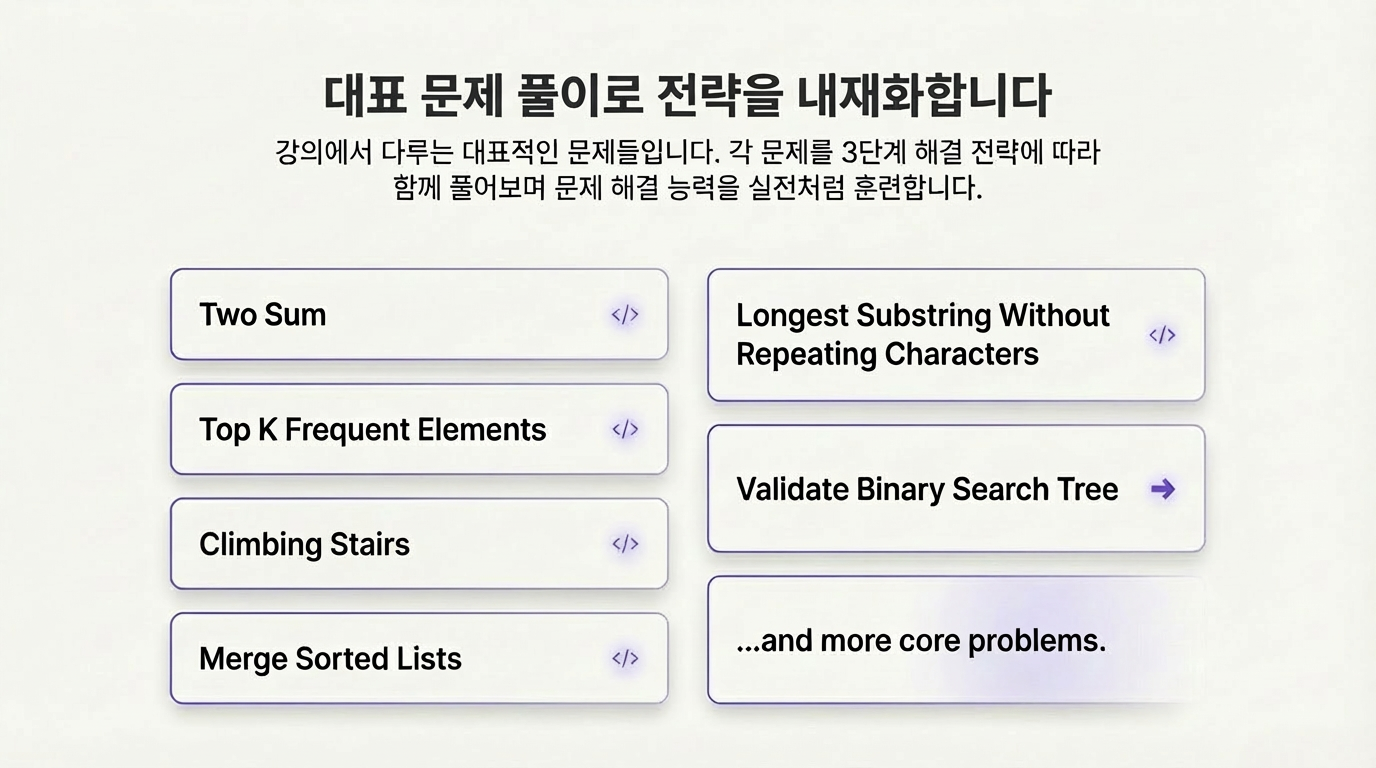
Understanding key problem types that repeatedly appear in coding tests and interviews
The ability to determine which algorithms and data structures to apply when looking at a problem
The benchmark for being able to continue solving LeetCode problems on your own
Even though you're consistently solving LeetCode problems,
don't you feel lost about where to start when you see a new problem?
Even when you look at the solution code, it just ends with "Oh, I see"
When a slightly modified problem appears, you find yourself struggling from scratch again
The solution is too slow to meet the time limit
This course was created for those experiencing these problems.
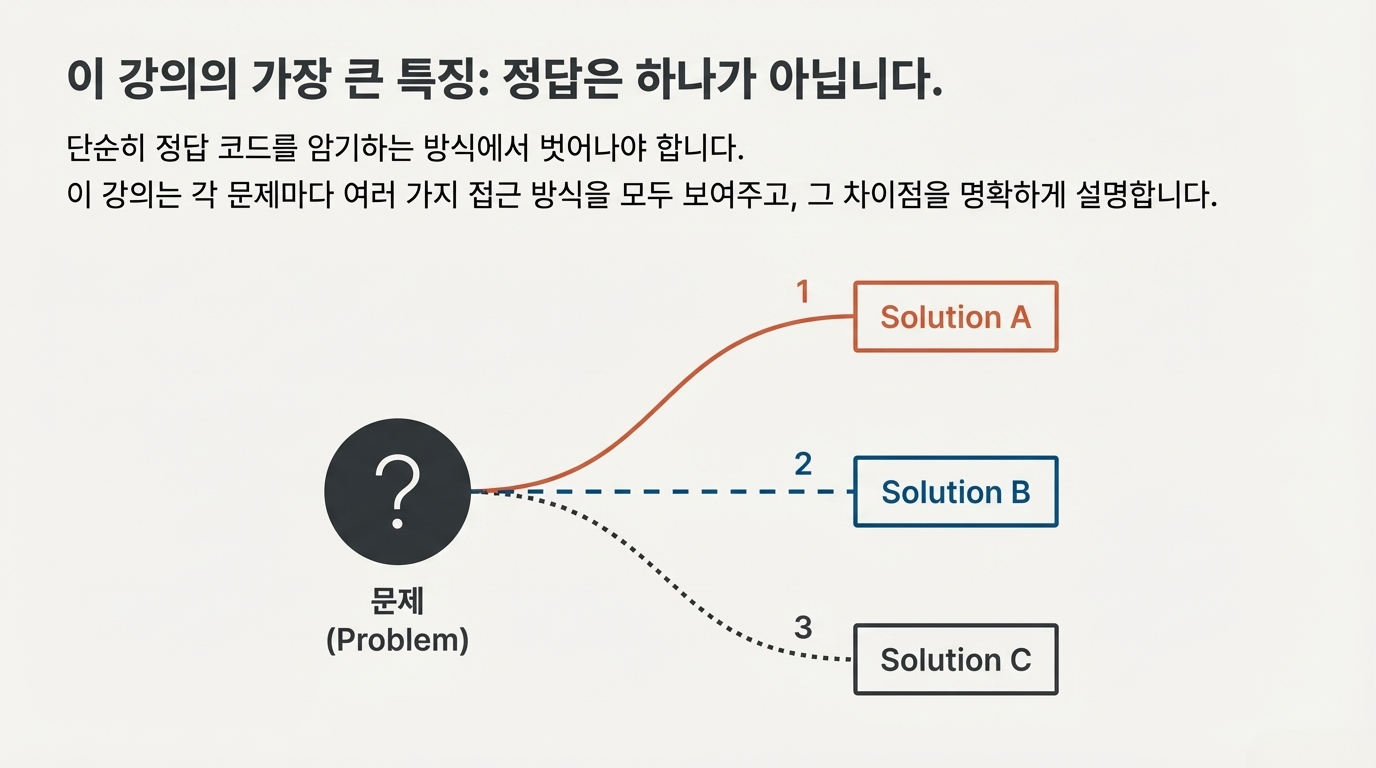
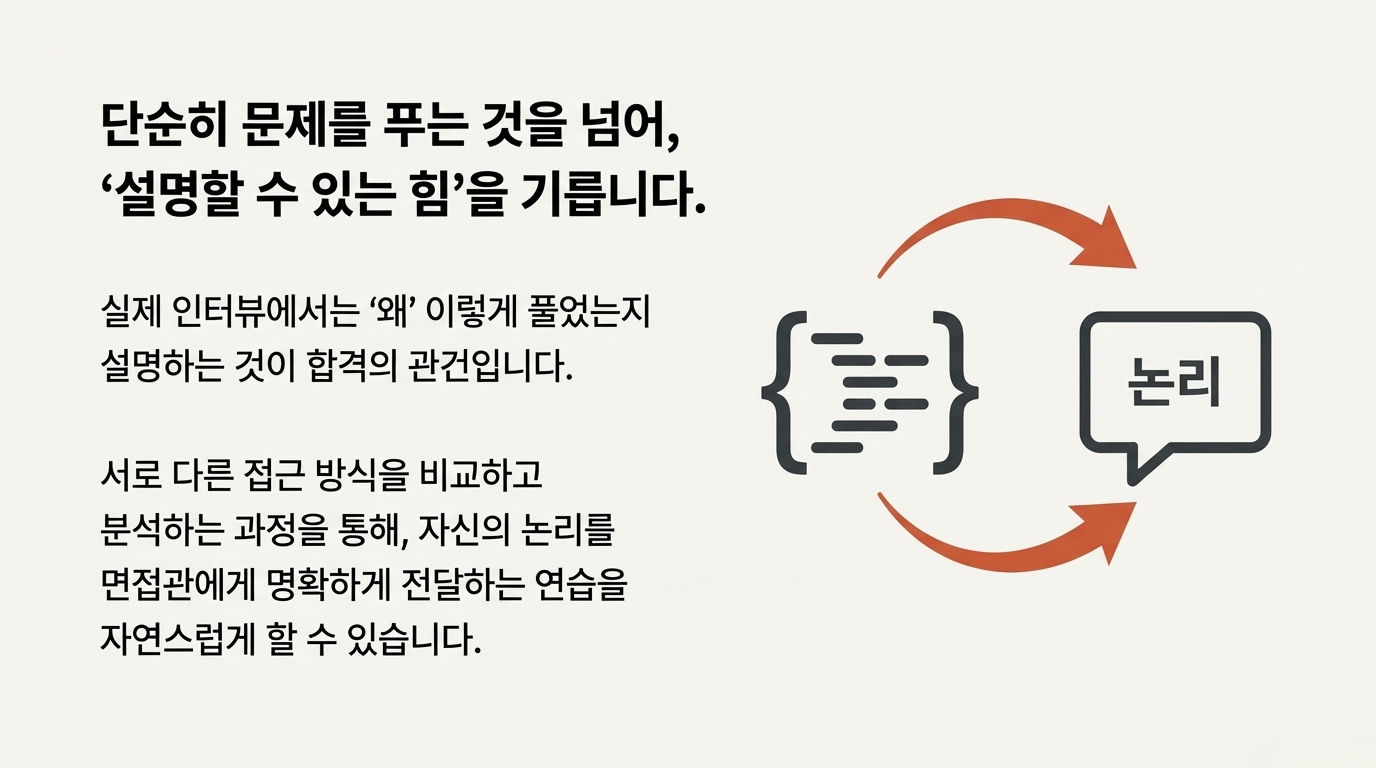
This course doesn't simply show you the answer code. This course teaches you "how to think," not just
"how to solve" LeetCode problems.
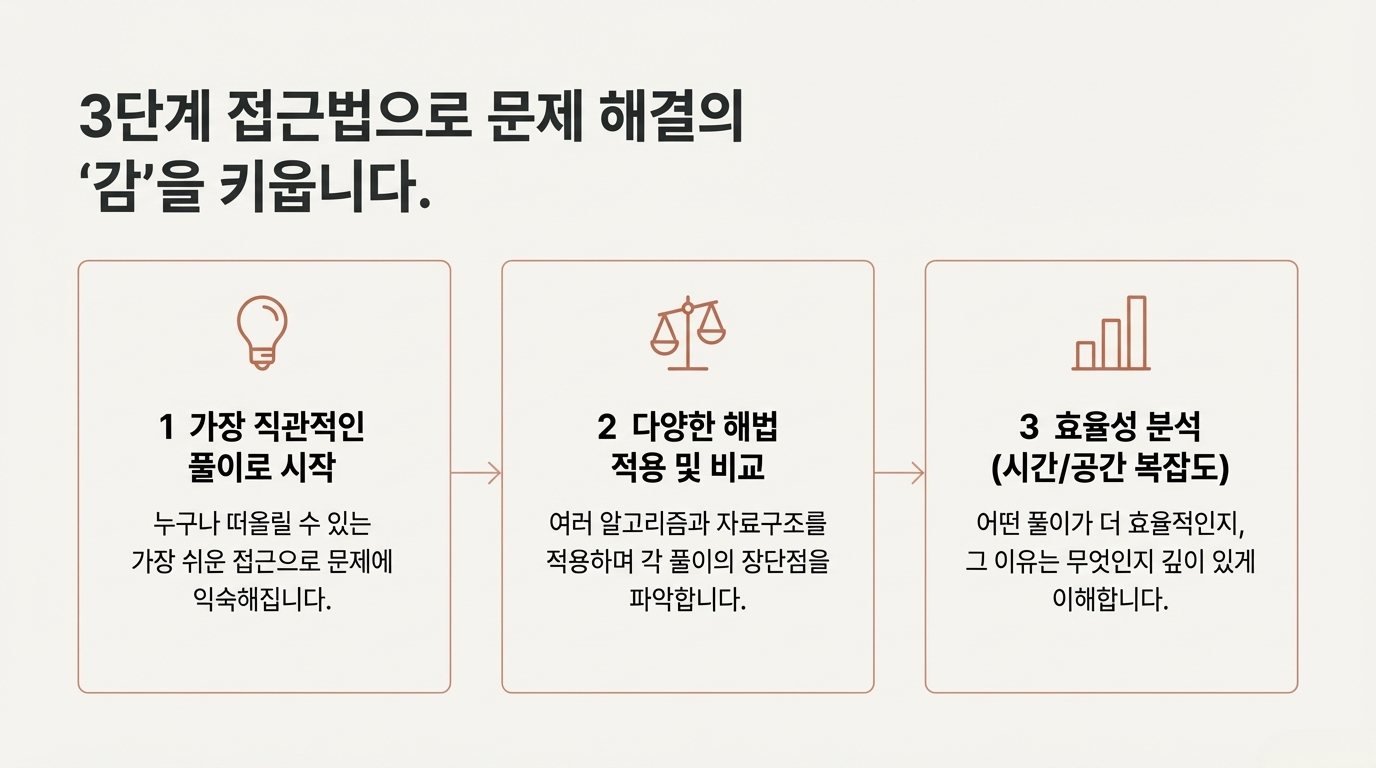
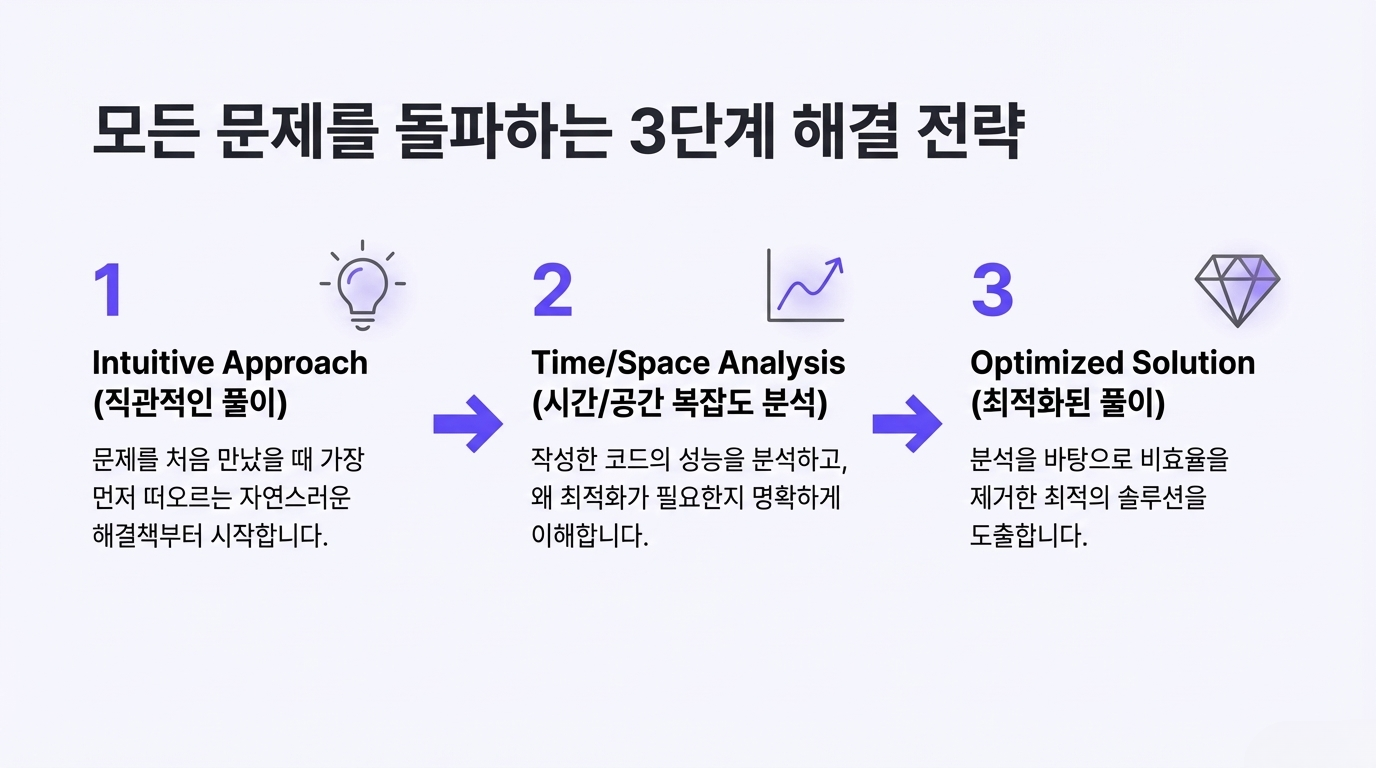
For each problem, we repeat the following flow.
The Most Intuitive Approach (Bruteforce)
Time / Space Complexity Analysis of the solution cแปงa lแปi giแบฃi ฤรณ
Clearly understand why this solution is inefficient
A better approach utilizing data structures or algorithms bแบฑng cรกch sแปญ dแปฅng cแบฅu trรบc dแปฏ liแปu hoแบทc thuแบญt toรกn
Derive the final optimized solution by comparing multiple approaches
For a single problem
๐ We cover at least 2, and up to 5-6 different approaches
so you can learn with understanding "why this solution is good."
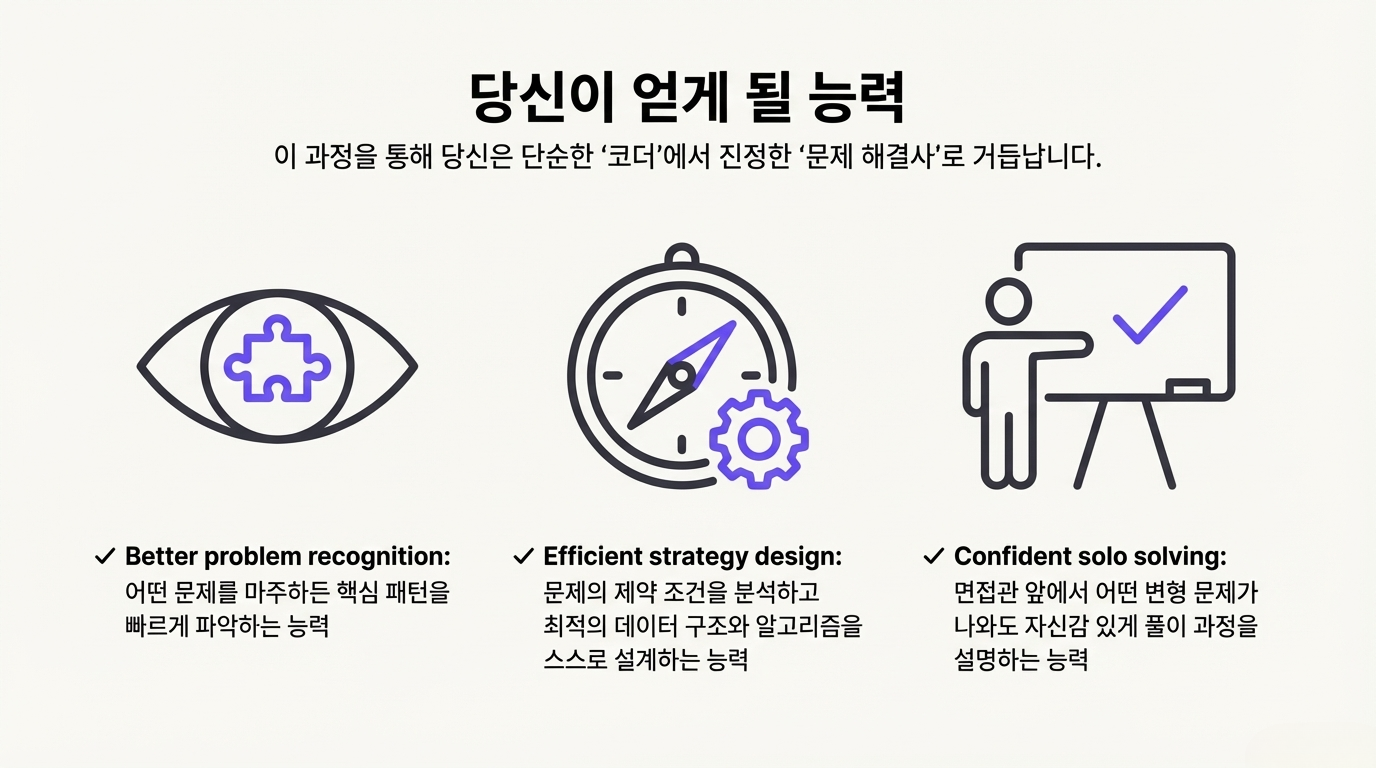
Through this course, you can expect the following changes.
As soon as you see a problem
โ the ability to sense which algorithm / data structure to use
The ability to establish realistic solution strategies
โ considering time constraints
LeetCode problems
โ A baseline to continue solving on your own
The goal is not simply to become someone who "solves many problems" but to grow into someone who "knows how to solve problems".
Developers who are preparing for coding tests for the first time or preparing again
I understand LeetCode problems but have no idea how to approach solving them
Junior to mid-level developers aiming for overseas employment / Big Tech interviews hฦฐแปng tแปi mแปฅc tiรชu xin viแปc แป nฦฐแปc ngoร i / phแปng vแบฅn Big Tech
Those who want to develop problem-solving thinking skills rather than simple memorization
Python basic syntax (variables, loops, functions, lists, etc.)
Who is this course right for?
Developers who are preparing for coding tests for the first time or again
For those who understand the LeetCode problem but have no idea how to solve it
Junior to mid-level professionals interested in overseas employment / Big Tech interviews
Need to know before starting?
Python Syntax Basics
Canada๐จ๐ฆ I am a Korean๐บ๐ธ developer living in Toronto and working for a US Silicon Valley startup.๐ฐ๐ท Working as a developer for over 18 years, I have experienced several career moves from major domestic corporations to global Big Tech companies, and in the process, I have prepared for and taken countless coding tests.
I focus on explaining the coding test not simply as a "process of solving many problems," but as a process of thinking about how to view a problem and which approach to choose. Instead of quickly showing the correct answer, my lectures are conducted in a way that explores why we think this way and what other options are available.
I am creating my lectures in a style that always explains things step-by-step, starting from the most intuitive solutions, so that even those who are not yet familiar with algorithms and data structures can follow along without feeling overwhelmed.

All
70 lectures โ (21hr 35min)
All
2 reviews
5.0
2 reviews
Reviews 2
โ
Average Rating 5.0
5
I am sharing the most efficient study method I experienced while taking this course by Dalle (Daeyoung). First, try solving the problems and listen to the lectures. Most people will probably think, "Oh, this is just another algorithm problem-solving course." The important thing is that if you can't solve a problem while listening, don't torture your brain until it's solved; just watch the lecture. Since this is a practice stage anyway, there's no need to torture your brain to the point of losing interest. Just think, "So that's how Dalle solved it," and move on. (However, you must code along with him. This is important.) The real key point of the course starts from the second round. When you go through the lectures a second time, try solving the problems first without listening to the explanation. As you solve them, draw diagrams either in comments or on a pad. The core is to start with a brute-force approach and optimize it step-by-step. 1. During the optimization process, make sure to note down why you thought of that specific approach. Even if you feel like you can't forget the answer you've already seen, pretend to trick yourself and write down the causal relationship of your thoughtsโeven if it's just the imprinted flow of optimization. 2. If you can't solve it, write down in detail exactly where you got stuck moving to the next step. Then, while watching the lecture, write down Dalle's thought process that breaks through that stage and code along with him. It's okay even if you just memorize it. (Your brain cannot distinguish between perfect understanding and perfect memorization.) 3. Before starting the third round, thoroughly study the "wrong answer notes" you've written so far. Then, set a time limitโ20 minutes for Easy, 40 minutes for Medium, and 60 minutes for Hardโand try solving them on LeetCode while explaining your thought process out loud or through comments. If the explanation doesn't flow smoothly or you get stuck, it means that's your weakness. In that case, watch the lecture for that problem again and repeatedly solve similar types of problems on LeetCode to turn them into patterns; this is great for supplementing your weaknesses. To Daeyoung, who is always sincere about helping junior developers! Thank you once again!
I read your heartfelt post carefully. It brings me a great sense of fulfillment to see that the points I agonized over while preparing the lecture were conveyed exactly as intended. ใ ใ Looking at the study method you mentioned, I can feel that you are striving to build your own thought process rather than simply following the solutions. In particular, recording how you reached a certain thought and clearly identifying the points where you got stuck is exactly what you should be doing. This is the typical learning style of those who achieve great results in actual coding tests. As an instructor, the moment I hope for most is when a student begins to solve problems in their own way, and it seems you are already moving well into that stage, which gives me a lot of energy. Also, I believe sharing your experience like this will be a huge help to others! Thank you sincerely for your warm words. I will continue to cheer you on as you move forward with your studies.
Reviews 1
โ
Average Rating 5.0
5
The explanation was very clean, and I liked how you explained it slowly so that even beginners could follow along. In particular, showing the thought process step-by-step was a huge help! I still have many problems left to solve, but I think this will be very helpful for my coding test preparation.
Thank you so much for leaving such a valuable review! I'm glad to hear that the pace of the solutions and the explanation style were helpful. It might seem like a lot of problems at first, but as you solve them one by one, you'll eventually reach a point where it all feels familiar. If you ever get stuck while studying, please feel free to ask questions anytime. ๐
Explore other courses in the same field!