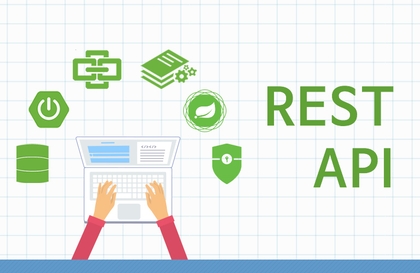
Spring-based REST API development
whiteship
This course develops a REST API that satisfies Self-Descriptive Message and HATEOAS (Hypermedia as the engine of application state) using various Spring technologies.
Intermediate
Spring, REST API, Java
This course covers Spring Web MVC, a Java Servlet-based MVC framework. For a more efficient learning experience, please take the Spring Framework Core Technologies course.


Reviews from Early Learners
5.0
김종현
In fact, it was never an easy lecture. Those who are trying to take the class should choose carefully. However, the lecture is very in-depth. I recommend it because it requires a deep understanding, such as explaining mainly about writing test code, how to look at references, and showing the framework itself. In particular, the awkward laughter that comes out when the teacher himself makes a mistake is a charming point. Hahahaha
5.0
이규형
Thank you for explaining it easily. What is MVC? How should I write test code? I had concerns before even starting, but as I listened to the lecture, I understood it and felt that Spring was fun. I will listen to it repeatedly until I understand it, and I will continue to learn how to write test code, and I will try to make it mine. Thank you for making a great lecture.
5.0
우유소보루
It seems like you are studying deeply. It is difficult for those who are completely new to Spring to understand, so it would be a good idea to look up what you don't know when you listen to the lectures and then go to the lectures once you understand it.
How Spring Web MVC Works
Various features of Spring Web MVC
Using Spring Web MVC without Spring Boot
Modifying Spring Web MVC Configuration in Spring Boot
Learn the core principles, configuration, and utilization of Spring Web MVC all in one place!
Baek Gi-seon's Spring Web MVC
📢 Please be informed
In this course, you will learn about Spring Web MVC, a Java Servlet-based MVC framework.
In this course, you will learn how Spring MVC works, how to configure it, and how to use annotation-based Spring Web MVC.
Java Enterprise Edition (Java EE) provides a specification and API called Servlet (HTTP Servlet) that allows you to develop web applications.
Spring Web MVC provides a framework that simplifies and accelerates the development of Servlet-based API-based applications. This allows developers to focus on application logic rather than the Servlet API.
In fact, many companies are developing, deploying, and operating enterprise applications based on Spring Web MVC.
This lecture covers how Spring MVC works, how to configure it, and how to use annotation-based MVC.

Spring Web MVC
How it works
Anyone who wants to understand

Spring Web MVC
About how to set up
Anyone who wants to know

Spring Web MVC
Various functions
Those who want to learn

Even without Spring Boot
Spring Web MVC
Anyone who wants to use it
Webflux is not covered
Learn about servlets
I mainly use Timeleaf
About Spring Boot
Test-friendly development
Provide example code
Spring Framework Core Technology Prerequisite
Spring Boot Concepts and Utilization Elective

Who is this course right for?
For those who want to understand how Spring Web MVC works
For those who want to know the various features of Spring Web MVC
For those who want to know how to set up Spring Web MVC
For those who want to use Spring Web MVC without Spring Boot
Need to know before starting?
《Spring Framework Core Technologies》 Lecture
Java programming experience
How to use IDE and Git
93,235
Learners
4,370
Reviews
2,010
Answers
4.8
Rating
20
Courses
Having worked at Naver and Amazon, I am currently working as a Senior Software Engineer at Microsoft.
Einstein once said, "Education is not the learning of facts, but the training of the mind to think." I create my lectures with deep resonance for those words.
YouTube: Sharing useful knowledge and career advice for developers on the 'Keesun Baik' channel
Translation: Translated numerous books related to Spring and Hibernate
Author: Easy-to-Follow Java Web Development
All
60 lectures ∙ (11hr 0min)
Course Materials:
16. @EnableWebMvc
18:43
17. WebMvcConfigurer
10:07
19. Spring Boot JSP
14:02
25. Resource Handler
13:40
All
177 reviews
4.9
177 reviews
Reviews 3
∙
Average Rating 5.0
5
Thank you for explaining it easily. What is MVC? How should I write test code? I had concerns before even starting, but as I listened to the lecture, I understood it and felt that Spring was fun. I will listen to it repeatedly until I understand it, and I will continue to learn how to write test code, and I will try to make it mine. Thank you for making a great lecture.
Reviews 10
∙
Average Rating 4.2
5
In fact, it was never an easy lecture. Those who are trying to take the class should choose carefully. However, the lecture is very in-depth. I recommend it because it requires a deep understanding, such as explaining mainly about writing test code, how to look at references, and showing the framework itself. In particular, the awkward laughter that comes out when the teacher himself makes a mistake is a charming point. Hahahaha
Reviews 17
∙
Average Rating 4.8
Reviews 19
∙
Average Rating 4.8
Reviews 14
∙
Average Rating 4.6
1
I tried to listen to Mr. Baek Gi-seon's lecture, but I have to give up. Since he goes through the shortcut keys in IntelliJ every time, I couldn't follow along at all (I wish he had explained which shortcut keys he was using at least...) Since he only explains by debugging using the Din-Z key and IDE functions, I thought it would be a difficult lecture, especially for those who have come across Spring with STS or Eclipse (and Windows users). In fact, IntelliJ is a very good IDE. (It's just expensive so it's useless..) However, I think it's nonsense to say that you came to study Spring, but can't proceed because you can't follow the IDE usage.. It's a difficult lecture even for people who can use IntelliJ smoothly. In my personal opinion, you should be at least an intermediate to advanced Spring user who is already familiar with other technologies such as JPA, h2, Thymeleaf, and RestController.. As I use it, I find that most of the complaints are about the IDE. But if it was just like that, I would have given it about 4 points. But fundamentally, the explanation was not friendly throughout the lecture. (For example, if it was explained like this: DispatcherServlet's basic strategy: DispatcherServlet.properties, it would be hard to understand..) I've been a Spring user for quite some time, but I'm honestly cautious about whether it's a good lecture.
I understand. If you are in a situation where it is difficult to handle the IDE itself, it may have been difficult to watch the lecture because the screen transition felt sudden. You may think it is an excuse, but it was difficult to focus on the main topic of the lecture because I explained even the most basic shortcuts one by one. Although I did explain the debugging shortcuts that may feel unfamiliar in class, it may not have been sufficient. Also, you do not need to have prior knowledge of JPA, H2, Thymeleaf, or @RestController to take the Spring Web MVC lecture. If you felt that way, it is because my teaching skills are lacking. This lecture is absolutely not deeply related to the relevant technologies. However, since there are many things that are connected to them (and among them, @RestController is actually something you should learn in this lecture, not something you should know in advance), I just showed you how to use them together, but you do not need to know everything in detail to understand this lecture. If you felt that the explanation was not friendly, that is also my fault. In the case of the basic strategy of DispatcherServlet, which you gave as an example, I explained it in detail for 21 minutes in "Spring MVC Components", but I think I explained it in a way that I didn't understand well. Many people, including Charie T, sympathized with me, so I will refer to it a lot when making the next lecture. Thank you for your feedback.
Check out other courses by the instructor!
Explore other courses in the same field!
Limited time deal ends in 4 days
$9,712.00
29%
$84.70