Kim Younghan's Practical Java - Basics
yh

$34.10
Basic / Java, oop
5.0
(2,409)
28,200+
Learn practical core Java object-oriented concepts easily via example code.

Basic
Java, oop


Understand the principles to see the core!
Young-han Kim's Spring MVC: Application 👨💻
📌 Please check before taking the course!
Most modern applications are web applications that operate in a web environment. When Java backend developers develop these web applications, most of them use Spring MVC. Spring MVC is the most popular web framework that helps develop complex web applications easily and quickly.
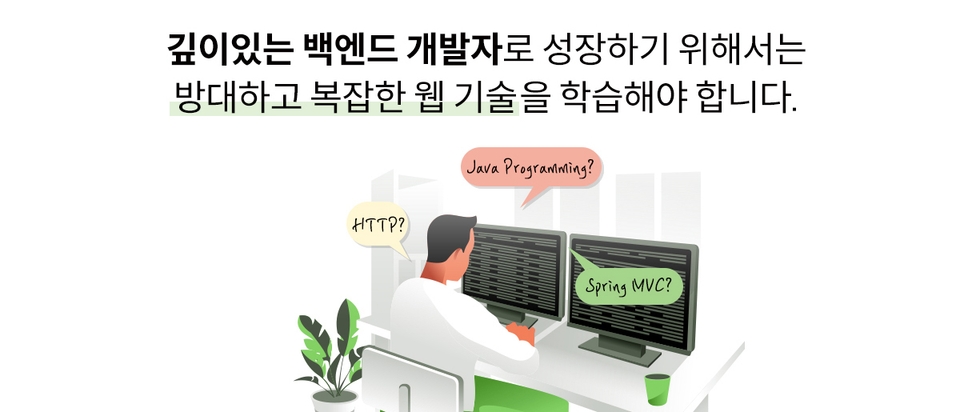
Java Backend web technologies are vast, and there is a lot of material to study. In particular, Spring MVC offers many features and has a complex structure. To properly learn these web technologies, you must first understand the core principles and structure of Spring MVC, and then conquer the vast array of web application technologies one by one on that foundation.
Please check if you have understood the core principles and structure of Spring MVC required for web development through the previous lecture, <Spring MVC Part 1>.
1. From the beginnings of Java web technology to the latest practical skills
2. Developing an MVC framework directly through code
So far, we have learned Java backend and Spring MVC foundational technologies. In this course, we will learn essential practical application skills built upon the foundations we have covered.
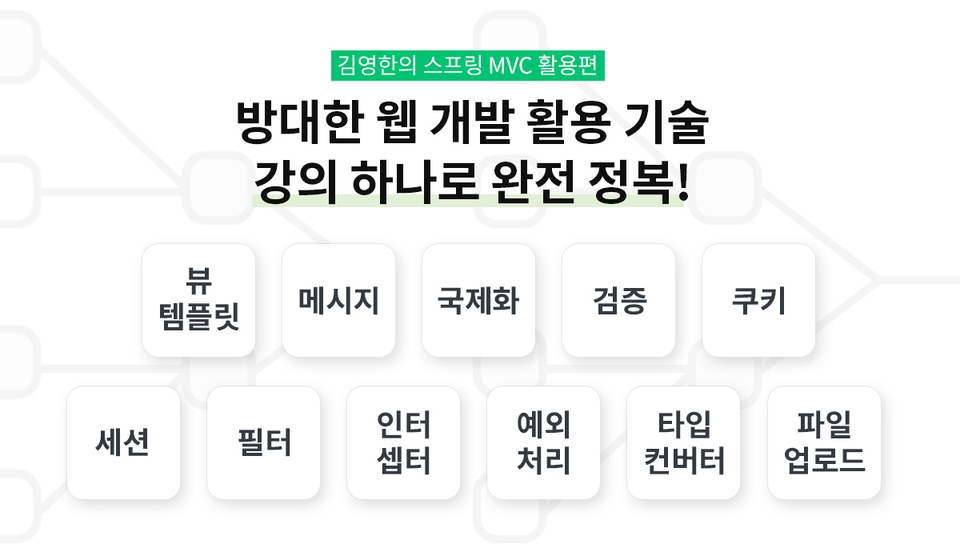
In Spring MVC Part 2, you can completely master a vast range of practical web technologies through examples, building upon the foundation of Spring MVC learned in Part 1, including View Templates, Messages, Internationalization, Validation, Cookies, Sessions, Filters, Interceptors, Exception Handling, Type Converters, and File Uploads.
Based on the core principles and structure of Spring MVC, I will help you master extensive web application technologies through practical example code and help you grow into a more in-depth backend web developer.

Spring MVC for the
first-time developer
Backend Developer
Job Seeker
Professional developers who want to deeply
understand Spring MVC
Developers who want to create web apps
with Spring
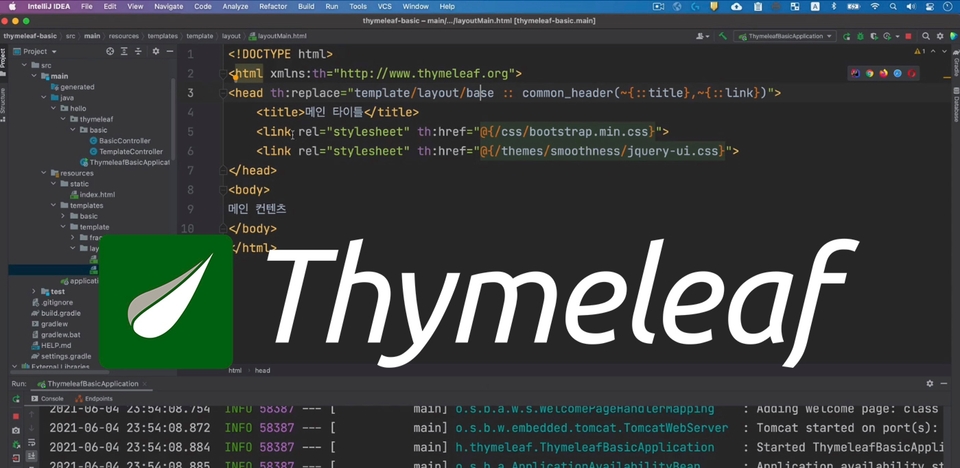
Thymeleaf is a server-side view template for backend developers. By using Thymeleaf, backend developers can easily and quickly create dynamic HTML on their own without the need for a separate frontend developer.
In this course, you will learn everything from the basic features of Thymeleaf to its integration with Spring and complex form management functions such as checkboxes, radio buttons, and select boxes by building them through hands-on examples.

As web applications grow larger and more complex, various messages used throughout the application must be managed consistently in one place. For example, if you want to change the term "Product Name" to "Item Name," you would have to modify the source code of numerous files. By using the message functionality provided by Spring, you can manage and edit these terms all at once.
Internationalization is a feature that displays the site in English for English speakers and in Korean for Korean speakers. Spring already provides these internationalization features. In this lecture, we will learn about the message and internationalization features provided by Spring step-by-step through practical examples.
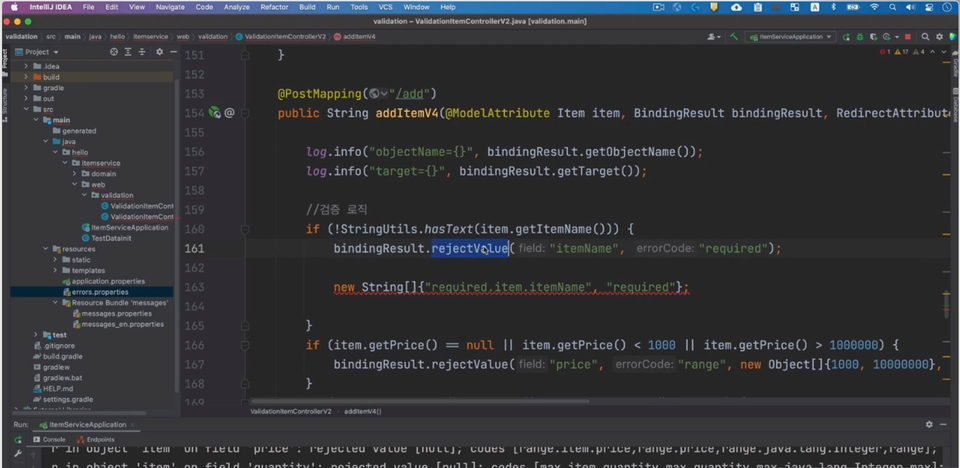
When a customer enters incorrect values in a registration form and submits them to the server, the server must validate those values, display the form again, and provide friendly guidance on which parts were entered incorrectly. This approach is an essential feature for all web services.
In the lecture, we will first develop these validation functions manually. Then, we will use the validation features provided by Spring, and further, we will learn step-by-step through examples about Bean Validation, which allows you to perform validation very conveniently with just a single annotation.
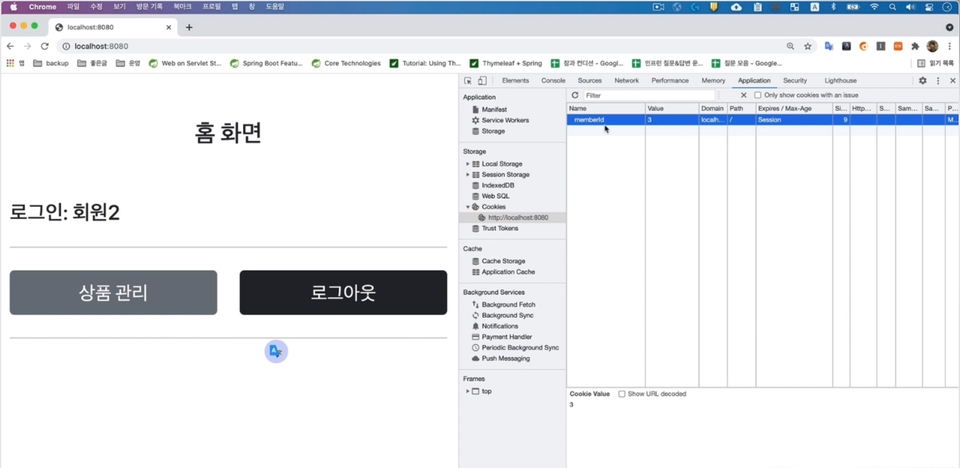
HTTP is a stateless protocol. Therefore, concepts like cookies and sessions are necessary to maintain login functionality. In this course, we will first build a login feature using only cookies. After identifying the security issues involved, we will then create and apply a session implementation ourselves.
Through the process of creating a session yourself, you can gain a deep understanding of how cookies and sessions work. Additionally, you will learn about and apply the sessions provided by servlets.
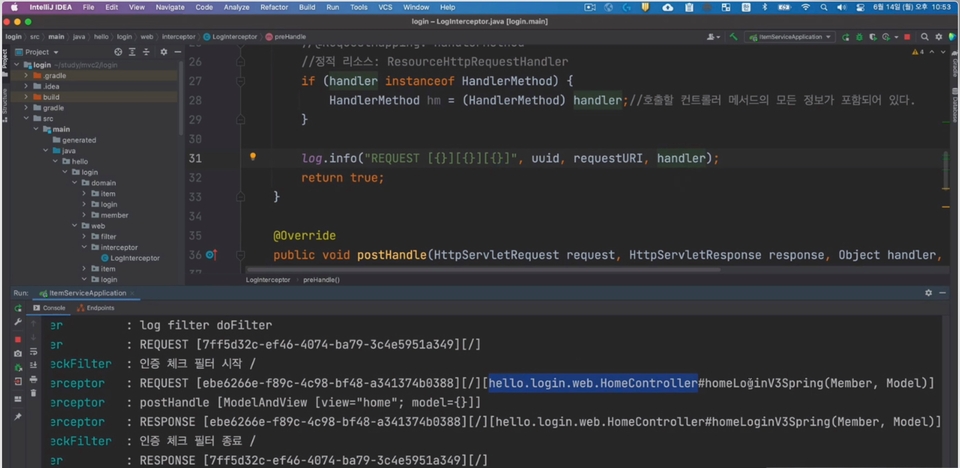
We will learn about Filters provided by Servlets and Interceptors provided by Spring through examples.
First, we will create a simple feature that logs all HTTP requests using both filters and interceptors, followed by an authentication feature using both as well. By using them together in this way, you can clearly understand the respective strengths and weaknesses of each.

When learning web applications, the most difficult part to understand is Exception Handling. This is because the servlet container (WAS) and Spring MVC each provide their own methods for handling exceptions. In practice, these two are intertwined, creating a complex exception handling mechanism. Consequently, it is very difficult for developers to accurately understand and utilize how Spring and the servlet container each operate internally when an exception occurs in a controller.
In the lecture, I will explain everything step-by-step, from exception handling in the servlet container to exception handling in Spring MVC. Therefore, after taking this course, you will clearly understand how the server operates internally when an actual exception occurs and which points need to be modified. Additionally, I will also explain exception handling when using APIs.

When developing an application, there are many cases where you need to convert types, such as converting a string to a number or vice versa. For example, even if the string "10" is passed in an HTTP request, Spring allows you to receive it as the number 10 in an Integer type using @RequestParam. Spring provides a feature called Type Converter to support consistent type conversion.
Type converters are frequently mentioned when learning Spring, but it is not easy to gain a deep understanding of how they actually work. Through this lecture, you can understand everything from the basics to the practical application of type converters step-by-step through examples.
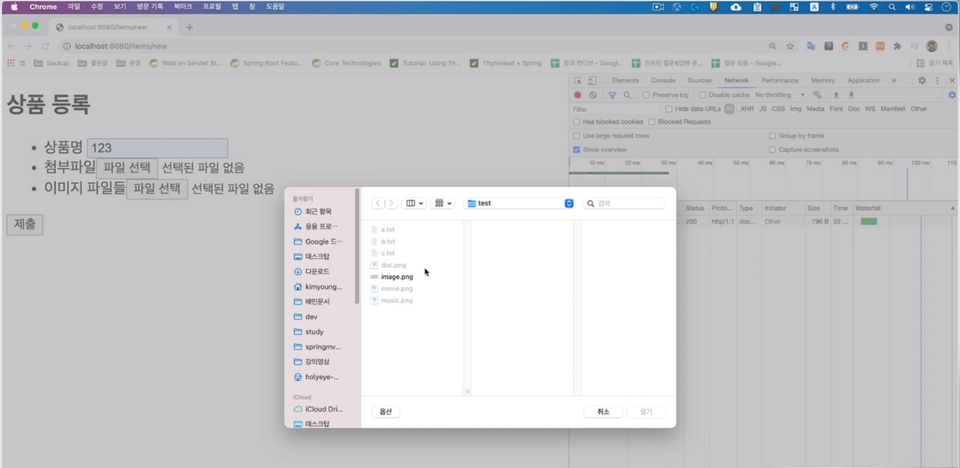
There are countless file upload examples on the internet. In this course, we go beyond simply explaining file upload features; we provide an in-depth explanation of the protocols used for file uploads and the underlying principles of how file uploads are possible over HTTP. Furthermore, we will learn file upload functionality step-by-step through examples, starting from Servlets and moving to the convenient file upload methods provided by Spring.
The Spring MVC course is divided into two parts.
This course is Spring MVC Part 2 -
Backend Web Development Application Technologies.
Solidify the core concepts of Java web technology and Spring MVC, and understand the basic functions of Spring MVC.
Part 1 first introduces Java backend web technologies and covers the overall web landscape, including Servlets, JSP, the MVC pattern, and MVC frameworks. After understanding the background of these web technologies, you will firmly establish the core concepts of Spring MVC. Subsequently, you will learn the basic features of Spring MVC and develop a web page capable of basic CRUD operations using Spring MVC.
Learn various practical techniques of Spring MVC.
In Part 2, you will learn various practical techniques of Spring MVC through code by progressively developing a single example, covering topics such as Thymeleaf, messages, internationalization, validation, cookies, sessions, filters, interceptors, exception handling, common features, and extension points.
I am preparing a series that will allow you to completely master Spring. Focusing on core Spring features used in actual practice, I plan to pass on practical know-how by boldly omitting outdated features or those not used in the field.

Young-han Kim's Spring Complete Mastery Series
Spring Core Principles to Practical ApplicationIncluded in this course

Spring Boot + JPA Practical Mastery
Advanced Backend Modern Practical TechniquesPractical Advanced Course






![3. Web Development Course [Spring Framework + e-Government Standard Framework]Course Thumbnail](https://cdn.inflearn.com/public/courses/324888/course_cover/44f2d353-757a-4835-8935-d5b986674f91/egov-spring-eng.png?w=420)


![[MMORPG Game Development Series with C# and Unity] Extra: ASP.NET Core AdvancedCourse Thumbnail](https://cdn.inflearn.com/public/course-326079-cover/71b7528d-889f-4a9f-acf2-a69972398a6b?w=420)

![[Advanced] Complete Ruby on Rails 8 Course for Indie HackersCourse Thumbnail](https://cdn.inflearn.com/public/files/courses/337217/cover/01jvr4g0csp1ppzgm22x2h996k?w=420)
![[React Part 1] Learning React by Building and ComparingCourse Thumbnail](https://cdn.inflearn.com/public/courses/326905/cover/739f7b4b-1a9f-478f-a6a8-1a13bf58cae3/326905-eng.png?w=420)