Spring DB Part 2 - Data Access Utilization Technology
You can utilize and implement the database data access technologies required for backend development. You will understand the principles and structure of Spring DB access technologies and grow into a more in-depth backend developer.
Hello, Younghan! I started studying in July of last year, and after 1 year and 4 months, I finally listened to all of Younghan's lectures (except for the boot lecture). While listening to each lecture, I decided to listen to DB Part 2 and write a proper course review, and I'm finally able to write one.
When I was feeling lost studying development as a non-major, I think I was able to grow by listening to Younghan's lectures. I worked on several projects through the lectures, and studied the CS I lacked through study.
I will tell you about the characteristics of Younghan's lectures, who listened to all of Spring and Jpa's lectures.
Let me tell you about the characteristics of Younghan's lectures. In order to learn the 5 steps, he teaches you step by step from step 1. If you know step 5 without knowing steps 1-3, if you learn steps 1-3 through the lectures, you will know why step 5 came out like this. I always listened to it without knowing, so I was always amazed when I saw the code evolving, thinking, "Technology has developed this much." (The reason there can be new technologies is because there are technologies from the past.)
And I think that it is more effective to watch Younghan's lectures multiple times. For example, if you listen to the Spring Basics lecture, then the Spring MVC lecture, and then listen to the Spring Basics lecture again, your perspective will be broader than when you first listened to it. That's why I think I listened to JPA Basics 2-3 times (because it's difficult).
For those of you who are considering Younghan's lectures, I hope you read this article and think about it.
Oh, and lastly, thank you so much for the supporters' QnA answers! Whenever I didn't know something, I always solved it by Googling or QnA.
Good luck to you all.
Thank you for reading the long article.
5.0
선한영향력주는개발자되기
100% enrolled
Hello, Professor.
I finished this lecture as well.
I followed the roadmap for about a year, listening to lectures after work and on weekends, but now only the last chapter of the grand finale is left.
I am so grateful that you always explain the background of the technology and why it is used so that anyone can understand it, and try to convey at least one more thing.
Sometimes I see the professor's computer time while watching the lecture. Sometimes it is a number, and sometimes it is a clock shape, so I thought that he was hiding it on purpose. Hahaha. Anyway, watching you film lectures at various times from early evening to dawn, I often reflected on myself, thinking, "The professor is filming such great lectures so diligently, but am I working that hard?"
You provided such great lectures and gave me generous advice as a senior developer, so it was a year of time where I was able to gain motivation not only for technical learning but also for life. I think I will be able to maintain this system well and develop happily in the future.
Thank you.
5.0
웃자
100% enrolled
Honestly, those who don't know the contents of Spring DB 1 and 2 are building a tower on top of their thoughts.
If you don't know even one thing about the table of contents, definitely listen to it!
Listen twice
What you will gain after the course
Internal principles of using a database through Spring
Various ways to use a DB through Spring
Spring DB Access Technology
Essential Spring Data Access Technologies for Backend Developers Part 2 Spring Data Access Technologies Part.2
📣 Please check! This course is the 7th lecture in the Java Spring Complete Mastery Series. Please check the Spring Complete Mastery Roadmap by Young-han Kim, the youngest Technical Director at Woowa Brothers, first. • Roadmap Link: https://www.inflearn.com/roadmaps/373 (Click to go)
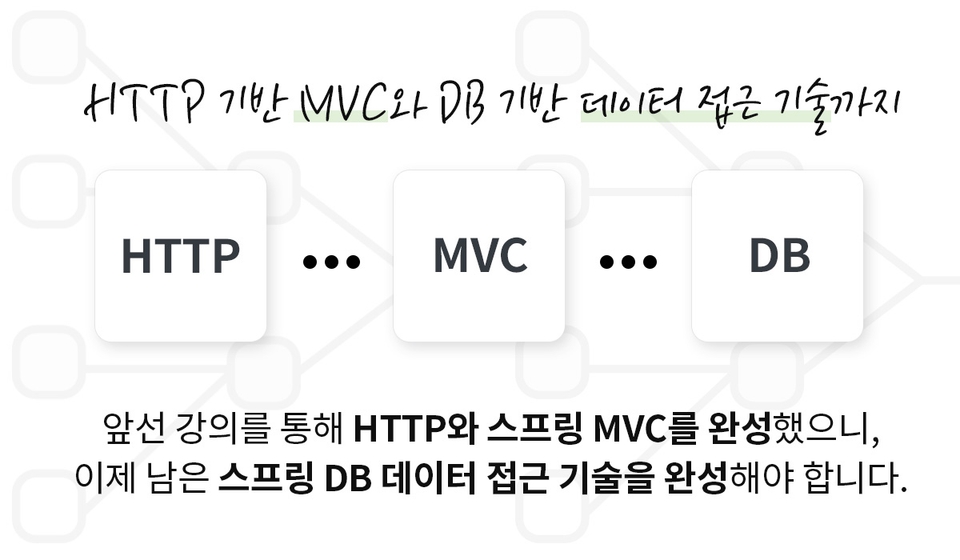
Young-han Kim's Spring DB Mastering Data Access Technologies
To develop backend web applications properly, you must master two major pillars: HTTP-based MVC and DB-based data access technology. Since we have completed HTTP and Spring MVC through the previous lectures, we must now complete the remaining pillar: Spring DB data access technology.
✅ Please check the prerequisite knowledge.
Please check if you have understood the principles and structure of Spring DB through the previous lecture, <Spring DB Part 1> .
1. Understanding the basic principles of Spring data access technology 2. Developing directly with code used in practice
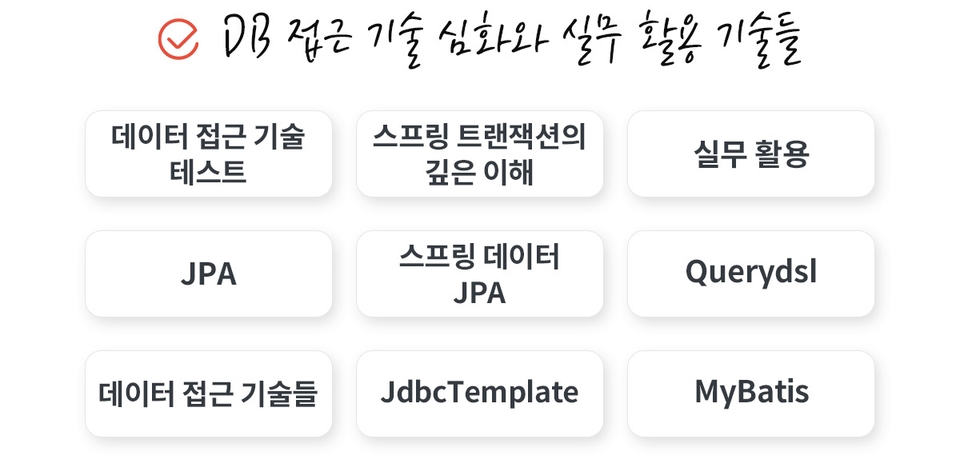
Through the Spring DB Part 1 lecture, I have understood the core principles and structures of DB access technologies. In this Spring DB Part 2, we will build upon the foundation of Part 1 to learn various practical application techniques essential for the field. Part 2 is largely divided into three sections.
1) Understanding Various Data Access Technologies
You will learn various data access technologies commonly used in practice, such as JdbcTemplate, MyBatis, JPA, Spring Data JPA, and Querydsl, by progressively developing them through practical examples. Through this process, you can naturally understand why each technology is necessary and their respective strengths and weaknesses while developing the code.
2) Data Access Technologies and Testing
Data access technologies are ultimately used for the purpose of managing data in a database. Therefore, it is necessary to verify whether the data access technology can properly store and retrieve data in an actual database. In this lecture, I will explain step-by-step the best practices for testing in scenarios involving database integration.
3) Deep Understanding of Spring Transactions
In Spring DB Part 1, we explored why the transaction features provided by Spring are necessary and how they work internally. In this session, we will study Spring transactions in great depth and learn how to apply them in practical scenarios.
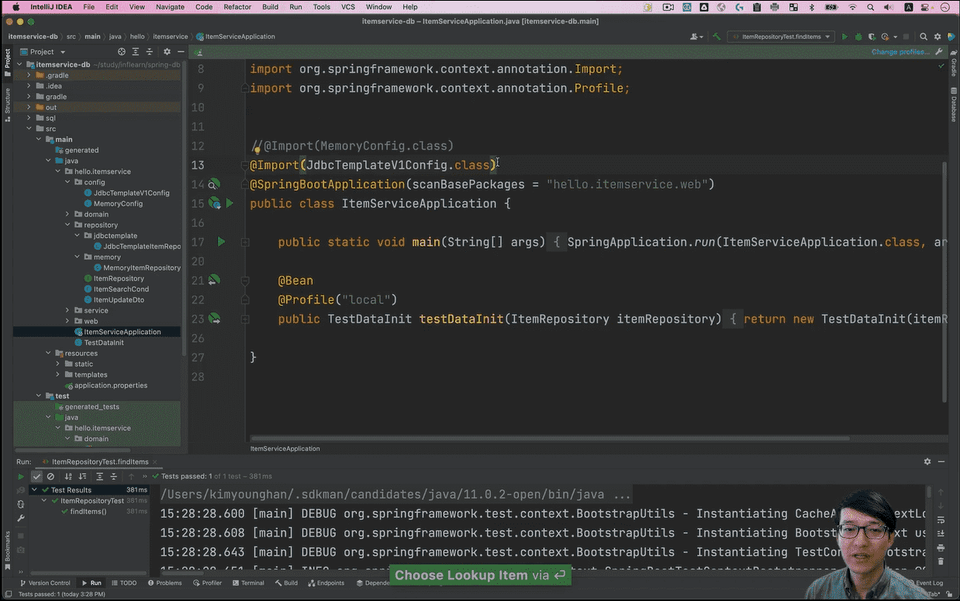
Practical precautions when using Transaction AOP
Various options of Spring Transaction
Exception handling and the internal principles of how Spring transactions are committed and rolled back
Transaction propagation options and internal operation mechanisms
Course Objectives
Goal: The goal of this course is to master the extensive DB data access technologies required when developing practical backend applications.
From Basics to Practical Application: Although it contains a lot of content for practical development, it is structured step-by-step so that developers without experience in web application development can also adapt. For your information, you should complete Spring DB Part 1 before studying Spring DB Part 2.
Practical Example-Oriented: You will naturally learn the data access technologies required for developing backend applications with Spring through practical examples, and I will pass on industry best practices.
Conciseness: Outdated features not used in practice have been boldly excluded. The explanation focuses on content primarily used in modern practical applications.
Course Content
Data Access Technology - JdbcTemplate
Spring's JdbcTemplate is a great choice when using SQL directly. This technology helps you use JDBC very conveniently. It also handles most of the repetitive tasks that occur when using JDBC directly. * Developers only need to write the SQL, define the parameters to be passed, and map the response values. * By applying JdbcTemplate to a real-world web application, you will understand the pros and cons of this technology.
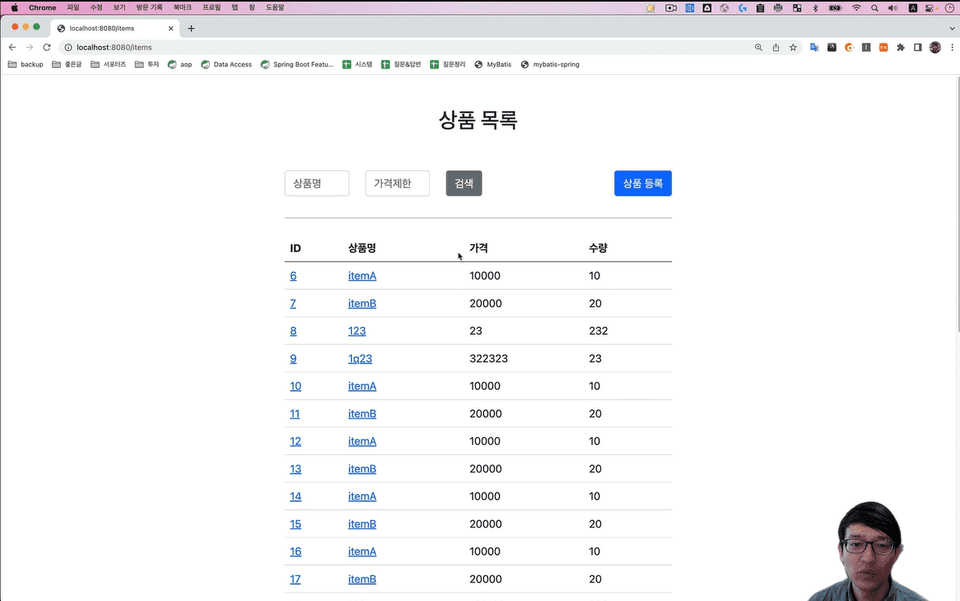
Data Access Technology - MyBatis
MyBatis provides more features than the previously explained JdbcTemplate. Compared to JdbcTemplate, the most attractive aspects of MyBatis are that it allows you to conveniently write SQL in XML and makes writing dynamic queries very easy. In this lecture, you will understand the pros and cons of this technology by directly applying MyBatis to a functioning web application through code.
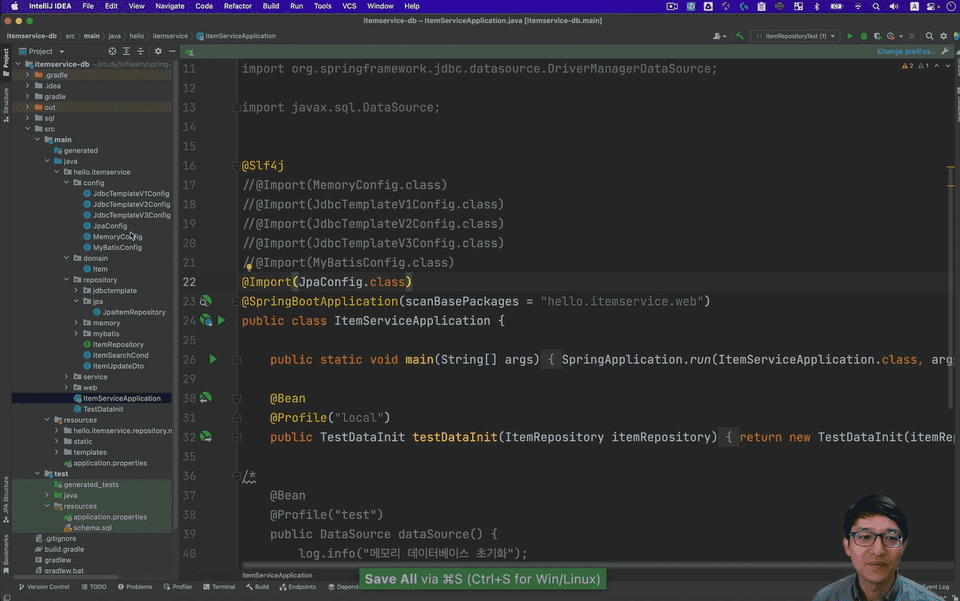
Data Access Technology - JPA
Spring and JPA are the core technologies of the Java enterprise market. While Spring provides various features across the entire application, including the DI container, JPA provides ORM data access technology. JPA is as vast as Spring and requires a significant amount of learning, but once mastered, it can provide a massive boost in productivity for data access technology. Here, we will explore the basic functions of these technologies, the pros and cons of why they should be used, and the overall big picture.
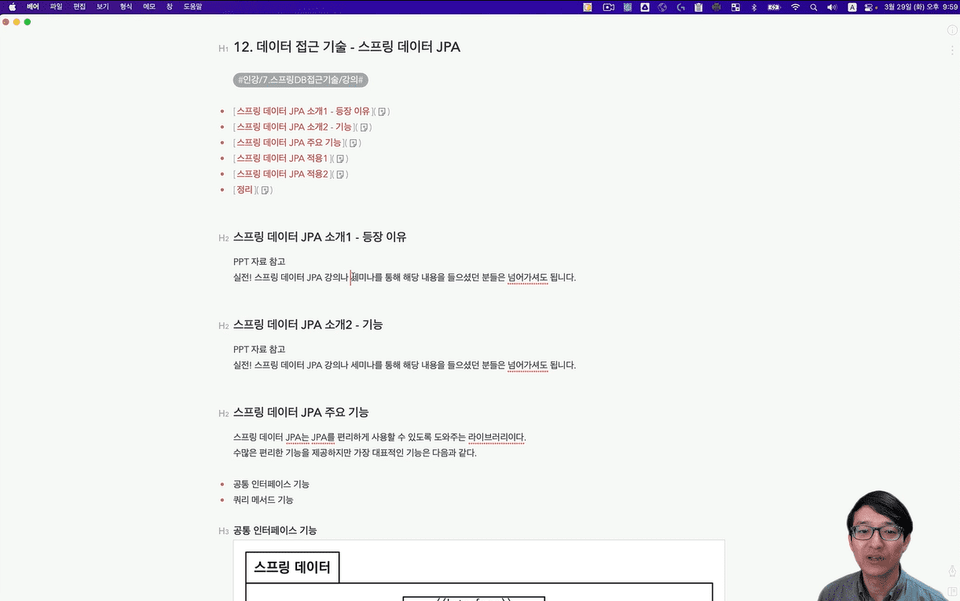
Data Access Technology - Spring Data JPA
Spring Data JPA is a technology that helps you use JPA more conveniently. Simply put, it provides all the basic CRUD functionalities, allowing developers to revolutionary reduce the amount of code they need to write. In the lecture, you will understand the pros and cons of this technology by applying Spring Data JPA directly to a real-working web application through code.
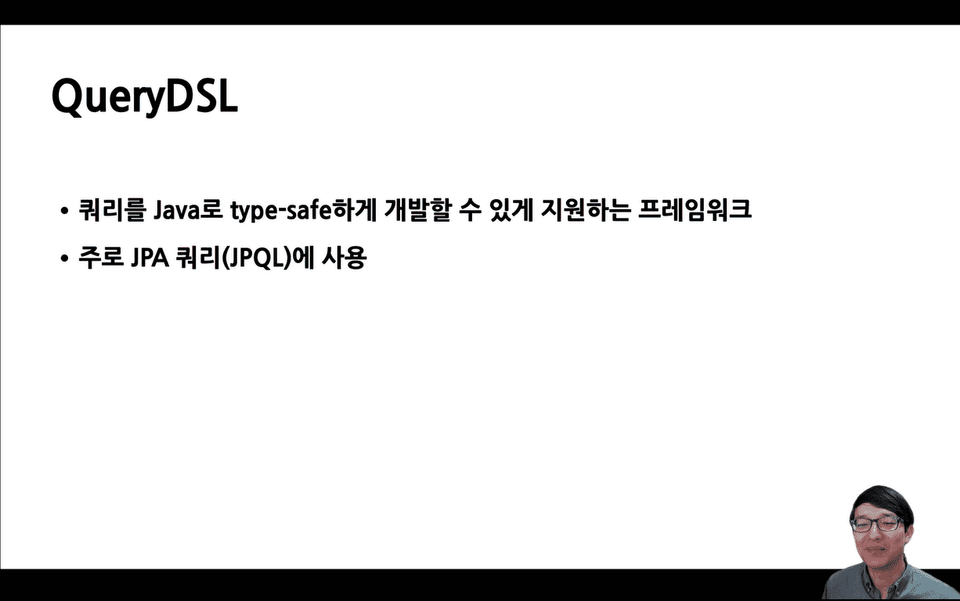
Data Access Technology - Querydsl
JPA makes it difficult to handle complex or dynamic queries. Using Querydsl allows you to solve these problems very conveniently. It is a highly recommended technology that is essential if you use JPA in practice. In the lecture, you can understand the pros and cons of this technology by applying Querydsl directly to a working web application through code.
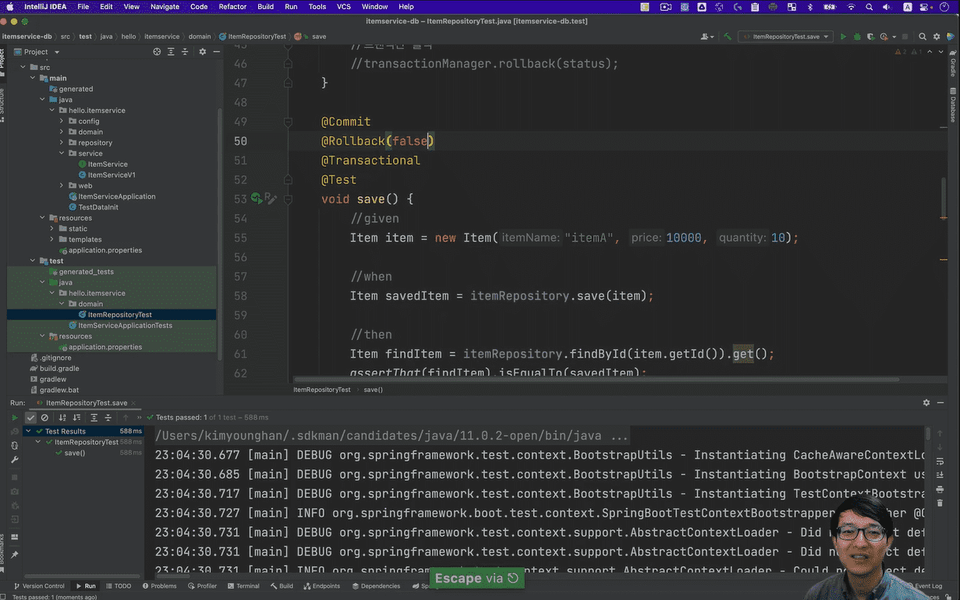
Data Access Technology - Testing
Data access technology is ultimately used for the purpose of managing data in a database. Therefore, it is necessary to verify whether the data access technology can properly store and retrieve data in an actual database. In this lecture, I will explain step-by-step the best practices for testing in a database-integrated environment. For example, I will explain how to configure tests that connect to a database and explore through code how @Transactional and embedded mode databases operate.
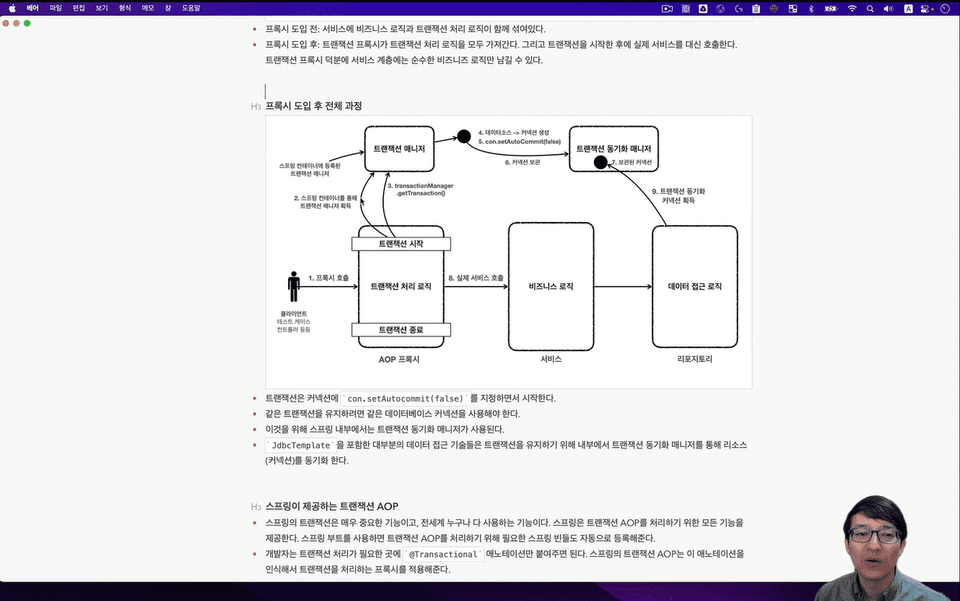
Understanding Spring Transactions
In DB Part 1, we explored why the transaction features provided by Spring are necessary and the internal principles of how they work. In this session, we will take an in-depth look at the various features Spring Transaction offers, including practical precautions when using Spring Transaction AOP, various Spring Transaction options, and the internal principles of how Spring transactions are committed or rolled back when an exception occurs.
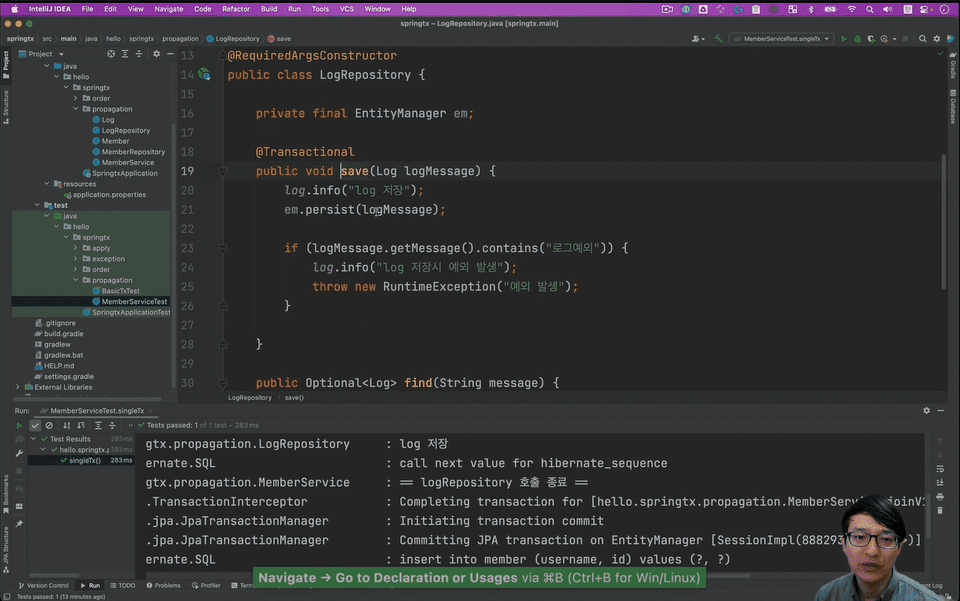
Spring Transaction Propagation
We cover Spring's transaction propagation in great depth. You will understand why transaction propagation is necessary and explore various propagation options, exception handling based on those options, and important precautions when using transaction propagation in practical applications.

A word from the instructor, Younghan Kim
Backend developers must master two major pillars: MVC and DB access technology. I will help you complete these two pillars and grow into a solid backend developer. Thank you.
It's awesome :) It's the best lecture.
I learned a lot while listening to the lecture and I'm using it well in my work.
I'm planning to listen to the practical lecture as well, and I'm looking forward to the Spring Boot lecture.
Honestly, those who don't know the contents of Spring DB 1 and 2 are building a tower on top of their thoughts.
If you don't know even one thing about the table of contents, definitely listen to it!
Listen twice
Hello, Younghan! I started studying in July of last year, and after 1 year and 4 months, I finally listened to all of Younghan's lectures (except for the boot lecture). While listening to each lecture, I decided to listen to DB Part 2 and write a proper course review, and I'm finally able to write one.
When I was feeling lost studying development as a non-major, I think I was able to grow by listening to Younghan's lectures. I worked on several projects through the lectures, and studied the CS I lacked through study.
I will tell you about the characteristics of Younghan's lectures, who listened to all of Spring and Jpa's lectures.
Let me tell you about the characteristics of Younghan's lectures. In order to learn the 5 steps, he teaches you step by step from step 1. If you know step 5 without knowing steps 1-3, if you learn steps 1-3 through the lectures, you will know why step 5 came out like this. I always listened to it without knowing, so I was always amazed when I saw the code evolving, thinking, "Technology has developed this much." (The reason there can be new technologies is because there are technologies from the past.)
And I think that it is more effective to watch Younghan's lectures multiple times. For example, if you listen to the Spring Basics lecture, then the Spring MVC lecture, and then listen to the Spring Basics lecture again, your perspective will be broader than when you first listened to it. That's why I think I listened to JPA Basics 2-3 times (because it's difficult).
For those of you who are considering Younghan's lectures, I hope you read this article and think about it.
Oh, and lastly, thank you so much for the supporters' QnA answers! Whenever I didn't know something, I always solved it by Googling or QnA.
Good luck to you all.
Thank you for reading the long article.
Hello, Professor.
I finished this lecture as well.
I followed the roadmap for about a year, listening to lectures after work and on weekends, but now only the last chapter of the grand finale is left.
I am so grateful that you always explain the background of the technology and why it is used so that anyone can understand it, and try to convey at least one more thing.
Sometimes I see the professor's computer time while watching the lecture. Sometimes it is a number, and sometimes it is a clock shape, so I thought that he was hiding it on purpose. Hahaha. Anyway, watching you film lectures at various times from early evening to dawn, I often reflected on myself, thinking, "The professor is filming such great lectures so diligently, but am I working that hard?"
You provided such great lectures and gave me generous advice as a senior developer, so it was a year of time where I was able to gain motivation not only for technical learning but also for life. I think I will be able to maintain this system well and develop happily in the future.
Thank you.
Dear Seonhanyeonggwangryeok Developer, thank you for always listening to me diligently and leaving frequent course reviews. Since you said you've been together for a year, I feel like I've done something together, so it's more rewarding.
I've been spending more time lately, so I can focus more on the lectures, thanks to the students who sometimes talk to me^^