




![[PyTorch] Learn Deep Learning Easily and QuicklyCourse Thumbnail](https://cdn.inflearn.com/public/courses/324742/course_cover/96781b94-7bae-47f8-ab6f-42821f26f042/coco-pytorch.png?w=420)
[PyTorch] Learn Deep Learning Easily and Quickly
coco
Learn MLP, CNN, and RNN, the basic framework of deep learning, quickly and easily.
Intermediate
Deep Learning(DL), Artificial Neural Network, PyTorch
Let's learn the principles properly by implementing algorithms from scratch without a deep learning library :)
683 learners
Level Basic
Course period Unlimited


Reviews from Early Learners
5.0
수원양민
Thank you for the great lecture.
5.0
Jang Jaehoon
Thank you for the great lecture!
5.0
윤미최
Thank you for the free course.
How Deep Learning Algorithms Work
Implementation of a seamless deep learning algorithm
Examples of various major deep learning model applications

Transformer, CNN, RNN... Are these models you've already heard of?
Well then, let me ask you a question.
"Which model, a CNN or a Transformer of the same size, requires more training data?"
If you were asked this question in an interview, would you be able to answer it satisfactorily? 🤔
The world of deep learning is constantly evolving, with new models constantly emerging. However, at the heart of this change lie core concepts that remain constant . This lecture explores these core concepts , laying the foundation for a deep understanding of deep learning.
Through this course, you'll learn how to implement key models from the ground up, with clear, statistically-based explanations! Once you've mastered the core models, you'll be able to easily implement and apply other models. New deep learning models are constantly emerging, but they often build upon and adapt existing models, so a thorough understanding of the core models is crucial .
Incorporating implementation (hands-on projects) into the course curriculum presents challenges for educators. Implementation requires a variety of elements, including environment setup, debugging, and version management. However, the sheer amount of effort spent on preparatory work can distract students from learning, and sometimes even lead to abandoning the course midway.
To minimize these difficulties , all the code used in the class is provided through Colab , so you can take the class without any environment restrictions as long as you have an internet browser .
We also provide various learning materials.
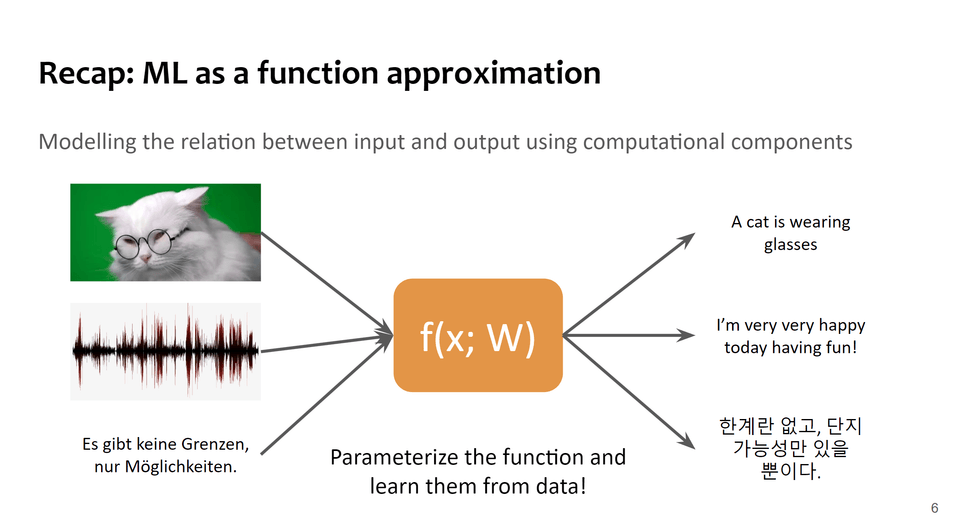
✅ Over 70 rich lecture slides cover the model's principles in detail.
✅ Live coding allows you to gain a deeper understanding of the coding implementation process.
✅ We provide practice problems so you can check your learning on your own.

Lecture slides

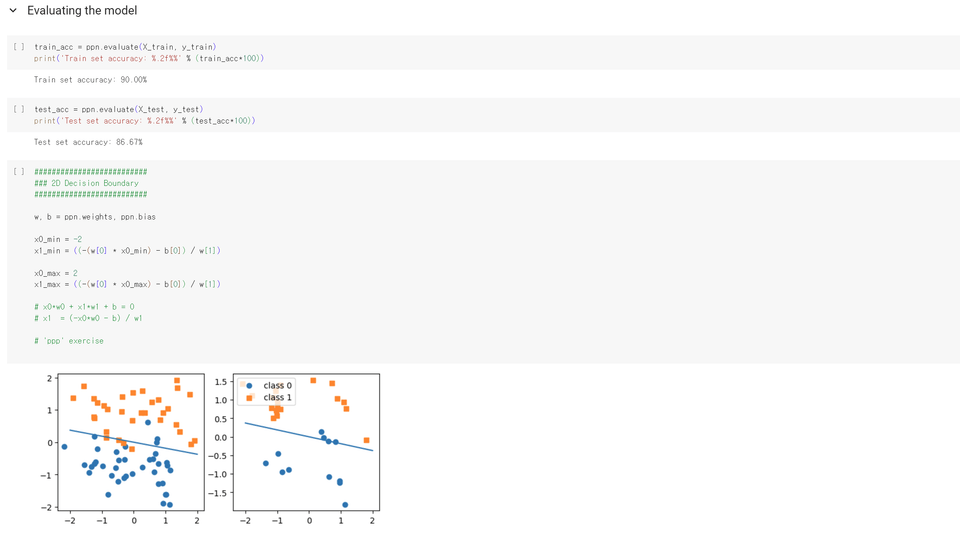
Colab practice code
I hope you'll complete my lecture and become familiar with artificial intelligence. 💪
Beginners learning artificial intelligence for the first time
This course covers all the various modules of deep learning and covers the fundamentals, making it the perfect choice for those who want to learn from the ground up.
Shallow Learner
What is batch normalization, and why is it necessary? Can you give clear answers to these questions? If you've encountered deep learning but find it challenging, try solidifying your understanding of the core concepts!
You can properly understand the basic concepts of deep learning.
You can learn basic concepts through implementation by implementing the basic elements of deep learning, such as backpropagation and regularization, using only the numpy library without a platform such as Pytorch.
You can fully understand major deep learning models such as CNN, RNN, Seq2Seq, Word Vector, and Transformer through conceptual depth and ground-up implementation.

Deep Learning: Learning from the Ground Up
The basic elements of deep learning can be learned using only the numpy library.
You can learn the core concepts by implementing them.

A complete theoretical explanation based on statistics
Since deep learning is a statistics-based technology, basic statistical knowledge is required.
Through this, you can accurately understand deep learning models.
Former PhD and researcher at Korea Advanced Institute of Science and Technology (KAIST)
Current) Professor at Gwangju Institute of Science and Technology (GIST)

Each lesson slide and Colab link are provided.
Even if you can only do basic Python implementation, you can follow the class.
All exercises will be done in Colab to make setup as easy as possible.
We strongly recommend that you follow the provided Colab code and complete the practice problems. This course is designed to deepen your understanding of the theory through hands-on practice.
Who is this course right for?
For those who are new to deep learning
For those who want to grasp both implementation and theory
Researchers/developers who want to properly establish the basics
Those who want to understand the principles by implementing them thoroughly from the ground up
683
Learners
14
Reviews
5.0
Rating
1
Course
Hello. I am Eui-hwan Kim from the GIST Graduate School of AI, researching Robot AI.
1) multi-modal perception
2) general-purpose navigation
3) mobile manipulation
For more details regarding the research, please refer to the GIST ACSL website.
I look forward to seeing you again with lectures that will be helpful to you in the future :)
All
77 lectures ∙ (24hr 28min)
All
14 reviews
5.0
14 reviews
Reviews 5
∙
Average Rating 5.0
Reviews 868
∙
Average Rating 5.0
Reviews 5
∙
Average Rating 5.0
Reviews 171
∙
Average Rating 4.5
Reviews 893
∙
Average Rating 4.9
Explore other courses in the same field!
Free