
Log Naming Strategies for Junior PMs for Data-Driven Decision Making

"Have you given up on data analysis after only studying the tools?" PMs at large corporations only need to look at the data already implemented by the analysis team. However, PMs at startups or side projects are different. They must build the 'foundation' themselves—from designing logs and labeling them to collecting the data. "Everyone says data is important, but what exactly should I implement and where in my service?" Stop getting lost in abstract concepts. Checking login history is the true beginning of Data-Driven Decision Making (DDDM).

강의소개.상단개요.수강생

난이도 입문

수강기한 무제한

Service Planning
Service Planning
Data literacy
Data literacy
Service Planning
Service Planning
Data literacy
Data literacy

강의상세_배울수있는것_타이틀

  • How to plant the data

  • Log Naming Conventions


Are you feeling overwhelmed by where to start with data?
Let's start by properly establishing log naming.

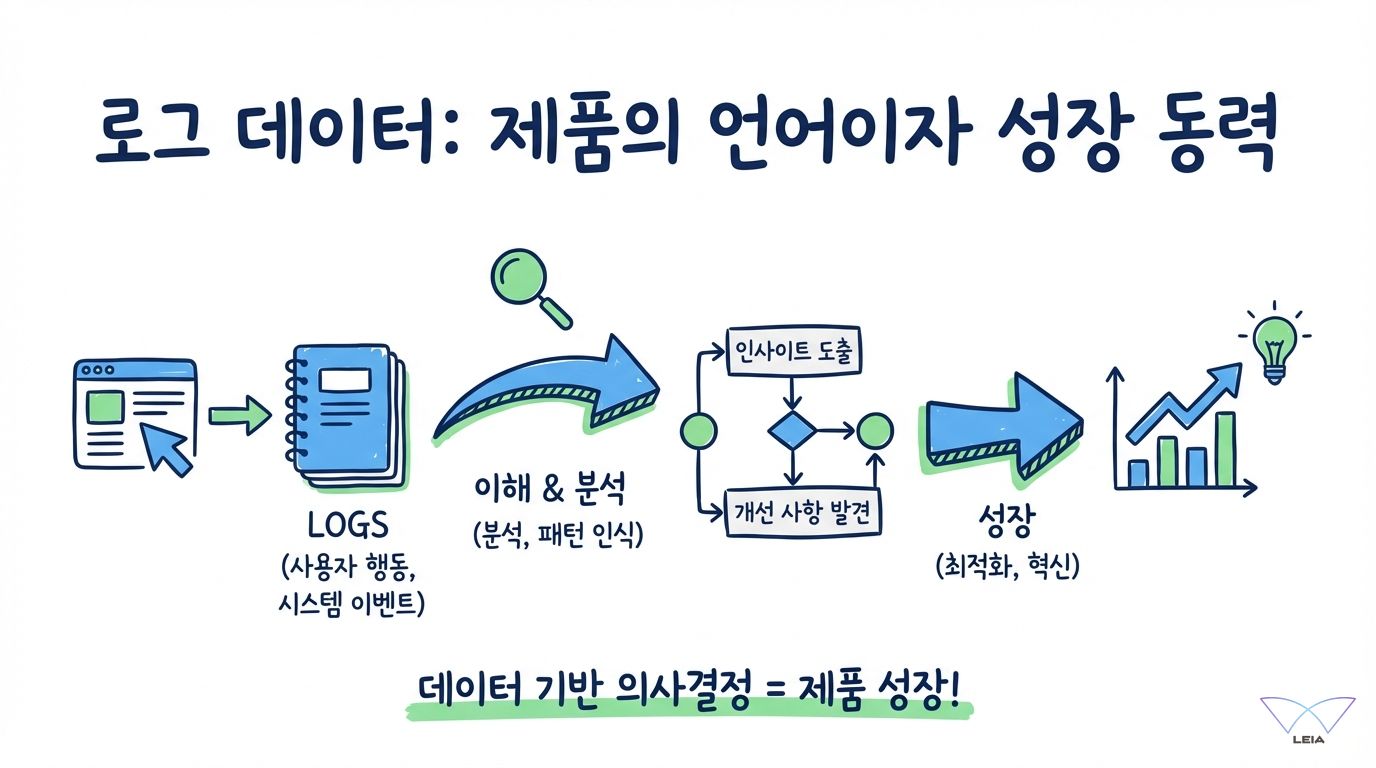
Log data is not just a simple record; it is the language of product growth and the core of decision-making.
Through this lecture, you can transform into a PM who gains clear insights without getting lost in complex data.


Have you ever had a moment where you relied on intuition rather than data for an important company decision, only to realize your mistake?

Have you ever had your mind go blank at the mention of the word 'log' while communicating with the development team, or felt overwhelmed and unsure where to start when asked to analyze data?

Have you ever wanted to accurately track user behavior with clear names like 'product_detail_page_click' instead of vague logs like 'click'?

If data-driven decision-making has always felt difficult, don't worry anymore.
Through this course, you will learn how to 'properly' read data and 'accurately' name it as a PM, gaining the data utilization skills that lead to actual product improvements.


Build the foundation for data-driven decision-making,
starting with log naming.

Learn how to 'plant' data and transform into a
'PM who grows through logs'.


By the end of this course, you will


Improve the accuracy of your decision-making using log data you designed and collected yourself.

  • Instead of relying on vague guesses or intuition, you will be able to make more rational and reliable decisions based on actual user behavior data. You will understand the core principles of Data-Driven Decision Making (DDDM) and learn how to secure the growth engine of your service on your own.

Effectively design and utilize log data, the language of the service.

  • Starting with log naming conventions, you will learn exactly "what" and "how" to record user behavior. You will grow into an expert who prevents data analysis errors caused by incorrect log naming and collects data that captures the true meaning of the service.

Avoid the pitfalls of data-driven decision-making and derive practical insights.

  • You will learn how to focus on the most critical data by setting clear goals and Key Performance Indicators (KPIs), avoiding common pitfalls such as data overload, misinterpretation, and low data quality. You will be able to accurately identify user needs through the collected data and confidently propose data-driven ideas for product improvement.

Collaborate effectively with the development team to build a reliable data pipeline.

  • You will learn the know-how to communicate and collaborate closely with development teams starting from the log data design stage. By establishing processes to manage and verify the quality of log data, you will gain the ability to accurately utilize data in analysis tools and ultimately derive practical insights for product improvement.


✔️

Data-driven decision making
is now an essential competency for PMs

Log naming,
the first step of data-driven decision making

This course helps you clearly understand the core principles of Data-Driven Decision Making (DDDM) and your role as a Product Manager (PM). By mastering specific methodologies for designing and naming logs within a startup environment, you will gain practical guidelines for rational and successful product development based on data.

Practical Log Design and Naming Practice

In the lecture, you will learn how to record user behavior from the perspective of 'Log Data: The Language of Products and the Engine of Growth.' Specifically, you will practice log naming strategies for various interactions such as button clicks, page views, and user inputs with concrete examples, enhancing your ability to improve data collection accuracy and derive practical ideas for product improvement.


📚

Establishing the starting point of data
Log naming strategy

Section 1

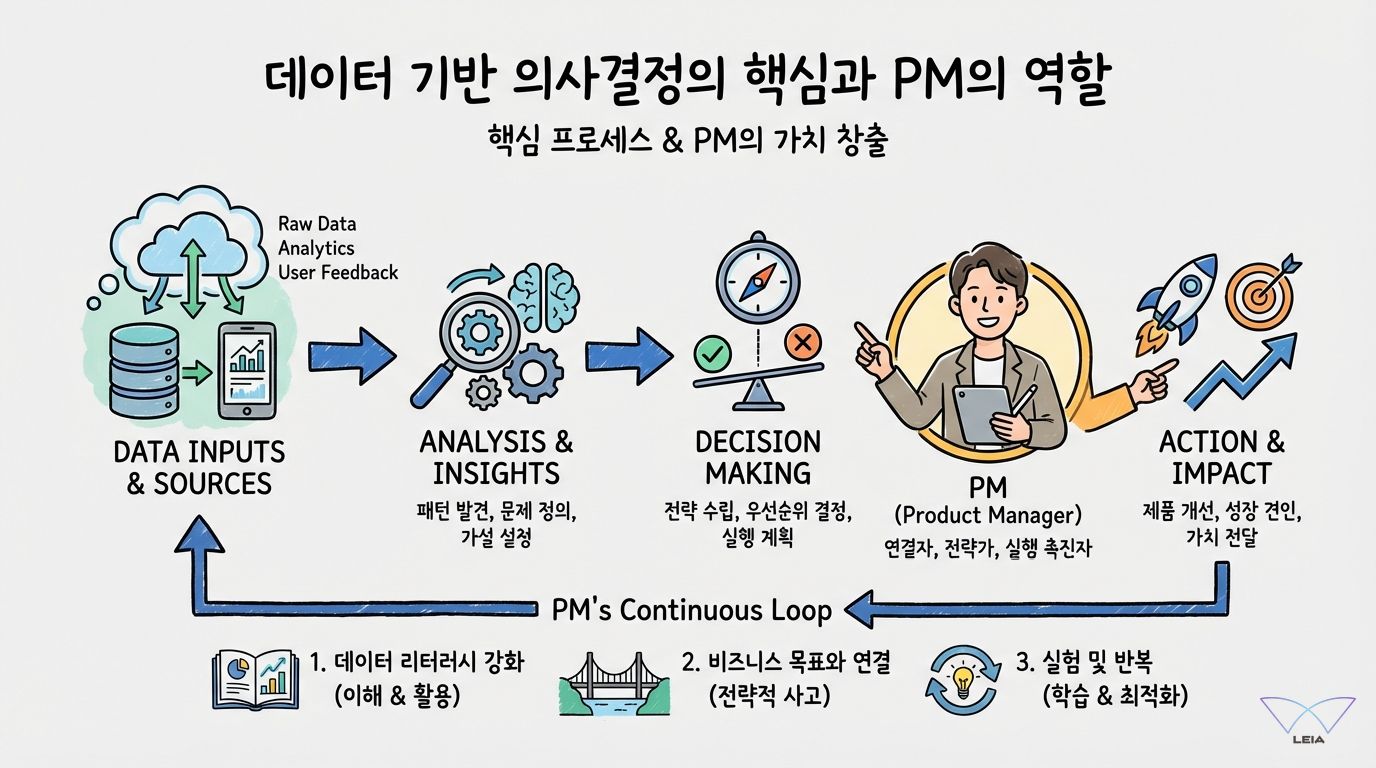
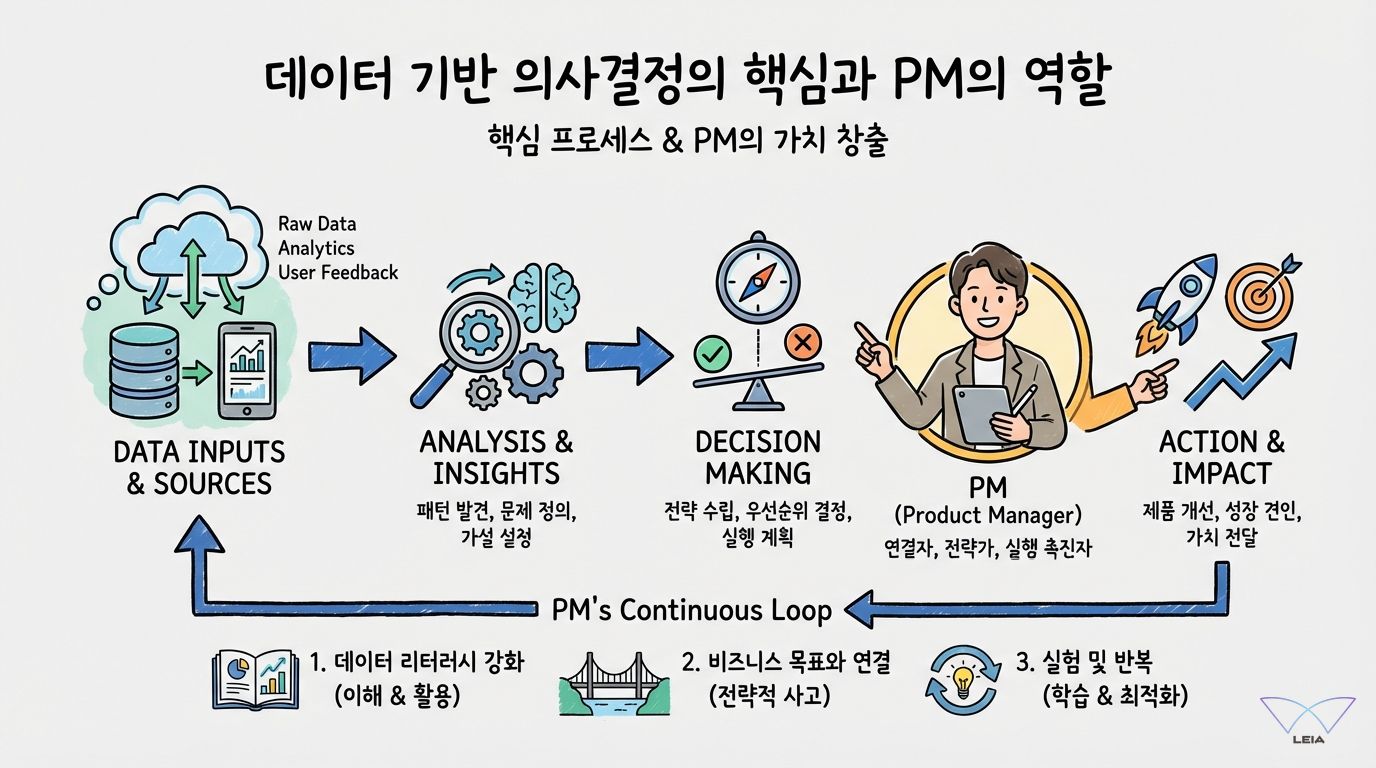
Understanding Data-Driven Decision Making and the Role of the PM

Learn about the importance of Data-Driven Decision Making (DDDM) and the role of the PM. You will learn how to make rational decisions based on objective metrics and user behavior data rather than guesswork, and explore the positive impact of DDDM on product growth along with success stories. Additionally, you will identify common pitfalls such as data overload, misinterpretation, and low data quality, and learn strategies to overcome them.


Section 2

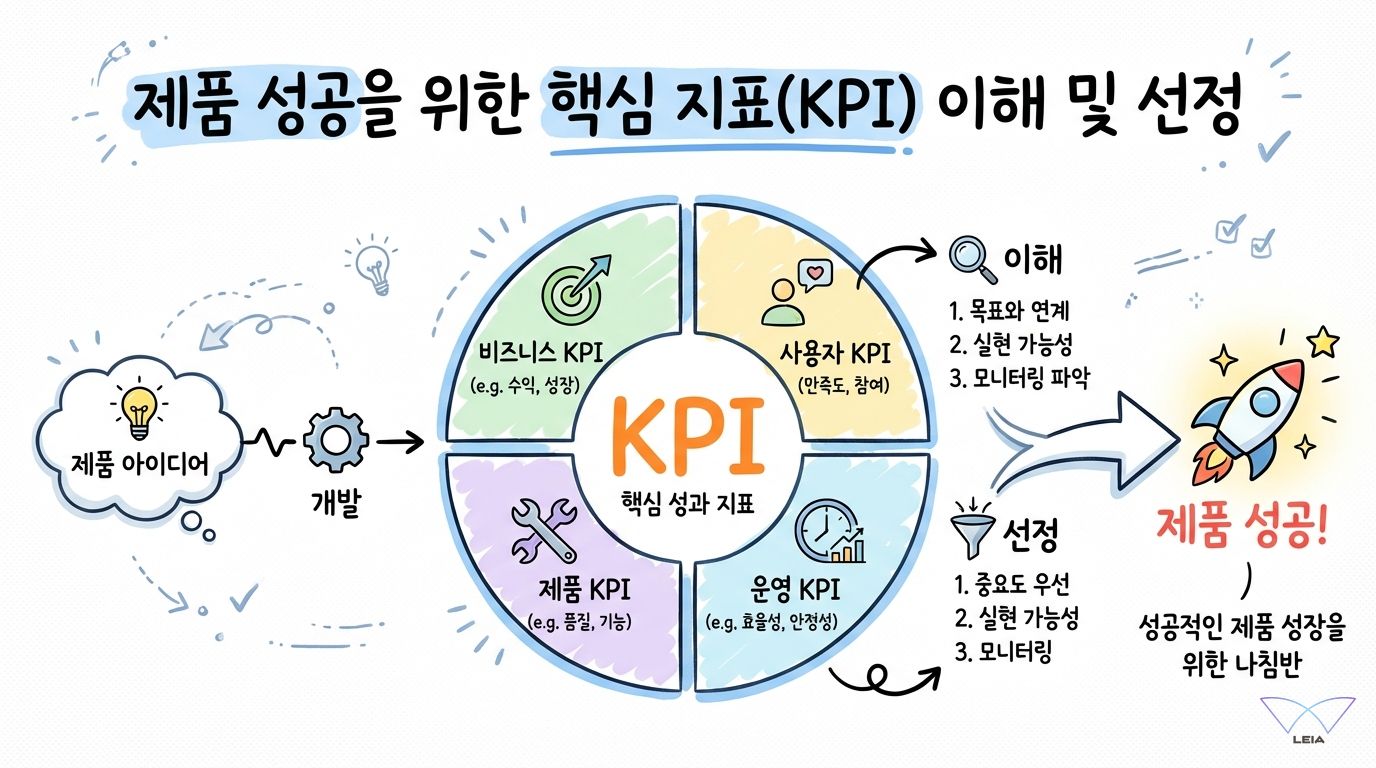
Defining Key Performance Indicators (KPIs) and Establishing Effective Tracking Plans

Learn how to understand and select Key Performance Indicators (KPIs) for product success. You will practice setting KPI tracking goals based on the SMART principles and designing effective event schemas based on the user journey. Finally, you will build a foundation for data collection by creating and reviewing a tracking plan.


Section 3

Standard Log Naming Conventions and Event/Property Definitions

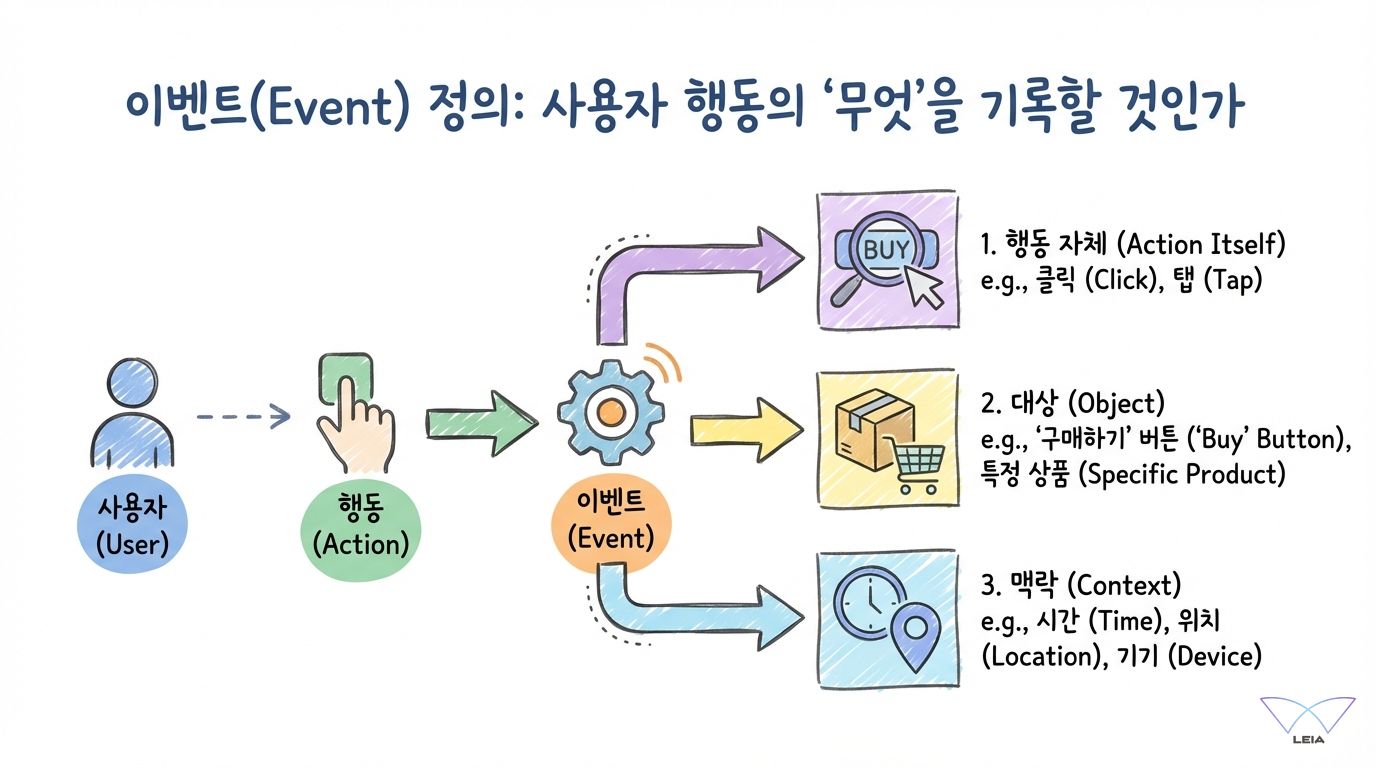
Learn the importance of standard log naming conventions to improve data quality. You will learn in detail how to define Events to record "what" user actions are taking place, and how to define Properties/Parameters as a way to include "detailed information" about those events.


Section 4

Log naming strategies for various user behaviors

You will learn specific log naming strategies for various user actions such as button clicks, page views, and user inputs. Additionally, we will explore practical ways to effectively name logs for complex interactions and exception scenarios.


We can solve the concerns of these people!


📌

Junior PM

Those who know the importance of log data collection
but feel overwhelmed about where and how to start

📌

Planners with little experience in data analysis

Those who have difficulty defining core service metrics
and setting product improvement directions through data.

📌

Everyone
running a side project

Those who do not know how to clearly record and manage user behavior data,
and are unable to utilize data for service growth

Notes before taking the course


Practice Environment

  • You only need a web browser, without any separate development environment setup.

  • You can follow along with the lecture content and try writing simple log examples yourself.

  • There are no special requirements for PC or laptop specifications to take the course.

Prerequisites and Important Notes

  • It explains the concept of Data-Driven Decision Making (DDDM) in an easy-to-understand way, even for those who are new to it.

  • It is okay even if you have no prior knowledge of log data.

  • It is especially useful for those who want to handle data themselves in startups or personal projects.

Learning Materials

  • Lecture materials are provided so you can review what you've learned.

  • You can refer to examples of log naming conventions that can be applied to actual services.

  • You can learn practical mindsets for data-driven decision-making.


강의소개.콘텐츠.추천문구

학습 대상은 누구일까요?

  • People who want to plant and verify data for the first time

  • People who have never heard of data terminology before

강의소개.지공자소개

52

수강생

4

수강평

4.8

강의 평점

3

강의_other

I have conducted over 10 web and app development projects, three of which were actually launched and continue to be operated to this day.
I won the Grand Prize at the EPSON Innovation Challenge in Korea and participated in various collaboration and problem-solving projects at the Apple Developer Academy.
I hold an ADsP certification and am currently working as a solo PM at a startup. My name is Yeji Kim.

더보기

커리큘럼

전체

18개 ∙ (강의상세_런타임_시간 강의상세_런타임_분)

강의 게시일: 
마지막 업데이트일: 

수강평

아직 충분한 평가를 받지 못한 강의입니다.
모두에게 도움이 되는 수강평의 주인공이 되어주세요!

Nada님의 다른 강의

지식공유자님의 다른 강의를 만나보세요!

비슷한 강의

같은 분야의 다른 강의를 만나보세요!

강의상세.할인문구

$1,392.00

60%

$22.00