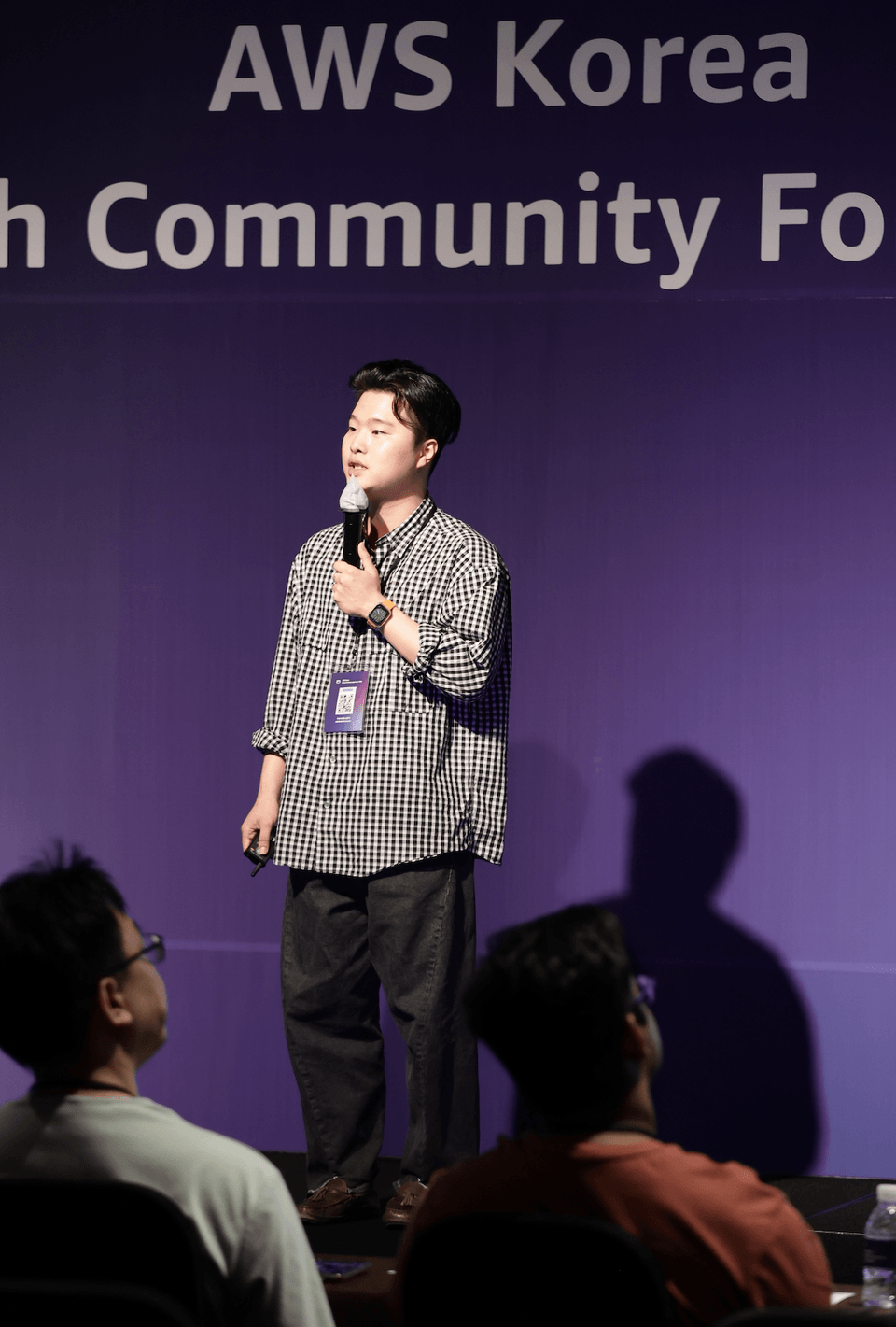
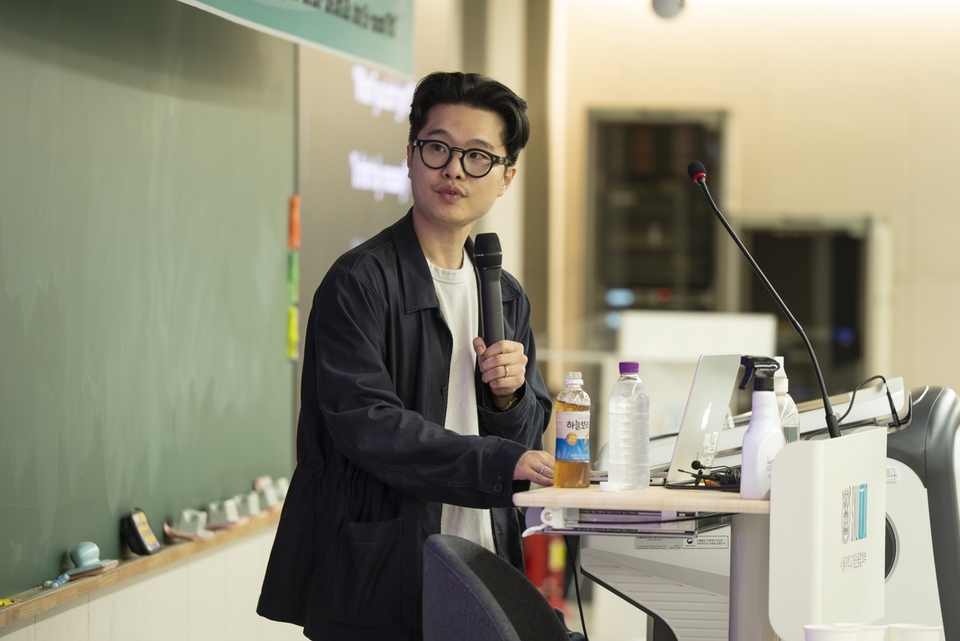
[Offline First-come, first-served] Jae-gyu Lee (Ouroboros) Builder Meetup - Harness, a contract handed to the agent
This is an offline meetup where Jaegyu Lee, developer of the open-source Agent OS 'Ouroboros'—which quadrupled its GitHub stars in just three months—shares design principles gained from directly integrating and dismantling eight coding agent runtimes.
1개 수업 학습
추가 자료를 통해 학습을 이어나가요.
Jae Gyu Lee님과 함께해요!
Career Verified
Hello. I am Jaegyu Lee, the creator of Ouroboros.
How to verify Agents,
I am researching how agents can remember effectively.
I am cultivating open source so that everyone can use AI technology effectively.
Lecture History
Seoul National University, College of Transdisciplinary Studies, Silicon Valley Design Thinking Lecture 2H (2026.01)
Seoul National University of Science and Technology, ITM Department, OLAP and AI Data Analysis Lecture (2026.04)
Seoul National University, School of Transdisciplinary Innovations, Lecture on Design Thinking and Socratic Reasoning in the Silicon Valley AI Era 1H(2026.04)
Seoul National University Department of Transdisciplinary Studies AI Education Lecture 1H(2026.05)
KT AI Capacity Building Lecture, Harness Engineering: How to Control Probabilistic AI as a Deterministic System 4H(2026.05)
Seoul National University X San Francisco AI Native Lecture 1H(2026.06)
Hanwha AX Lecture 3H(2026.07)
External Activity History
1st place at Ralphton #1, Judge and Speaker at Ralphton #2
GDG Build with AI Incheon, Major Knowledge Required for Harness Engineering Session 1H
Hermes Meetup, RLM-FORGE Session 1H
Arize AI Meetup, Agent OS Session
GDG Korea-Japan Hackathon Judge
OBA Hackathon Award Winner
ICML meetup Agent Client Protocol presentation
Various YouTube filming (https://www.youtube.com/@Q00_Dev)

Harness, the contract handed to the agent
AXPORT, a journey to the world of AX
AIRXPORT
WHERE AX LEARNING TAKES OFF
AXPORT is a name that combines AX and Airport (Airport). Like a journey to an unfamiliar world, it signifies our intention to become the boarding gate to the destination of AX. At this gate, top AI & AX speakers become pilots to deliver high-density insights directly on-site.
If you have ever assigned a task to AI,
this is a problem everyone has experienced
⏺ Creating Todo list...
☐ Fix typos in document
☐ Build document audit system
☐ Develop automatic tool detection module
They even include things I didn't ask for in the plan.
> Then let's run it
✗ TypeError: validateUser is not a function
✗ ENOENT: no such file or directory
I can"t believe it when they say "there are no problems."
⏺ ✓ Deployment successful
> Run deployment script # Today, same request
⏺ ✗ Failed — I will try a different method...
It's the same request, but the result is different every time.
✻ (Thinking) If I touch the DB schema
I shouldn't... The DB schema is...
⏺ migration_v2.sql created
If you tell them not to do it, that's all they think about.
You need an environment, a "harness," for a fundamental solution.
Recommended for these people
- ✓Developers with 3 to 10 years of experience who are already using AI coding tools for work or side projects
- ✓Tech leads and engineering managers looking to achieve breakthrough efficiency improvements through AI
- ✓Senior developers who have felt inefficiency while switching between multiple CLIs
- ✓Solo entrepreneurs and indie hackers who want to create their own products through AI
- △This session might be difficult for those who are new to AI agents.
I only use Claude Code; will this session be necessary for me?
→The more you get used to a single AI tool, the more you might struggle when you need to switch to a different one.
You will be able to apply the same principles and harnesses even when you need to move your AI building environment, such as to Codex or local LLMs.
There are already many lectures on harnesses, and I've taken them too. How is this one different?
→Most harnesses on the market often only cover the methodology up to "how to design them."
This session covers everything from the reasons behind the design to the process of failure and revision, as well as the criteria for judgment, rather than just the methods.
The person who will tell this story
I am building Ouroboros, an open-source project that unifies multiple coding agent runtimes into a single harness. To overcome the limitations of single prompts, I have directly integrated the interfaces, state management, and permission issues of eight different runtimes. In this meetup, I will systematically share the decision-making criteria I gained through this process for the first time.
GitHub Star Growth Graph
April 2026 → July · 1.1k → 4.8k (approx. 3 months)
Key Experience
- Current) ZEP Tech Lead
- Open source Agent OS 'Ouroboros' Maintainer — Started development in late January 2026, reached 4.8k GitHub stars in just 3 months
- 1st place winner of Ralph-a-thon
- Appeared in numerous media outlets, including AI podcasts
🎤 Behind-the-scenes stories revealed only on-site
- A story of managing open source with an AI review bot that writes its own apology letters when it makes a mistake during a release
- The story of how the bot's reviews were so strict that a culture of "sharing review-passing skills" emerged among contributors
- A debate with the developer who first created the 'harness' concept, until finally receiving the recognition, "Isn't that an agent?"
What you can learn from this meetup
A design approach that is not dependent
A harness design mindset that is not tied to a specific AI CLI
Criteria for judgment
Criteria for distinguishing interface, state management, and permission issues across 8 CLIs
Next-step concepts
Meta-Harness · Self-Improving Agent · Agent Memory
Practical Open Source Know-how
Release Gate · Contributor Trust · GTM
What you will gain from participating
Session Composition
Jagyu shares the limitations of single prompts he personally experienced, focusing on actual failure cases. He explains the events that led to the philosophy that "AI coding fails at the input, not the output."
- The Reason Ouroboros Was Born — If you don't know exactly what you want, you can't produce the right results
- The era where execution is replaced — What remains is the front-end design of thinking about what to command
Prompt
How to make a good request
Harness
How to create an environment
Meta-Harness
Harness evaluating harness
Self-improvement
The result becomes the input for the next execution
It covers interface differences, state management, permissions, and execution environment issues that arose while supporting multiple runtimes such as Claude Code, Codex, and OpenCode.
↓
OUROBOROS Lingua Franca
"Ask the user" — a single contract
A structure where creating a single skill allows eight tools to understand it simultaneously
- 4 things that cannot be solved with prompts alone — State management · Validation · Completion reliability · Permissions
From 'Meta-Harness,' which evaluates and improves the harness itself, to the 'Self-Improving Agent' that gets smarter with use — we share ways to provide a better environment for agents. We also introduce the concept of 'Agent Memory,' which allows agents to retain memories.
Prompt = Request 🙏
🤖
무엇을 할지 매번 다른 에이전트Harness = Contract 📋
🤖
- Crystallization of Intent — Fixing the core intent (seed) as a document and verifying it through set rules rather than AI
- "Don't build a harness" — Why you shouldn't reinvent the executor, but instead create the contracts and environments on top of it
- Towards an Agent OS — Only essential features in the core, the rest as plugins. Conditions for a 'thin harness'
We discuss community feedback, issue management, trust with contributors, release decisions, and the process of discarding failed designs.
A review bot with its own identity, designed with four layers like human memory
- Release Gate — The checkpoint that must be passed before deployment, and the day the bot wrote a letter of reflection
- Metrics Beyond Star Counts — A Dead Repo with 10k Stars vs. Actual Download Counts
- Promoting is as important as building well — GTM, and the principles of an ecosystem where the power of contributors is added
Timetable
- 18:30Entry · Table Networking (Icebreaking)
- 19:00Opening
- 19:05Harness, a contract handed to an agent
- 20:35Q&A
- 20:45Networking Session
- 21:15Insight Sharing
- 21:30Group Photo · Closing
Frequently Asked Questions
Q. Is it offline or online?
A. This page is for offline participation registration only.
If you wish to attend online only, please use the VOD that will be released separately after the event.
Q. Will meals be provided?
A. Yes, simple sandwiches and drinks are included in the participation fee.
You can participate with a full stomach even if you come straight after work!
Q. Will there be filming or recording?
A. The event will be filmed for VOD production.
By attending, you are considered to have consented to being filmed; if you do not wish to be, please inform the organizers in advance.
Q. What happens if I am inevitably unable to attend?
A. If you let us know at least one day before the event, we will offer the seat to someone on the waiting list.
Please check the refund policy at the bottom for detailed cancellation and refund conditions.
Q. Is a laptop absolutely necessary?
A. It's not a hands-on session, so it's not mandatory, but
you can gain deeper knowledge by following along and taking notes on your laptop.
Q. How is on-site entry verified?
A. After payment is completed, you can receive a QR code through the link sent the day before the event.
7월
30일
챌린지 시작일
2026년 7월 30일 AM 10:00
챌린지 종료일
2026년 7월 30일 PM 12:30
챌린지 커리큘럼
All
1 lectures
챌린지에서 배워요
A perspective on designing runtime-agnostic harnesses so you don't have to relearn everything from scratch every time a new AI tool is released.
Criteria for judging how to resolve agent divergence, false completion reports, irreproducibility, and permission issues through architecture rather than prompts.
A roadmap to understanding the next trends—such as Meta-Harness, Self-Improving Agents, and Agent Memory—ahead of others.
How to manage open source in collaboration with AI review bots: release gates, contributor trust, metrics beyond star counts, and GTM
Recommended for
these people
Who is this course right for?
Developers who are already using AI coding tools like Claude Code for work or side projects, but are tired of constantly cleaning up the messes made by these agents.
A developer who switches between various CLIs and has experienced their settings and know-how being reset every time they learn a new tool.
Tech leads and engineering managers who need to introduce AI coding to their teams and are more concerned about "what standards to operate by" than "which tool to use"
Builders who want to create their own tools or products on top of agents, and developers who dream of running open-source projects.
Reviews
취소 및 환불 규정
챌린지는 지식공유자가 설정한 수업 최소 정원이 충족되지 않을 경우, 폐강 안내가 고지되며 결제 내역이 자동취소됩니다.