Big Data/Text Mining Analysis Methods (LDA, BERTtopic, Sentiment Analysis, CONCOR with ChatGPT)

This is a lecture on learning text mining analysis techniques, big data analysis techniques, word frequency analysis, word cloud visualization, morphological analysis, and topic modeling analysis techniques utilizing Python and ChatGPT, covering how to utilize text mining data analysis techniques necessary for writing papers and basic application methods for research papers.

(4.5) 17 reviews

173 learners

Level Basic

Course period 8 months

Big Data
Big Data
Text Mining
Text Mining
Big Data
Big Data
Text Mining
Text Mining

Reviews from Early Learners

4.5

5.0

뚱이 언니

63% enrolled

Hello, I am leaving a lecture review after listening to half of the class. I have a PhD in language and have absolutely no knowledge of Python, but I am listening to the lecture with satisfaction because the teacher writes the code well and explains it well. Recently, I kept getting errors related to using LDAvis, so the teacher helped me remotely at 10 PM, but I couldn't do it even after 12:30 PM. It was late, and the teacher was really trying to help me, but I was really sorry that it didn't work, but the teacher corrected the error and sent me the code by email the next day. That's how sincere and passionate the teacher is in teaching. (When I came in, I saw that the teacher had updated the code in the lecture list.) Even if you have absolutely no knowledge of Python like me, you can listen to the lecture, and if you ask the teacher for help, he will help you, so I hope you listen to the lecture. After I finish this course, I plan to listen to the teacher's other (paid) lectures. I sincerely recommend the lecture content and the teacher.

5.0

밝은 비버

45% enrolled

This is a lecture that I found like a ray of light when I was frustrated while studying text mining on my own :-) Why is it so easy to understand when it explains all the hot methodologies that are often covered in theses these days..!! (Honestly, if I were to take it at school, it would be a 1-semester lecture..How come you explain it so compactly?>.<) More than anything, it was a practical lecture, not a theory lecture, so it was very helpful in practice, and it was a lecture that completely condensed knowledge, so I didn't regret the tuition at all. In fact, it felt cheap..ㅠㅠ One more thing that is the most...perfect thing about this lecture..!! When I leave a question, the teacher gives feedback almost in real time, and tries to solve it together until the end, so I dare to give a thumbs up!!^^bb Thank you, teacher~~

5.0

우아한 북극곰

100% enrolled

This lecture is truly a blessing in disguise for graduate students or researchers preparing a text mining research paper. There are many books on Python text mining on the market, but there is no one that provides guidance for beginners in coding to actually apply coding to research papers. This lecture is very helpful because it shows the entire process of how Python coding is actually done from the data collection stage to the analysis method so that it can be applied directly to research papers. I especially liked the fact that they gave me quick and friendly feedback on parts I was curious about. This lecture is not a lecture that explains the principles of coding grammar in detail. However, since it is a lecture that allows you to immediately apply the necessary parts of your research to real-life situations even if you don't know how to code, it is a lecture that is perfect for those who want to do text mining research but have difficulty applying coding!

What you will gain after the course

  • Summary of Key Tips for Text Mining using Python

  • Word frequency analysis

  • Word Cloud Visualization

  • Morphological analysis

  • TF-IDF for identifying importance in text

  • Text Topic Classification using the LDA Method

  • Data Interpretation Methods for Big Data/Text Mining Thesis Writing

  • Explanation of the core theory of Text Mining

  • Sentiment Analysis using the KNU Sentiment Dictionary (Sentiment Word Extraction, Sentiment Document Ratio)

For text mining or writing a paper related to text mining
Welcome to those who have concerns! 🙌

It will be easier to understand if you take the free lectures "Basic Text Mining: App Review Analysis with Python" and "Textom Basics Lecture: SNS Recognition Analysis for Writing Big Data Papers" before taking the course .

This lecture guides you through writing papers using core techniques used in text mining/big data analysis papers, from classical models such as LDA topic modeling and KNU sentiment analysis to the latest technique, BERTopic.

This lecture is designed to help graduate students and researchers in the humanities, arts, physical education, health, and medicine fields write big data papers.

Non-majors and liberal arts students can eliminate their fear and uncertainty about writing text mining papers through this lecture !

The lecture also includes know-how on how to easily perform big data/text mining analysis using ChatGPT .

" 📖 Beginners don't need to waste hours analyzing big data papers/texts. "

"A lecture for those who want concise but deep learning"

📚 This is not a lecture that explains complex theories or lengthy, theoretical explanations.

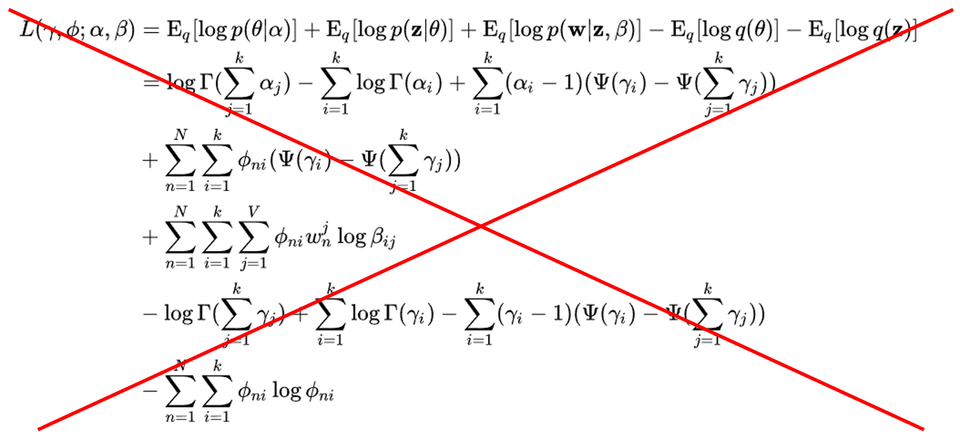
Mathematical theory used in LDA model

🗝 This is not a lecture that provides a theoretical explanation at the level of experts, but a practical lecture that can be immediately applied by those writing papers on work or big data.

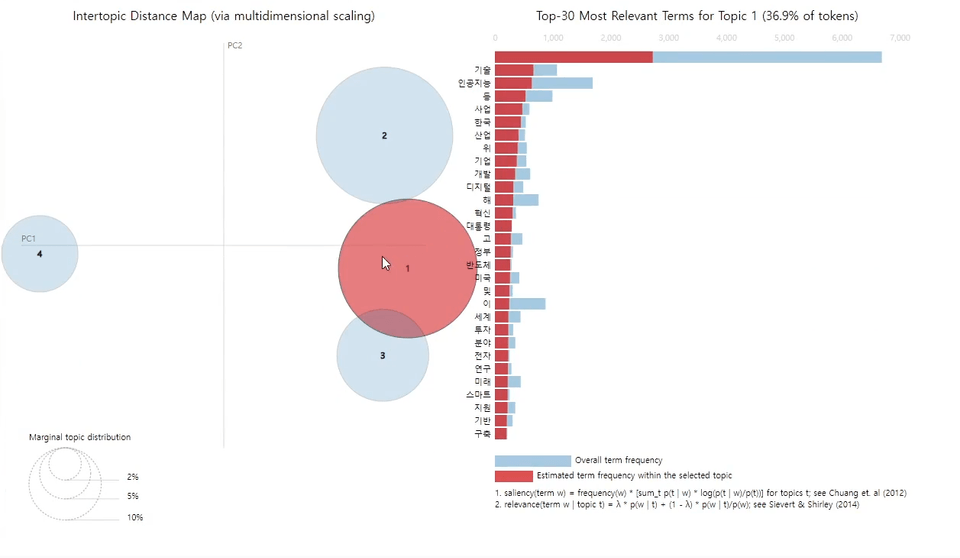
Visualization results of LDA models mainly used in papers and practice

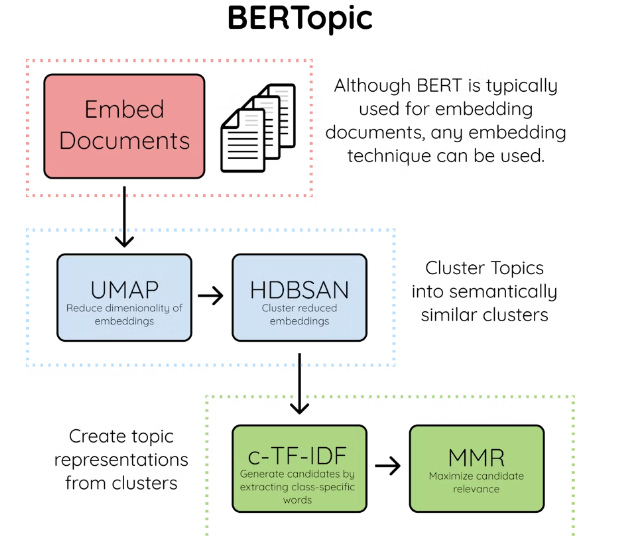
We will also guide you on how to use the BERTopic model, which has been appearing a lot recently.

🗝 If you listen to the lecture and change only the code used, you can apply text analysis . (Code that enables data analysis by changing only the input data is provided)

📚 This lecture is a condensed version of 6 years of text analysis experience and research.

📚 We teach you the most used core techniques for beginners.

Text mining and big data are increasingly being introduced in all research fields.

Corporate practice also requires the ability to handle text data to be recognized.

We have created an efficient lecture so that anyone can easily follow the current trend of big data and text mining instead of complex and difficult coding.

  • 📚 Text analysis projects and research using Python


    💻 This lecture will help you write a big data research paper using text mining techniques! (This is an introductory lecture for beginners.)

    🚀 We will teach you the core theories of text analysis and text analysis techniques that can be used in practice.

    🗝 We help you discover insights from large amounts of text documents.

  • ✅ This course teaches big data analysis and text mining analysis techniques using Python, and covers how to extract meaningful information from data and text.

  • ✅ This is a text analysis lecture for writing big data papers (the most basic lecture for recognition analysis and trend analysis).

  • ✅ Learn about data collection and refinement, text data preprocessing, frequency analysis, TF-IDF analysis, word cloud, LDA, and topic modeling using sentiment analysis.

✅ We will guide you on how to do big data analysis more easily by using ChatGPT , the latest LLM.

Learn things like this 📚

You will understand how to analyze big data and text data using Python.

You will learn techniques required for data analysis, such as data preprocessing, visualization, and statistical analysis .

You can learn the data analysis skills required to write a big data paper.

You can improve your data analysis skills by learning various data and text analysis tools and techniques .

We will practice the process of collecting BigKinds data and directly extracting data to be used in papers.

We will guide you on how to make big data analysis easier by utilizing ChatGPT, an AI model that is currently trending.


I recommend this to these people 🙆‍♀️

Researchers, data scientists, and machine learning engineers working in the data field

Researchers and graduate students who want to write papers on text mining and big data

Anyone interested in big data analysis and text mining analysis technology

Join this lecture 😊

Students who are anxious about data analysis and paper writing can strengthen their skills through this course.

By learning how to extract meaningful information from data and text through lectures, students will be able to acquire high-level capabilities in the fields of big data analysis and text mining. These capabilities will greatly contribute to the enhancement of students' job competency and academic achievement.


Lecture Features ✨

Provides information on data extraction and analysis required for paper writing

Practical data analysis using real Python

Easy explanation that even Python beginners can follow

Learn how to extract meaningful information from big data and text data with Python.

The right ratio of theory and practice! Practice in which actual data analysis is performed based on theory.

Please write a course review after completing 100% of the course . We will provide Textom lectures to those who complete 100% of the course and write a review!


Recommended for
these people

Who is this course right for?

  • Graduate students, researchers aiming to write Text Mining/Big Data papers

  • Those who want to learn text mining techniques

  • Those interested in text mining using Python

  • Conducting Text Mining Projects and Research Tasks

  • Those who want SNS data analysis

  • Those who want to understand customer needs for marketing by analyzing customer feedback and reviews

  • Those who want to try sentiment analysis

Need to know before starting?

  • You need some knowledge of Python basics.

  • Need to know how to use Google Colab

Hello
This is HappyAI

5,562

Learners

336

Reviews

54

Answers

4.5

Rating

12

Courses

Lee JinKyu | Lee JinKyu

Ph.D. in AI Engineering · Adjunct Professor in the Department of AI Software · CEO of Happy AI

Hello.
I am Lee JinKyu, and I research, develop, and teach AI, focusing on natural language processing (NLP) and large language models (LLMs).

I earned a Ph.D. in Engineering specializing in Artificial Intelligence and have conducted research primarily in natural language processing and LLMs.

I am currently an adjunct professor in the Department of AI Software, teaching AI-related courses such as natural language processing and computer vision, and I run HappyAI, a generative AI company.

After working as a natural language processing and big data analysis researcher at a government-funded research institute, and then as a developer at an AI-specialized company, I currently carry out AI projects and training for businesses and public institutions.

At various companies and institutions, including Samsung SDS, KT, Hyundai Wia, and the Seoul Digital Foundation, I have conducted training and projects related to generative AI, LLMs, RAG, AI agents, and fine-tuning.

Additionally, I have conducted natural language processing and text mining research on various types of unstructured data, including documents, surveys, reviews, news media, policy, and academic data, and have experience with research and analysis projects across fields such as healthcare, policy, the environment, law, economics, and education.


Key Career History

  • Adjunct Professor in the Department of AI Software

    • Natural Language Processing

    • Computer Vision

    • Generative AI

    • Data Mining

  • Ph.D. in Engineering (Artificial Intelligence)


    • Large Language Model (LLM) and Agent Research

  • CEO of Happy AI

    • Generative AI, LLM, RAG, and AI Agent R&D and education

  • Researcher at a government-funded research institute

    • Natural Language Processing · Big Data Analytics

  • Developer at an AI and Big Data Specialist Company

  • AI Columnist

    • Articles on generative AI, LLMs, RAG, and AI technologies


Key Areas of Expertise

  • Generative AI and large language models (LLMs)

  • RAG · Private LLM

  • AI Agent · Agentic AI

  • AI applications based on LangChain and LangGraph

  • LLM fine-tuning based on LoRA·QLoRA

  • Natural Language Processing (NLP) · Text Mining

  • AI-based data analysis and work automation


Training for Major Companies and Institutions

  • Samsung SDS – LangChain·RAG-based LLM programming

  • KT – LLM/sLLM application development

  • Seoul Digital Foundation – LLM theory and RAG chatbot development

  • Hyundai Wia – Generative AI·AX training

  • Seoul National University of Science and Technology – Python-based text analysis

  • Kyonggi University – Python Using ChatGPT

  • Dankook University – Big Data Expert Program


Key AI Projects

  • Private LLM-based RAG document search and chatbot development

  • Development of Private LLM solutions in an internal network environment

  • LLM Fine-Tuning and Instruction Tuning

  • AI Agent-based business process design

  • Natural language processing and text mining–based research and analysis

  • AI analysis of survey, review, media, policy, and academic data


Research and Publications

  • Conducted domestic and international academic research on natural language processing and LLMs

  • Research on measuring and mitigating LLM bias

  • Numerous papers in the fields of NLP and text mining

  • Experience in AI-related patents and software research and development

  • Book: “Stock Data Analysis with ChatGPT”


What I Consider Most Important in My Lectures

AI technology is changing rapidly, but if you understand the core principles, you can learn new technologies much faster.

In the lectures, rather than simply following features or code,

“what it is → why it is needed → how it works → where it is used in practice”

I consider it most important to explain things clearly so that you can understand them.

Rather than explaining complex AI technologies in a difficult way,
I will explain them so that even beginners can understand the overall structure and apply them to real-world work and projects.


Inquiries about lectures and projects

Email
leejinkyu0612@naver.com

Homepage
https://happyaidata.kr

YouTube
https://www.youtube.com/@HappyAI_0612

GitHub
https://github.com/leejin-kyu

※ Kmong Prime Expert


Detailed profile
https://bit.ly/jinkyu-profile

More

Curriculum

All

48 lectures ∙ (5hr 38min)

Course Materials:

Lecture resources
Published: 
Last updated: 

Reviews

All

17 reviews

4.5

17 reviews

  • aa47474198510님의 프로필 이미지
    aa47474198510

    Reviews 2

    ∙

    Average Rating 5.0

    5

    100% enrolled

    It was great that you showed us how to apply this to research papers too! I hope there will be more advanced lectures like this in the future :)

    • yeobi852767님의 프로필 이미지
      yeobi852767

      Reviews 1

      ∙

      Average Rating 5.0

      5

      100% enrolled

      This lecture is truly a blessing in disguise for graduate students or researchers preparing a text mining research paper. There are many books on Python text mining on the market, but there is no one that provides guidance for beginners in coding to actually apply coding to research papers. This lecture is very helpful because it shows the entire process of how Python coding is actually done from the data collection stage to the analysis method so that it can be applied directly to research papers. I especially liked the fact that they gave me quick and friendly feedback on parts I was curious about. This lecture is not a lecture that explains the principles of coding grammar in detail. However, since it is a lecture that allows you to immediately apply the necessary parts of your research to real-life situations even if you don't know how to code, it is a lecture that is perfect for those who want to do text mining research but have difficulty applying coding!

      • 밝은 비버님의 프로필 이미지
        밝은 비버

        Reviews 1

        ∙

        Average Rating 5.0

        5

        45% enrolled

        This is a lecture that I found like a ray of light when I was frustrated while studying text mining on my own :-) Why is it so easy to understand when it explains all the hot methodologies that are often covered in theses these days..!! (Honestly, if I were to take it at school, it would be a 1-semester lecture..How come you explain it so compactly?>.<) More than anything, it was a practical lecture, not a theory lecture, so it was very helpful in practice, and it was a lecture that completely condensed knowledge, so I didn't regret the tuition at all. In fact, it felt cheap..ㅠㅠ One more thing that is the most...perfect thing about this lecture..!! When I leave a question, the teacher gives feedback almost in real time, and tries to solve it together until the end, so I dare to give a thumbs up!!^^bb Thank you, teacher~~

        • runying03057863님의 프로필 이미지
          runying03057863

          Reviews 1

          ∙

          Average Rating 5.0

          5

          63% enrolled

          Hello, I am leaving a lecture review after listening to half of the class. I have a PhD in language and have absolutely no knowledge of Python, but I am listening to the lecture with satisfaction because the teacher writes the code well and explains it well. Recently, I kept getting errors related to using LDAvis, so the teacher helped me remotely at 10 PM, but I couldn't do it even after 12:30 PM. It was late, and the teacher was really trying to help me, but I was really sorry that it didn't work, but the teacher corrected the error and sent me the code by email the next day. That's how sincere and passionate the teacher is in teaching. (When I came in, I saw that the teacher had updated the code in the lecture list.) Even if you have absolutely no knowledge of Python like me, you can listen to the lecture, and if you ask the teacher for help, he will help you, so I hope you listen to the lecture. After I finish this course, I plan to listen to the teacher's other (paid) lectures. I sincerely recommend the lecture content and the teacher.

          • iami3370818님의 프로필 이미지
            iami3370818

            Reviews 1

            ∙

            Average Rating 5.0

            5

            35% enrolled

            After hearing the course reviews, I also rushed through the lectures Although the progress rate is high, I honestly don't know what it means. I'm too much of a beginner. I feel like I should have taken the Textom lecture. From Python ~~~~~~~~ ah~ it's difficult. I need to submit a journal paper in May.. Actually, I saw a colleague write and upload a paper with Textom in just 1.5 days, so I thought I could do it too. After taking the lecture, I'm even more lost. Seems I need to go for the Textom lecture... So sad.

            • leejinkyu0612
              Instructor

              Hello 😊 If you are new to big data analysis, the concepts might feel a bit difficult. This is especially true if you are new to Python or text mining. As you mentioned, taking a free course like "Basic Text Mining: App Review Analysis with Python" or "TEXTOM Basic Course: SNS Perception Analysis for Writing Big Data Papers" before this course will be much more helpful in understanding the overall flow. Try taking a basic course first, and then coming back to this main course will make it easier to follow along. I also wish you all the best in completing your academic paper! Thank you 😊

          HappyAI's other courses

          Check out other courses by the instructor!

          Similar courses

          Explore other courses in the same field!