
Data Structures and Algorithms Made Easy with Diagrams (Basics)
gamja5
In this lecture, you can learn linear data structures and algorithms.
Beginner
Algorithm
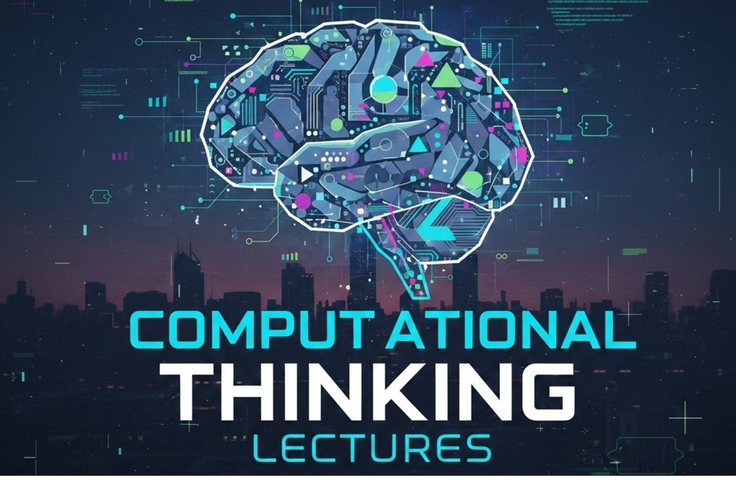
Along with reading, writing, and arithmetic, computational thinking is an essential skill that everyone living in the AI era must possess. Computational thinking can be simply defined as thinking like a programmer or thinking like a computer scientist. This course directly transfers an actual university semester course and covers essential content for those new to programming or beginners who want to major in computer science. It provides easy explanations of fundamental concepts to help non-computer science majors or those with humanities backgrounds communicate easily with professional programmers.
1 learners are taking this course
Level Beginner
Course period 6 months
A comprehensive understanding of computational thinking
Acquiring Computational Thinking for Programming
A suitable course for those with a humanities background who want to build foundational knowledge in programming (coding)
A must-take course for those with no background in computer-related fields who are taking their first steps into the world of coding
Essential fundamentals for those who have tried getting into programming but gave up on coding without being able to move to the next level
This course is a direct transfer of a university semester-long course (when including both Part 1 and Part 2), where you learn to think like a programmer or computer scientist.
It covers essential content for those new to programming or beginners who want to major in computer science.
It explains concepts in an easy-to-understand way with examples so that non-majors or people with humanities backgrounds can easily communicate with professional programmers.
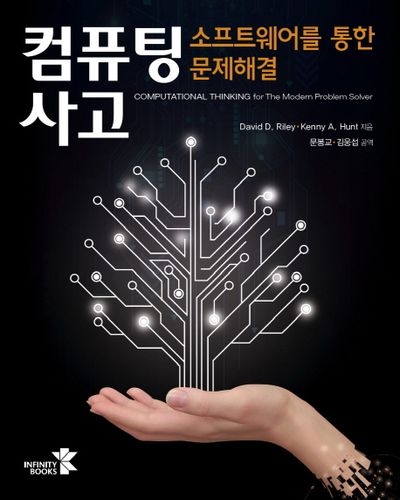
Textbook referenced in this course
Explore the historical events that contributed to the invention of modern computers and software.
Understand the difference between analog computers and digital computers.
Understand the concept of stored programs and their role in program execution and data processing.
Learn about the basic structure and characteristics of modern computers.
We examine practical definitions of the concept of computational thinking.
Section (2) Real-World Information and Data
Understand how data is encoded as bit strings in computer systems.
Define measurements of data capacity and the capacity required to store real-world information.
Understand positional notation and learn how integers and real numbers can be encoded.
Learn how complex information such as text, colors, images, and sounds can be encoded as bit strings.
Section (3) What is Logic
Understand that logic is necessary and useful for correct and rational thinking.
Examine how the logic of natural language is represented symbolically.
Define logical values and logical operators, and understand truth tables, tautologies, and contradictions.
Learn how logic is applied to solve real-world problems.
Section (4) Problem Solving
Learn about functional requirements that are key to problem definition for algorithms.
Learn about logical reasoning methods such as cause-and-effect analysis, deductive reasoning, and inductive reasoning.
Understand the five patterns of control flow in programs: sequencing, selection, iteration, control abstraction, and concurrency.
We will explore top-down design and divide-and-conquer for problem solving.
Learn about binary search and data decomposition methods.
Understand abstraction techniques such as class diagrams for data abstraction and use case diagrams for problem definition abstraction.
Section (5) Algorithmic Thinking
Understand the concepts of software and program execution.
Understand how logical conditional statements work through selection in algorithms.
Understand that repetition is very common in algorithms.
Understand how algorithms are modularized.
Understand how statements such as naming, selection, and repetition are represented in flowcharts.
Understand the concepts of computational state, events, and operations in computing.
Model a sequential algorithm with about 10 states.
Section (6) Modeling Solutions
Can interpret activity diagrams that include actions and conditions.
Recognize the three control forms (sequencing, selection, iteration) that constitute the control flow of activity diagrams.
You can create an activity diagram for a given algorithm.
Recognize states and events in algorithms.
Can interpret state diagrams that include do, entry, and exit actions.
Understanding of sets and logic, as well as integers and real numbers from high school curriculum will be very helpful
The initial lecture video quality (audio/video) may not be excellent and could be updated later
Questions can be answered through Q&A
Who is this course right for?
Anyone who is new to computing and programming
Beginners or non-majors who want to acquire essential concepts in the field of computing
People who want to apply computing knowledge to business scenarios and communicate smoothly with professional programmers
Need to know before starting?
No special foundational knowledge is required, but you should have an open mind about the field of computing
All
24 lectures ∙ (9hr 0min)
1. 계산기의 역사
12:57
2. 최초의 컴퓨터
17:01
3. 현대적인 컴퓨터
24:24
4. 계산적 사고
37:02
5. 정보와 데이터
28:49
6. 기수법
23:14
7. 데이터 표현(문자와 소리)
25:34
8. 데이터 표현(그림과 영상)
17:52
9. 논리와 명제
22:13
10. 논리 연산자
17:39
11. 합성 명제
18:08
12. 논리의 응용
26:17
Limited time deal
$35,750.00
35%
$42.90
Explore other courses in the same field!