♣ Why do you get the same feedback every time you write?
The moment you need to write always comes.
However, the results are strangely similar.
- In theses: “The significance of the research is unclear.”
- In essays: “The main point is vague.”
- In resumes: “There is no impact.”
- In reports: “I don’t understand what you’re saying.”
- Repeated comments that the structure is "distracted" or "unorganized."
At this point, you start to think:
“Am I just bad at writing?”
However, in actual consultations,
in most cases, the problem is not your sentence-level skills.
♣ The problem is that ‘you don’t know where the problem is’
Many people already write enough.
They even revise.
They add emotion and reinforce logic.
But the results do not change.
The reason is simple.
[Because you have never learned the criteria for judging and revising writing.]
So you fix it,
but you have no confidence in whether you are fixing it correctly.
♣ This course starts here
This course
does not teach you how to write pretty sentences.
It does not cover how to make expressions more moving.
Instead, it answers questions like these:
- Why is this piece not read until the end?
- I thought I wrote logically, so why isn't it persuasive?
- I wrote the same content, so why are the evaluations so different?
- Why do I still feel anxious even after revising?
The core is one thing:
[Good writing has ‘structural criteria’ that transcend genres.]
♣ The core of this course is just one thing
[The reason writing passes is structure, not intuition.]
This standard
applies not only to essays, resumes, reports, content, personal essays, and novels,
but also to ‘writing judged by evaluators,’
such as research proposals and academic theses.
This course
does not teach major-specific knowledge or research methodology.
Instead,
It establishes the criteria for you to judge for yourself why your writing is not persuasive.
♣ This is especially for those who:
- Always receive vague evaluations on essays or resumes
- Get repetitive feedback on company reports or proposals
- Are writing a thesis or research proposal but can't get the structure right
- Have finished writing but aren't sure if the direction is correct
- Want to judge writing based on criteria rather than intuition
♣ What we cover in the course
- 5 structural criteria common to essays, resumes, reports, and theses
- The central axis of writing that must be checked before fixing sentences
- The minimum conditions that separate good writing from rejected writing
- Common patterns that evaluators and judges actually look for
- Structural errors that occur when emotion, information, logic, and background get mixed up
♣ How this course differs from other writing courses
- Explains literature, essays, business, and academic writing with a single standard
- Tells you **where to fix** rather than just ‘how to write well’
- Can be applied immediately in actual evaluation and judging situations
- Provides a blueprint that can be expanded to essays, stories, novels, and professional writing later
This is not a course to make you write better.
It is a course that enables you to explain why your writing is not passing.
♣ Instructor Introduction
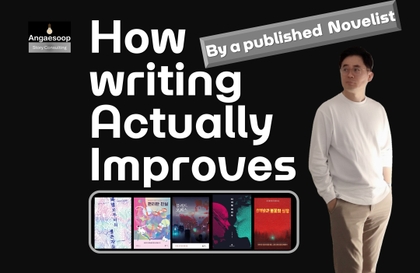
This course is led by
Sihyeong Lee, CEO of Angaesup Media,
a professional author who has planned and published 3 full-length novels
and has structurally refined numerous manuscripts across essays, novels, and business writing.
One thing he became certain of while fixing writing in the field is this:
The reason writing fails
is not a matter of talent or effort,
but the fact that the writer does not know where to fix it.
This course is the starting point that establishes those criteria first.
♣ One-line Summary (Very Important)
This course
is not about making you write more;
it is a course that teaches you how to judge the writing you have already done.





























![[Sebasi] How to Write One-Line Copy That Attracts People | Copywriter Jung CheolCourse Thumbnail](https://cdn.inflearn.com/public/files/courses/338048/cover/01jzmpcqpdatchh5entw2x89z6?w=420)


![Report Writing Techniques to Get You Home Earlier and Secure Your Promotion [1+2 Integrated Package]Course Thumbnail](https://cdn.inflearn.com/public/files/courses/340536/cover/01kfjcgh9zjs4gr7bbmssdty1b?w=420)

.png?w=420)