Essential processes for proficient reporting and presentation! The Art of Reporting (The Dignity of Reports Part 4)

Recognize the differences between reporting and presentation in the specific context of the workplace, and learn the necessary processes for proficient reporting and presentation.

(5.0) 2 reviews

28 learners

Level Basic

Course period 6 months

Planning Document
Planning Document
presentation PT
presentation PT
Planning Document
Planning Document
presentation PT
presentation PT

What you will gain after the course

  • Why reporting and presentations at work are different

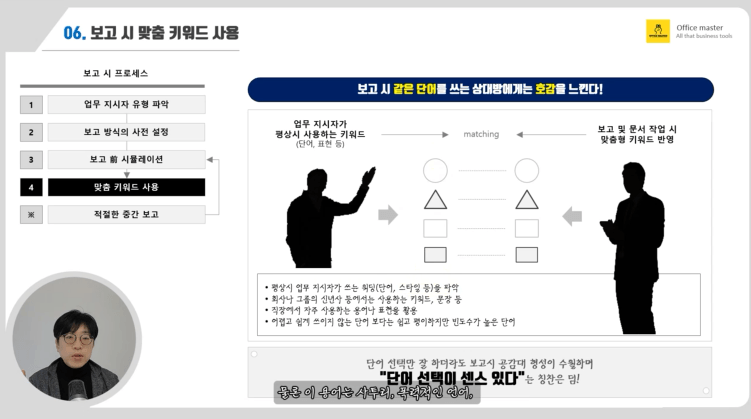
  • The first step in reporting: identifying the type of person giving the instructions.

  • Reporting methods of a 'top performer' who understands the other person

  • Why setting a 'response goal' for the audience is important

  • The core of presentation design: scenario construction

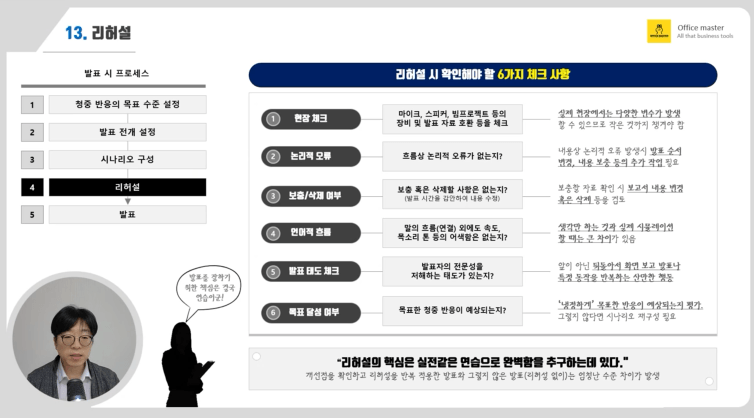
  • The key to a perfect report: Checklist for rehearsals

The Dignity of Reports, Part 4
[Reporting Skills] for Perfect Document Writing😀


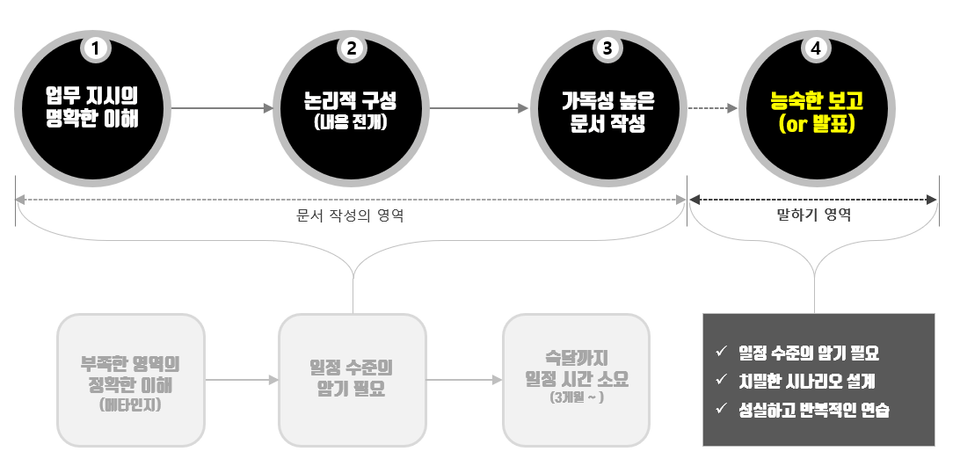
Document (planning papers, proposals, reports—hereafter referred to as reports) creation to reporting
generally involves a 4-step process.

  • First, accurately understand the work instructions given by the supervisor (boss), and

  • Second, organize the instructed content according to a logical flow (development, data collection, etc.), and

  • Third, express your thoughts as slides according to each logical structure (table of contents, etc.).

  • Finally, you proceed with the reporting task (or presentation) based on the work you have completed.

In other words, if a problem occurs in any one of the four steps mentioned above, your report will become a so-called 'rejected report'. That is, you will end up writing a report with low work productivity. Therefore, I have synthesized the above content to create a lecture titled "The Class of a Report."

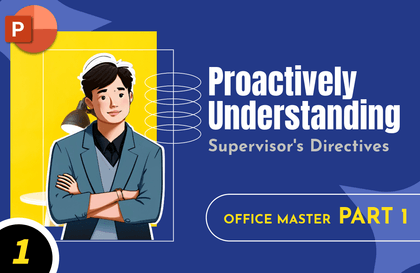
  • PART 1. Understanding the Work

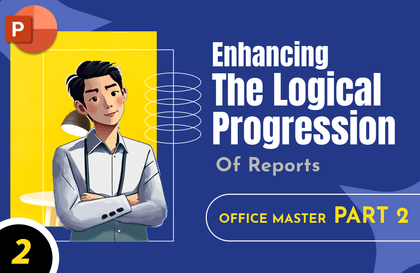
  • PART 2. Logical Structure

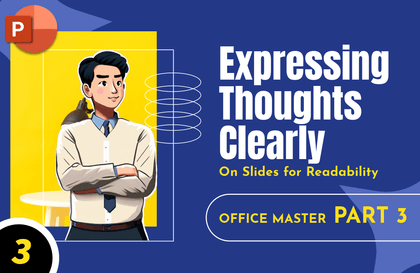
  • PART 3. Expression of Thoughts

  • PART 4. Reporting Techniques (& Presentation)

💡 This lecture is the fourth story of The Dignity of Reports, 'PART 4: Reporting Techniques'.

Features of this course

📌 You can identify the types of work supervisors, which is the first step to effective communication.

📌 Understand why setting a 'response goal' for the audience is important.

📌 Learn in detail the key to a perfect report and the checklist for rehearsals.

📌 Learn natural reporting and presentation techniques.

💡 Key Features and Differentiators

  • Systematically learn by distinguishing between presentations and reports, which are the primary forms of verbal communication in the workplace

  • Delivering only the core content based on practical experience in planning/strategy/support and extensive lecturing experience

Recommended for these people

Those who create great documents
but 'freeze up' only when it's time to report

Employees in departments with relatively high
presentation and reporting workloads

Office workers who want to give impressive presentations
in front of an audience

💡 Additionally, we also recommend it to these people

  • Those who want to learn the theoretical background for excelling at workplace reporting and presentations

  • Those who lack confidence in reporting or presenting

What you will learn

The Difference Between Reporting and
Presenting in the Workplace

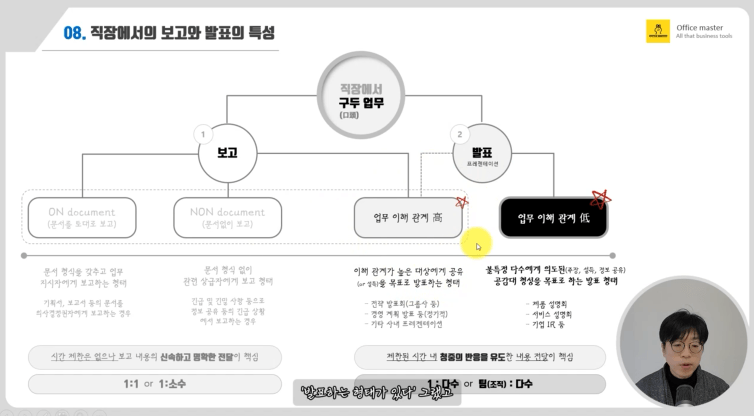
Reporting and presentations used in the workplace differ in their concepts and characteristics. Through this course, you will identify the fundamental reasons for reporting and presenting that can be properly utilized in a professional setting, rather than just general reporting and presenting.

A Systematic Process for Crafting
Perfect Reports

We will systematically explore everything from A to Z regarding reporting, including report planning, delivery methods, rehearsals, and key considerations during actual reporting.

A Systematic Process for Delivering
Praised Presentations

Systematically explore everything from A to Z of presentations, including planning, delivery methods, rehearsals, and checklists for the actual presentation.

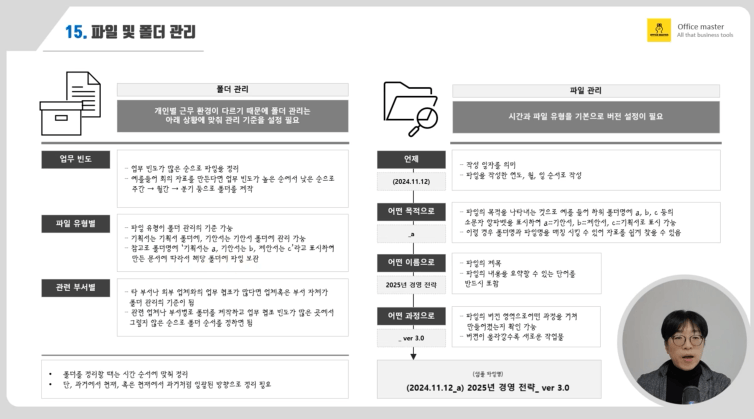
File and Folder Management for Perfect
Wraps-Up hoàn hảoのファイルとフォルダー管理

Learn about file and folder management that must be handled after all presentations and reporting tasks are completed.

The person who created this course

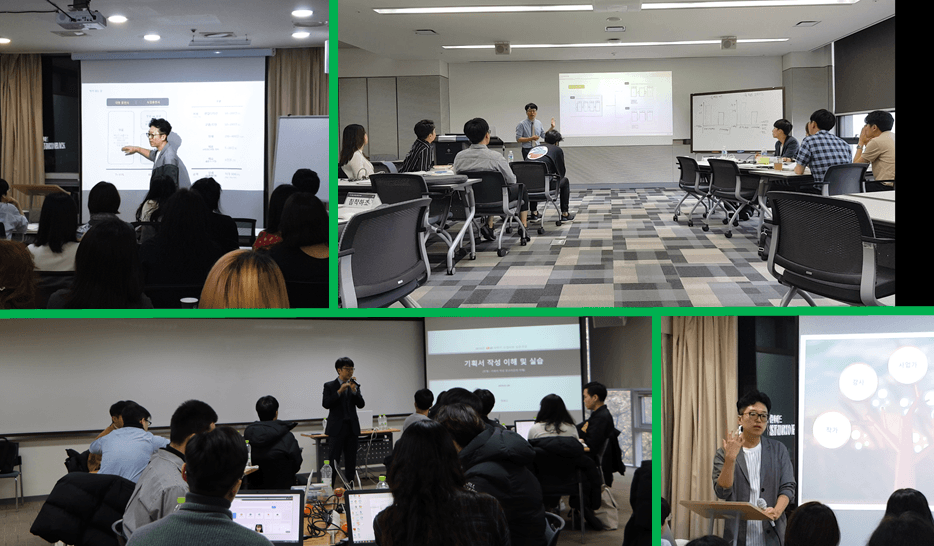
  • Professional Instructor in Document Writing (Planning Papers, Proposals, Reports)

  • Practical PowerPoint Instructor /

    Visualization EXCEL Instructor

  • Operating the YouTube channel [Office Master]

  • Author of <Praiseworthy Proposals Have a Different Algorithm>

💡 Other Experience

  • Worked in Strategic Business, Marketing Planning, CRM Planning, and Partnership Business departments at JoongAng Ilbo and JoongAng Ilbo Marketing Co., Ltd.

  • Independent Publishing Lecture (Independent Publishing After Work)

Frequently Asked Questions

💡 Frequently Asked Questions

  1. I am a beginner at writing documents (plans, proposals, reports, etc.). Can I still take the course?

    • Of course. It is possible. In fact, it is even better for those who are beginners at report writing or want to learn it properly. Since report writing is a process of creating a single document, a functional understanding is required during the writing process. We have structured the content systematically so that you can easily understand these aspects."

  2. Does it also include logical development methods for document writing or content related to presentations?

    • No. This lecture focuses on expressing your thoughts on actual PowerPoint slides


      The learning focuses on the methods and processes of expressing your thoughts. Therefore, you should watch other parts of the lecture, such as the logical development of documents.


  3. Are the contents of the other parts of the lecture difficult?

    • It is not difficult at all. The videos are designed with a short tempo, lasting around 5 to 10 minutes each. In other words, they are structured so that you can listen to them comfortably. Furthermore, the slide content is written in as much detail as possible so that you can fully understand the material just by looking at the slides, even in environments where you cannot listen to the audio.

  4. Additionally, do I need to take the other parts of "The Dignity of Reports"?

    • Not necessarily. You can selectively take any of the four parts of "The Dignity of Reports" based on the areas you feel you need to improve. However, since those who struggle with reporting often face structural difficulties in multiple areas rather than just one, we recommend taking at least two or more parts.

Recommended for
these people

Who is this course right for?

  • Those who create documents well but 'freeze up' when it's time to report.

  • Employees in departments with a relatively high volume of presentations and reporting tasks

  • An office worker who wants to give a great presentation in front of an audience

  • Those who want to learn the theoretical background for excelling at reporting and presentations in the workplace.

Hello
This is swingjazz

641

Learners

65

Reviews

1

Answers

4.7

Rating

7

Courses


"Solving complex business issues with the sharpest tool called AI."


Expertise in translating the language of business into the language of AI

Go

Lectures that simply list tool features cannot solve real-world problems. Based on the practical insights I have gained over 15 years at the forefront of strategic business and channel innovation, I propose the most realistic solutions that cut through the pain points faced by practitioners using AI technology.


Key Background and Expertise

  • Practical AI Coach: A veteran expert with over 15 years of hands-on industry and teaching experience

  • Current) CEO of Template Studio: A strategist who designs and systemizes the 'algorithms' of business documents

  • Current) Full-time instructor for Multicampus regular courses: An educator who drives the highest level of engagement in every session with a proven curriculum

  • Former) JoongAng Ilbo Strategic Business Team / Channel Innovation Team: Practical DNA from directly leading business planning and innovation processes


Public credibility proven by results

  • Author of: 『The Algorithm for Highly Praised Proposals is Different』 (Self-Up Book)

  • Satisfaction: Average student rating 4.9 / 5.0 (Based on practical work applicability)

  • Lecture References: Delivered lectures to over 25 major domestic corporations and public institutions, including Samsung Electronics, Woori Bank, Ericsson-LG, and Korea Asset Management Corporation (KAMCO).


Core Value

"Practitioners should focus on planning, while AI handles the repetition." Through AI workflows embedded with Template Studio's expertise, we will instill immediate innovation into your workplace.

More

Curriculum

All

16 lectures ∙ (1hr 38min)

Published: 
Last updated: 

Reviews

All

2 reviews

5.0

2 reviews

swingjazz's other courses

Check out other courses by the instructor!

Similar courses

Explore other courses in the same field!

$51.70