For those new to the high-performance microcontroller STM32F series, this guide covers all processes for an easy start, from the installation of the free compiler TrueSTUDIO and code auto-generation program CubeMX, through conceptual explanations of chip functions, source code writing (including HAL driver function explanations), to hardware implementation.
This was a great lecture that helped me a lot. Thank you.
5.0
jos
100% enrolled
Thank you for the great lecture.
5.0
정상민
100% enrolled
It helped me a lot with the STM32 Cortex and cubeMX, HAL driver concepts and studies.
I understood a lot because you taught with passion.
I was lost a lot as a self-study from books, but it was a great help.
What you will gain after the course
Understanding the internal peripheral operation of STM32F4
You can build hardware and embedded applications using those functions.
This course covers everything from installing the free TrueSTUDIO compiler and CubeMX code generator to explaining chip functions, writing source code (explaining HAL driver functions), and implementing hardware. This course is designed for beginners to the STM32F series, a high-performance microcontroller widely used in embedded development. It covers everything from understanding chip functions to installing the free TrueSTUDIO compiler and CubeMX code generator to understanding HAL driver functions and hardware implementation. By watching this video lecture and following along, you can easily learn about high-performance 32-bit MCUs.
This video course consists of 13 lessons focusing on frequently used functions.
CH0-1. Installing TrueSTUDIO
CH0-2. CubeMX Installation
CH1. LED output and switch input with GPIO
CH2-1. UART communication (polling method)
CH2-2. Using UART printf in TrueSTUDIO
CH2-3. UART Rx Interrupt (Receive Interrupt)
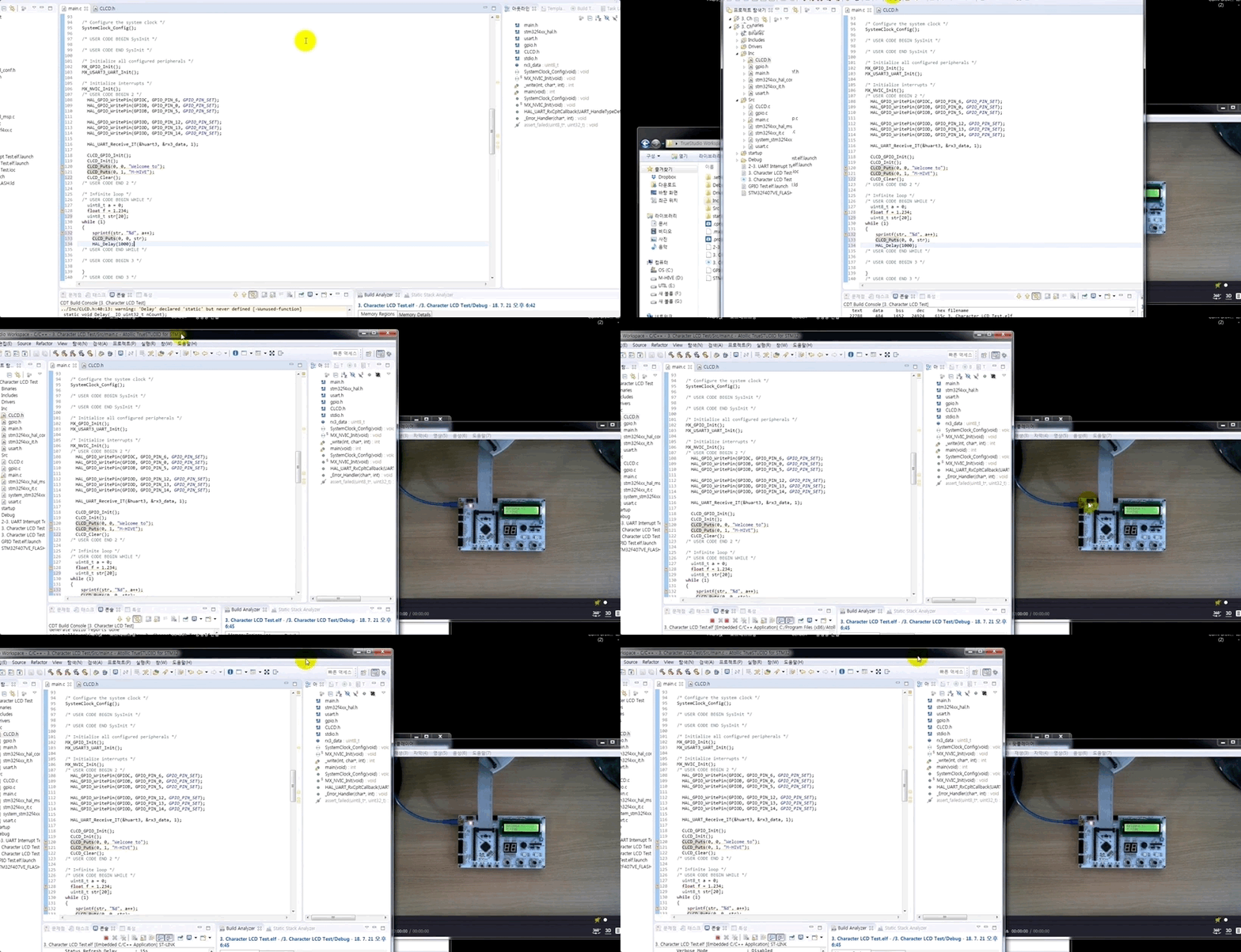
CH3. Character LCD (Text LCD) string and variable output
CH4. TIM Interrupt (Timer Interrupt)
CH5. EXTI (External Interrupt)
CH6-1. Generating PWM
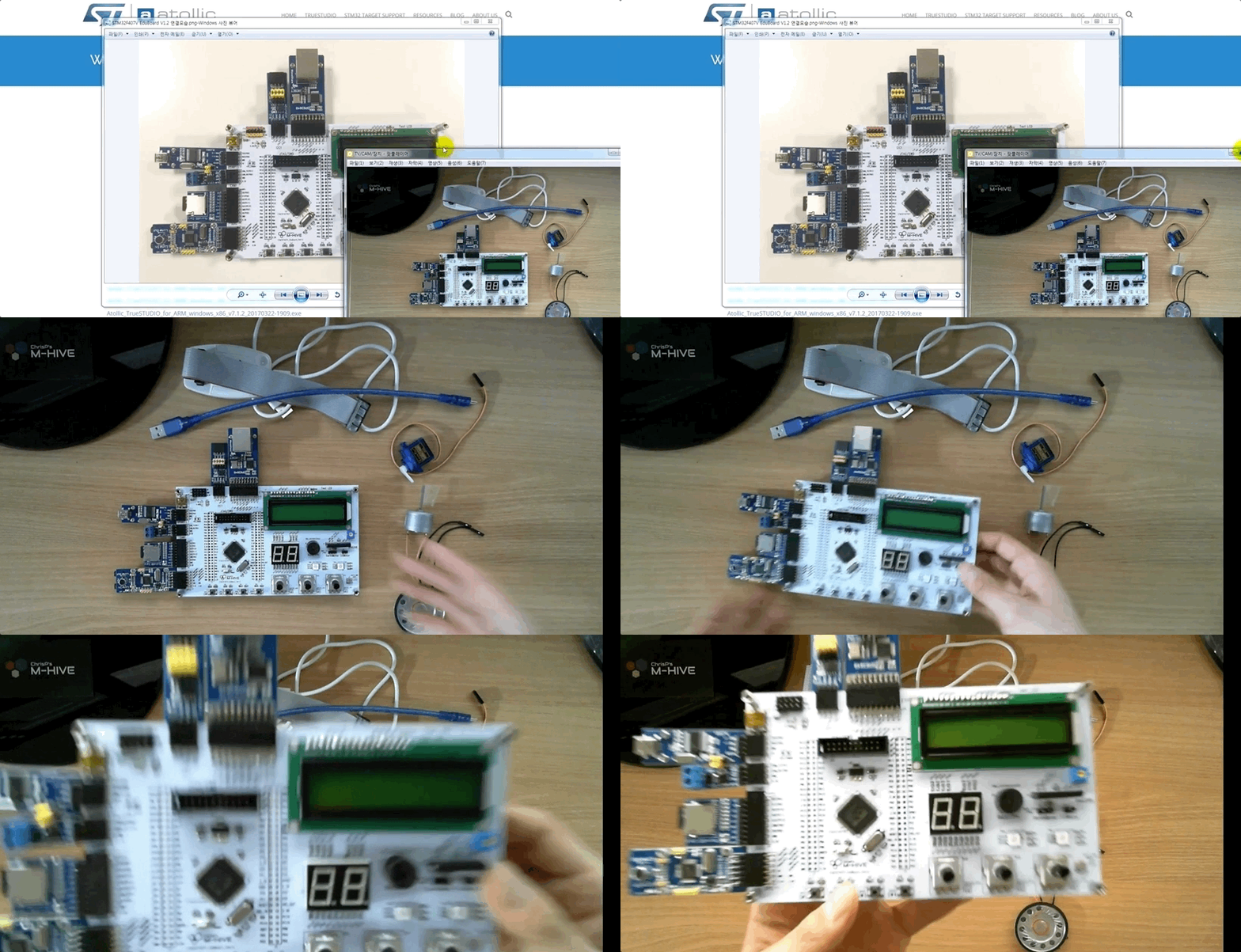
CH6-2. Driving SG90 servo, buzzer, and DC motor with PWM
CH6-3. Real-time PWM cycle change
CH7. Multichannel ADC with DMA
CH8. DAC
CH9. I2C communication (AT24C04 EEPROM)
CH10. SPI Communication (VS1003 Voice Codec)
CH11-1. SDIO + FATFS file input/output
CH11-2. SD card (FATFS) + VS1003 MP3 player
CH12-1. ETH + LwIP (UDP Echo Server)
CH12-2. ETH + LwIP (Using UDP Received Data)
CH13-1. CAN Communication Concept
CH13-2. CAN configuration and transmission code writing
CH13-3. Setting the CAN filter MASK ID and writing the receiving code
※ TrueSTUDIO and CubeMX are only available as CubeIDE (CubeIDE = an integrated development tool combining TrueSTUDIO and CubeMX). Therefore, we recommend using CubeIDE, and the video lectures can be followed in the same way using CubeIDE.
The UI has changed slightly with the newer CubeMX version for CubeIDE, but the overall framework remains the same. CubeIDE can be downloaded from the ST website. (If you want to develop in the same environment as the video tutorial, you can download CubeMX V4.26 separately, also available from the ST website.)
Then, I hope you have fun developing with STM32. If you have any questions, please leave a comment on YouTube or Naver Cafe. I will check and reply to you right away.
thank you
- Emhive ChrisP
Learning Objectives
Understand the internal peripheral operations of the STM32F4 and use its functions to create hardware and embedded applications.
Things to learn
Helpful people
Practitioners developing products using the STM32F series
Students studying electronic engineering
Those who develop using hardware, embedded systems, and firmware
Those who develop by incorporating IoT
Those who want to move from 8-bit MCU to 32-bit MCU
Anyone who wants to create a drone or self-driving car
Those studying physical computing, etc.
Note
CubeMX -> A program that automatically generates chip function configuration code. TrueSTUDIO -> A toolchain that writes and builds actual source code, then downloads and debugs it within the STM32. HAL -> A hardware-level library provided by STMicroelectronics to easily implement the chip functions of its STM32.
Since C is the basic language, those who are not familiar with C must learn it first. (Conditional loops, pointers, structures, functions, local variables, global variables, static variables, etc. are basic grammar, so you must know them.)
It would be helpful if you have knowledge of electronic circuits and basic circuit theory.
Introduction of knowledge sharers
ChrisP
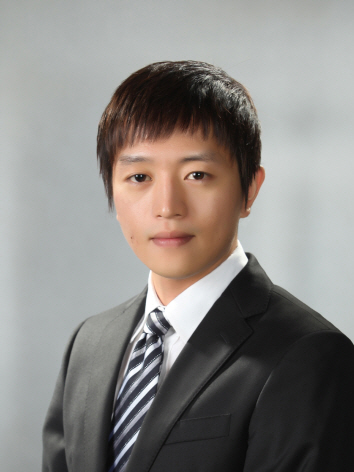
My name is ChrisP, and I run the M-HIVE Embedded Academy in Hongdae, Seoul. I also offer offline courses on C language and STM32F. - Operate a YouTube channel for tutorials on STM32F4 properties. - Operates Naver Cafe cafe.naver.com/mhiveacademy. - 8 years of experience in embedded firmware development. - Development of a fully automatic GPS waypoint flight drone. - C language, STM32, PCB artwork lectures - Support for mentoring college students.
Recommended for these people
Who is this course right for?
STM32F series product developers
A student studying electronics
Developers using hardware, embedded systems, and firmware
Developer integrating IoT
For 8bit MCU users moving to 32bit MCU
Anyone wanting to build drones, autonomous vehicles
It helped me a lot with the STM32 Cortex and cubeMX, HAL driver concepts and studies.
I understood a lot because you taught with passion.
I was lost a lot as a self-study from books, but it was a great help.







![[Free] Complete Beginner's C Basics You Must Learn Before Learning C LanguageCourse Thumbnail](https://cdn.inflearn.com/public/files/courses/339609/cover/01k9y6b60pyncbn3e91j0m5wnf?w=420)