
inflearn logo

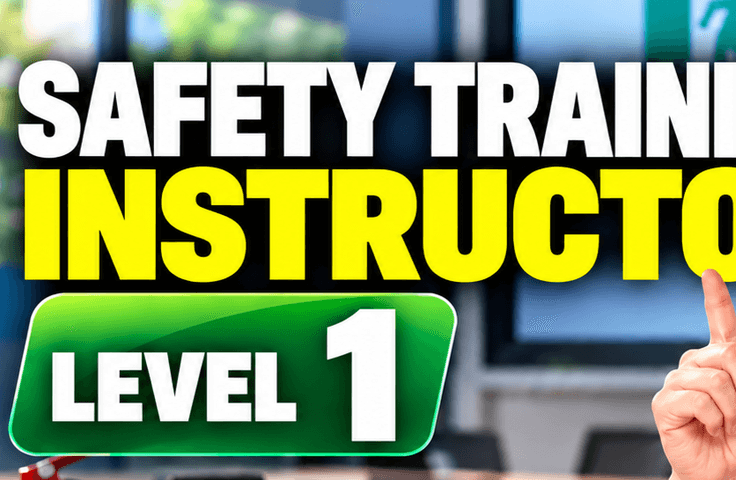
Safety Education Instructor Level 1 Certification Course - Accident Prevention and Practical Safety Management

Learn systematic knowledge for preventing and managing safety accidents that may occur in everyday life and various settings. This professional training program covers everything from basic safety theory to safety guidelines applicable in real-world environments, with the goal of obtaining the Level 1 Safety Education Instructor certification.

1 learners are taking this course

Level Beginner

Course period 3 months

risk-analysis
risk-analysis
nullsafe
nullsafe
security training
security training
product certification
risk-analysis
risk-analysis
nullsafe
nullsafe
security training
security training
product certification

What you will gain after the course

  • Learn the principles of preventing safety accidents and systematic safety management methodologies

  • Ability to establish and implement training on site-specific safety rules

  • Obtained a Level 1 Private Qualification in Safety Education Instruction


Can you look ahead of danger, rather than only after an accident?

People who prevent danger do not rely on intuition.
They develop the ability to establish accident prevention principles based on laws and real-world cases and teach safety rules suited to each situation.


You will examine the criminal liability for traffic accidents and the 12 major negligence offenses, and be able to explain on-site pedestrian protection, defensive driving, and post-accident procedures.

You will learn to design safety training that prepares people to respond to disasters and emergencies, covering everything from typhoons, flooding, earthquakes, and evacuation to CPR and automated external defibrillators.

From facility, chemical, and cybersecurity incidents to electrical and gas accidents at home and financial fraud, we examine risks in everyday life and organizations by area.

Even if you are new to the field of safety, you do not have to start with vague anxiety.
You can build your skills step by step, from basic theory to laws, case studies, and the implementation of on-site customized training, and prepare to obtain the Level 1 private certification as a Safety Education Instructor.


From traffic, disasters, and public health
to everyday life and crime safety,
learn the causes of accidents and legal responses,
as well as prevention guidelines for each setting.

You will grow from someone who vaguely worried about safety
into a safety education instructor who discovers risks and turns them into training
.


By the end of this course, you will be able to


You will develop an eye for quickly identifying risks in the field.

  • You will systematically examine risk factors that vary by situation, such as traffic accidents, fires, infectious diseases, and natural disasters, and be able to organize for yourself the items that need to be checked before an accident occurs. You will develop the criteria to determine what should be checked first at home, in workplaces, and in public-use facilities.


✔️

We build the capacity to manage safety by preparing before an accident occurs, not after.

From transportation, disasters, and public health
to crime and everyday safety

By connecting laws and implementation plans, traffic accident precedents, disaster response systems, infectious disease management, CPR, fire evacuation, and crime prevention, you establish standards for making decisions in the field. In line with the role of a Safety Education Instructor, you can personally design everything from developing educational plans to communicating safety guidelines tailored to each target group.

Learn Safety Response Through Real Accident Situations

Based on cases involving pedestrian accidents and drunk driving, typhoons, flooding, and earthquakes, the spread of infectious diseases, airway obstruction and cardiac arrest, household electrical and gas accidents, and crowd management at facilities used by many people, you will organize prevention guidelines and response procedures. You will also learn immediately applicable action standards, including evacuation, defensive driving, CPR, and the use of automated external defibrillators.

Complete training preparation using laws, case law, and disaster response materials

The course provides laws and implementation plans related to safety education, traffic accident precedents, the national disaster management system, crisis management manuals, and materials on infectious diseases, fire, and crime prevention in line with the learning flow. Using these resources, you can analyze risk factors by site, develop safety education plans and prevention guidelines, and prepare to obtain the Level 1 Safety Education Instructor certification.


📚

Learn the key principles for each type of accident
and build your on-site response capabilities

Section 1

The Safety Education Instructor system and legal framework

Understand the value and role of the Level 1 Safety Education Instructor certification, and learn the legal principles of the relevant laws, enforcement decrees, regulations, and general provisions. This section covers the establishment, implementation, and evaluation of safety education plans by the government and institutions, as well as the training of professional personnel and the management system for educational institutions.


Section 2

Traffic Accident Prevention and Traffic Safety Management

Learn about the legal concept of traffic accidents, vehicle types, criminal liability, and the 12 major traffic violations, and study key precedents involving signal violations, crossing the centerline, hit-and-run accidents, and more. Develop the ability to practice education on protecting pedestrians and vulnerable road users, preventing drunk and reckless driving, and ensuring the safety of motorcycles, personal mobility devices, and public transportation, as well as defensive driving.


Section 3

Response by Disaster Type and National Disaster Management

Understand the national disaster management system, early warning of disaster information, crisis management manuals, and evacuation and relief systems. Learn response principles for different natural disasters, including typhoons, floods, urban flooding, fine dust, cold waves, heat waves, earthquakes, tsunamis, and landslides, as well as practical measures for safety education instructors.


Section 4

Health and Safety and First Aid

Learn methods for preventing and managing musculoskeletal disorders, work-related stress, mental health issues, infectious diseases, chronic diseases, and cerebrocardiovascular diseases, along with occupational health legislation. Strengthen on-site response capabilities through training in health promotion activities, cardiopulmonary resuscitation, automated external defibrillators, airway obstruction, and first aid for everyday emergencies.


Section 5

Social Infrastructure Protection and Complex Disaster Response

Learn about the protection systems for national critical infrastructure and nationally important facilities, facility safety management, and the national disaster and safety management system. Cover crisis response and business continuity management measures for environmental and chemical accidents, biochemical terrorism, radiation disasters, disruptions to energy, water, and information and communications infrastructure, and cybersecurity threats.


Section 6

Everyday Safety and Fire & Crowd Safety Management

Learn the principles for preventing falls and falls from heights, electrical, gas, and carbon monoxide accidents, exposure to household chemical products, and crowd accidents in public-use facilities occurring at home and in public places. Based on combustion theory, firefighting equipment, smoke evacuation, and evacuation facilities, learn fire safety education and management methods suited to living environments.


Section 7

Crime Prevention and Victim Protection

Understand the structure of crime, crime prevention theories, community safety management, and personal protection methods for emerging violent crimes. Learn the preventive and protective roles of safety education instructors based on the criminal psychology behind financial fraud and voice phishing, criminal investigations and procedures, criminal punishment and treatment, and victim support.


We can address the concerns of people like these!


📌

New staff members responsible for safety management

Those who feel overwhelmed about where to begin inspecting risk factors at workplaces and educational sites, and have not been able to systematically organize response guidelines for traffic accidents, fires, infectious diseases, and disasters
Those who want to learn the basic structure of relevant laws and safety education plans and develop safety rules and training plans suited to their site themselves

📌

Middle managers at companies and facilities

Those who are responsible for both safety education and accident prevention at public-use facilities, social welfare facilities, schools, and workplaces but have difficulty developing specific measures and recurrence prevention plans after an accident
Those who want to connect traffic safety, disaster safety, health and safety, fire safety, and crime prevention safety into a single management system and reflect them in checklists and educational programs

📌

Middle-aged adults and retirees preparing to enter the safety education field

Those who want to clearly establish a learning path for understanding the role of a safety education instructor and obtaining a private certification while starting a career in a new professional field
Those who want to understand a wide range of topics, from everyday safety to CPR, first aid, disaster response, and crime prevention, and build the foundation to deliver practical training in local communities and institutions


Notes Before Taking the Course


Practice environment

  • Windows and Mac operating systems are supported.
    An internet connection and the latest web browser are required.

  • Prepare a document viewer program.
    The recommended specification is at least 4 gigabytes of memory.

Prerequisite Knowledge and Precautions

  • Beginners in safety management can also participate.
    You will learn the relevant laws and accident cases in order.

  • You should be interested in transportation and disaster cases.
    Those with field experience can apply this directly to their work.

Learning materials

  • Lecture slide materials are provided.
    Review safety-related laws and key content.

  • We use accident cases and checklists.
    Practice evacuation, first aid, and crime prevention.


Recommended for
these people

Who is this course right for?

  • Beginners in the field of safety training and those wishing to obtain certification

  • Safety managers in companies and at worksites

  • Middle-aged and retired people preparing to enter new professional fields

Need to know before starting?

  • Basic concern for safety and willingness to learn

  • Environment Required for Taking Online Video Lectures

  • A systematic commitment to self-improvement and obtaining certifications

Hello
This is smeid20194422

The Small and Medium Business Innovation Development Institute, an incorporated association, has consistently conducted its Chief Executive Officer program offline since 2019. Based on this experience, it currently offers courses such as the Safety Education Instructor program (certified by the Korea Research Institute for Vocational Education and Training), AI Writing, and Management in the AI Era.

Curriculum

All

58 lectures ∙ (23hr 44min)

Published: 
Last updated: 

Reviews

Not enough reviews.
Please write a valuable review that helps everyone!

Similar courses

Explore other courses in the same field!

Limited time deal

$207.90

30%

$297.00