inflearn logo

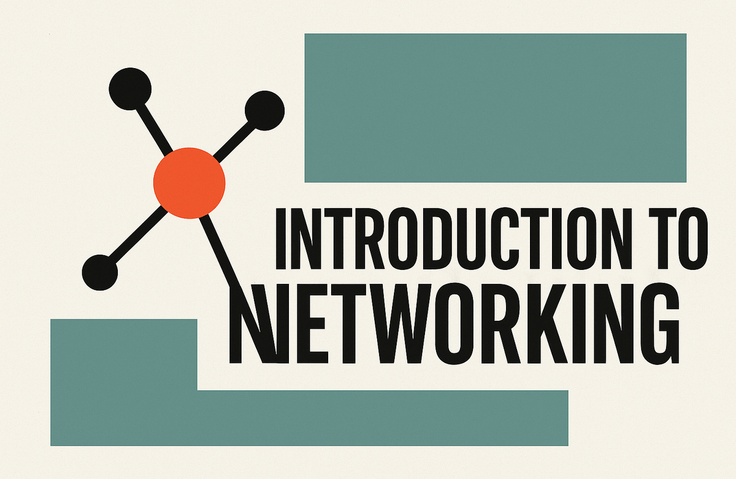
Introduction to Networking — Truly Understanding Network Fundamentals, Beyond Just a Single Ping

This is an introductory networking course for non-majors that focuses on understanding the flow of communication through visuals rather than memorizing terminology. Using the layered model as a framework, we follow the entire process of what happens when you enter a URL into the address bar from start to finish, helping you build practical networking intuition that can be applied immediately in the real world.

11 learners are taking this course

Level Beginner

Course period Unlimited

debugging
debugging
networking
networking
subnet
subnet
operating-systems
operating-systems
tcp-ip
tcp-ip
debugging
debugging
networking
networking
subnet
subnet
operating-systems
operating-systems
tcp-ip
tcp-ip

What you will gain after the course

  • Explain communication flow by layer and calculate network range using subnet masks.

  • Classifying switches, routers, firewalls, and load balancers by OSI layers and understanding their roles

  • Diagnose and resolve connection problems yourself using Ping, Traceroute, and Netstat.

Ping works, but do you know why it does?

When you run a ping command in the terminal and get a response, we say it's "connected." However, if you're asked to explain what path that response took to return, or why sometimes ping works but you still can't connect, you'll find yourself at a loss.

This course fills exactly that gap. It is not a lecture for memorizing terminology. It is a course that enables you to visualize the entire picture—from the moment you enter an address in the browser's address bar until the screen appears—of how that request travels through various devices to the server and back.

Once you grasp this big picture, you will be able to figure out where any network technology fits on your own just by asking one question: "Which layer is this about?"

Recommended for:

Junior developers who freeze up whenever networking issues arise during deployment or failure situations.

Junior operators who have tried running ping and netstat but cannot explain why they work the way they do.

Non-majors preparing for a career transition to IT who want to build a solid foundation in networking basics.

Those who can solve certification exam questions but don't have a sense of what's actually happening in practice.

Why this course is different

It explains through flow rather than rote memorization. By using the layered model as a framework and slotting in what happens at each layer, fragmented knowledge connects into a single, cohesive story.

It covers real-world pitfalls. It points out the factors that lead to actual incidents, such as why you should reduce TTL before a server migration, the difference between CLOSE_WAIT and TIME_WAIT, and why leaving management ports open to the outside is dangerous.

It teaches the process, not just knowledge. When a connection fails, the difference between a beginner and an expert lies in the order of approach, not the amount of knowledge. The diagnostic sequence of checking from the lower layers up is covered in a separate lecture.

We encourage you to type rather than just read. For each concept, we provide corresponding practice commands. Knowledge gained from reading disappears, but knowledge verified by hand remains.

Curriculum

Part 1 Basic Concepts (Lessons 1-3)
Definition of a Network, LAN, WAN, and the Internet, Circuit Switching and Packet Switching

Part 2 Layer Model (Lectures 4~6)
OSI 7 Layers, Mapping to TCP/IP 4 Layers, Encapsulation

Part 3 Lower Layers (Lessons 7-9)
Transmission Media and Ethernet, MAC Address and Switches, ARP and Broadcast Domains

Part 4 Network Layer (Lectures 10~13)
IPv4 address structure, subnetting, private IP and NAT, routing principles

Part 5 Transport and Application Layers (Lessons 14~17)
TCP, UDP, and Ports, 3-way handshake, DNS, HTTP and HTTPS

Part 6 Operations, Security, and Practice (Lessons 18-22)
DHCP, Firewall and Load Balancer, Practice Commands, Troubleshooting Steps, Next Steps Roadmap

What you will be able to do after the course

You will be able to explain the entire communication process layer by layer. You can calculate network ranges and the number of available hosts yourself just by looking at a subnet mask. You will be able to distinguish the roles of switches, routers, firewalls, and load balancers at each layer. You can diagnose basic connectivity issues on your own using commands like ping, traceroute, and netstat. Finally, when a failure occurs, you will be able to approach the problem systematically instead of just blindly rebooting.

Recommended for
these people

Who is this course right for?

  • A junior developer who gets stuck whenever network terms come up during deployment or incidents.

  • A junior engineer who has started server operations but cannot explain the principles of ping and netstat.

  • A non-major preparing for a career transition into IT who wants to build a solid foundation in network fundamentals required for practical work.

Need to know before starting?

  • Experience using computers and the internet on a daily basis

  • Experience of entering a URL in a web browser and accessing a website

  • Willingness to use the terminal (command line) to execute simple commands

Hello
This is jjangkbg7719

Career Verified

229

Learners

12

Reviews

1

Answers

5.0

Rating

8

Courses

Hello, I'm Frank.

I am an infrastructure engineer who has been wrestling with servers for over 20 years. Starting with Linux server operations, I am now in charge of the cloud infrastructure for a large-scale payment service. My daily life involves migrating from data centers to AWS, managing hundreds of instances, and tracing the causes of failures in the early hours of the morning.

The reason I created this course is simple.

I often received questions like these from those around me: "I managed to connect to the server, but I don't know what to do next." "There are so many instance types; which one should I choose?" These are the exact same points where I got stuck at first. However, when I looked for resources, I found that most of them were written for people who already knew what they were doing.

So I decided to create the course I wish I had when I first started learning.

My lectures are based on three principles.

First, I help you understand rather than memorize. Instead of just listing commands, I explain why we use them in the first place.

Second, I boldly omit unnecessary content. I do not increase the volume by including information that is useless to beginners right now.

Third, I also talk about what doesn't work. Instead of just listing the pros, I clearly point out cases where it might not be a good fit. For someone who has to make decisions in the field, that is more important.

If you feel a sense of "Ah, I should start from here" after listening to the lecture, then my goal has been achieved.

Please feel free to leave any questions you may have at any time.

More

Curriculum

All

33 lectures ∙ (42min)

Course Materials:

Lecture resources
Published: 
Last updated: 

Reviews

Not enough reviews.
Please write a valuable review that helps everyone!

jjangkbg7719's other courses

Check out other courses by the instructor!

Similar courses

Explore other courses in the same field!

Limited time deal

$3.30

62%

$8.80