
inflearn logo

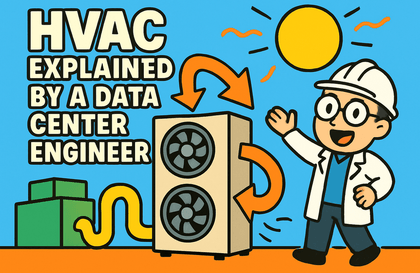
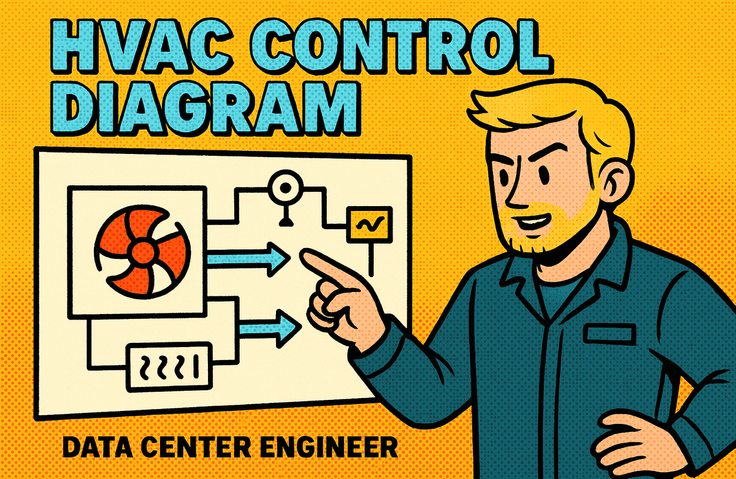
HVAC automatic control drawings explained by a data center engineer

When I moved from the field of automatic control to a construction company, the thing that flustered me the most was the fact that 'no one teaches you how to read drawings.' Under the silent pressure of being expected to know everything as an experienced hire, I struggled to decode the alien language of drawings by constantly questioning the designers and learning the hard way. By the time I became proficient enough to handle tasks on my own, I met a colleague on a commissioning team at a Middle East site who had transferred from another company. Even that veteran colleague, who had seen it all, was struggling, saying, "I've never been taught how to read drawings, so I feel lost." That was when I realized for sure: 'Ah, not knowing how to read drawings is by no means an individual's fault.' Only when you accurately understand the drawings can efficient collaboration between engineers take place. So, I began explaining how to read drawings step-by-step to my colleagues and juniors, and that experience became the backbone of this lecture. To be honest, to those who know, a drawing is just a piece of paper with lines on it, but to those who don't, it is like an undecipherable cryptogram. If you cannot break through the drawings, the entire system remains a black box that is forever difficult to grasp. Since many engineers find automatic control difficult in itself, I felt there was a desperate need for a guide that could scratch that particular itch. After taking this course, you will be able to perfectly understand not only the types of automatic control drawings but also the detailed information contained within each one. You will gain practical insight, such as knowing exactly which drawing to pull out when you need specific information. I hope this lecture, which I have prepared while working in the field for 18 years, becomes a powerful weapon you can use immediately in your work. If there is anything you are curious about or find difficult to understand while taking the course, please don't struggle alone and feel free to ask questions at any time. Just like an Uninterruptible Power Supply (UPS) that stands by to provide power even during an outage, I will always be on full standby to answer your questions.

1 learners are taking this course

Level Beginner

Course period 12 months

Project Management (PM)
Business Productivity
Interview
Interview
Self Improvement
Self Improvement
get a job
get a job
Project Management (PM)
Business Productivity
Interview
Interview
Self Improvement
Self Improvement
get a job
get a job

What you will gain after the course

  • You can understand the types of automatic control drawings.

  • You can understand the information that each automatic control drawing must display.

  • You can understand the types of control points for major HVAC equipment.

  • You can understand the start/stop sequence of the HVAC system.

  • You can understand the other systems that the HVAC system exchanges signals with.

When I moved from the automatic control field to a construction company, the thing that flustered me the most was the fact that "no one teaches you how to read blueprints." Under the silent pressure of being expected to know everything since I was hired as an experienced professional, I struggled to decode the "alien language" of blueprints by constantly questioning the designers and learning the hard way through trial and error.

Around the time I became capable of handling the work proficiently on my own, I met a colleague in the commissioning team at the Middle East site who had transferred from another company. However, even that veteran colleague, who had seen it all, was struggling, saying, "I've never been taught how to read drawings by anyone, so I feel completely lost."

That was when I realized for certain: 'Ah, not knowing how to read drawings is by no means an individual's fault.' Only when you can accurately understand drawings does efficient collaboration between engineers become possible. So, I began explaining how to read drawings step-by-step to my colleagues and juniors, and that experience became the backbone of this lecture.

To be honest, to those who know how to read them, drawings are just pieces of paper with lines on them, but to those who don't, they are like indecipherable secret codes. If you cannot break through the drawings, the entire system will remain an elusive black box forever. Since many engineers find automatic control difficult in itself, I felt there was a desperate need for a guide that could clearly scratch that itch.

After completing this course, you will be able to perfectly understand not only the types of automatic control drawings but also the detailed information contained within each one. You will gain practical insight, knowing exactly which drawing to pull out when specific information is needed. I hope this course, prepared from my 18 years of field experience, becomes a powerful weapon that you can immediately apply to your work.

If you have any further questions or find certain parts difficult to understand while taking the course, please don't struggle alone and feel free to ask at any time. Just like an Uninterruptible Power Supply (UPS) that stands by to provide power without fail even during a blackout, I will always be on full standby to answer your questions.

Recommended for
these people

Who is this course right for?

  • An engineer who wants to understand HVAC automatic control

  • An office worker who wants to change careers to the HVAC field

  • An office worker who wants to change jobs to a data center

  • A university student who wants to get a job in the data center field

Hello
This is molin

"I have added the 'breadth' of data center operations to the 'depth' of plant HVAC construction."

Hello. I am an engineer who spent the last 16 years building plants in the scorching deserts of the Middle East (Qatar, UAE, Saudi Arabia) and is now keeping the heart of mechanical and fire protection systems beating in data centers that stay awake 24/7.

I have completed over 18 major projects while working at companies such as Hyundai Engineering & Construction, Equinix, and Empyrion Digital. From Emergency Shutdown (ESD) systems in oil and petrochemical plants to cutting-edge HVAC controls in data centers, the facilities I have worked on continue to perform their roles reliably across the globe.

But these days, the "control" target I am most passionate about is not machines, but "people." With the Fourth Industrial Revolution, data centers and high-tech facilities are increasing explosively, yet there is a severe shortage of "prepared engineers" to handle them. The thirst and regret I felt at job interviews led me down a different path. I told myself, "If they don't exist, I'll train them myself."

I am a working engineer and also an 'instructor' who has met 1,450 students on the global education platform Udemy. From field workers in the desert to colleagues at global corporations, I feel the greatest thrill when my knowledge serves as the foundation for someone else's growth.

I continue to study today. I do so to convey complex technologies more easily and clearly, and to ensure our team grows stronger together. To go beyond being an engineer who excels alone and instead create an ecosystem where we succeed together—that is how I love my work.

More

Curriculum

All

8 lectures ∙ (1hr 34min)

Course Materials:

Lecture resources
Published: 
Last updated: 

Reviews

Not enough reviews.
Please write a valuable review that helps everyone!

molin's other courses

Check out other courses by the instructor!

Similar courses

Explore other courses in the same field!

Limited time deal

$78,210.00

10%

$67.10