inflearn logo

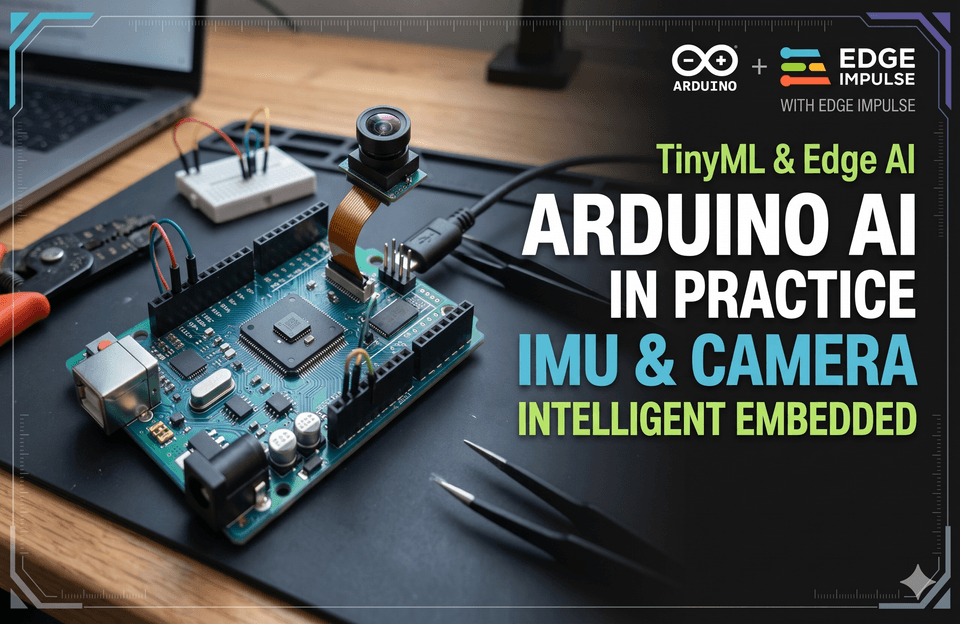
Edge AI Development with Arduino and Edge Impulse: From Sensors to Vision Deep Learning Implementation

Sensor and vision AI can feel daunting, from data collection to deployment. Drawing on hands-on troubleshooting experience, this course uses illustrations and practical exercises to guide you toward a working result. This is a practical embedded AI development course you can start without math. Using Arduino Nano BLE 33 and Nicla Vision boards, you’ll build and deploy gesture recognition and image classification models yourself. With the no-code Edge Impulse platform, you’ll gain hands-on experience with the entire process, from data collection to deploying deep learning models. Practical troubleshooting and performance improvement tips will help you develop real-world edge device development skills.

1 learners are taking this course

Level Basic

Course period 3 months

Deep Learning(DL)
Deep Learning(DL)
Arduino
Arduino
IoT
IoT
Computer Vision(CV)
Computer Vision(CV)
Embedded
Embedded
Deep Learning(DL)
Deep Learning(DL)
Arduino
Arduino
IoT
IoT
Computer Vision(CV)
Computer Vision(CV)
Embedded
Embedded

What you will gain after the course

  • Implementing AI Models for Gesture Recognition and Image Classification on an Arduino Development Board

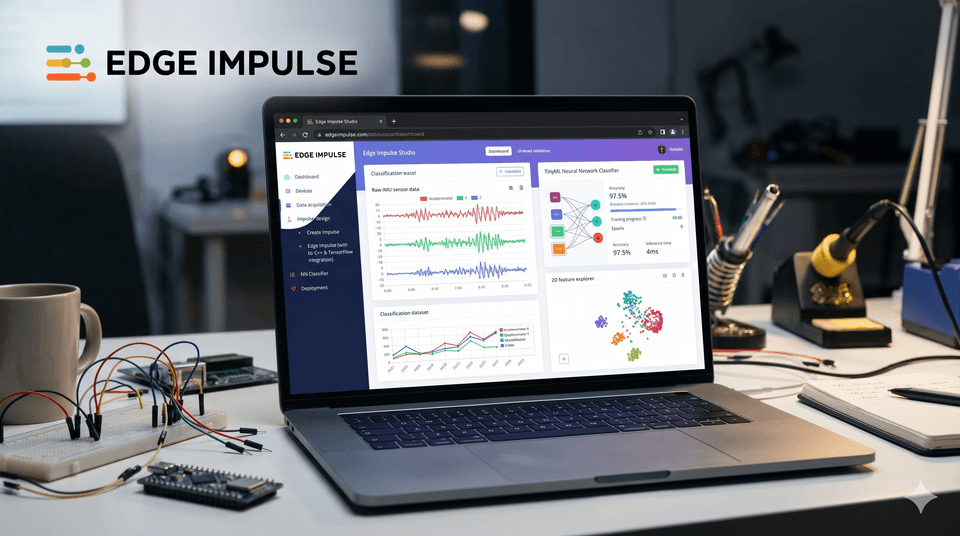
  • No-code sensor data collection, preprocessing, deep learning model training, and deployment using Edge Impulse

  • Model Performance Improvement and Practical Debugging Techniques for Edge Device Design

  • Overall Development and Design Workflow for Running AI Models on Edge Devices

  • Experience optimizing Edge AI models for lightweight deployment and understanding hardware resource requirements, including ROM, RAM, and computation time.

Edge AI Device Development with Arduino and Edge Impulse

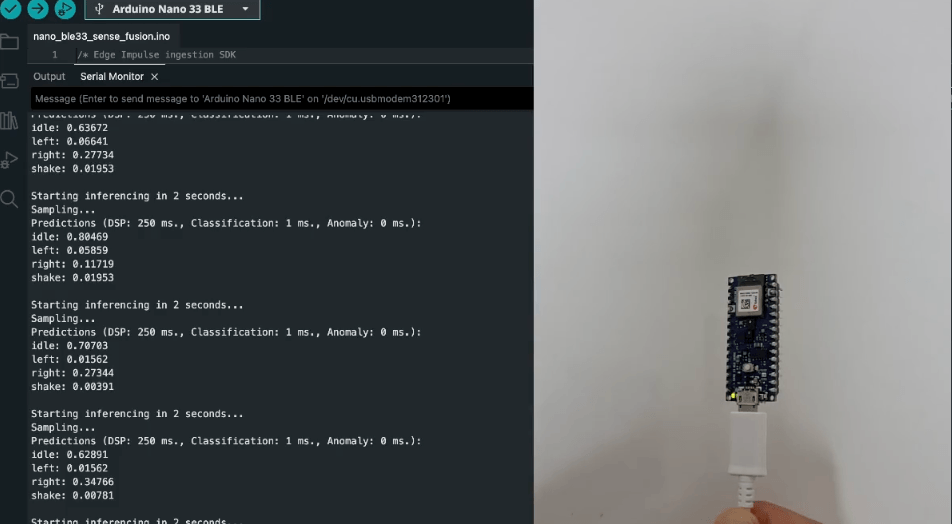
Live Gesture Recognition Demo

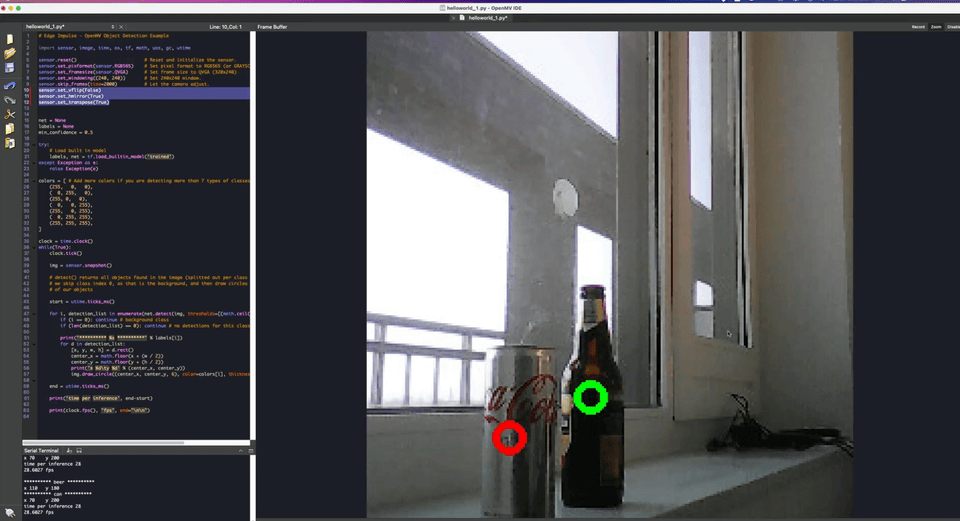
Promotional demo video for the FOMO algorithm

Build a gesture recognition device using sensor data.

Deploy a camera image classification model to the board.

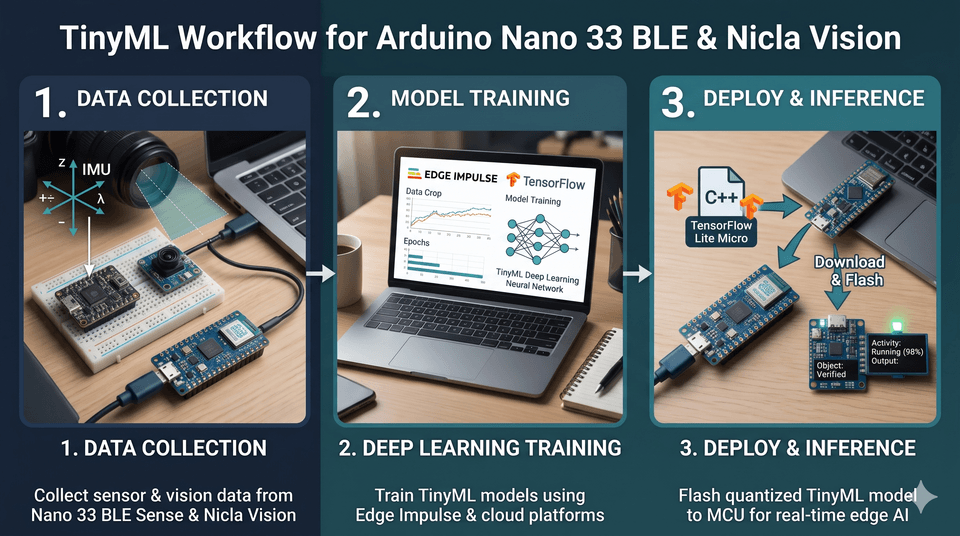
We take a hands-on approach to the entire process, from data collection to model deployment. We build a complete AI Edge Device while taking memory and computational requirements into account.

Get hands-on with every stage of AI Edge Device development.

Focus on hands-on building rather than math.
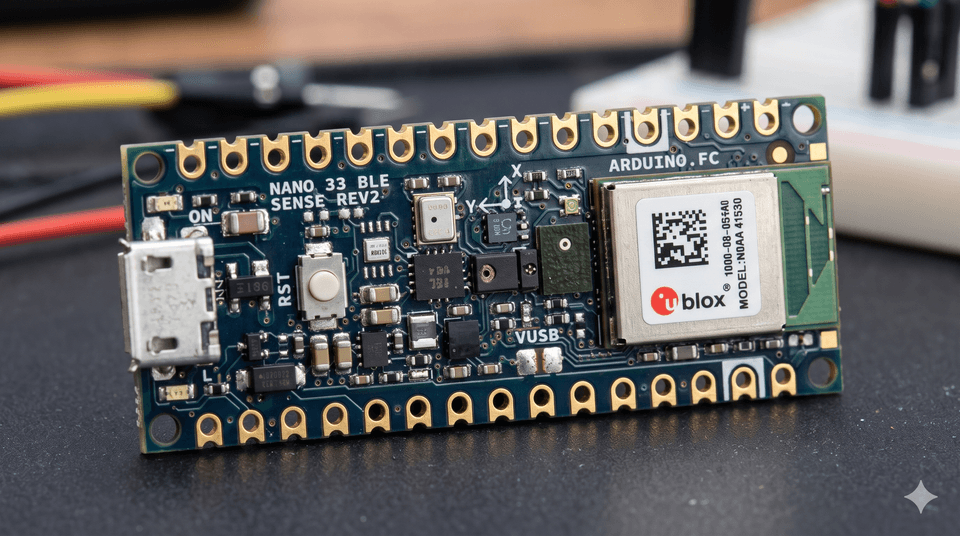
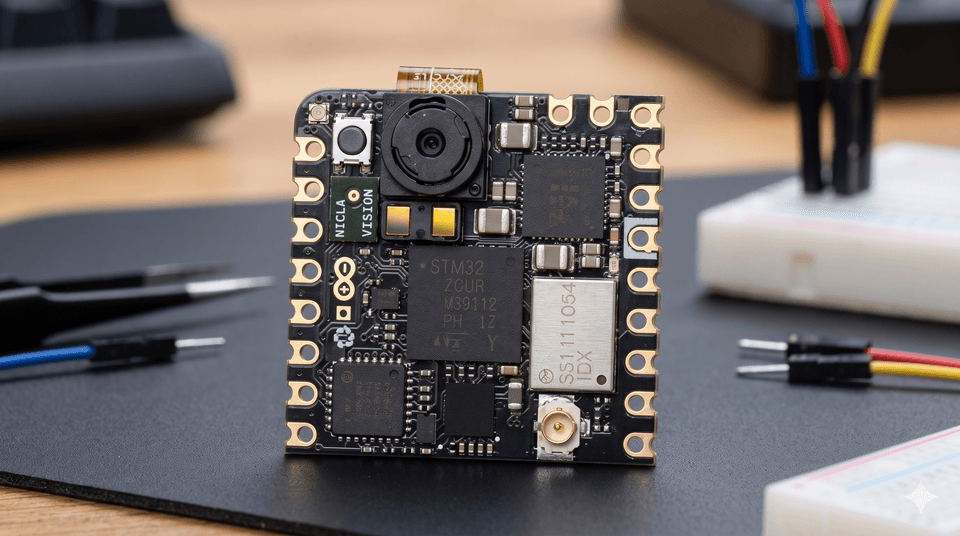
Using the Arduino Nano 33 BLE Sense, Nicla Vision, and Edge Impulse platform,
you will work through everything from collecting sensor data to preprocessing and training models.
Learn the deep learning development process for running models on small boards.

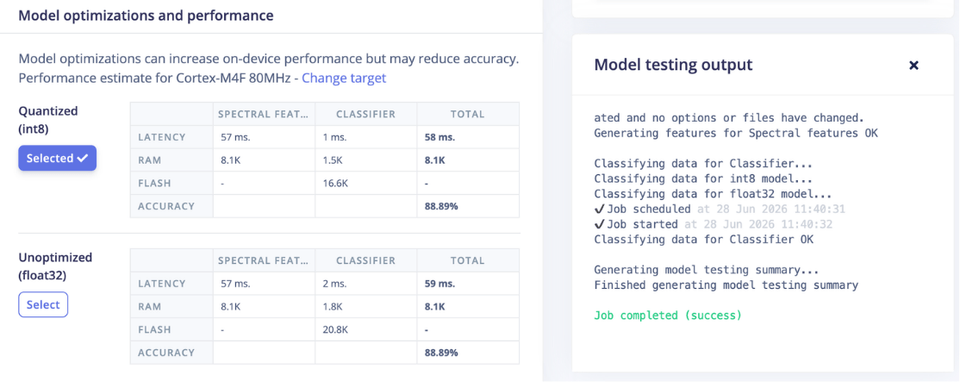
Check the computation time and required Flash and RAM sizes of the lightweight deep learning model implemented in the hands-on exercise.

Deploy the trained model to an Arduino development board.
Experience the entire edge AI development process, from preparing sensor and camera data to running the model,
and check hardware constraints such as memory and processing time.

Implement everything directly on the board, from sensors to vision

Deep Learning Model Training with Edge Impulse

Section 1 - Overview of Edge Impulse and Lightweight Deep Learning

Explore the role and key features of Edge Impulse, and learn the fundamentals of edge AI for running lightweight deep learning models on Arduino.

Section 2 - Arduino Nano Gesture Recognition Project

Set up the development environment, collect and preprocess sensor data, and train a gesture recognition model. Deploy the trained model to the Arduino Nano development board and verify its operation, learning the process of completing the project.

Section 3 - Nicla Vision Image Classification Project

Use the Nikla Vision development board to collect image data and train and evaluate an image classification model. Deploy the model to an edge device, check the inference results, and learn the workflow for implementing vision-based edge AI.

From Sensors to Deployment

Want to build AI with sensor data but not sure where to start?
This course was made just for you.


✔️ Beginners who want to get started with edge AI without the math hassle

  • For those who want to learn AI by building things themselves rather than focusing on formulas

  • Those who want to gain hands-on experience step by step, from collecting sensor data to deploying a model

  • Those who want to create a gesture recognition model that runs on Arduino

✔️ Embedded and IoT developers

  • Those who want to add AI capabilities directly to existing devices

  • Those who want to learn how to deploy models on devices while accounting for memory and computational requirements.

  • Those who want to learn practical debugging and performance optimization through projects

✔️ Students and developers who want to build a working prototype quickly

  • Anyone who wants to build a hand gesture recognition device with an Arduino Nano

  • For those who want to implement image classification with Nicla Vision

  • For those who want to complete a working project from data preparation through deployment on a device.


Build a device that can interpret information captured by its sensors and camera right on the device.
Your own edge AI project will be a solid starting point for your next challenge.

Notes Before Enrolling


Setup

  • Use a browser on Windows, macOS, or Linux.

  • Arduino IDE, Edge Impulse, and an internet connection are required.
    Prepare an Arduino Nano 33 BLE and a Nicla Vision board.
    A computer with at least 8 GB of memory is recommended.

Prerequisites and Notes

  • Prior knowledge of mathematical AI is not required.
    Basic coding experience will be helpful for the exercises.

  • Classify gestures using sensor data,
    and build an image classification model using camera footage.
    Please prepare a board and a USB data cable.

Learning materials

  • Review the lecture slides and practice code together.
    You can follow along from data collection to model deployment.

  • Keep the Arduino board manual and your practice notes handy.
    This makes it easy to compare model settings and run results.


Recommended for
these people

Who is this course right for?

  • Learners in middle school and above who want to get started with embedded deep learning without any mathematical knowledge of AI.

  • A developer who wants to quickly build an AI edge device prototype

  • Embedded and IoT developers seeking to acquire AI skills

  • A university student who needs to complete an embedded project quickly but isn’t sure what kind of project would deliver the best results.

  • An expert who finds repetitive embedded development tedious

Need to know before starting?

  • Understanding of basic programming concepts (variables, functions, conditional statements, etc.)

  • Basic knowledge of Arduino or microcontrollers

  • Experience with Computer Applications and Development Environment Setup

Hello
This is miotmaker

Career Verified

Edge AI · IoT · Embedded

From a Master's in wireless communication to mass production development at startups and large corporations.

Supporting the growth of Edge AI, IoT, and embedded developers based on practical experience.

---

👨‍💻 7th-year Embedded Software Developer

🎓 M.S. in Computer Science and Engineering, Seoul National University


More

Curriculum

All

9 lectures ∙ (1hr 30min)

Published: 
Last updated: 

Reviews

Not enough reviews.
Please write a valuable review that helps everyone!

Similar courses

Explore other courses in the same field!

Limited time deal

$3,259.00

48%

$38.50