강의

멘토링

커뮤니티

AI Technology

/

etc. (AI)

Manufacturing Innovation and AI Big Data for CEOs and Leaders

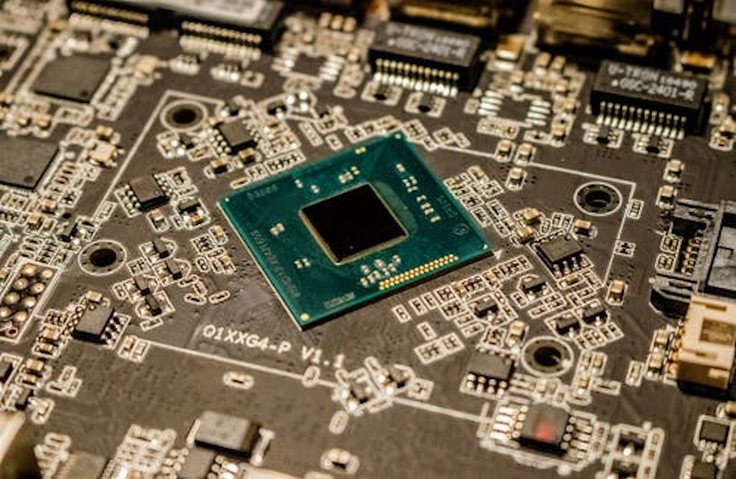
You can benchmark manufacturing innovation strategies for semiconductors and run machine learning and deep learning on semiconductor data without coding.

(4.0) 1 reviews

16 learners

Level Basic

Course period Unlimited

  • 1159136
AI
AI
Machine Learning(ML)
classification
classification
AI
AI
Machine Learning(ML)
classification
classification

What you will gain after the course

  • Semiconductor Big Data AI Cases

  • NO CODING(Orange 3) implementation

Lecture Summary📖

1) What kind of data will be collected in semiconductor and display manufacturing sites to drive innovation activities?
2) As a CEO and leader, is there any way to know whether a project that introduces artificial intelligence is progressing properly?
3) Is it possible to freely use machine learning or deep learning without coding?


Target audience👨‍💻

1) CEOs and executives who want to introduce artificial intelligence through manufacturing-related innovation activities.
2) Leaders of organizations seeking to introduce artificial intelligence in manufacturing
3) Those who want to implement artificial intelligence, machine learning, and deep learning without coding.


Expected effect💁‍♂️

1) You will be able to benchmark manufacturing innovation plans for semiconductor and display big data and come up with ideas on how to introduce them in your own domain.
2) You can freely experiment with machine learning and deep learning without coding and select the optimal artificial intelligence algorithm.
3) By acquiring the ability to derive insights through machine learning and deep learning algorithms using each domain's data, you can improve the field.

Curriculum📕

Lecture 1. Semiconductor Display Manufacturing Innovation and AI Big Data (Innovation Cases: Production, Yield, Quality)
Lecture 2 : Semiconductor Display Manufacturing Innovation and AI Big Data (Innovation Cases: Infrastructure, Environmental Safety, Energy)
Lesson 3 : Preliminary Preparation / Data Preprocessing and Visualization
Lecture 4 : Data Preprocessing and Visualization / Machine Learning (Classification: k-NN)
Lecture 5. Machine Learning (Classification: Logistic Regression, Tree, Random Forest, SVM)
Lecture 6. Machine Learning (Classification: Naïve Bayes, Neural Network)
Lecture 7. Machine Learning (Classification: Stacking, Adaboost / Regression: k-NN, Tree, Random Forest, Linear Regression, Linear Regression, Neural Network, Bias and Variance, Ensemble and Bagging, Boosting, XGBoost, Stacking)
Lecture 8. Machine Learning (Image Classification, Clustering: k-Means, Hierarchical Clustering) /
Deep learning (DNN, CNN)

10 Reasons Why AI Training for CEOs, Executives, and Leaders Is Important
1. If the CEO/executive doesn't do it first, no employee will.
2. Artificial intelligence is not something that can be left to employees and carried out on its own.
3. If CEOs/executives only have an abstract understanding of AI, they will not be able to make sound decisions.
4. AI experts are expensive, making it difficult to hire them arbitrarily. Even if they were hired, it's difficult to know what questions to ask and how to ask them during interviews, and even to determine whether their answers are correct or incorrect.
5. Training employees can be very cost-effective and time-saving, but the CEO/executive must first know how to train them.
6. Ideas for AI implementation should come from the CEO/executive who has the most comprehensive knowledge of the business system.
7. When CEOs and executives learn about AI themselves, they realize that implementing AI is not that difficult.
8. If the CEO or executive leading the project doesn't understand AI, the project could easily go astray. If they envision an AI at the level of AlphaGo, only to find that its performance falls short of expectations, they could immediately revert to their original methods.
9. Once you learn what AI really is, your expectations and ambitions will be lowered, and you will start thinking about ways to improve accuracy.
10. Ultimately, the CEO/executives make all the decisions about this, so if they don't know the details, they can't do anything.
(Source: Book , author Jang Dong-in, publisher Hanbit Media)

💾 Things to note before taking the class

This lecture is a re-edited version of an online seminar conducted via video conference. Please note!
Depending on your environment, the sound quality may feel uneven. Please check the preview lecture before attending!

  • All you need is a computer (desktop or laptop).

  • A higher spec computer may run faster, but there won't be a huge difference.

  • We use Orange, an open-source data mining toolkit. Please download and use it fromthe link .

  • The semiconductor dataset files for the practice are attached in Section 0-Unit 3.

Recommended for
these people

Who is this course right for?

  • CEOs and executives keen on AI adoption through manufacturing innovation.

  • Organizational leaders seeking to adopt manufacturing-related AI

  • Those who wish to implement Artificial Intelligence, Machine Learning, Deep Learning without coding

Hello
This is

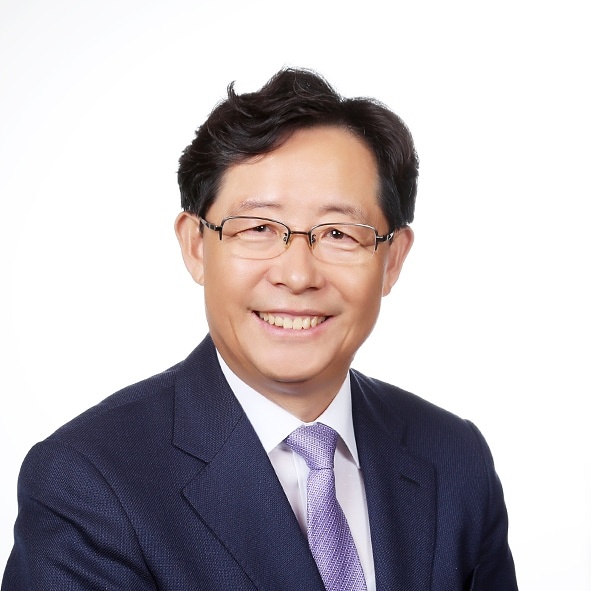
After majoring in electronic engineering at Kwangwoon University, the aforementioned consultant worked in the semiconductor division of Samsung Electronics for 27 years from 1984 to 2011. During this time, he served as the Manufacturing Team Leader and Head of the Manufacturing Center, as well as the Head of the Infrastructure Technology Center overseeing environmental safety, facilities, and systems. After concluding his career in semiconductors as an Executive Vice President, he served as the Vice President of Samsung Display (OLED) for five years from 2011 to 2016, where he was the Head of the Manufacturing Center and General Manager of the complex, responsible for production, environmental safety, facilities, and systems. He earned his MBA from the Seoul School of Integrated Sciences & Technologies (aSSIST) and Business School Lausanne (BSL), followed by a Ph.D. and a DBA in Big Data from the Business School Lausanne in Switzerland. Currently, he is a professor at the Swiss School of Management (SSM), a research professor at the Korea Institute for Industrial Policy Studies, and the Vice Chairman of the Artificial Intelligence Association, while also leading manufacturing intelligence projects.

After majoring in electronic engineering at Kwangwoon University, the consultant spent 27 years from 1984 to 2011 at Samsung Electronics' semiconductor division, serving as Manufacturing Team Leader and Head of the Manufacturing Center before becoming Head of the Infrastructure Technology Center, where he oversaw environmental safety, facilities, and systems. After completing his career in semiconductors as Senior Vice President, he served as Executive Vice President at Samsung Display (OLED, LCD) for five years from 2011 to 2016, where he was Head of the Manufacturing Center and Complex Manager responsible for production, environmental safety, facilities, and systems. After retiring, he obtained a Big Data MBA, Ph.D., and DBA from aSSIST University and Business School Lausanne (BSL) in Switzerland. He is currently serving as a professor at the Swiss School of Management (SSM), a research professor at the Korea Institute for Industrial Policy Studies, and Vice Chairman of the Korea Artificial Intelligence Association, where he leads the Manufacturing Intelligence Business Division.

Curriculum

All

9 lectures ∙ (7hr 11min)

Course Materials:

Lecture resources
Published: 
Last updated: 

Reviews

All

1 reviews

4.0

1 reviews

  • jhlee06096671님의 프로필 이미지
    jhlee06096671

    Reviews 1

    Average Rating 4.0

    4

    89% enrolled

    • 1159136
      Instructor

      I'm glad it was helpful. Thank you.

$77.00

Similar courses

Explore other courses in the same field!