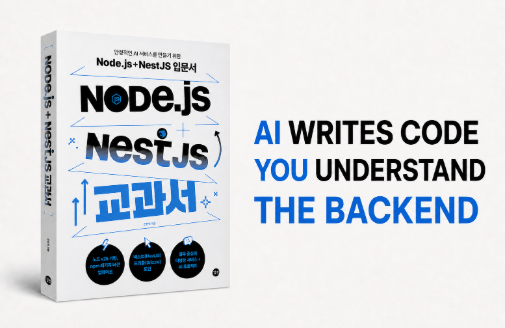
A practical condensation of the <Node.js + NestJS Textbook>, updated for the AI era!

This course helps you understand the entire flow of backend development by building everything from an HTTP server to an AI service step-by-step. You will develop the ability to read and understand AI-generated code while learning core concepts such as servers, databases, HTTP, login, and deployment, along with practical applications of Node.js, Express, and NestJS through hands-on practice.

81 learners are taking this course

Level Basic

Course period Unlimited

Node.js
Node.js
Express
Express
TypeScript
TypeScript
NestJS
NestJS
database
database
Node.js
Node.js
Express
Express
TypeScript
TypeScript
NestJS
NestJS
database
database

What you will gain after the course

  • Understanding the core concepts of server, client, login, HTTP, database, and deployment

  • The ability to read and understand the flow of server code implemented by AI

  • A perspective that connects scattered backend concepts into a single service architecture

  • Understanding Node.js-based server architecture and database integration principles

In an era where AI implements code,

What kind of skills will be important?


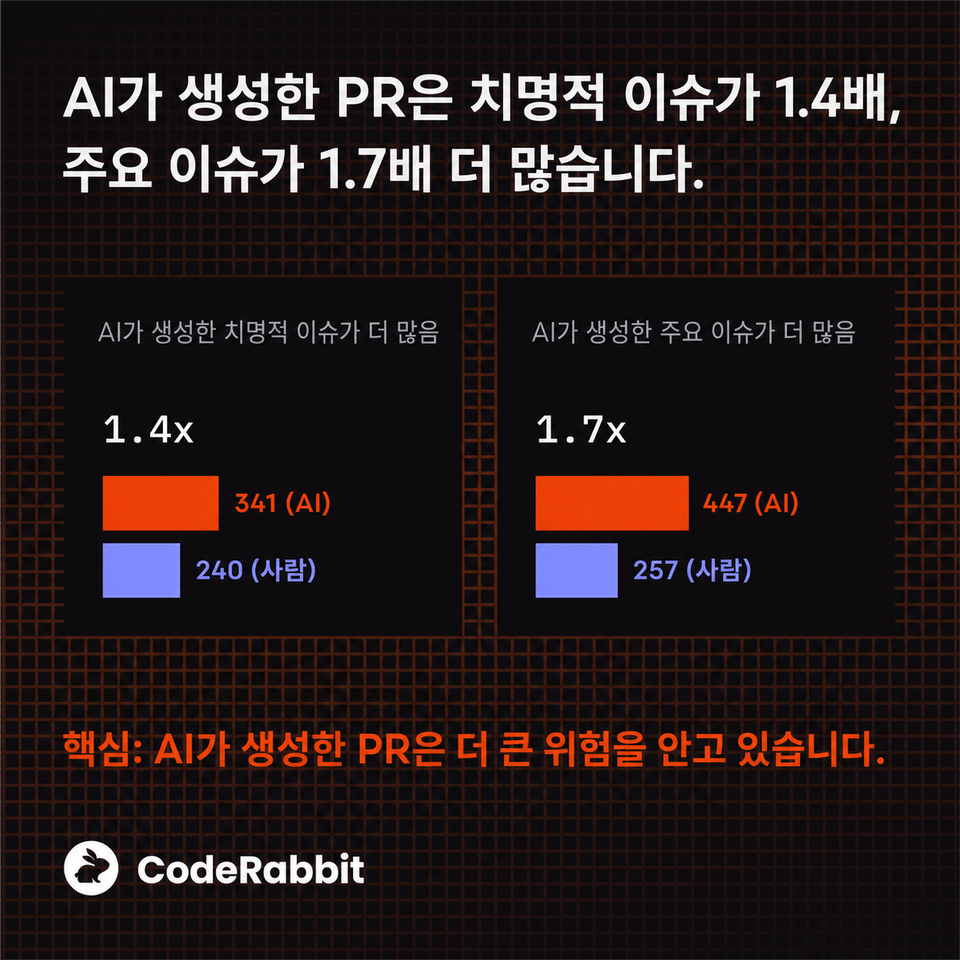
AI writes code thousands or tens of thousands of times faster than humans. However...

AI code contains many more risks.

That is why you shouldn't rely on it 100%. Now...

1. The ability to read and understand code generated by AI
2. Accurately understanding concepts to give correct instructions

These two are the core skills.


Are you able to answer the following questions yourself?

1. How servers and clients communicate
2. What roles cookies and sessions play in the login process
3. What structure data is stored in within a database
4. How services are deployed


AI can explain each concept to you.

However, when you try to understand one concept, ten new ones pop up!
In this lecture, we will clearly organize the
big picture of how each concept is connected within an actual service.

From server and client, to request and response

Open the basic server code and trace the process of a client's request arriving at the server and returning as a response.

Up to the process where login and data storage are connected

Understand the code for sign-up, login, social login, cookies, sessions, and image uploads through an Express project.

From TypeScript, NestJS, and AI services to deployment

We will convert an existing JavaScript project to TypeScript and deploy NestJS SNS and AI assistant apps to AWS.

Why Node.js and NestJS?
By using JavaScript and TypeScript, you can build both the client and server with the same language. Node.js excels at handling numerous asynchronous requests and is ideal for quickly building AI services by leveraging various AI SDKs and the npm ecosystem.

Unlike high-freedom frameworks like Express, NestJS clearly divides the roles and flow of code into modules, controllers, providers, and guards. Therefore, even as the scale grows, it is easy to understand the structure, and it is easy to determine where to start reading and modifying AI-generated code.


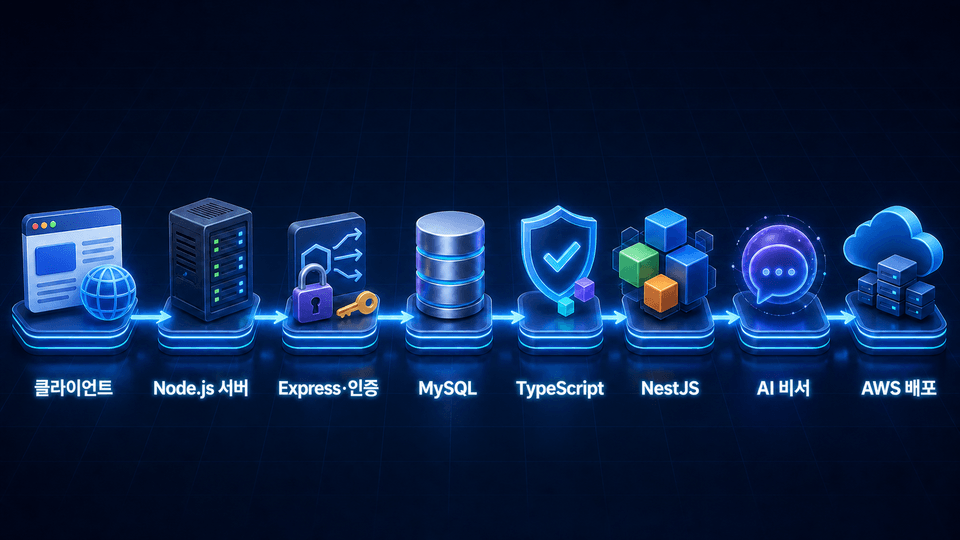
From web servers to authentication, databases, and AI agents
we will read real-world project code together
ranging from Node.js, Express, and TypeScript to NestJS.

You will grow into a developer who can read, judge, and modify AI-generated code, rather than just stopping at running it.


By the end of this course, you will be able to

Result 1: You will be able to trace the flow of server code implemented by AI

  • You will be able to explain the process of a client's request arriving at the server and returning as a response after passing through the router, authentication, business logic, and database. Even when encountering unfamiliar server code, you will be able to determine where to start reading.

Result 2: You can explain the connections between scattered back-end concepts

  • You can explain the roles of servers and clients, cookies and sessions, and logins and databases, as well as how they connect to each other within the overall service flow.

Outcome 3: You will be able to determine which points to check before modifying your code

  • When an error occurs, instead of blindly changing the code, you will be able to establish criteria for determining whether to check the request, authentication status, data retrieval, environment variables, or deployment settings first.

✔️

Practical learning to understand the
concepts and connection structures needed to read AI-generated code

From the principles of HTTP servers
to connecting NestJS and AI services

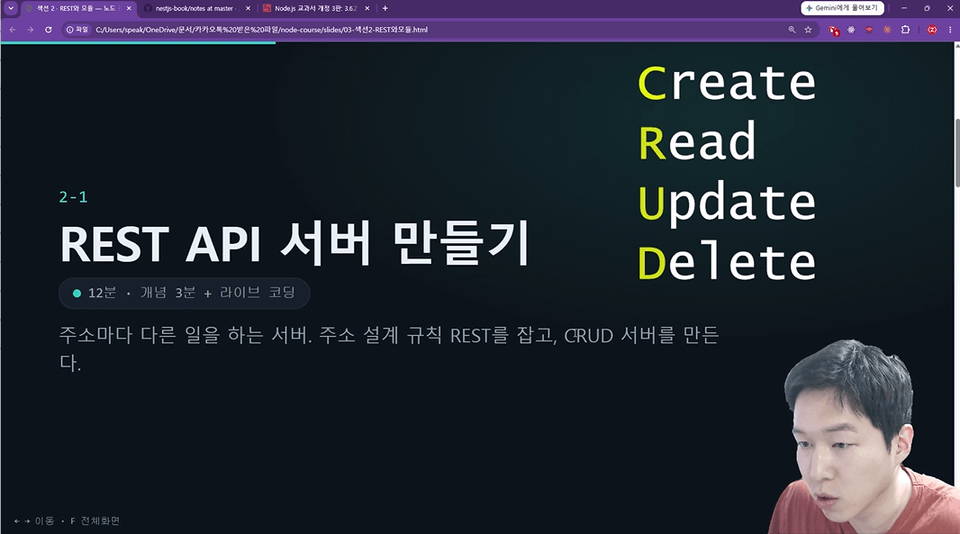
Create your first server with Node.js and implement it step-by-step, covering REST APIs, status codes, module systems, middleware, and even database and authentication structures.
Transition from Express to TypeScript and NestJS to personally experience the code flow and scalable backend architecture.

A project to directly implement NodeBird SNS and AI Agents

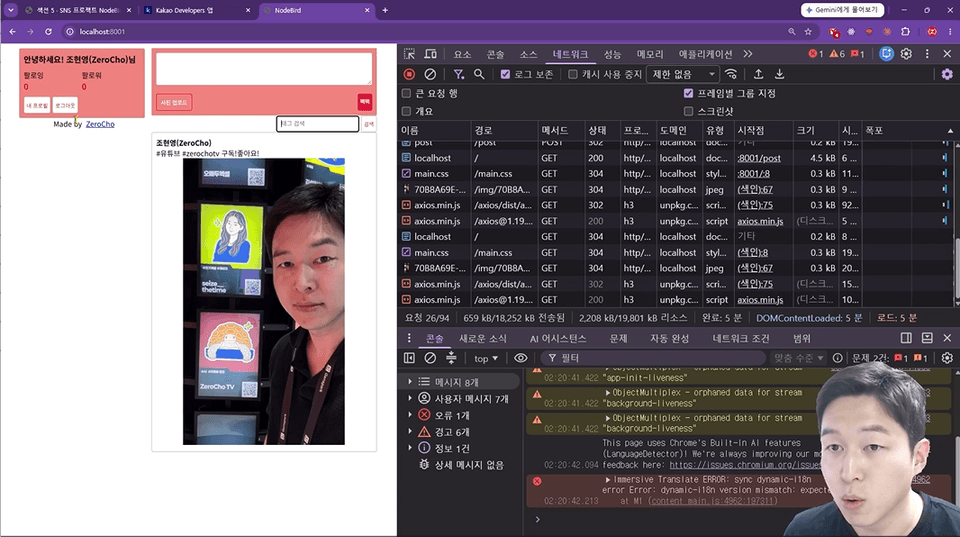
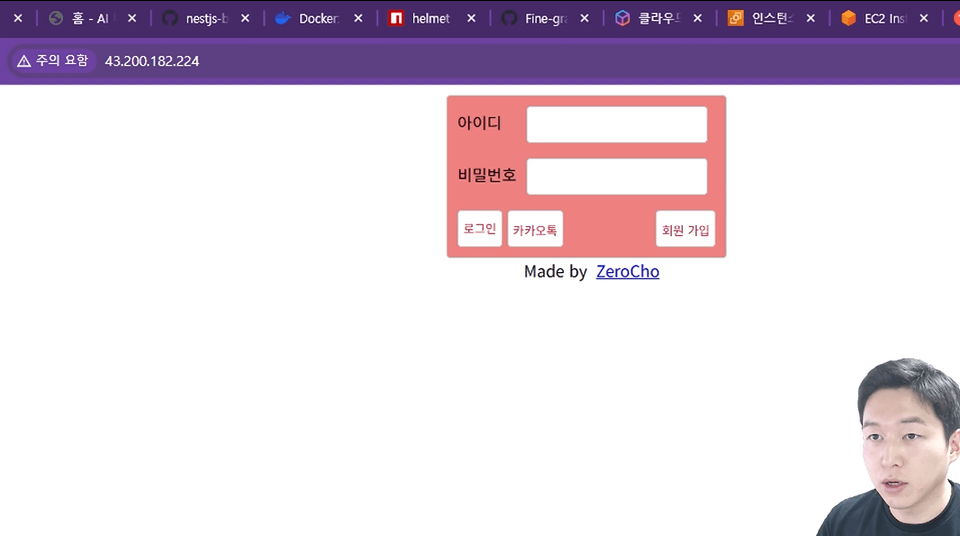
We will incorporate features such as sign-up and login, Kakao login, cookies and sessions, image uploads, follows, and hashtags into NodeBird SNS.
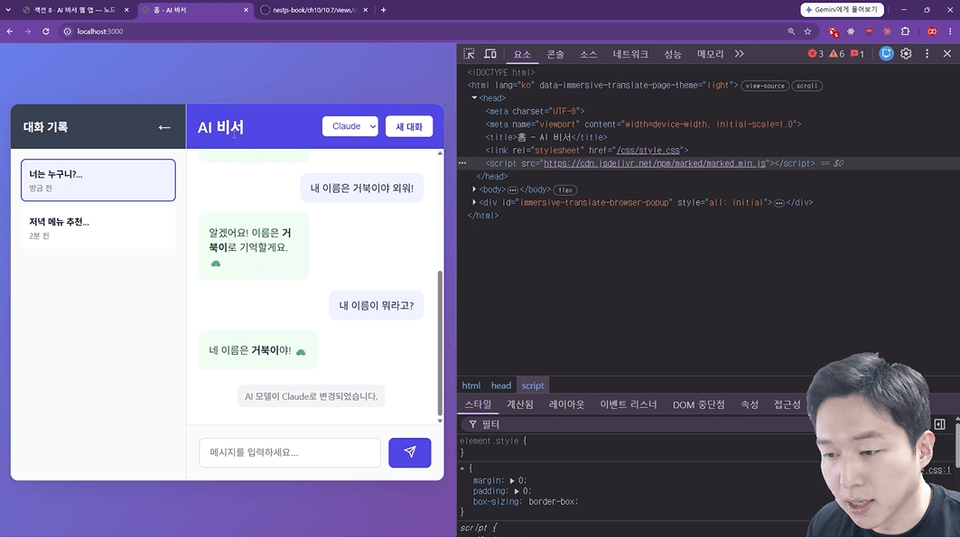
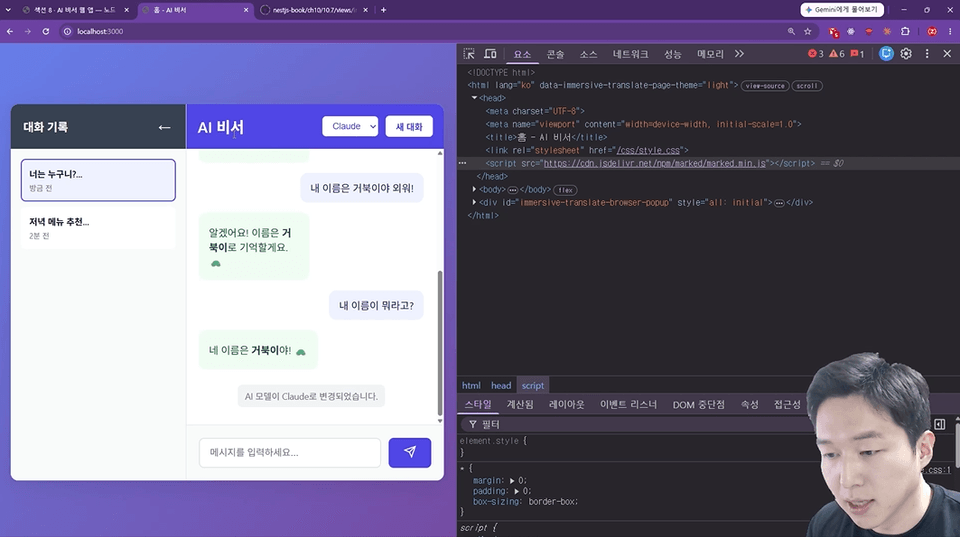
Afterward, we will build an AI Agent service that connects various AI models and manages chat rooms and conversation history.

Check the code flow and deployment process of the hands-on project together

In the course, we cover everything from database integration code using Drizzle ORM to the configuration of NestJS modules, providers, guards, pipes, and DTOs using actual project code.
By managing versions with Git and GitHub and proceeding with AWS deployment, you will be able to make your service available for others to use!

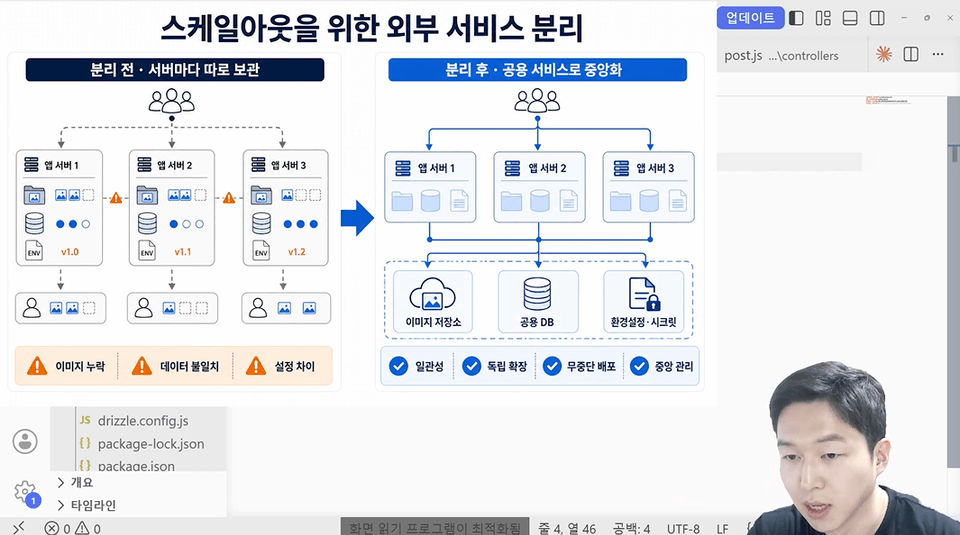
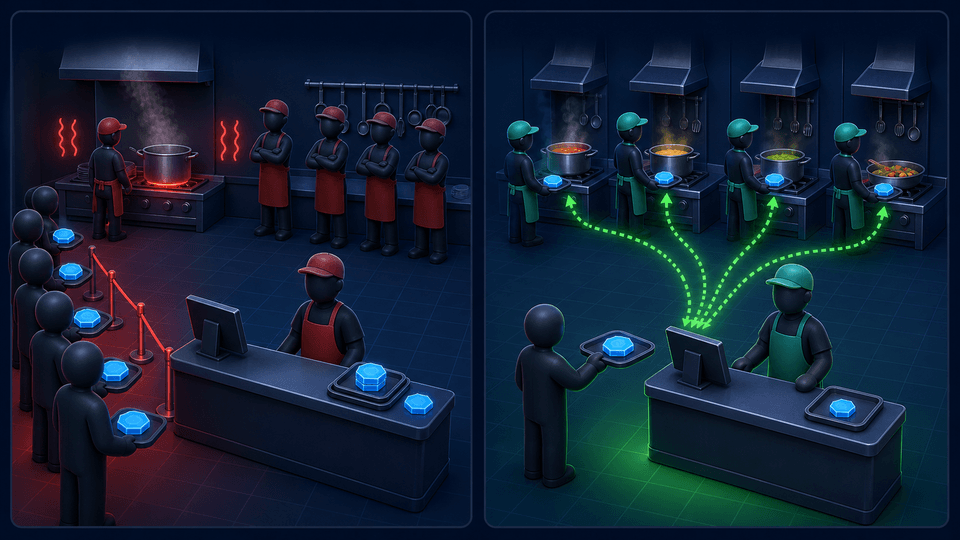
Providing PPTs, supplementary notes, and infographics to aid understanding

Explanations can be difficult with words alone, so visual aids are always better, right? That's why I explain everything with over 100 images! Since it's a shame to miss parts covered in the book but not in the lectures, I also provide 8 pages of supplementary notes!


📚

A practical journey to personally complete everything from HTTP servers to AI services

Section 1

Basic Concepts of Server and Node

Learn the operating principles of a server by installing Node and building an HTTP server yourself. Practice core Node concepts such as file reading, automatic restarts, buffers and streams, and asynchronous processing.


Section 2

REST API and Module Systems

Create a REST server using Node's basic features and learn the meaning and application of HTTP status codes. Additionally, understand the differences between the two module systems used in JavaScript and how to apply them.


Section 3

Utilizing the Express Framework

Learn how to install external code using a package manager and configure a server with Express. Build a practical web server by utilizing middleware, static files, cookies and sessions, router separation, error handling, and template engines.


Section 4

Database and ORM

Learn the basic principles of using a database on a server and the process of data integration. Practice defining schemas and performing database queries and manipulations using an Object-Relational Mapper.


Section 5

Practical Project: NodeBird SNS

Complete a social network service by implementing Git-based version control, project structure, many-to-many relationships, sign-up and login, Kakao login, and image uploads. Learn the practical backend workflow by developing server separation, hashtags, follows, and other service features.


Section 6

Introducing TypeScript

We will transition the existing Node project to TypeScript, applying static typing, type definitions, and the compilation process. You will learn how to improve server code to be more type-safe and easier to maintain.


Section 7

Transitioning to the NestJS Framework

Configure NestJS applications based on modules, guards, middlewares, and providers. Practice authentication, lifecycle, interceptors, circular dependencies, exception filters, parameter decorators, rendering, pipes, Data Transfer Objects (DTO), and the principles of Dependency Injection (DI).


Section 8

Hands-on Project: AI Agent Service

Build an agent service by connecting multiple AI models and implement chat screens and chat room management features. Complete an AI-based backend application by saving chat history, adding custom AI providers, and expanding agent functionalities.


Section 9

Service Deployment and Operation Preparation

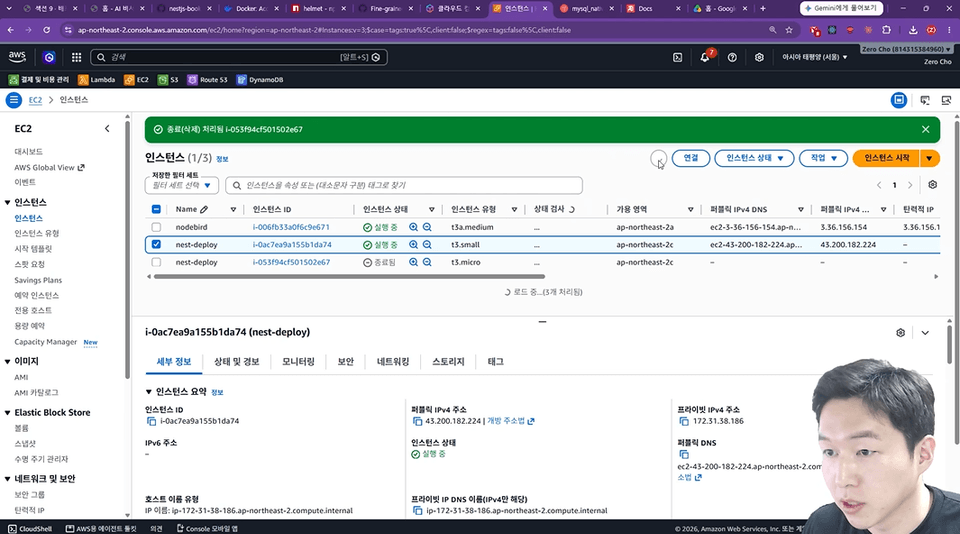
Prepare the environment for project deployment and manage the source code using Git and GitHub. Complete the process of deploying the server to Amazon Web Services and launching the AI agent service in a production environment.


We can solve the concerns
of people like this!

📌

JavaScript developers preparing to enter backend development

This is suitable for those who can build screens but find the process of requests being processed by a server and stored in a database vague. You can grasp the entire flow of the backend by reading actual code in order, from a basic HTTP server to authentication and data storage.

📌

Frontend-focused junior developers

It is suitable for those who find it difficult to know whether to check status codes, cookies, sessions, or authentication processing when an API error occurs. You will be able to understand the process of how a request from the screen passes through Express and the database to return as a response.

📌

Aspiring entrepreneurs building services with Vibe Coding

This course is suitable for those who have succeeded in running server code written by AI but struggle to explain where logins are processed or where data is stored, or find it difficult to fix errors. You will be able to grasp the entire structure, ranging from TypeScript, NestJS, and AI model integration to cloud deployment.


Things to note before taking the course


Practice Environment

  • The practice will be conducted on Windows (it can also be done in a Mac environment).

  • Node.js, VS Code, and Git are required (installed during the course).
    A minimum of 8GB of RAM is recommended.

  • The AI assistant app practice may require API keys for AI services. In the AWS deployment practice, costs may be incurred during the account creation and service usage process, so you must check for potential charges.

Prerequisites and Important Notes

  • The course proceeds on the assumption that you have a basic understanding of JavaScript syntax.

  • Even if you are not familiar with the grammar, you can take the course if you are able to follow along by getting a general grasp of it with the help of AI.

  • This is not a lecture that teaches coding, but rather a lecture on server structure, operating principles, and concepts.

  • It will be helpful to have a foundation in frontend and web basics when taking this course.

Learning Materials

  • We will use the code from the lecture screen and the practice materials. Everything is available on GitHub.

  • On GitHub, the slides folder contains the lecture PPTs, and the notes folder contains the supplementary material notes.

  • Please note that there are infographic images in the ch5, ch6, and ch9 folders.

Recommended for
these people

Who is this course right for?

  • Developers who know the basics of JavaScript and want to start backend development

  • A frontend developer who wants to improve their server development skills

  • A vibe coder who codes by vibe but wants to understand the principles of the server.

  • Learners who want to learn how to use Node.js and the NestJS framework in practice

Need to know before starting?

  • Understanding basic JavaScript syntax and asynchronous processing concepts

  • Basic knowledge of HTML/CSS and understanding of how the web works

  • Basic experience using the terminal (Command Line)

Hello
This is zerocho

Inflearn Verified

Career Verified

68,549

Learners

1,810

Reviews

9,774

Answers

4.8

Rating

28

Courses

One of the key strengths of my courses is the Q&A support (Winner of the Inflearn Q&A King award twice). I respond to your questions within 24 hours, doing my best to help you out! I’ll answer your questions with the mindset that we are tackling the problems together!

One of the key strengths of my courses is the Q&A support. (Winner of the Inflearn Q&A King award twice) I respond to your questions within 24 hours, doing my best to help you out! You’ll feel like we’re solving the problems together.

👉ZeroCho Lectures
ZeroCho's full lecture roadmap. A complete roadmap of all my courses is available here.

– Author of Node.js Textbook, Self-Guided JavaScript by ZeroCho, Let's Get IT JavaScript, and TypeScript Textbook
ZeroCho.com Operator
– Currently) Broadcasting development-related content on ZeroCho TV via YouTube
– Formerly) Smoretalk CTO
– Formerly) CTO of Today's Pickup (Youngest Development Team Lead at Kakao Mobility after exit to Kakao Mobility)

  • Author of Node.js Textbook, Self-Guided JavaScript by ZeroCho, Let's Get IT JavaScript, and TypeScript Textbook

  • Operator of ZeroCho.com

  • Currently running a YouTube channel ZeroCho TV, covering development topics

  • Former CTO at SmoreTalk

  • Former CTO at Today Pickup (acquired by Kakao Mobility, where I became the youngest lead developer)

More

Curriculum

All

50 lectures ∙ (6hr 36min)

Course Materials:

Published: 
Last updated: 

Reviews

Not enough reviews.
Please write a valuable review that helps everyone!

zerocho's other courses

Check out other courses by the instructor!

Similar courses

Explore other courses in the same field!

Limited time deal

$741,563.00

28%

$38.50