Practical Data Science Part 1. Introduction to Python
This course is for those who need to introduce data analysis, machine learning, AI, etc. to their work but are not familiar with Python programming. You will systematically learn the core functions of Python required to become a data scientist in a short period of time.
This is the easiest Python course I've seen for beginners recently, and it's easy to understand. I think it's a good course for laying the foundation.
5.0
김선욱
13% enrolled
It was not difficult at all because it explained only the necessary content in an easy-to-understand manner, and it was a great help in reviewing basic concepts that I had forgotten.
5.0
이현수
100% enrolled
Even if you are not familiar with programming, this lecture was really helpful because it explained the core concepts of Python for applying artificial intelligence to practice in an easy-to-understand manner, even though it was a short lecture! I think it was a lecture that extracted the maximum efficiency in the minimum time!!
What you will gain after the course
Python core functions for implementing data analysis and machine learning models
Basics of handling data and processing file input/output
Contains only the essentials! Essential Python for Data Analysis
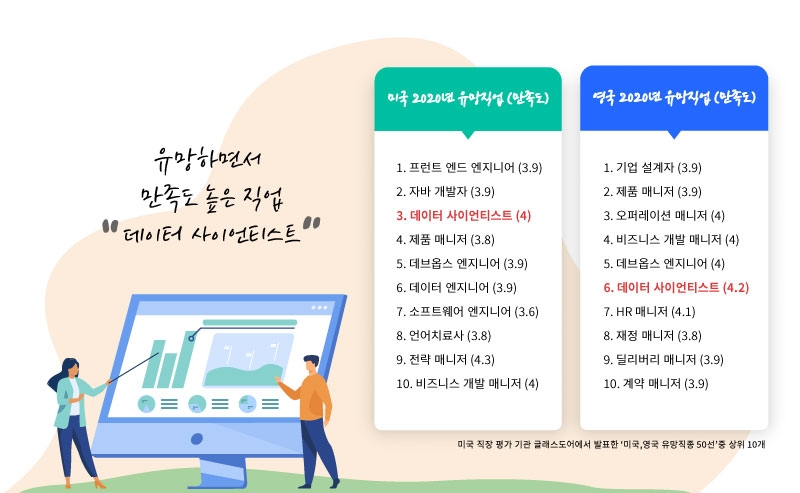
Big data analytics, machine learning, deep learning, artificial intelligence, and digital transformation (DT) are among the most in-demand technology fields today. In nearly every industry, training data scientists to handle these technologies is crucial and urgent.
To become a data scientist, you must first and foremost be able to use Python fluently. However, learning Python takes so much time that many people give up early on.
📕 Learn only the essentials you need in the field!
This course focuses on the fundamentals and core concepts of Python required for practical data analysis and machine learning model development in the field. It doesn't delve into in-depth beginner topics or introduce numerous Python features. Instead, it focuses solely on the core concepts.
STEP 00
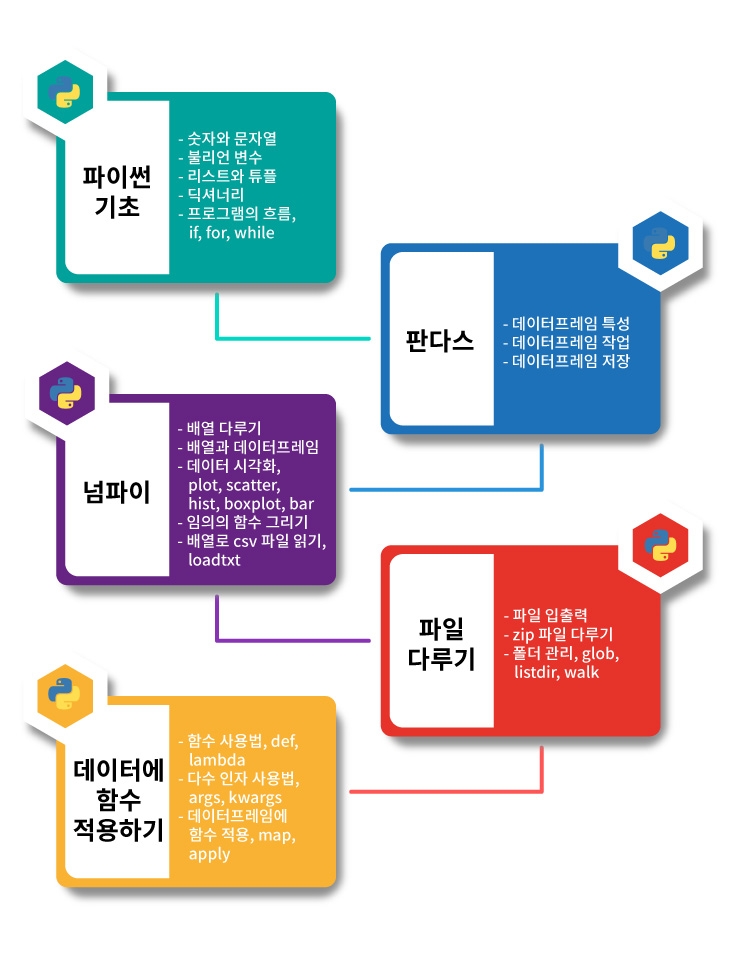
First, learn how to use Jupyter Notebook and GitHub by setting up your Python environment. The GitHub tutorial shares the source code location, so follow along and learn.
STEP 01
Beginning with a solid foundation in Python, you'll learn the differences and characteristics of handling numbers, strings, and Boolean variables, as well as lists, tuples, and dictionaries for grouping and processing multiple data sets. You'll also learn how the "if," "for," and "while" statements manage program flow.
STEP 02/03
Next, we will learn how to manipulate data frames, a two-dimensional table structure provided by the pandas package (searching, adding, deleting data, etc.), and cover numerical operations on matrices (arrays) provided by NumPy.
STEP 04
We cover data visualization and introduce the usage and features of representative visualization techniques such as plot, scatter, hist, boxplot, and bar graphs.
STEP 05
Python's greatest strength is its ability to conveniently apply functions to data . Learn various ways to apply functions and the differences between lambda, map, and apply.
🙋♂️ 5 hours is enough!
Many people who study Python for problem solving give up because of its difficult theories. However, it's highly likely that you won't need those theories to solve the problems you want to solve.
As Saint-Exupéry said, "Perfection is not when there is nothing more to add, but when there is nothing more to take away." In this lecture, I aim to convey the core contents of Python required to become a data scientist in a minimal amount of time .
We hope that through this course, everyone will successfully advance to become a data scientist.
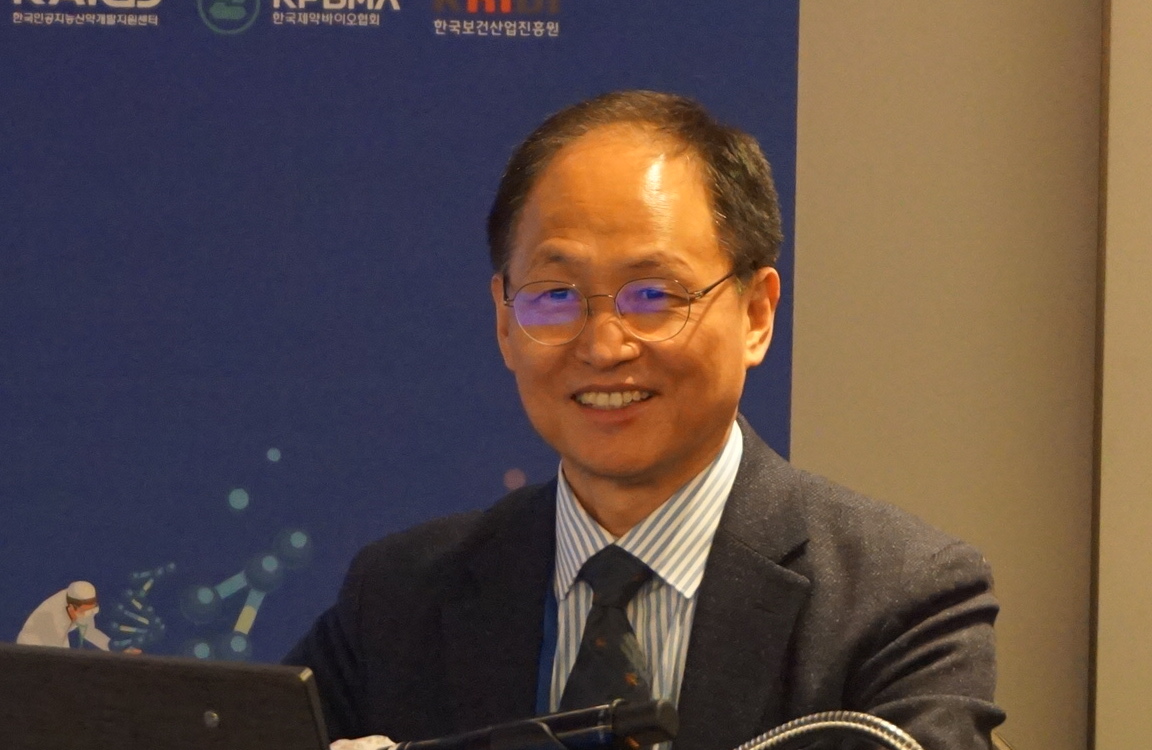
Kim Hwa-jong, CEO of Data Science Lab
Recommended for these people
Who is this course right for?
Anyone who needs to adopt machine learning technology to solve their own tasks
For those who are not familiar with Python but want to learn the core Python in a short period of time
This is a question a friend asked me after I entered the Department of Electronic Engineering. Well, I did answer. "In electronic engineering, we learn the principles of how to build a radio; fixing broken electronics isn't really what we do..."
There are more cases where a problem solver is needed rather than an expert armed with theory. I believe that solving real-world problems is more important.
Recently, I have been working on solving problems in various industrial sectors—such as finance, energy, electronics, heavy equipment, logistics, drug discovery, and food—using machine learning. It is a field with so much to learn and endless opportunities. Although my primary role is a professor (Department of Computer Science and Engineering at Kangwon National University), my deep interest in solving real-world problems has led me to hold several concurrent positions. I currently serve as the Director of the AI Drug Discovery Training Center, an Adjunct Professor at KAIST, and the CEO of Data Science Lab.
I believe that the most essential talent in the AI era is a data scientist who can solve real-world problems, and I hope all of you become highly sought-after data scientists.
Thank you. I made it with beginners in mind, but I tried to include as much basic information as possible. I think it would be good to use it to understand the scope of what even beginners need to know.
Even if you are not familiar with programming, this lecture was really helpful because it explained the core concepts of Python for applying artificial intelligence to practice in an easy-to-understand manner, even though it was a short lecture! I think it was a lecture that extracted the maximum efficiency in the minimum time!!
Even though I had no basic knowledge of Python, I think this is a really good lecture for beginners to learn the basics, as the core concepts are conveyed in an easy-to-understand and concise manner, from setting up a development environment to utilizing functions.
It was not difficult at all because it explained only the necessary content in an easy-to-understand manner, and it was a great help in reviewing basic concepts that I had forgotten.





![[PL 0302] Python for Data Manipulation - NumPy MasterclassCourse Thumbnail](https://cdn.inflearn.com/public/courses/334756/cover/a4cbdc80-53da-4422-9b8d-67362b68a9fa/334756.png?w=420)



![[Renewed] Beginner’s Python Machine Learning Bootcamp (Easy! Learn by Solving Real Kaggle Problems) [Data Analysis/Science Part 2]Course Thumbnail](https://cdn.inflearn.com/public/courses/327464/cover/55c4db7b-7764-43cc-ac75-d9e8d08098f1/327464-eng.png?w=420)
![[Side Projects After Work] Big Data Analysis Engineer Practical Exam (Task Types 1, 2, and 3)Course Thumbnail](https://cdn.inflearn.com/public/courses/329972/cover/dcfb28fd-48c1-4bb1-ab31-d59eac874194/329972-original.png?w=420)
![[Renewed] First-Time SQL and Database (MySQL) Bootcamp [From Beginner to Practical Applications]Course Thumbnail](https://cdn.inflearn.com/public/courses/324208/cover/85872a8e-d2bb-4c43-82fc-d55fa067746e/324208.png?w=420)