강의

멘토링

커뮤니티

College Edu.

/

Mathematics

Im Jang-hwan's Kalman Filter 1

You can understand the theoretical operation principle of the Kalman Filter through easy examples.

(5.0) 2 reviews

41 learners

Level Basic

Course period Unlimited

  • jhim21
kalman-filter
kalman-filter
Probability and Statistics
Linear Algebra
Linear Algebra
MATLAB
MATLAB
Python
Python
kalman-filter
kalman-filter
Probability and Statistics
Linear Algebra
Linear Algebra
MATLAB
MATLAB
Python
Python

What you will gain after the course

  • Understanding the exact working principle of the Kalman Filter through easy examples

  • A robust mathematical theoretical approach

The difficult and challenging Kalman filter,
Let's understand it clearly with examples ✨

Studying with examples
How the Kalman Filter Works 💡

Kalman Filter?

The Kalman filter is an algorithm developed in the 1660s by American control theorist Rudolf E. Kalman. He developed it at NASA to solve rocket and aircraft flight control problems, and it has since been applied to various fields, including control engineering, robotics, and signal processing. It remains a widely used algorithm even today.

The Kalman filter is a mathematically complex algorithm, making it quite challenging to understand. Learning it requires a significant foundation in linear algebra, probability theory, and statistics. It's not easy! I've been there myself. I've hit a wall several times while studying. Despite the numerous lectures available, I still haven't fully grasped the Kalman filter. It's impossible to explain every Kalman filter, and there's no need to.

So, I decided to explain how the Kalman Filter works with a few simple examples . Once you understand the Kalman Filter, you can apply it to your field of expertise. Is it better to apply it without understanding the theory, or to apply it with knowledge of the theory and principles? The wise choice is yours.


Lecture Features ✨

In this lecture, I'll explain the working principles of the Kalman filter in a very concrete way, using simple examples to facilitate as intuitive a understanding as possible. If you utilize this lecture effectively, I believe it will significantly reduce the time it takes to understand the Kalman filter.

You can mathematically understand how the Kalman filter works.

Learn from easy examples to examples that will help you fully understand the Kalman filter.

We present the theory of probability and statistics necessary for explaining the theory .


I recommend this to these people 🙆‍♀️

Anyone who knows a little about what a Kalman filter is

Control engineering, robotics, signal processing, and computer vision majors

Graduate students who want to learn the Kalman filter thoroughly


What you'll learn 📚


Expected Questions Q&A 💬

Q. Can I really understand the Kalman Filter?

In fact, I want to tell you that to truly understand the Kalman filter, you need to study it consistently and relentlessly. I created this course because I believe I can help you understand the Kalman filter.

Q. How much prior knowledge of probability and statistics is required?

I'm a first-look, first-hand approach, so I believe anyone with some basic knowledge can tackle the challenge. You should also consistently study probability and statistics. Furthermore, since you don't need to know everything, I've included the necessary information in the appendix.

Q. What kind of mathematical knowledge is required as prerequisite knowledge?

Knowledge of linear algebra, probability and statistics, and optimization theory is required.


Please check before taking the class 📢

  • I've implemented the theoretical content primarily in Python. I've also included some MatLab programs for my own needs. I'll upload the programs I implemented, but I want to emphasize that each student is responsible for implementing them.
    • For reference, I first programmed using easy Matlab and then using PyCharm.
    • The purpose of this lecture is to focus on the theoretical explanation of the Kalman Filter. Therefore, implementation is the responsibility of each student.
  • Class materials are uploaded in PDF format, and program files are uploaded in text format.

Introducing the Knowledge Sharer ✒️

  • Current 3D Computer Vision Researcher
  • Current YouTube Channel Operator: Lim Jang-hwan: 3D Computer Vision
  • Current) Face book: SLAM KR Group (Mathematics Expert Committee)
  • Former) Doctor of Science (topology) from Kile University, Germany
  • Former Research Professor, Graduate School of Advanced Imaging Science, Chung-Ang University (3D Computer Vision Research)
  • Book: Optimization Theory

Recommended for
these people

Who is this course right for?

  • For those who want to understand how the Kalman Filter works

  • Those studying robotics, control engineering, and signal processing

  • Those studying machine learning and artificial intelligence

Need to know before starting?

  • Basic knowledge of MatLab and Python languages

  • Probability and Statistics Basics, Linear Algebra, Calculus

Hello
This is

219

Learners

10

Reviews

8

Answers

4.6

Rating

4

Courses

After graduating with my PhD, I had the opportunity to study and teach computer vision for about five years, which led me to

Up until now, I have been focusing my studies on bridging the gap between my mathematics major and engineering theories.

Areas of Expertise (Fields of Study)

Major: Mathematics (Topological Geometry), Minor: Computer Science

Current) 3D Computer Vision (3D Reconstruction), Kalman Filter, Lie-group (SO(3)),

Researcher in Stochastic Differential Equations

Current) YouTube Channel Host: Jang-hwan Lim: 3D Computer Vision

Current) Facebook Spatial AI KR Group (Mathematics Advisory Committee Member)

Education

PhD in Natural Sciences, University of Kiel, Germany (Major in Topological Geometry & Lie-group, Minor in Computer Science)

Bachelor's and Master's (Topology major) in Mathematics, Chung-Ang University

Experience

Former) CTO of Doobivision, a subsidiary of Daesung Group

Former Research Professor at Chung-Ang University Graduate School of Advanced Imaging (3D Computer Vision Research)

Books:

Optimization Theory: https://product.kyobobook.co.kr/detail/S000200518524

Link

YouTube: https://www.youtube.com/@3dcomputervision

Blog: https://blog.naver.com/jang_hwan_im

er Vision Research) Author of: Optimization Theory: https://product.kyobobook.co.kr/detail/S000200518524 Link YouTube: https://www.youtube.com/@3dcomputervision Blog: https://blog.naver.com/jang_hwan_im

er Vision Research) Author of: Optimization Theory: https://product.kyobobook.co.kr/detail/S000200518524 Link YouTube: https://www.youtube.com/@3dcomputervision Blog: https://blog.naver.com/jang_hwan_im
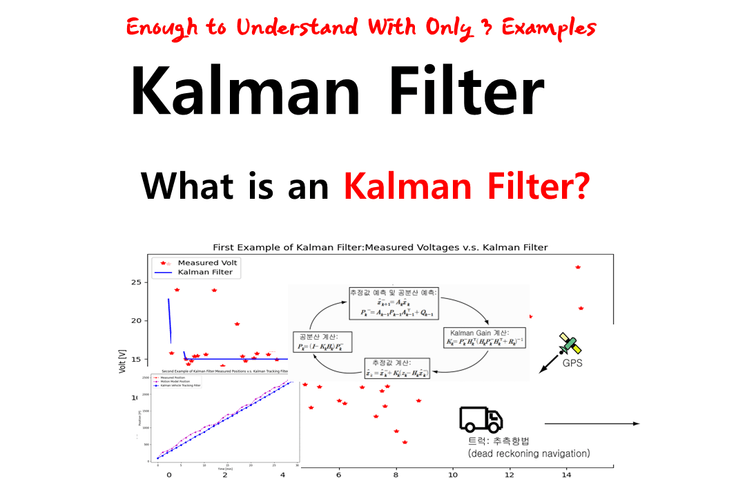
er Vision Research) Author: Optimization Theory: https://product.kyobobook.co.kr/detail/S000200518524 Link YouTube: https://www.youtube.com/@3dcomputervision Blog: https://blog.naver.com/jang_hwan_im

er Vision Research) Author of: Optimization Theory: https://product.kyobobook.co.kr/detail/S000200518524 Link YouTube: https://www.youtube.com/@3dcomputervision Blog: https://blog.naver.com/jang_hwan_im

er Vision Research) Author of: Optimization Theory: https://product.kyobobook.co.kr/detail/S000200518524 Link YouTube: https://www.youtube.com/@3dcomputervision Blog: https://blog.naver.com/jang_hwan_im
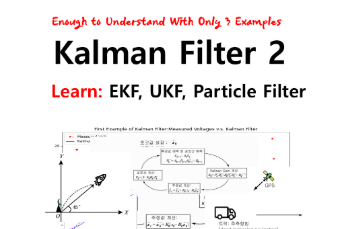
er Vision Research) Author of: Optimization Theory: https://product.kyobobook.co.kr/detail/S000200518524 Link YouTube: https://www.youtube.com/@3dcomputervision Blog: https://blog.naver.com/jang_hwan_im

Curriculum

All

34 lectures ∙ (5hr 10min)

Course Materials:

Lecture resources
Published: 
Last updated: 

Reviews

All

2 reviews

5.0

2 reviews

  • dltmdfkr22님의 프로필 이미지
    dltmdfkr22

    Reviews 1

    Average Rating 5.0

    5

    100% enrolled

    • bertter9438님의 프로필 이미지
      bertter9438

      Reviews 10

      Average Rating 4.5

      5

      32% enrolled

      $169.40

      jhim21's other courses

      Check out other courses by the instructor!

      Similar courses

      Explore other courses in the same field!