


[Vibe Coding + AI Practical Data Analysis] 5.0 Perfect Score Course That London MBA Students Raved About: Complete Data Analysis Practical Skills and Job Preparation That Liberal Arts Non-Majors Can Use Right Away in the Field!
"Are you still studying with coding books?" A course, rated 5.0/5.0 by MBA and business undergrads at a London management university. You can take AI data analysis lectures from home. Even for humanities-background non-majors: practical data analysis skills immediately usable in the field, plus a data analysis portfolio for job search completion. I am a British Professor (British Professor) teaching data analysis and project classes with ChatGPT, no coding knowledge required.
168 learners
Level Basic
Course period Unlimited


・
Edited
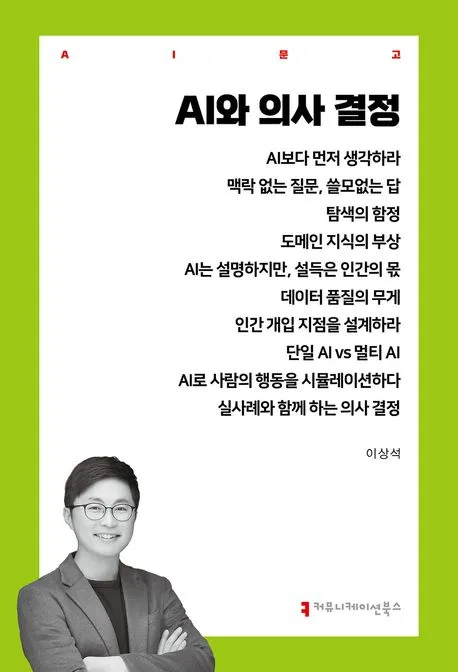
Publication Announcement for the Book 'AI and Decision Making'
"Why do some succeed while others fail to persuade, even with the same data?"
This question was a concern I held for eight years while applying data science to the HR field. Even when analyzing the same data, some reports moved executives, while others were quietly buried. At first, I thought it was a matter of analytical technique. I believed that more sophisticated models and more accurate figures would be enough, but it wasn't as simple as I thought.
Those concerns became my first book, "Data-Driven Report."
After writing the book, the next question naturally followed.
"If we use AI with the same performance, why do the results vary for each individual?" is the question.
Even though AI has emerged, its foundation remains data. This led me to believe that to better evaluate AI outputs, we must first gain a deeper understanding of human judgment itself. That became the starting point of my doctoral studies. I began to explore how humans make decisions and how those decisions change when working alongside AI. The more I researched, the more I realized that these questions shared the same roots as the ones I had as an HR data scientist. Even as the tools changed, the core remained how the person making the judgment perceives and thinks.
And now, in the middle of that journey, I introduce this book, "AI and Decision Making."
The reason I am introducing this book in the middle of this journey is because of a dream I have held since before becoming a researcher. That dream is for my research to reach those in the field who share the same concerns, so that we may contemplate them together. Research papers are peer-reviewed, published in academic journals, and read by fellow researchers in the same field. That is the path scholars aim for and can be considered the "standard" way. However, the questions that have driven me from my days as a new employee at KEPCO, where I began my career, until now have always been rooted in the field. Those questions were about how to persuade more effectively with data and how to make better decisions when working alongside AI.
I am still in the process of researching and do not have a complete answer yet. However, it is clear that the question from the early stages of my career became my first book, led to my doctoral program, and has now resulted in this book. I believe it is enough if I can share this journey with those who have similar concerns.
(Since the book is thin, I am confident it will give you a sense of pride and satisfaction in having finished an entire book in less than an hour.)