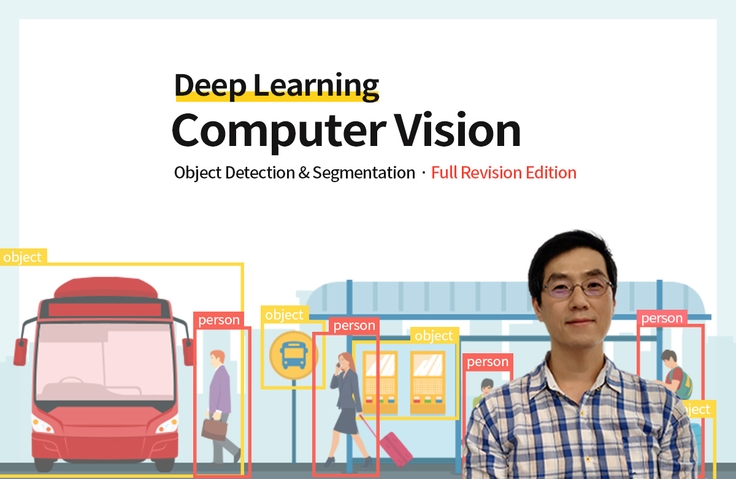
[Revised Edition] Deep Learning Computer Vision: The Complete Guide
This course will help you grow into a deep learning-based computer vision expert needed in the field through in-depth theoretical explanations of Object Detection and Segmentation, along with practical examples at a level that can be immediately applied in the industry.
It's really unbelievably good.. I was so mad at Infleun while listening to Coco Pytorch in the neighborhood. I found happiness after listening to this lecture. Thank you so much.
5.0
한병식
31% enrolled
Professor Kwon Chul-min's lectures are always the best. Thank you.
5.0
율언니
7% enrolled
It's super helpful. The good practice examples were a big help ^^
What you will gain after the course
Understanding Deep Learning-Based Object Detection and Segmentation
In-depth theoretical study of RCNN series, SSD, YOLO, RetinaNet, EfficientDet, and Mask RCNN
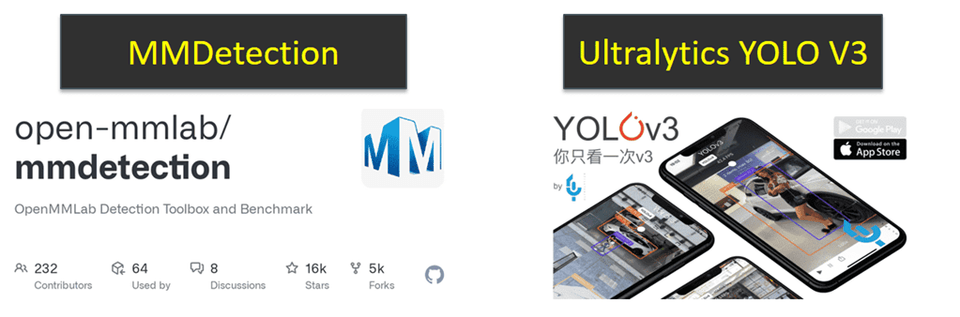
Learn how to use representative implementation packages for Object Detection and Segmentation, such as MMDetection and Ultralytics YOLO.
Performing Image/Video Object Detection/Segmentation using OpenCV and TensorFlow Hub
Learn various challenging, practical examples to reach a level where you can directly apply Object Detection and Segmentation to real-world tasks.
Acquire various foundational knowledge that constitutes Object Detection/Segmentation
Train a custom dataset using various implementation packages and create your own model.
Learn the pros and cons of various Object Detection/Segmentation models firsthand through practical hands-on examples.
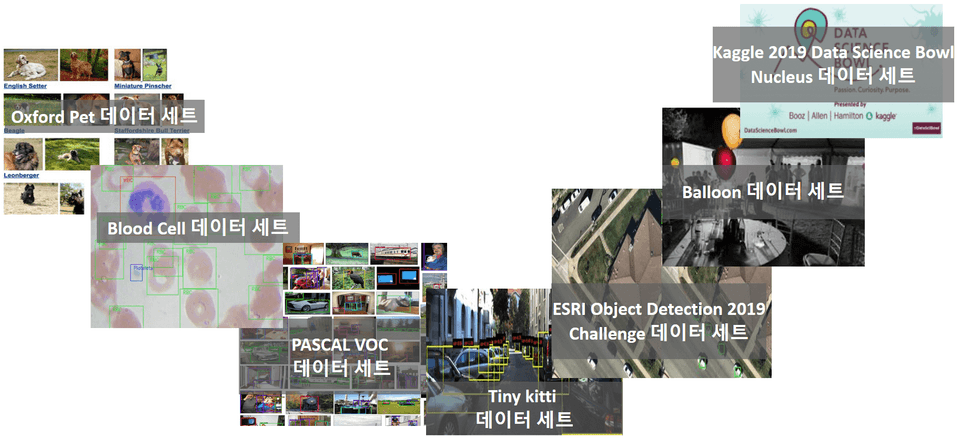
Handling major datasets such as Pascal VOC and MS-COCO and converting them to TFRecord
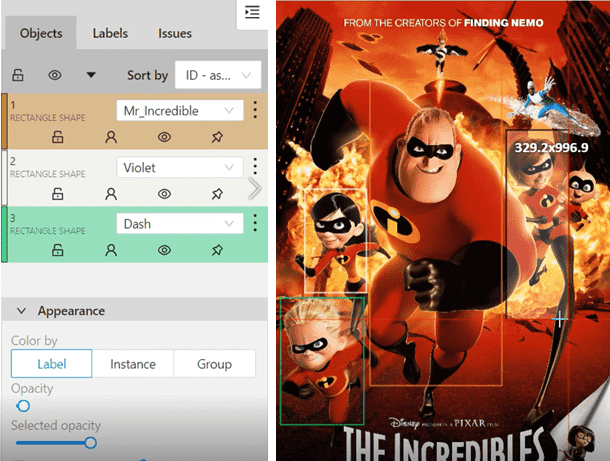
Applying annotations to datasets using the CVAT tool and creating training data yourself
Lower the hurdles and dive deeper into the core! Become a deep learning CNN practical expert.
Deep Learning Computer Vision Learning through the latest revised edition.
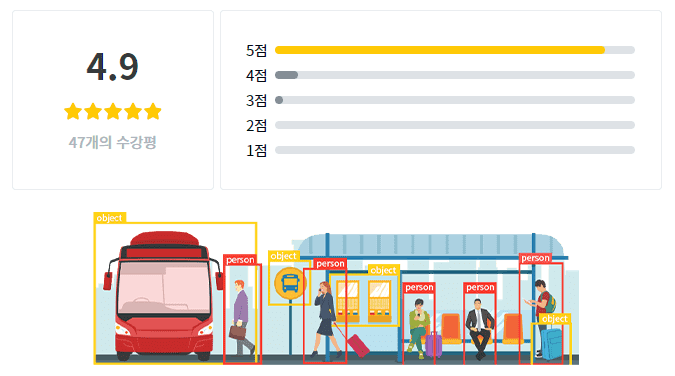
Average rating 4.9★ Chosen by 1,300+ students, Inflearn Bestseller 2021 Full Renewal!
Hello, I am Chul-min Kwon. Thanks to your great support, I have released the revised edition of 'Deep Learning Computer Vision: The Complete Guide.' I have remade about 90% of the videos from the previous course and will introduce even more improved and additional content.
Based on the feedback you have sent for the lectures so far, we have created this revised edition with a focus on the following points.
More detailed theoretical explanations for topics that have received many student questions over time.
Object Detection/Segmentation package-based practice with the latest/highest performance
Reflecting the latest trends in Object Detection/Segmentation
Writing more flexible, diverse, and scalable practice code + even more detailed explanations
Various other additional classes
Without a doubt, the revised lecture is superior to the first edition and consists of more detailed content. It will guide you into the latest deep learning-based Object Detection and Segmentation fields.
Course Introduction 📝
The center of deep learning computer vision technology is rapidly shifting toward Object Detection and Segmentation.
Deep learning-based Object Detection and Segmentation technologies are spreading across many fields, including ▲intelligent video information recognition ▲AI vision inspection smart factories ▲automated medical image diagnosis ▲robotics ▲autonomous vehicles. Accordingly, leading AI companies at home and abroad are investing heavily in these fields and seeking to secure development talent.
The two major trends finally meet: Object Detection & Segmentation
In recent years, the fields of Object Detection and Segmentation have advanced rapidly, leading to an increasing demand for talent with relevant practical skills. Nevertheless, as these are cutting-edge fields of deep learning application, the reality is that it is difficult to cultivate appropriate talent due to a lack of books, materials, and lectures for learning.
We will guide you to become a deep learning computer vision expert.
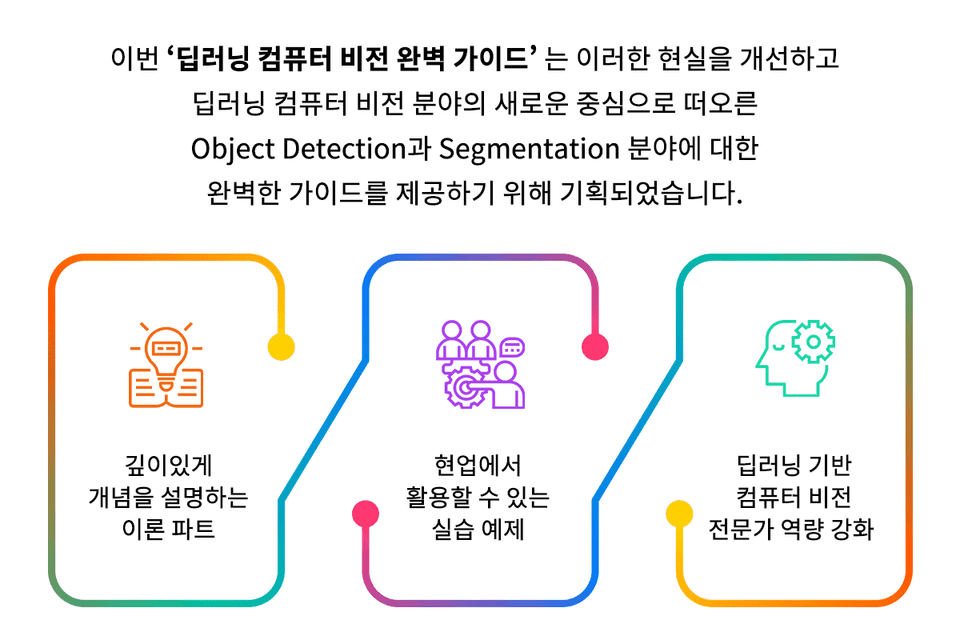
This course consists of in-depth theoretical explanations of Object Detection and Segmentation, along with numerous practical examples that can be applied immediately in the field, and will help you grow into a deep learning-based computer vision expert needed in the industry.
From easy concept explanations to in-depth theories.
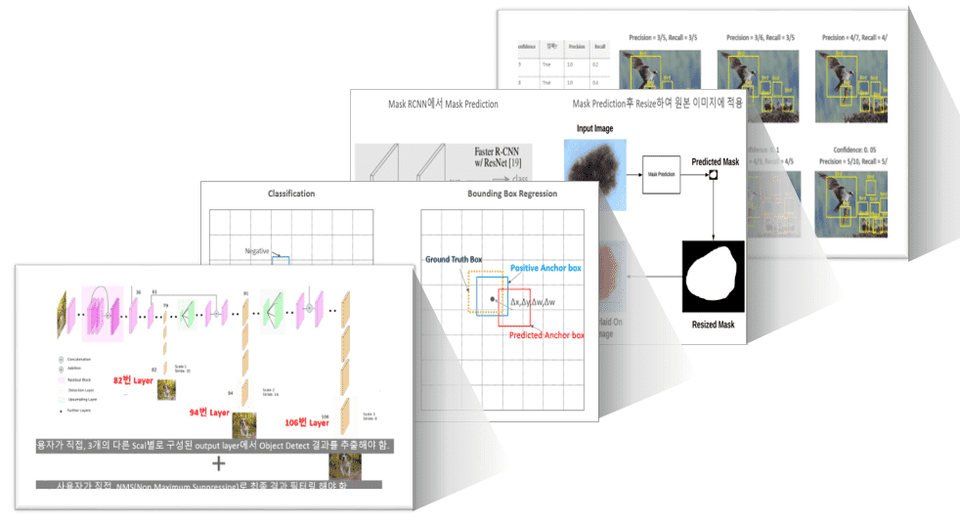
We provide clear explanations covering the vast field of Object Detection and Segmentation, ranging from easy concepts to in-depth theories on the RCNN family, SSD, YOLO, RetinaNet, EfficientDet, Mask RCNN, and more.
You can thoroughly master the concepts with detailed lecture slides.
Maximizing practical deep learning skills through hands-on practice examples.
There is no better way to improve your practical skills than by coding and implementing things yourself. This course consists of many hands-on practice examples, which will maximize your practical implementation skills in Object Detection and Segmentation.
Those who have been wondering how deep learning CNNs can be applied in practice
Those who want to develop deep learning-based computer vision solutions
Those who want to expand their deep learning image classification skills to the latest CV technologies
Graduate students in AI, or those preparing for employment/career change in the deep learning-based CV field
Please check the prerequisite knowledge.
Python programming experience and a basic understanding of deep learning CNNs are required.
Additionally, it is even better if you have some experience with TF.Keras or PyTorch.
Hard to find anywhere else, the latest CV technologies all at once.
High-performance latest Object Detection/Segmentation implementation hands-on practice using packages
MMDetection, Ultralytics Yolo, etc.
Inference practice using versatile OpenCV DNN and Tensorflow Hub
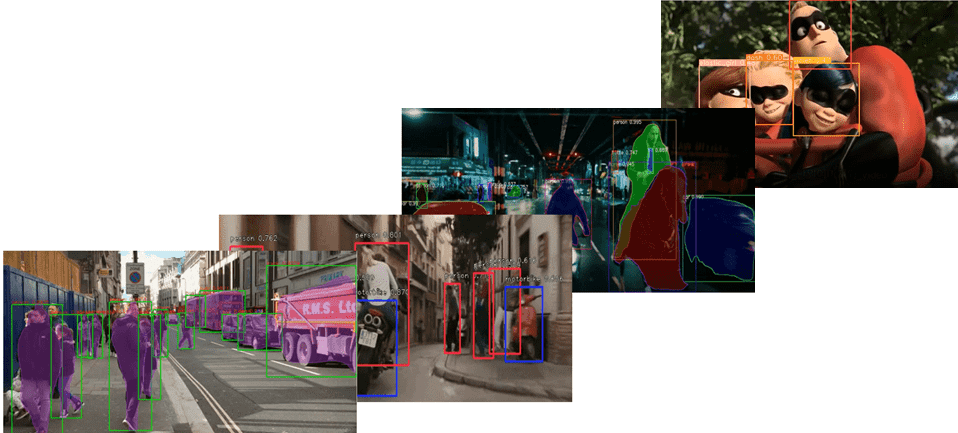
Object Detection/Segmentation practice on various images and videos
Various cases of actually utilizing computer vision technology
With various custom datasets, Model Training Practice
Various custom data sets
As a deep learning computer vision expert, you must be able to train models with various custom datasets to produce your own object detection/segmentation models. Furthermore, you should be capable of improving and evaluating the performance of these models.
This course will help you develop the ability to train custom datasets and create optimal inference models using various implementation packages.
Practice Custom Model Training / Inference with your own custom training dataset
Hands-on practice using a self-created training dataset
Using the annotation tool CVAT, you will directly create a training dataset by applying bounding box annotations to general images, and then practice custom model training and inference using the dataset you created.
Practice Environment 🧰
This course primarily conducts hands-on practice based on GPUs. For GPU-based practice, the environment will be set up on Runpod, while for practice sessions unrelated to GPUs, you may use the Google Colab environment.
In the case of Runpod, an additional cost of about $10 to $20 will be incurred for the practice sessions. While it is possible to proceed with $10 (though it will be a bit tight ^^;;), we recommend a budget of around $20 for a more comfortable experience.
Please check before taking the course!
Please note that if you do not use Runpod's GPU environment, you may experience difficulties following the examples. We appreciate your understanding in advance.
Practice Code and Lecture Materials 👨💻
Practice code can be downloaded from https://github.com/chulminkw/DLCV_New. Reviewing the practice code in advance will help you assess the level of programming knowledge required to understand the exercises.
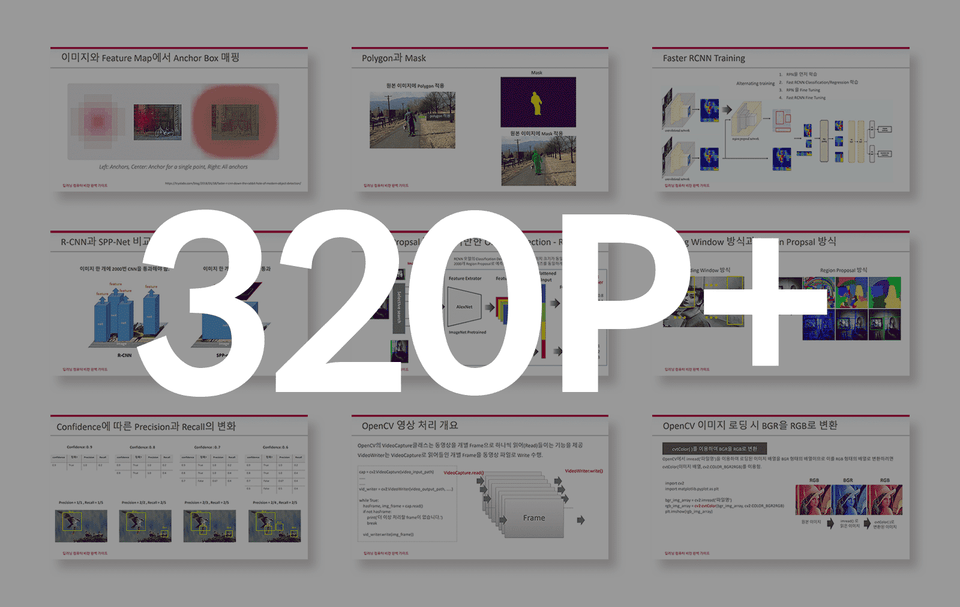
320-page lecture PDF textbook provided
The textbook used in the lecture (320 pages long) can be downloaded from Lecture Section 0: Lecture Textbook.
To learn theory, there is no better way than practice.
Do not wait until you perfectly understand deep learning theory. There is no better way to learn theory than through practice.
Once you start coding, your brain is wired to follow along and develop a concrete understanding. Let's implement the various practice examples provided in the lecture together. As you listen to the lecture and implement them yourself by typing on the keyboard, the parts that once felt vague and abstract will gradually become tangible.
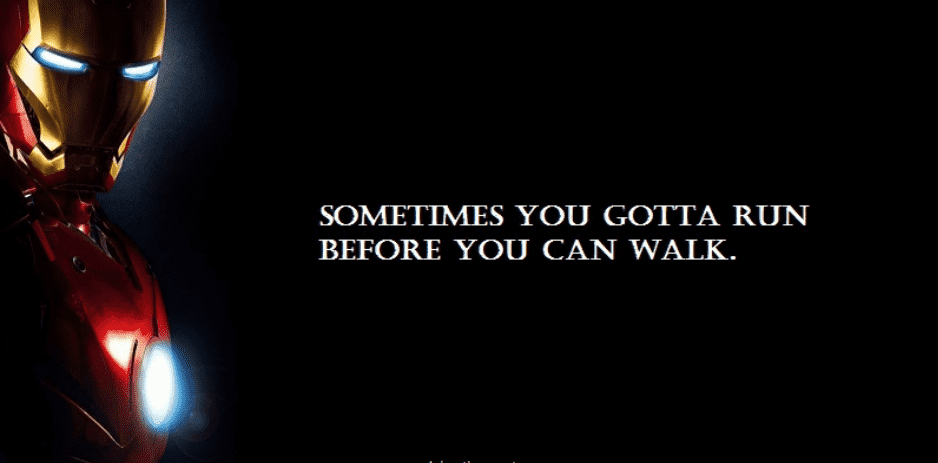
To become an expert, sometimes (though I believe it is most of the time) you have to run before you can walk. This course will be your best companion in growing your career and capabilities in the field of deep learning-based computer vision.
Thank you.
― What Tony Stark said to JARVIS during the Iron Man suit test in <Iron Man 1>
It's really unbelievably good.. I was so mad at Infleun while listening to Coco Pytorch in the neighborhood. I found happiness after listening to this lecture. Thank you so much.
This is a great lecture that can be applied directly to practice. If the instructor has time, I hope that a lecture on data such as voice and text based on RNN will be opened.













![[Revised Edition] The Complete Guide to Python Machine LearningCourse Thumbnail](https://cdn.inflearn.com/public/courses/324238/cover/7e380aa0-48ba-4ee7-a6b2-8da7900568d6/324238-eng.png?w=420)







![[OpenCV] Python Deep Learning Image Processing Project 2 - Find the Bad Apples!Course Thumbnail](https://cdn.inflearn.com/public/courses/325290/course_cover/0f6dc5fe-e6e6-414a-af6d-10f589e50788/openCV-dnn2-rotten-apple-eng.jpg?w=420)
![[Mobile] Deep Learning Computer Vision Practical ProjectCourse Thumbnail](https://cdn.inflearn.com/public/courses/324985/course_cover/6bedded2-1f32-4d11-be03-6e5bf5a3b488/sjh-mobile-cv.png?w=420)
![[Raspberry Pi] IoT Deep Learning Computer Vision Practical ProjectCourse Thumbnail](https://cdn.inflearn.com/public/courses/324813/course_cover/eb51871d-082a-4b77-add0-f87421aaac46/sjh-IoT.png?w=420)
![[Tensorflow2] Complete conquest of Python machine learning - Marathon record prediction projectCourse Thumbnail](https://cdn.inflearn.com/public/courses/324207/course_cover/1a79c7dc-1624-4d3a-95ff-79ba1e9c4025/python_machine_learning.png?w=420)
![Deep Learning and PyTorch [and Image Classification]Course Thumbnail](https://cdn.inflearn.com/public/files/courses/341712/cover/ai/3/f1bb7ccd-7a72-4fa7-9ae0-cc3c9b3f3e8b.png?w=420)

![[Practical AIoT] Perfect Preparation for Smart Mirror Makerthon: LLM, CV, and Hardware DesignCourse Thumbnail](https://cdn.inflearn.com/public/files/courses/340196/cover/01kexgfr26whtfsmsqd2dj1x7x?w=420)
![First-Time Deep Learning and PyTorch Bootcamp (Easy! From the Basics to the Core Transformers Behind ChatGPT) [Data Analysis/Science Part 3]Course Thumbnail](https://cdn.inflearn.com/public/courses/329540/cover/1be7b8cb-800f-48cb-a30c-b7d78996c075/329540-eng.png?w=420)

![[AI Practice] Getting Started with Paper Implementation for AI Research Engineers with PyTorchCourse Thumbnail](https://cdn.inflearn.com/public/courses/334289/cover/b8885796-1e67-4983-9432-bcda0daae927/334289.png?w=420)
![[7-Day Complete] Pass MS AI-900 Certification in One GoCourse Thumbnail](https://cdn.inflearn.com/public/files/courses/338854/cover/01k4caartf5v7x2e574pq0wnp8?w=420)