inflearn logo
Challenge
Ended

[Week 3] 〈UX Psychology Through 30 Case Studies〉 Reading Challenge

In the AI era, what's more important than drawing screens is 'the essence of UX'—the ability to understand users' emotions and behaviors. This 3-week <UX Psychology through 30 Cases> reading challenge helps you develop practical instincts for moving users by reading one UX psychology case per day and completing missions.

Service Planning
UX Research
UX Planning
psychology
book-challenge

16개 수업 학습

6회 미션 수행

라이브 3 회

성취의 증표, 수료증을 발급해요.

같은 기수와 교류하고 함께 성장해요.

질문하고 즉시 답을 얻어요.

완주 시 쿠폰을 제공해요.

designnonri님과 함께해요!

824

Learners

124

Reviews

1

Answers

4.9

Rating

3

Courses

AI-based UX Design | Researcher · Instructor · Author · Designer

- AI product planning, UX research, prototyping, and design improvement
- Master's research on UXer-AI co-creation models and UXer-AI collaboration research

[Lectures/Workshops]

  • KDT Bootcamp: AI-Based Product Design

  • On/Offline Lectures & Workshops: SKT, Samsung SDS, Udemy, Modulabs, Seoul Business Agency, Notefolio, AI Design Association, HCI Korea, etc.


[Books]

  • UX Design Explained Through 30 Psychology Stories (BJ Public)

  • UX/UI Design Workshop with AI (Wikibooks)

[Related Papers]

  • UXer–AI Collaboration Process for Enhancing Trust (arXiv preprint, 2025)

  • "How Can I Trust AI? : Extending a UXer-AI Collaboration Process in the Early Stages" (CHI 2024 Late-Breaking Work)

  • "Measuring User Burden of UX Practitioners Using Generative AI Tools: Comparing Experiences of Practitioners by Years of Experience" (HCI Korea 2024)

  • "Ethical Awareness of UXers in the Loop: Ethical Issues in the UXer-AI Collaboration Process from a UX Perspective" (MobileHCI 2023 Late-Breaking Work)

  • "Proposing of UXer-AI Collaboration Model for Effective Co-Creation" (KSDS 2023)

More

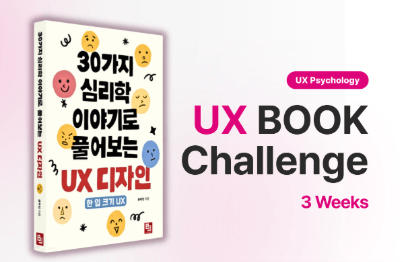
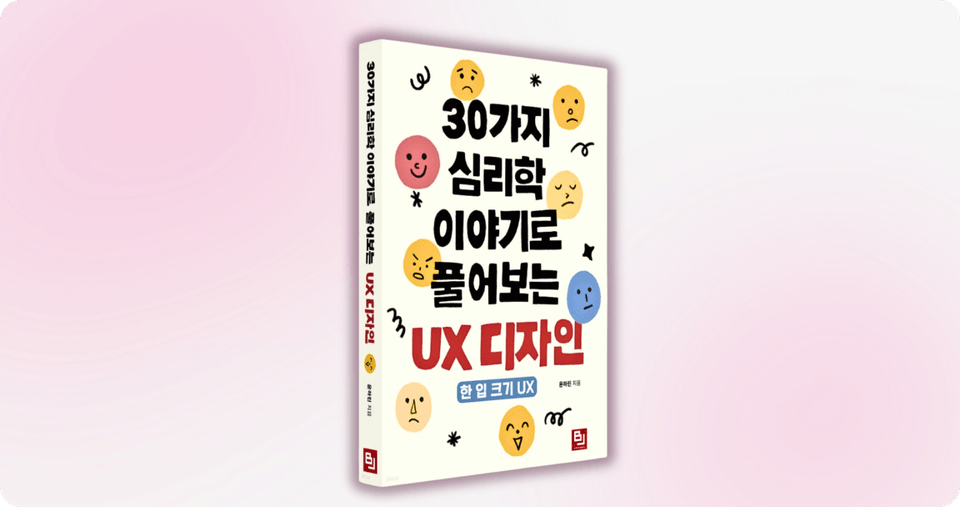
This challenge is a book completion challenge based on "UX Design Through 30 Psychology Stories: Bite-Sized UX" (by Yoon Harin).

  • The book is not provided separately and must be purchased individually.

  • Purchase Links 🔗Physical Book | 🔗E-book

Focus on the essence of UX
through real psychology cases.

As AI tools become more sophisticated, design, planning, and even development processes are being automated.
In the AI era, the ability to interpret 'why users feel that way' is more important than 'what to create'.

The core of that interpretation is the 'ability to understand people'.


However, there are hardly any resources that explain the essence of UX—user psychology, emotions, and behavior.

Through this 3-week reading challenge, develop your core UX competencies that remain solid even in the AI era.

Enhance your UX insights
with "UX Design Through 30 Psychology Principles."

This reading completion challenge is based on the book 『UX Design Through 30 Psychology Stories: Bite-Sized UX』(by Yoon Ha-rin). Over 3 weeks, we'll explore psychology case studies based on 5 emotions, delve into the principles of user behavior, and
propose weekly missions to find clues for practical application.


! The book is not provided separately and must be purchased individually.

3 weeks
conducted online

1 author live session
3 discussion sessions

There are
4 benefits

Check

Don't miss 1 live session with the author
and 3 discussion sessions you won't want to miss!

What is a discussion session?
It's an online group discussion session led directly by author Yoon Halin.
Each week, Halin provides reading points and missions first, then participants split into small groups and immediately hold book club discussions. You'll gain an experience of expanding perspectives and insights that are difficult to obtain alone.
*You can choose to participate selectively if you wish.

Check 2

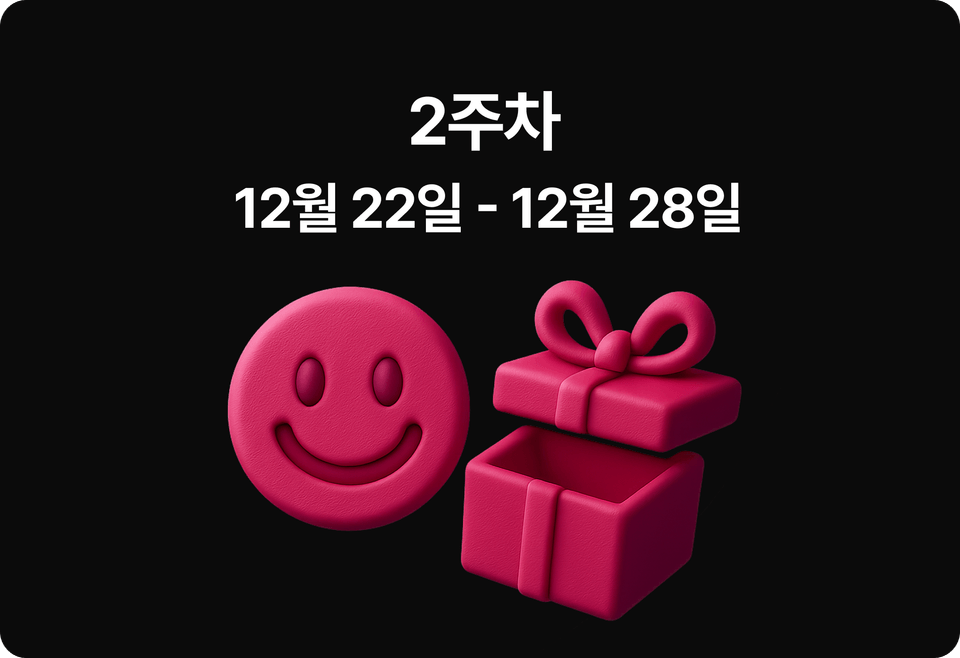
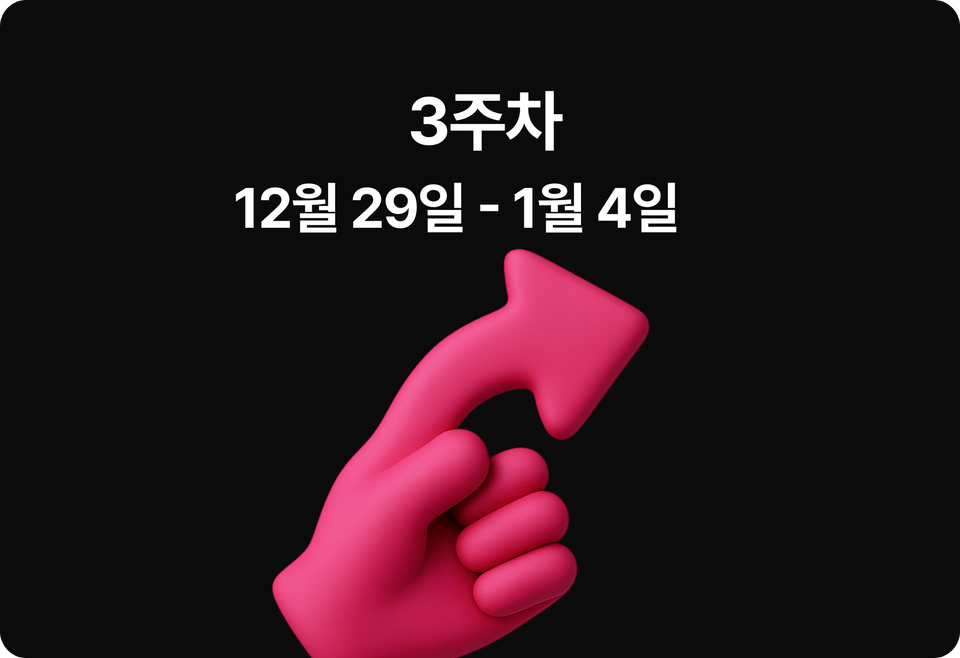
A 3-Week Challenge Journey

This is not just a book club where you simply read and finish. For 3 weeks, you'll analyze cases daily,
share insights with each other, and learn the 'essence' of UX through hands-on practice in this action-oriented challenge.

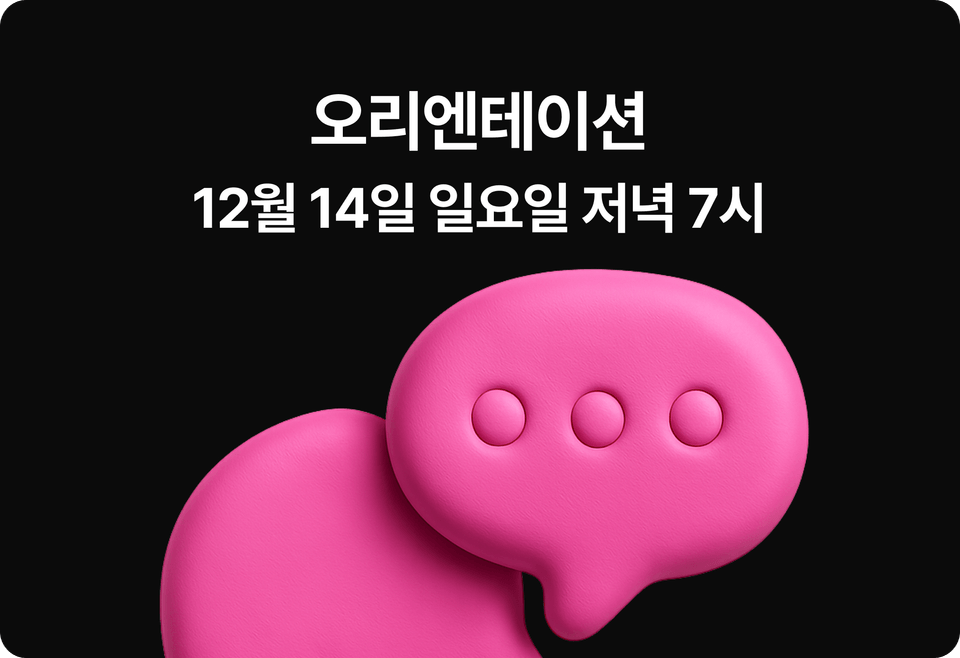
Orientation
· LIVE December 14th Author-led Online Session
Why do you need to know UX psychology?
What is the UX mindset that will become more important in the AI era?
Challenge operation guide

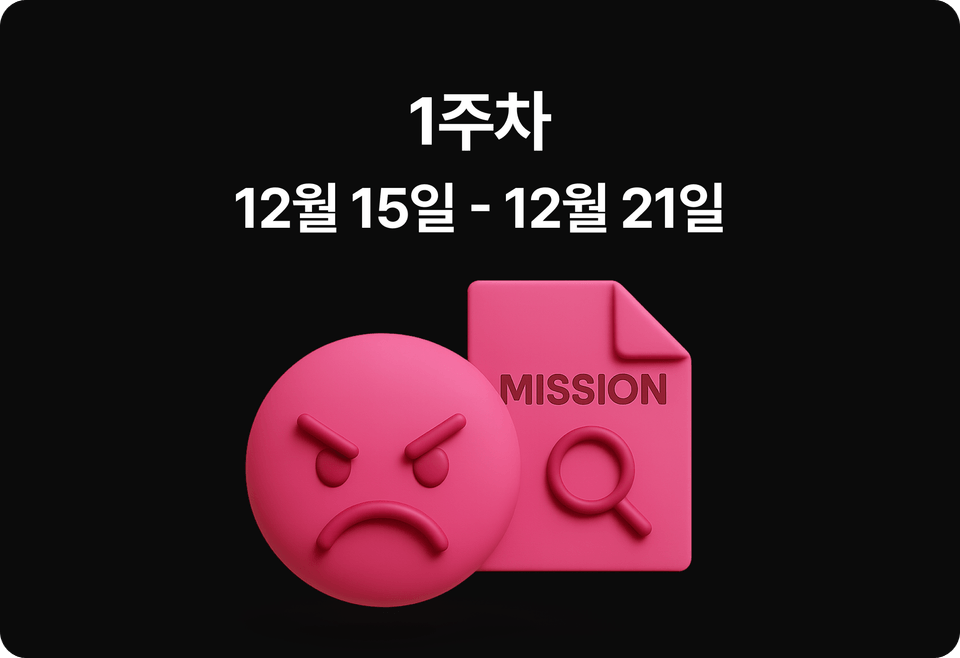
Week 1
UX Psychology That Triggers Negative Emotions
[Mission] Analyze UX Cases That Triggered Anger

Week 2
UX Psychology that Determines Selection, Purchase, Abandonment, and Return Visits
[Mission] Analyzing UX Cases that Drive Action

Week 3
UX Psychology that Determines Selection, Purchase, Abandonment, and Revisit
[Mission] Analyzing UX Cases that Drive Action

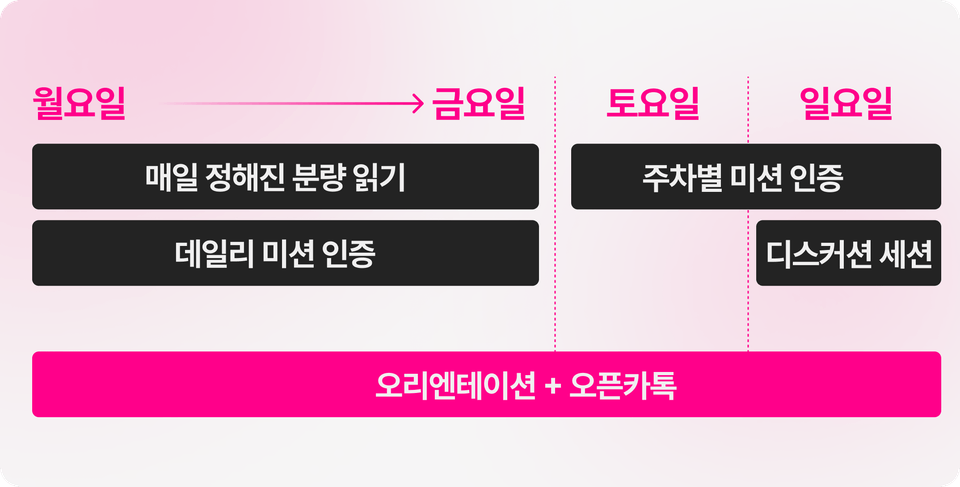
You'll need about 10-15 minutes of reading time each day. Consistency is key for this challenge.
Please read a little bit each day according to the set reading schedule.

You must share the pages you read each day along with a brief comment to complete the challenge mission.

I notice the `` tags are empty - there is no Korean text between them to translate. The surrounding context shows: - Before: Korean text about a reading challenge - After: Mixed Korean and English text about verification and sharing However, there is no content between the `` tags for me to translate. Could you please provide the Korean text you'd like me to translate?

Check 3

Strict verification and
flexible sharing

Through this challenge, you can develop psychology-based UX thinking skills that remain solid even in the AI era.
By reading one case study daily and applying it to real services, you'll enhance your ability to interpret users' emotions and behaviors,
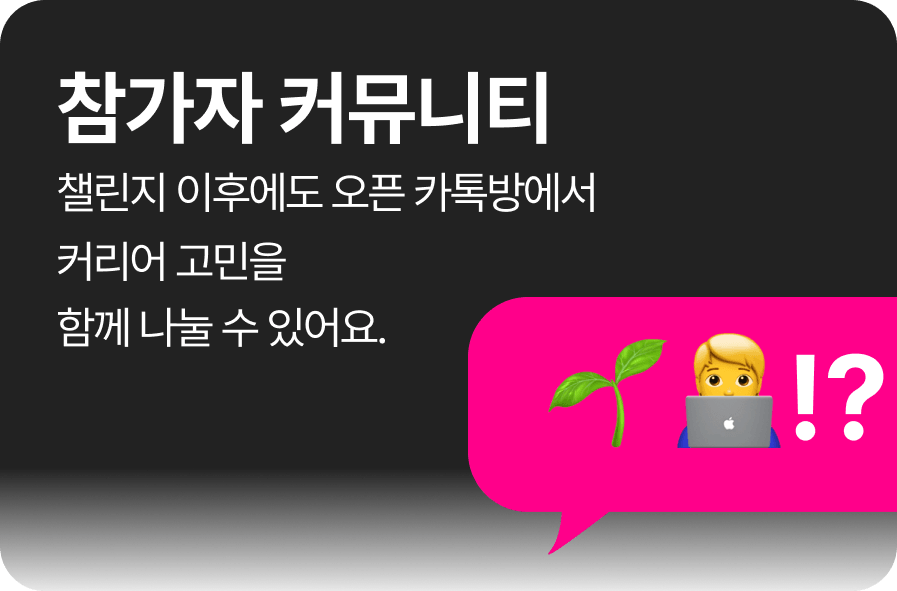
and by sharing diverse perspectives with participants in the open chat, you'll gain a multidimensional UX perspective that's difficult to achieve alone.

Check 4

Challenge Participant Benefits

Check 5

Additional Materials Provided

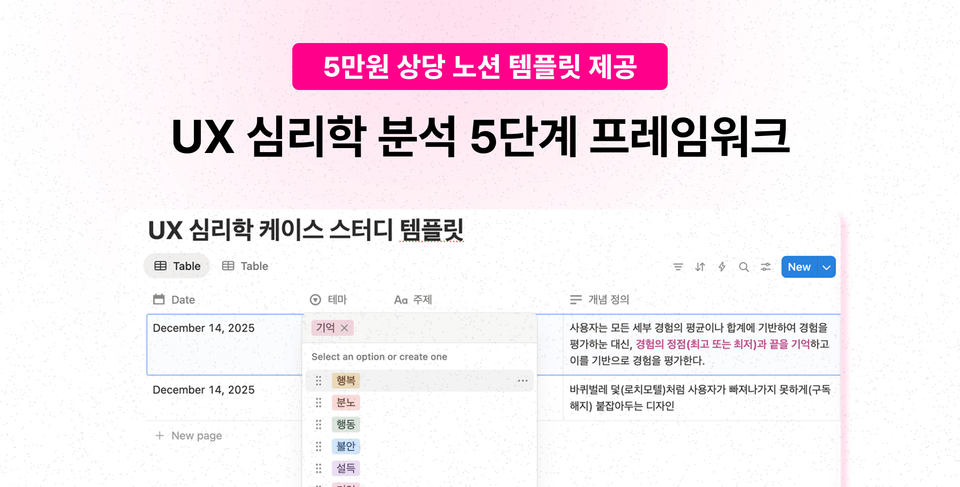
Challenge participants will receive a 5-step UX Psychology Analysis Framework worth 50,000 won.
Using the provided framework, you can systematically analyze the cases you read daily and derive actionable insights that can be applied to real services on your own.

12월

14일

챌린지 시작일

2025년 12월 14일 PM 03:00

챌린지 종료일

2026년 1월 4일 PM 02:59

챌린지 커리큘럼

All

25 lectures ∙ (1hr 13min)

Course Materials:

Lecture resources
Live

챌린지에서 배워요

  • The essence of UX design that remains unwavering even in the AI era — Learn a UX mindset based on users' emotions, behaviors, and psychology.

  • UX Psychology Principles Hidden in Everyday Services — Analyzing real UX design cases that elicit anger, happiness, persuasion, memory, and action.

  • A design perspective that moves users — Not just making screens look pretty, but developing the ability to understand why users behave the way they do.

  • Practical analysis and writing skills using UX psychology — Through weekly missions, you'll develop the ability to explain real design cases by connecting them with psychological theories.

Recommended for
these people

Who is this course right for?

  • Beginner to intermediate designers who want to solidify their understanding of the essence of UX

  • UX/UI beginners who want to understand users' emotions and behaviors from a psychological perspective

  • Those who want to analyze service design cases but don't know where to start

  • Job seekers/professionals who want to add depth of thinking to their portfolio

  • People in planning, development, or marketing roles who need to understand users

  • For those who want to develop a Human-Centered Design perspective

Reviews

All

7 reviews

5.0

7 reviews

  • beautifuldev님의 프로필 이미지
    beautifuldev

    Reviews 7

    Average Rating 4.9

    5

    94% enrolled

    Before participating in this challenge, I used to judge UI/UX based on personal feelings and impressions. For example, I never thought that things like cancel buttons being small and hard to find or streak maintenance UI being designed had anything to do with specific concepts. But now, I feel I can organize my thoughts and express them well based on the concepts I learned from the challenge. The concept that particularly stuck with me is confirmshaming. When developing subscription services, you inevitably end up creating inconvenient UX designs at least once to prevent user churn—like hiding the unsubscribe button or emphasizing the color of the "keep benefits" button. I learned for the first time through the book that the concept related to this is called confirmshaming. I used to work thinking it was something unavoidable for the company's benefit, but while reading the book, I thought I should think more deeply about creating designs that don't make users feel uncomfortable. After the challenge ends, I think I'll read the chapters I haven't read yet and lightly organize my thoughts on my blog 2-3 times a week. Even if not perfectly every day, I think I'll try to do it consistently, little by little :) Actually, I always felt regretful at work because I didn't know much about UX in depth, but it was great that this challenge resolved that, and I think this will be an opportunity for me to properly study more about UX. It was really great to gain new insights about UX while working with people from various job fields and to be able to share points I wouldn't have thought of on my own. I'd like to express my gratitude to Dinon and everyone who participated in the challenge together! haha

    • askare6904님의 프로필 이미지
      askare6904

      Reviews 14

      Average Rating 5.0

      5

      88% enrolled

      The most memorable takeaway from participating in the 3-week UX Psychology reading challenge was being reminded that the essence of UX is providing users with a good experience! I also remember the "4-piece set of purchase-inducing dark patterns" that I hadn't recognized as dark patterns before reading the book. It helped me stop thinking I should follow the majority of patterns just because they're UIUX patterns widely used in other apps. Through the UX Psychology book, learning about people's psychology and dark pattern examples, I felt that I need to make efforts to create a service that users return to when needed, by maintaining an appropriate level rather than using dark patterns. I want to continue the habit of reading and organizing books that I developed during this challenge. Starting next week, my goal is to read data-related books. I plan to continue the reading challenge so I can understand data and utilize it for decision-making! Through the reading challenge, I was able to expand my thinking by learning diverse perspectives and insights from the members! Great work everyone for the past 3 weeks!! Thank you!!

      • mykkimmai님의 프로필 이미지
        mykkimmai

        Reviews 2

        Average Rating 5.0

        5

        100% enrolled

        In this rapidly evolving world, I was able to think about how UX design should be approached through various examples. During the 3-week challenge period, I read one small chapter each day, wrote posts weekly, and shared discussions in live sessions. One concept that particularly stood out to me was negativity bias, which I learned about early on. When I personally collected UX cases, I felt there were notably many negative ones, which can ultimately be seen as being influenced by this negativity bias. Beyond that, it was a meaningful experience to connect cases I already knew with concepts and to share discussions with other challenge participants. I had always wanted to conduct case studies, and I'd like to continue the blogging activity I started by participating in this challenge. Rather than just stopping at case collection, I now want to analyze them and think of ways to improve them. Most importantly, I'm especially reminded that what matters is completing posts so that someone can read them. It was an enjoyable challenge even amidst a busy schedule!

        • yjy41216086988님의 프로필 이미지
          yjy41216086988

          Reviews 3

          Average Rating 5.0

          5

          0% enrolled

          This was a topic from the first chapter of the book, and the cobra effect example using Instagram was very impressive. For me, who uses Instagram not just as a simple SNS but as a tool for acquiring information through its algorithm features, it's useful for obtaining various information beyond what I need to learn, but time management was a challenge. I went back and forth between deciding and acting on firmly banning SNS use, and when I read the content in the book, I felt the irony in how the situation reverses when you deliberately try not to use Instagram haha. So it wasn't just me;; Since I'm a non-major student, I regularly review and study Figma materials, but these days Figma's update cycle is so fast that books don't match up. I'm wondering what to look at in times like these. YouTube is also perfect for filling in my lacking design knowledge, so I frequently check it out. Through Dinon author's reading challenge, it was a very precious time that allowed me to broaden my UX knowledge more beneficially. I think that even after the challenge period ends, if I continue to regularly find and read UI/UX related books and organize my thoughts in writing like now, it will be better remembered and become a study resource. Highly recommend it.

          • dbtjd1928님의 프로필 이미지
            dbtjd1928

            Reviews 3

            Average Rating 5.0

            Edited

            5

            88% enrolled

            When someone asked me about the difference between UI and UX, I could only give the example of a 'star-shaped mug'. This book introduced UXUI that changes users' minds and guides their thinking, and through participating in the challenge, I was able to add depth and breadth to my thoughts by exchanging opinions with various people. Now, after experiencing a service, I'll be able to express my impressions in more specific language beyond just "looks sophisticated" or "comfortable". In particular, among the concepts covered in week 2, 'biophilic design' impressed me the most. As technology advances, the world changes, and there are times when the reality of constantly having to learn something unfamiliar through platforms like Inflearn to adapt anew feels exhausting. At such times, I find myself longing for nature and visiting it to regain vitality. I'm both surprised and hopeful to discover that the work of creating a somehow familiar yet comfortable environment for users is already being applied in UXUI design, which is a concentration of knowledge-based technology. Now in my UXUI dictionary, the word 'natural' has been added alongside 'normal' as a meaning for being seamless haha In a world full of 'pull to refresh', one of my goals is to create a service that helps people Refresh. After participating in this challenge, it now becomes clear to me where to start. I plan to approach various services one by one with an open mind and try to discover the perspectives and theories I encountered through the challenge. I found it quite enjoyable to capture, as I did in this challenge, what intentions the creators are revealing and what meaning it conveys to users. Thank you to those who created the challenge and to my fellow participants!

            취소 및 환불 규정
            챌린지는 지식공유자가 설정한 수업 최소 정원이 충족되지 않을 경우, 폐강 안내가 고지되며 결제 내역이 자동취소됩니다.

            $38.50