



inflearn logo
Challenge
Ended

Revealing a Backend Developer Resume with a 90%+ Document Pass Rate + Live Resume Feedback (Limited to 3 People)

We are bringing in a backend developer who was accepted to five major companies simultaneously to reveal and dissect their actual resume. In this live session, we will compare their failing resume (Before) side-by-side with the one that started getting offers (After), sharing raw details on how specific lines were changed and the actual questions they were asked during interviews.

Java
Spring
MySQL
Docker
Free Live

1개 수업 학습

1회 미션 수행

라이브 1 회

완주 시 쿠폰을 제공해요.

라이브 이력서 피드백(세 분 한정)

dingcodingco님과 함께해요!

Inflearn Verified

Career Verified

17,650

Learners

1,787

Reviews

342

Answers

4.9

Rating

21

Courses

🚀 Ex-Toss, POSTECH graduate | Current Backend Developer (+8 years)
🎥 YouTuber with 20,000 subscribers | Development content creator
📚 Inflearn Instructor | Cumulative 15,000+ students
👥 Running a developer career community (8,000+ members)
🧩 Contributor to various open source projects (Gradle, Spring AI, etc.)
📝 Passed 38 resume screenings and conducted 100+ resume reviews on Kmong (5.0 rating)

I deliver vivid, real-world industry insights in an easy-to-understand and deductive manner.

Inflearn Interview Link!

More

Live Summary

This is a live session where knowledge sharer DingkoDingko reveals the resume writing method that achieved a 90% document pass rate,
as well as the thought process from problem definition to metric verification.


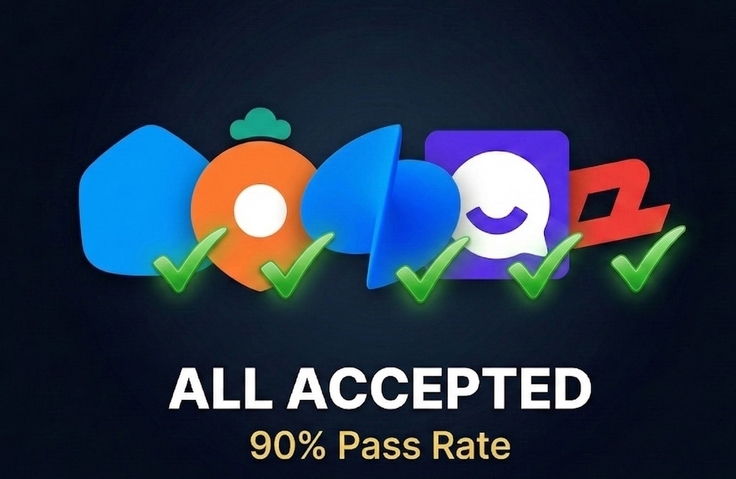
🔥 Accepted at 5 major companies simultaneously 🔥

🔥 Document screening pass rate 90% 🔥

What on earth did this backend developer write on their resume?


This person also didn't have a good acceptance rate at first.

Single-digit document pass rate.

If I applied to 10 places, I would barely hear back from one or two, and the rest would quietly reject me.

Then, I rewrote the resume.
I didn't change the tech stack. I didn't do any new projects either.


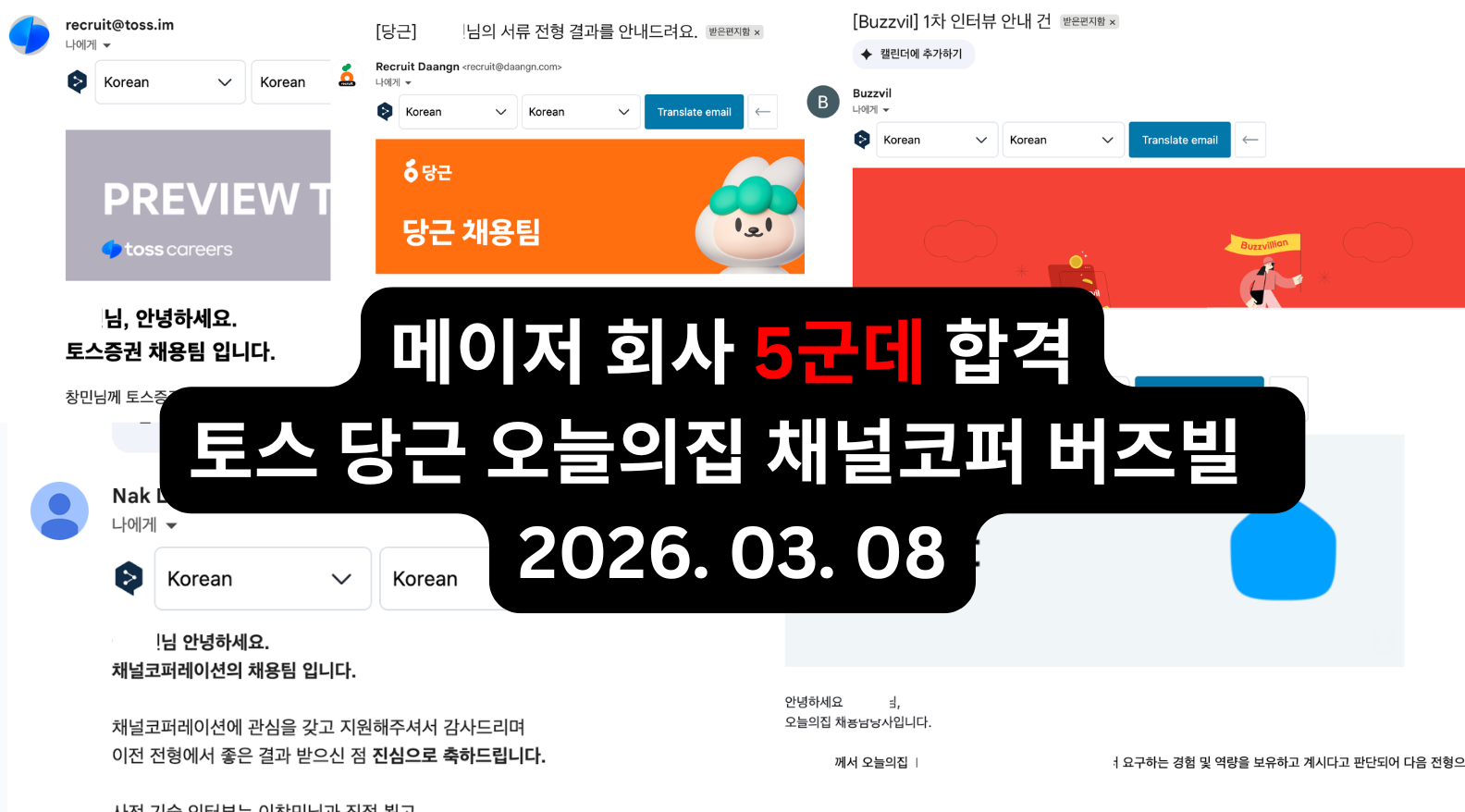
Here is my acceptance certification for Toss, Karrot, Ohouse, Channel Corp, and Buzzvil!

"It was most difficult to articulate the thought process in writing—from how I defined the problem and approached the solution to what specific metrics I achieved."

"The best part was getting a feel for how to organize things in this flow: instead of just listing experiences, explaining why this problem was important → what options were considered and why that specific method was chosen → what trade-offs were managed during the execution process → and what metrics were used to verify the results."

After establishing this flow, the document pass rate began to exceed 90%.

I will reveal everything in the live session about what this person actually wrote in their resume and how they wrote it.


💬
Are you currently
in this situation?

"I've done projects and studied the tech stack... but I keep failing at the document screening stage." "Out of 10 applications, I barely pass one or two, while the rest just send silent rejection emails." "I don't know what else to add to my resume, so I'm just working on another project." "I've heard that I should describe my achievements with numbers, but I feel lost on which metrics to use and how to write them."

The successful candidate mentioned above was in exactly the same situation.

"The advice to write achievements numerically felt vague, but once I understood which metrics to use and how to express them to be persuasive, it became much easier."

The problem isn't your skills. Interviewers look at hundreds of resumes a day. "Implemented Redis caching," "Applied indexing," "Utilized JPA" — these sentences are in every single one of those hundreds.

A list of features is not a resume. A problem-solving experience is a resume.

If you fail at the document screening stage, you won't have the chance to show your skills, no matter how good they are.

📋
What we cover
in the live session

1. Revealing the resumes of successful candidates from when they were rejected
That resume that looks all too familiar. We will examine together why it didn't work.

2. Compare the resumes that started getting accepted side-by-side
We will examine them one by one, looking at how the sentences changed for the same project and even how those metrics were created.

3. Share actual questions received during interviews
"How did you measure this metric?", "Why did you choose this technology?", "Did you not consider other methods?" From questions commonly asked at five major companies to questions that delved deeper depending on the company. I will share them along with the actual direction of my answers.

4. We will conduct an instant review of viewers' resumes
If you post a single line from your resume in the chat, we will provide feedback on the spot.

5. Exclusive discount coupons for live participants will be provided
There is a coupon available only for participants at the end of the live session.


Live Timeline (50 minutes)

Part 1: Reality Check (10 minutes)

  • Intro & Successful Candidate Introduction — "Who is this person?"

  • Failing resumes vs. passing resumes, what is the difference?

  • "Problem→Solution→Metric" pattern — The common structure of passing resumes


Part 2: Analyzing Successful Resumes

  • Before: Revealing the Resume

  • After Resume Reveal

  • Actual questions received in the interview and the direction of the answers

  • Looking back, what was most effective vs. what was a waste of time


Part 3: Viewer Participation & Wrap-up (15 min)

  • Live instant review of one line from viewers' resumes (2-3 people)

  • A word from the successful candidate to job seekers

  • Closing & Reveal of participant-exclusive coupons

Recommended for these types of people

Job seekers who fail at the document stage every time they apply and don't know what the problem is
✔ Those who only give abstract answers like "I've used Redis" or "I improved performance"
✔ Those who get stuck on follow-up questions (e.g., "Why did you choose that?", "What were the alternatives?")

Those who have prepared for interviews but have no opportunities because they can't pass the document screening
✔ Those who want to change "It became much faster" into a "specific expression"
✔ Those who want to turn toy project experiences into interview-ready answers

Those who have been told to write achievements numerically but feel lost on which metrics to use and how to write them
✔ Those who have used Redis, Kafka, or MSA but cannot provide a rationale for "why they used them"
✔ Those who have evaluated performance based only on "feeling" without measuring Before/After figures

🎁 EVENT 🎁

There are special benefits provided only to those who take the course.

Complete in 6 weeks! 4 strategies to differentiate your backend resume - How to stand out among identical resumes

We are providing a 30% discount coupon for this course!

The person who created this course

Sharing the behind-the-scenes story of reaching the final interviews at Coupang and Yanolja - A 6th-year developer's 24-company job-hopping story [ep 5]

Dingco Dingco (Main Instructor)

  • 2021 ~ 2022: S Coding Club Algorithm (data-structure) Tutor

  • 2022 ~ : Operating coding YouTube channel Dingco Dingco (Featuring various content related to developer employment)

  • 2022 ~ 2023 : Viva Republica Server Developer


  • Never giving up on a student 🦈

  • Operating a developer career-cracking community and organizing offline meetups


Notes to consider before taking the course

If!! you are having even the slightest second thoughts before signing up for the course.

Is it right for me to take this live session right now?? If you are hesitating, please feel free to inquire through the open chat room at any time!!

😍 I will do my best to answer your questions 😍

Hands-on Environment

  • Learning takes place through live sessions.


Learning Materials

  • Everything will be shared via Notion and PDF!


Prerequisites and Important Notes

  • At least one backend project experience (school assignments, bootcamps, and toy projects are all acceptable)

  • Experience creating a simple API using Spring or Node.js

  • Experience studying object-oriented programming, DBMS/RDBMS, cache, and index

  • Covers Java, Spring, MySQL, Docker, and Spring Boot


3월

28일

챌린지 시작일

2026년 3월 28일 오후 03:00

챌린지 종료일

2026년 3월 29일 오후 02:30

챌린지에서 배워요

  • You can clearly understand the difference between a "rejected resume" and an "accepted resume" through real-life examples.

  • You can find out in advance the actual questions asked in interviews at major companies and the recommended direction for answers.

  • You can identify the points in your resume that need to be changed right away.

Recommended for
these people

Who is this course right for?

  • A job seeker who keeps failing at the application stage every time they submit a resume and doesn't know what the problem is.

  • Junior developers with 1–2 years of experience who only repeat "Implemented [feature]" or "Used [technology]" on their resumes.

Need to know before starting?

  • It is enough if you are interested in backend development and have written a resume at least once.

  • No specific tech stack or prior knowledge is required. All you need to bring is a curious mind wondering why your resume isn't working.

Reviews

All

1 reviews

5.0

1 reviews

  • calculator님의 프로필 이미지
    calculator

    Reviews 231

    Average Rating 4.9

    5

    0% enrolled

    FAQs

    취소 및 환불 규정
    챌린지는 지식공유자가 설정한 수업 최소 정원이 충족되지 않을 경우, 폐강 안내가 고지되며 결제 내역이 자동취소됩니다.

    dingcodingco's other courses

    Check out other courses by the instructor!

    Free