


질문입니다
안녕하세요
// 9_12.cpp : This file contains the 'main' function. Program execution begins and ends there.

//


#include <iostream>

#include <cassert>

#include <initializer_list>


using namespace std;


class IntArray

{

private:

    unsigned m_length = 0;

    int* m_data = nullptr;


public:

    IntArray(unsigned length = 0)

        : m_length(length)

    {

        m_data = new int[length];

    }


    IntArray(const std::initializer_list<int>& list)

        : IntArray(list.size())

    {

        cout << "list.size() In constructor " << list.size() << endl;

        int count = 0;

        for (auto& element : list)

        {

            m_data[count] = element;

            ++count;

        }


        //for (unsigned count = 0; count < list.size(); ++count)

        //  m_data[count] = list[count];    // error


    }

    ~IntArray()

    {

        delete[] this->m_data;

    }


    IntArray& operator=(const std::initializer_list<int>& list)

    {

        cout << "assignment operator" << endl;

        cout << "list.size() In assignment operator " << list.size() << endl;


        delete[] m_data;

        int length = list.size();


        m_data = new int[length];


        int count = 0;

        for (auto& element : list)

        {

            m_data[count] = element;

            ++count;

        }


        return *this;

    }


    friend std::ostream& operator << (std::ostream& out, const IntArray& arr)

    {

        for (unsigned i = 0; i < arr.m_length; ++i)

            out << arr.m_data[i] << " ";

        out << endl;

        return out;

    }

};

int main()

{

    int my_arr1[5] = { 1,2, 3,4,5 };

    int* my_arr2 = new int[5]{ 1,2,3,4,5 };


    auto il = { 10, 20, 30 };


    IntArray int_array { 1, 2, 3, 4, 5 };

    cout << int_array << endl;

    int_array = {7, 2, 3, 2, 1, 6, 5};

    cout << int_array << endl;


    return 0;

}
이 코드에서 operator = 에 사이즈 7로 잘들어가는데
cout << int_array<<endl; 마지막줄을 실행시킬때
5개만 나오는데 왜그런지 모르겠습니다 ㅜㅜ
그리고 initializer_list 를 왜사용해랴하는지도 정확하게 알지못하겠습니다 ㅜ
답변 1
6
1. 출력 연산자 오버로딩 된 내용을 보면 m_length 만큼 반복문을 도는데, = 연산자 오버로딩 내용을 보면 m_length 는 업데이트를 안하셨어요~ m_data 에 7개 원소를 대입하기만 하셨지 m_length 멤버 변수는 7로 업데이트 하지 않으셨습니다. 그러니 m_length 는 5 인 상태로 변함이 없었기 때문에 출력 연산자에서 반복문 5 번만 돈 것입니다. 일반 int length 변수을 사용하셨는데,
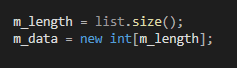
이렇게 하셔야하지 않을까 싶습니다. 디버깅 하면 왜 이런 결과가 나온건지 그 원인을 쉽게 추적하실 수 있습니다. 공부하실 때, 코드 짜실 때 디버깅 꼭 해보시길 바랍니다.
2. 컨테이너 초기화 하기 편하기 때문입니다. 코드에서도 볼 수 있다시피 파라미터로 넘긴 initializer_list 타입의 list 에서 size() 함수를 호출해서 {7, 2, 3, 2, 1, 6, 5} 의 사이즈가 뭔지도 바로 알 수 있었죠. 이처럼 initializer_list 는 c++ 에 정의된 클래스 타입이기 때문에 size(), begin(), end() 등의 멤버 함수 호출로 컨테이너 정보에 대해 쉽게 알 수도 있구요. 만약 이 파라미터를 배열로 넘겼다면 이 배열의 사이즈를 알기 위해선 또 반복문 일일이 돌리면서 세었어야 겠죠? 이 때문에 뒤에서 배우실 C++ STL 의 여러 컨테이너들은 이 initializer_list 를 사용하여 만들어진 경우가 많습니다.
https://stackoverflow.com/questions/39512381/why-do-we-use-initializer-list-in-c11
링크 참고 해주세요.
변수가 메모리에 저장되는 것을 알려주는 강의가 어떤강의였죠
1
492
1
메모리 주소 10진수로 출력
1
694
1
클래스 템플릿 특수화에서 boolalpha로 표현된 리턴값에 대해 질문이 있습니다.
1
529
1
여러가지 리턴 타입에 관한 강의가 어떤 걸까요?
1
564
1
메모리 주소에 관한 질분
0
705
1
인터페이스 클래스에서 reportError의 매개변수에 대해 궁금한 것이 있습니다.
0
566
1
형변환 오버로딩에서 const 관련 질문이 있습니다.
0
465
1
Digit 뒤에 reference를 사용하는 이유
0
535
1
4.2 전역 변수, 정적 변수, 내부 연결, 외부 연결
0
340
1
dat파일이...
0
552
1
TODO:대입 연산자 오버로딩에 대한 소스코드입니다.
0
669
1
복사 생성자 관련 질문이 있습니다.
0
470
1
수업 중 궁금한점이 있습니다.
1
404
1
라이브러리자체가 이해가 되지 않습니다.
0
587
1
마지막 예제 질문
0
322
1
증감연산자 위치에 따른 수행 순서 질문입니다.
0
393
1
단항 연산자 오버로딩에서 return 부분에 질문이 있습니다.
1
438
1
friend함수 관련 질문이 있습니다.
0
336
1
operator+ 정의부분에서 궁금한 것이 있습니다.
0
472
1
3분 17초 질문
0
374
1
함수에 값을 대입한다는 개념이 이해가 되지 않습니다.
0
470
1
int getvalue() const에서 const는 왜 뒤에 붙는건가요?
0
473
2
const Something &st에서 const를 빼면 안되나요?
0
325
1
friend함수는 다른 클래스의 멤버함수로 쓸 수 없나요??
1
508
1