Build a solid foundation for your first start with Redis A to Z!
Everything about Redis, explained so easily and fun that even a high school student can understand it perfectly.
Stop taking courses that only teach commands! A real Redis course where you learn while understanding the principles
Can you answer the interview questions below? 🤷♂️
Q1) Explain what you know about Redis replication and explain quorum.
Q2) Explain what you know about Redis in relation to threads.
Q3) What is the difference between delete and unlink?
Q4) Explain the two representative backup methods and their respective pros and cons.
Q5) How do you change Redis parameters while it is running?
Knowing a few Redis commands is different from knowing how to use Redis. Let's learn everything from commands to internal operating principles and the Redis ecosystem by installing, running, and applying Redis!
Why do IT/Tech companies prefer Redis?
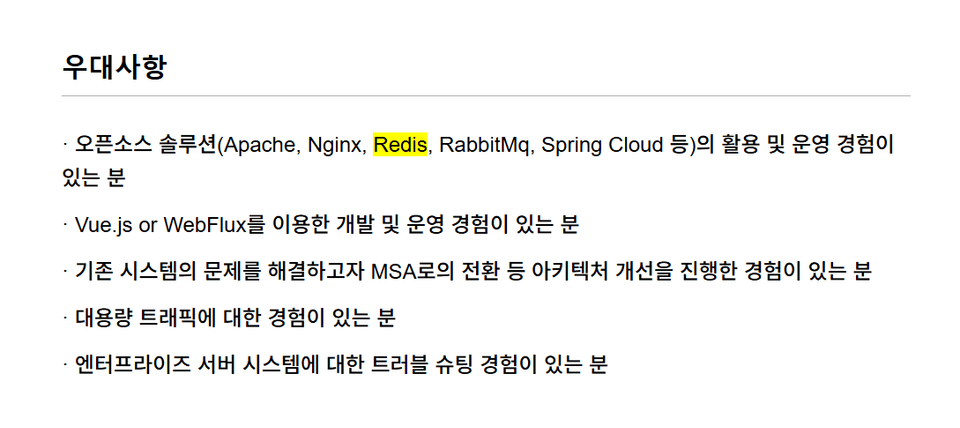
It is precisely because of speed, simple data models, and scalability. Redis provides extremely fast data processing speeds based on memory, and as a key-value store, it can process data quickly without complex queries. Additionally, it supports high availability and scalability through clustering and replication features, making it suitable for handling large-scale traffic. You can see that Redis is always specified as a preferred or essential skill in job postings for top tech companies like Naver, Kakao, Line, Coupang, and Baemin.
<Kakao Job Posting>
<Baedal Minjok Job Posting>
From practical work to interviews, we've packed in only the essentials of Redis ✨
By studying properly with this Redis course, you will not only gain Redis knowledge that you can use for a lifetime but also develop the capability to build applications using Redis. Save your precious time by quickly mastering the core concepts and prepare for both interviews and practical work!
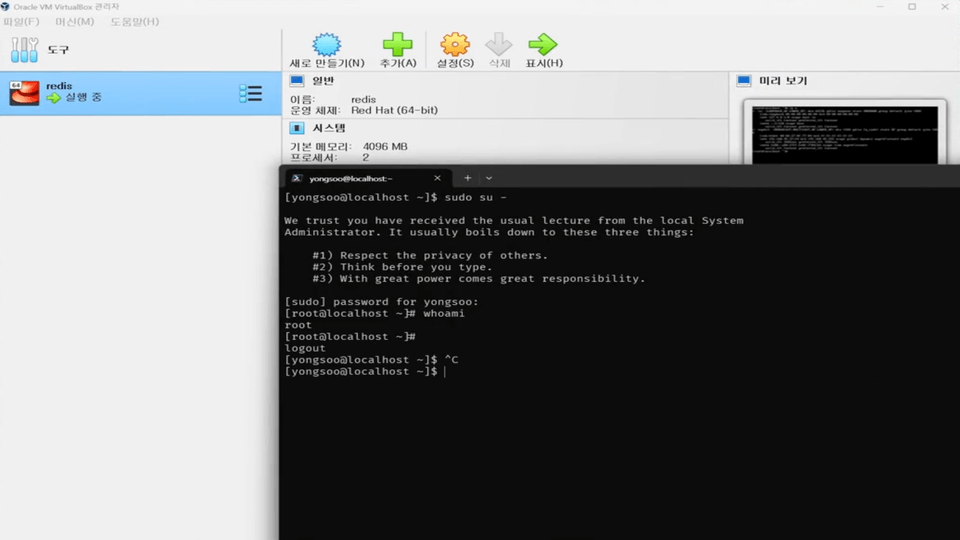
✅ Installing Redis yourself, just like in a real-world production environment
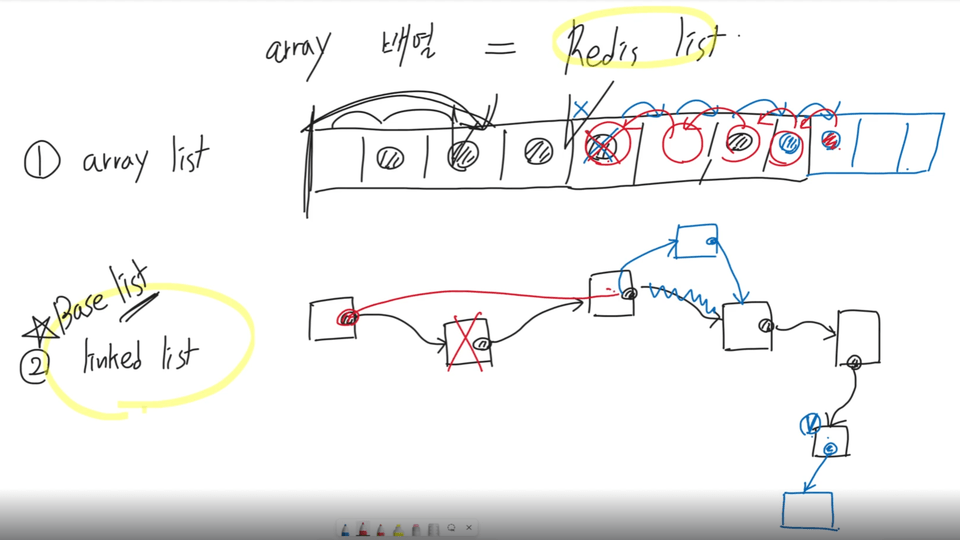
✅ Understanding the operating principles of Redis through intuitive visual explanations
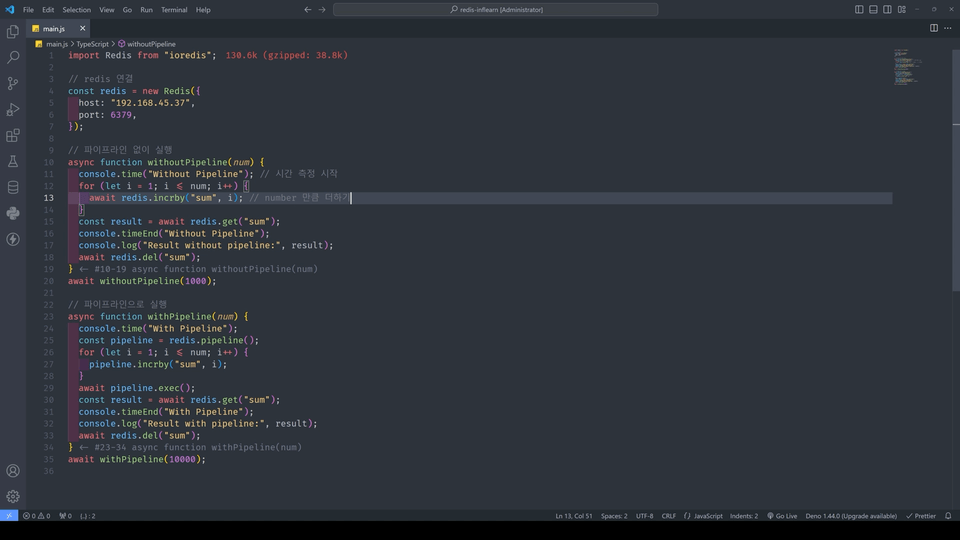
✅ Solving Redis usage examples with Node.js code
✅ Redis tips and tricks from industry experts shared throughout the course!
In this lecture, you will learn the following 🏃
1. Practical Redis Configuration
We will build a 100% realistic Redis environment using containers (Docker) and VMs. Additionally, you will learn about configurations for Redis auto-start, disk parallelism techniques for efficient backup processing, and Redis Insight for data management and monitoring.
2. Learning Redis Commands
You will learn basic commands for handling each data type, as well as commands useful in practice for efficient data processing, such as message queues, data backup, JSON data processing, pipeline processing, and transaction management.
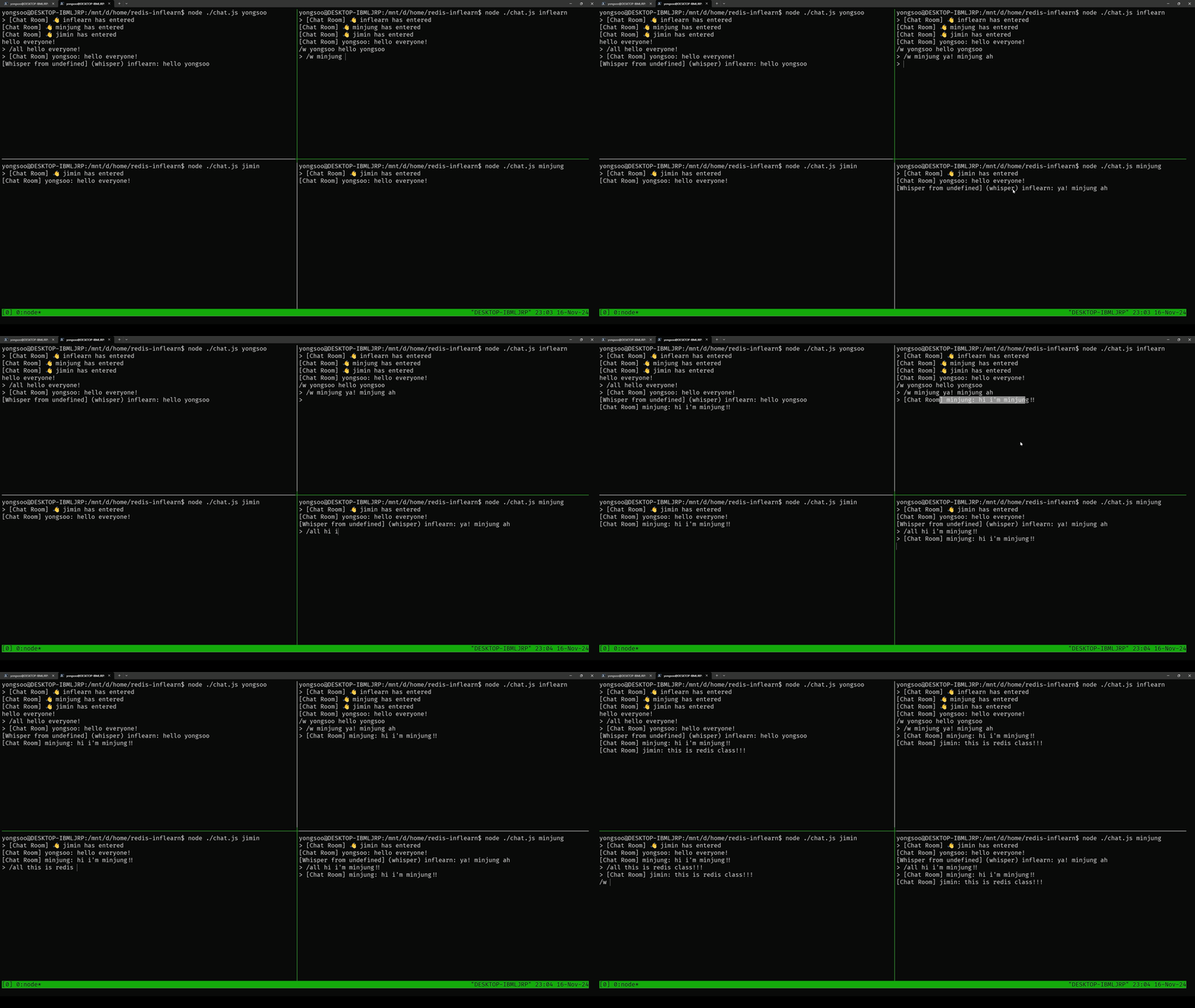
You will learn various ways to utilize Redis by implementing simple OTP generation, cache synchronization, and binary data caching with Node.js, as well as developing a ticketing system using distributed locks, cookie/session management, a real-time popular search term scoreboard, and a chatting system.
4. Redis Data Structures
We explain the data structures and data types used in Redis through diagrams to ensure an easy and intuitive understanding.
Recommended for these people 👍
💡 Those who are preparing to become a DBA (Infrastructure Operations)!
💡 Those who are preparing to become a backend developer!
💡 Those who have been assigned to a project using Redis right away, but don't know the first thing about it!
Q&A 💬
Q. Can non-majors take this course?
So that even a high school student can understandthe content, I explain it while slowly organizing the knowledge necessary for understanding.
Q. Is there a reason why the practice exercises only use Node.js code?
This is because the practice speed is faster compared to Java, C#, etc. However, the logic can be applied as is to Spring (Java, Kotlin) or .Net (C#) development.
Q. Can I learn everything about Redis just by taking this course?
Since this is a TypeScript course, the NestJS section does not cover backend explanations or code quality-focused coding separately. This section focuses solely on how to use TypeScript efficiently within NestJS. To be honest, you won't know 100%, but I am confident you will know 80%. This is because 10% is a portion that can only be filled through operational experience. (I believe the remaining 10% is filled when you look at Redis's internal Rust and C code. I did not include it as it would make the course too heavy.)
Q. Do you not explain Redis Stream?
Redis Stream would take up about 2 to 3 sectors, and in my experience, Redis Stream was not used very often in practice. Since Apache Kafka and Elastic Search are primarily used according to their purposes, I boldly excluded it from the lecture.
Recommended for these people
Who is this course right for?
For those who want to learn Redis properly!
For those preparing to become a DBA!
For those preparing to become a backend developer!










![Learning Express.js Properly: Part 1 From Basics to Advanced [Basic Level]Course Thumbnail](https://cdn.inflearn.com/public/files/courses/336833/cover/01jre8d93dtfptrdx7kjrt7rh0?w=420)