This course teaches the basic concepts of Webpack, a tool that is essential for the latest front-end frameworks (React, Angular, Vue). The purpose of this class is to help students understand the background and philosophy of Webpack and improve their ability to easily analyze and customize Webpack configuration files.
It was a great lecture that solidified the basics of the settings that I had just roughly passed over.
5.0
Leo
100% 수강 후 작성
It helped me a lot in understanding Webpack.
5.0
jude
100% 수강 후 작성
I think it was a lecture that taught me the basics about webpack. It was good because there were a lot of recommendations for good documents to know.
1. Course Introduction
This course covers the basic concepts of Webpack, an essential tool in the latest front-end frameworks (React, Angular, Vue). It is aimed at beginner front-end developers and web developers who have vague fears about Webpack.Through this course , we aim to understand the background and ideology of Webpack and improve the students' ability to easily analyze and customize the Webpack configuration file . In order to easily understand the notoriously complex settings of Webpack, the course will proceed in a hands-on manner with asimple explanation of the role of each property -> the instructor doing live coding -> the students taking the course with prepared examples.We cover the main properties of Webpack, such as Entry, Output, Loader, Plugin, and Resolve, and learn how to configure a development environment using Webpack and how to link with other web automation tools , so that you can apply not only the basic concepts but also the actual service and practice.
This site is good to look at while taking the lecture😁 (You can access the site by clicking)
2. Who does it help?
For those who don't know what Webpack is
People who have heard of Webpack but are scared when they open the configuration file
Those who threw their mouse while reading the official Webpack documentation
For those who want to learn Webpack but don't have any good reference materials
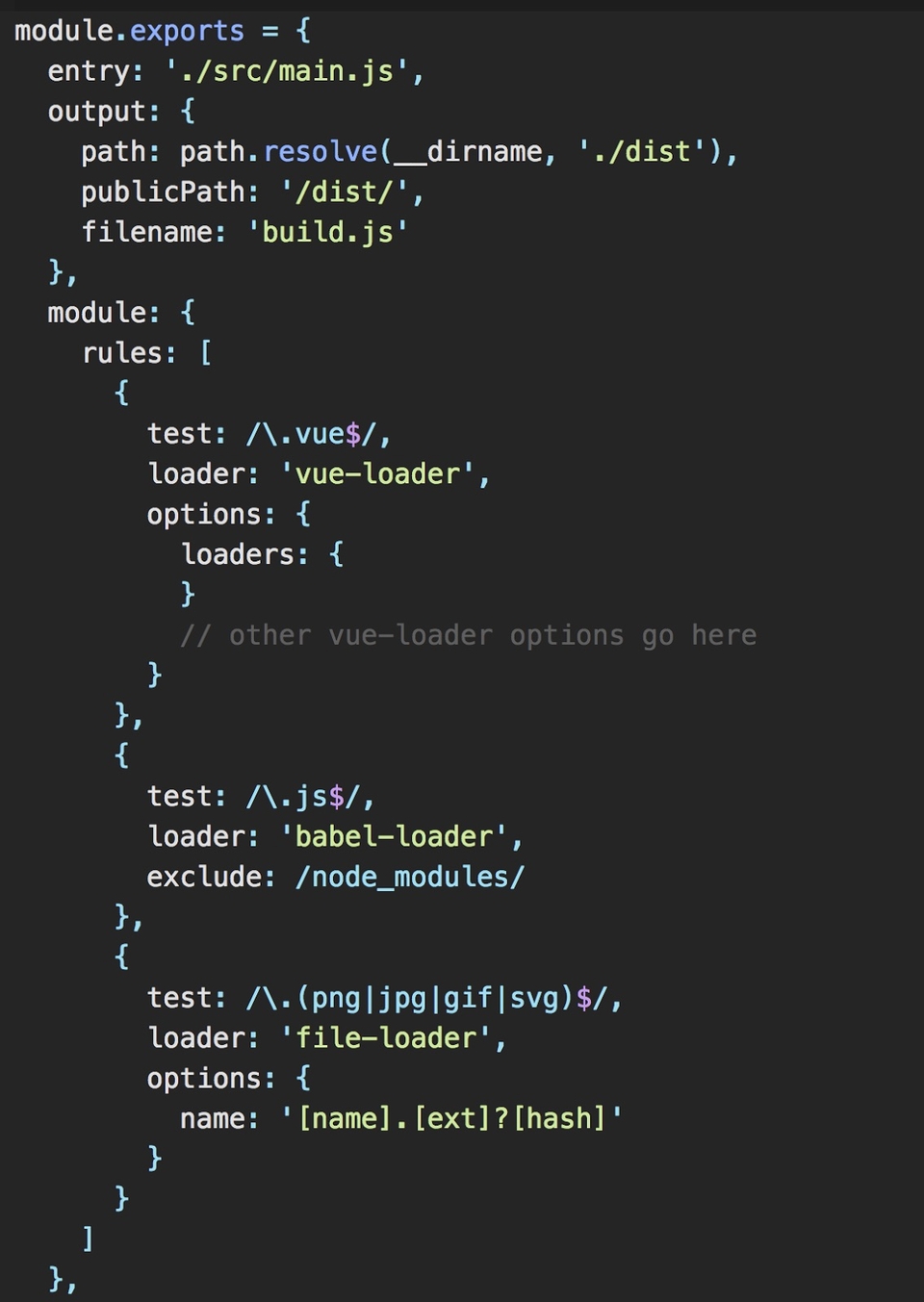
If you don't know what I'm talking about after seeing this image, just listen to it.
3. What do you learn?
Webpack Key Properties
Configuring the Webpack development environment
supplement
Entry
Output
Loader
Plugin
Resolve
Webpack Dev Server
Webpack Dev Middleware
Developer tool integration
Integration with Gulp
Introduction and usage of NPM(Node Package Manager)
Modularizing JavaScript
Node Path API
4. Course Features
The more complex the setup, the more you need to learn from small units in order to draw the big picture. After a brief explanation of each major property, the instructor's live coding -> the course is structured so that students practice according to the prepared examples. In this way, the course is structured so that students can easily and quickly follow Webpack.Also, many people wonder why they should use Webpack. We will explain the background of Webpack, the prerequisite knowledge required to use Webpack (NPM, JavaScript modularization), and other technologies (Node.js, Gulp) in advance , and look at the detailed setup, so it is a class like a story.
Although the version has changed, I thought of this as a study and found the changed parts and implemented them myself, which helped me a lot in my studies! Thank you, GateenGodgyo.