
High-Performance SQL for JPA (ORM) Developers
Vlad Mihalcea
$176.00
Intermediate / SQL, performance-tuning, sql-query, DBMS/RDBMS
4.9
(33)
600+
Make the most of relational database systems!

Intermediate
SQL, performance-tuning, sql-query

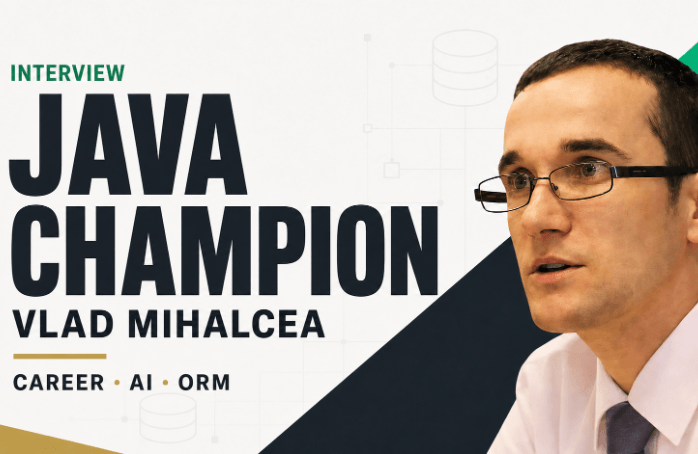
In the era of AI, what should developers study and which technologies should they choose? We asked directly about the journey to becoming a Java Champion, learning and expertise in the AI era, and why ORM is still necessary even when AI can write SQL for you.
798 learners
Level Beginner
Course period Unlimited
Reviews from Early Learners
5.0
KimAresen
I really enjoyed the interview; it was packed with insightful content. I found it very engaging as it focused well on "what developers should do in the AI era." To be honest, there are times when I feel a sense of dread, wondering if I should even continue studying development because of AI. However, the perspective that "verification and responsibility ultimately belong to humans" served as a great answer for me. I have one remaining question I'd like to ask. What is the position of the IDE in the AI era? These days, environments designed for agents rather than humans, like ADEs (Agent Development Environments) such as Orca, are emerging. Personally, I still believe that looking directly through an IDE (such as stepping through the flow with a debugger) is crucial for a human to understand the code. In a trend where tools are increasingly becoming agent-centric, I'm curious to know your thoughts on what will happen to the "IDE as a tool for human understanding."
5.0
라오나
Thank you for sharing such a great interview at a time when everyone is suffering from FOMO, worrying about what will happen if AI replaces them! Ultimately, it is important to become an expert. The part where you mentioned that our role is to build a stronger foundation and to verify and further refine the average answers produced by AI really resonated with me. I will also strive to become a reliable senior developer for my juniors, just like Vlad! Thank you for the great insights.
5.0
Bruce Han
I learned a lot about the mindset of a backend developer.
How to connect blog and community activities to learning and career
How to use AI as a learning partner and verify the answers
How to choose between Native SQL and ORM based on team experience and required features
Who is this course right for?
A developer who worries about how much to trust and verify AI's answers
A developer debating whether to learn various technologies or to study one field in depth
A JVM developer wondering if writing native SQL with AI makes it possible to do without an ORM
Developers who are curious about how blogging, Stack Overflow, and open-source activities help their careers
Need to know before starting?
No prior knowledge is required.
If you have experience using JPA/Hibernate or JDBC, you will be able to understand the technical discussions in the latter half more easily.

2,239
Learners
103
Reviews
4.6
Rating
4
Courses
My name is Vlad Mihalcea, and I’m a Java Champion. I wrote the High-Performance Java Persistence book, which became one of the best-selling Java books on Amazon.
I'm currently developing the amazing Hypersistence Optimizer, and in my free time, I develop various open-source projects (e.g., Hypersistence Utils and FlexyPool) and answer questions on StackOverflow.
I am a Java Champion and a major contributor to the Hibernate ORM project. I created the Hypersistence Optimizer tool, which scans application configurations and mappings to identify the changes needed to speed up the data access layer.
When he finds something interesting, he enjoys sharing it on his personal blog. He believes in open-source software and thinks every developer should contribute in some way.
If he cannot find the right tool, he even starts new open-source projects such as Hypersistence Utils or FlexyPool.
All
1 lectures ∙ (1hr 22min)
1. Vlad 2026 Interview
01:22:38
All
22 reviews
5.0
22 reviews

Reviews 6
∙
Average Rating 5.0
5
Thank you for sharing such a great interview at a time when everyone is suffering from FOMO, worrying about what will happen if AI replaces them! Ultimately, it is important to become an expert. The part where you mentioned that our role is to build a stronger foundation and to verify and further refine the average answers produced by AI really resonated with me. I will also strive to become a reliable senior developer for my juniors, just like Vlad! Thank you for the great insights.
I'm glad you found this interview useful. Many thanks to Inflearn for taking the time to record, edit, and publish the video interview. Since AI is relatively new to most of us, I think it's valuable to share our findings and learn from each other.

Reviews 47
∙
Average Rating 5.0
Edited
5
I really enjoyed the interview; it was packed with insightful content. I found it very engaging as it focused well on "what developers should do in the AI era." To be honest, there are times when I feel a sense of dread, wondering if I should even continue studying development because of AI. However, the perspective that "verification and responsibility ultimately belong to humans" served as a great answer for me. I have one remaining question I'd like to ask. What is the position of the IDE in the AI era? These days, environments designed for agents rather than humans, like ADEs (Agent Development Environments) such as Orca, are emerging. Personally, I still believe that looking directly through an IDE (such as stepping through the flow with a debugger) is crucial for a human to understand the code. In a trend where tools are increasingly becoming agent-centric, I'm curious to know your thoughts on what will happen to the "IDE as a tool for human understanding."
🇬🇧 Thanks, I'm glad you enjoyed this interview. We chose to discuss AI and its impact on the industry because it is a real concern for many developers now, no matter where they live. I used a translation tool to read your comment, so I'll reply in English, hoping it will be properly translated into Korean. Related to your question, I'll provide you with my answer below: > What is the position of the IDE in the AI era? I'm using both Claude Code and IntelliJ IDEA because the IDE is very useful for navigating a project, running tests, debugging applications, and reviewing the overall flow of a given request. At the moment, I'm working on a new project, and while Claude Code can generate the examples, I still want to run the code manually and see how things are working and why they work in a certain way. Many times, I bump into all sorts of issues that AI generated, which look harmless during review, but they could cause problems in production. So, I'm also using an IDE, and since the Claude Code plugin in IntelliJ IDEA is not that great, I use the CLI for Claude Code, which is actually better because the CLI is for AI while the IDE is for me, so I made a little bit of a distinction.

Reviews 2
∙
Average Rating 5.0
Reviews 2
∙
Average Rating 5.0
Reviews 1
∙
Average Rating 5.0
Check out other courses by the instructor!
Explore other courses in the same field!
Free




![[Done in a single word!] How to create your own monetized website with AICourse Thumbnail](https://cdn.inflearn.com/public/files/courses/336091/cover/01jxykkyatyya1dnv22ctkvtwe?w=420)
![[Spring AI in Practice] Creating Your Own 24-Hour Code Reviewer & Automatic Grading AgentCourse Thumbnail](https://cdn.inflearn.com/public/files/courses/340163/cover/01kd87fc1wdcg20nnkcngd9wap?w=420)